Introduction
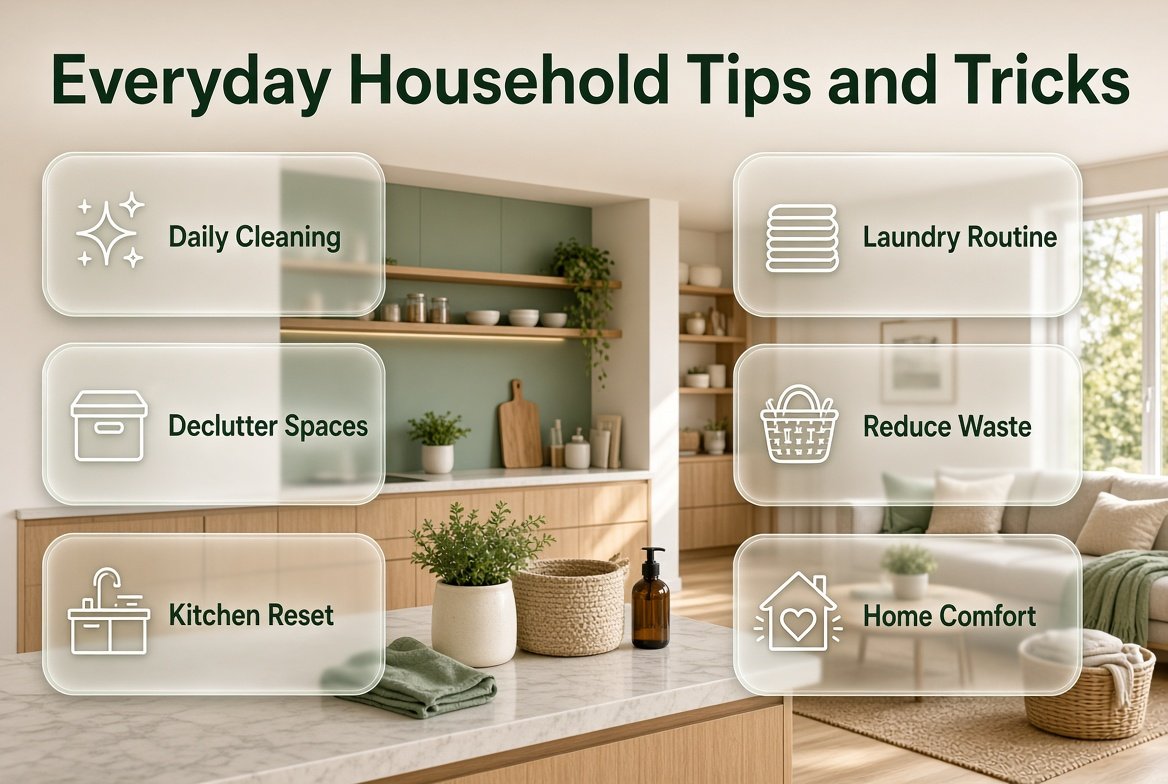
Everyday Household Tips and Tricks | Keeping a home clean, comfortable, organized, and functional can feel like a full-time job. Between preparing meals, managing laundry, putting away belongings, handling small repairs, and keeping shared spaces tidy, everyday household responsibilities can quickly become overwhelming. The good news is that you do not need expensive products, complicated systems, or hours of free time to make your home easier to manage.
With the right everyday household tips and tricks, you can simplify common chores, reduce unnecessary clutter, save time, and create a more welcoming environment for everyone in your household. Small habits, such as resetting the kitchen after dinner, returning frequently used items to their proper places, and preparing for the next morning before going to bed, can make a noticeable difference over time.
At Heartomenal, practical home advice focuses on making everyday living more comfortable, organized, and manageable. The most effective household routines are not necessarily the most complicated ones. They are the routines that fit your schedule, work with your available space, and remain easy to maintain.
This guide explores practical ways to manage household chores, organize rooms, reduce waste, improve home comfort, handle laundry, maintain essential household items, and establish routines that work for busy families, students, couples, and individuals. You will also learn which common mistakes to avoid and how to build a household system that saves effort without making everyday life feel restrictive.
1. What Are Everyday Household Tips and Tricks?
Everyday household tips and tricks are simple, practical methods that help people manage routine responsibilities more efficiently. They include organizing belongings, cleaning regularly, planning meals, maintaining household equipment, managing laundry, reducing waste, and creating habits that prevent small problems from becoming larger ones.
The purpose is not to keep every surface perfect. Instead, it is to make your home easier to use, maintain, and enjoy.
For example, placing a small basket near the entrance for keys and everyday essentials can prevent repeated searching. Preparing a short shopping list before visiting the supermarket can reduce forgotten purchases. Wiping kitchen surfaces after cooking can make the next cleaning session quicker.
Why do small household habits matter?
Small habits reduce the mental effort required to manage repetitive tasks. When everyday items have designated places and chores follow a predictable routine, you spend less time deciding what to do next.
These habits can also help you:
- Reduce unnecessary spending on duplicate household items.
- Keep frequently used areas functional.
- Avoid letting small cleaning tasks accumulate.
- Make shared responsibilities easier to divide.
- Identify maintenance problems before they become urgent.
- Create a more comfortable environment for daily activities.
Pro Tip: Choose household habits that solve a problem you experience regularly. A useful routine should make your life easier rather than introduce another complicated responsibility.
2. How Can You Keep Your Home Organized Every Day?
Daily organization works best when every frequently used item has a convenient home. Instead of relying on occasional large organizing sessions, create simple systems that make putting things away easier than leaving them scattered around.
Give everyday items a permanent place
Keys, chargers, mail, shoes, bags, remote controls, and frequently used kitchen tools often create clutter because they do not have obvious storage locations.
Start by identifying the items that regularly appear in the wrong places. Choose storage locations based on how and where you use them.
For example, keep keys near the main entrance, store charging cables close to the devices they serve, and place everyday shoes near the entrance if space allows.
A good storage location should be easy to reach and easy to use. If putting an item away requires opening several boxes or moving other belongings, the system may be too complicated.
Use a short daily reset
A daily reset is a brief period dedicated to returning a room to a functional condition. It is not a deep-cleaning session.
During a reset, you might:
- Return misplaced belongings to their usual locations.
- Put dirty dishes in the sink or dishwasher.
- Fold blankets and straighten cushions.
- Clear unnecessary items from frequently used surfaces.
- Prepare essential belongings for the following day.
Choose a consistent time, such as after dinner or before bedtime. Even a short reset can prevent clutter from spreading throughout the home.
For more structured ideas, explore Smart Home Organization Tips, which can help you develop practical systems for everyday belongings.
Organize according to frequency of use
Items used daily should generally be easier to reach than items used only occasionally.
| Item category | Practical storage location |
|---|---|
| Daily essentials | Accessible drawers, shelves, or baskets |
| Weekly-use items | Regular cupboards or designated storage areas |
| Seasonal belongings | Clearly labeled storage containers |
| Rarely used equipment | Safe, suitable secondary storage |
| Important documents | A secure, organized filing location |
Keep frequently used items accessible without making every surface a storage area. The aim is to reduce unnecessary movement while preserving enough clear space for everyday activities.
Common Mistake: Buying storage containers before deciding what needs to be stored. Sort your belongings first, measure the available space, and purchase containers only when they solve a specific problem.
3. What Is the Easiest Way to Keep a Home Clean?
The easiest way to maintain a clean home is to combine small daily tasks with regular weekly cleaning. Waiting until every room looks dirty usually creates a larger workload than dealing with routine messes as they appear.
Clean messes before they spread
Spills, crumbs, food residue, and wet bathroom surfaces are generally easier to address when noticed. Prompt attention also helps prevent certain stains, odors, and buildup.
After preparing food, wipe suitable kitchen surfaces. When changing clothes, place used garments in the laundry hamper. After showering, follow an appropriate bathroom ventilation and moisture-management routine.
These small actions reduce the number of separate cleaning jobs waiting for you later.
Follow a practical cleaning order
When cleaning a room, work from higher surfaces toward lower ones and finish with the floor. This helps prevent dust or crumbs from falling onto areas you have already cleaned.
A simple sequence is:
- Remove rubbish and misplaced belongings.
- Put away items that belong elsewhere.
- Dust suitable surfaces.
- Clean frequently touched areas as appropriate.
- Wipe suitable counters and furniture.
- Vacuum or sweep the floor.
- Mop compatible flooring when necessary.
Always follow product instructions and use cleaning materials suitable for the surface. Never mix household cleaning chemicals, especially bleach with ammonia or acids, because dangerous gases can form.
Build a manageable cleaning schedule
A cleaning schedule should reflect how many people live in your home, how frequently rooms are used, and how much time you have available.
| Frequency | Examples of household tasks |
|---|---|
| Daily | Dishes, food preparation surfaces, basic tidying |
| Several times weekly | Vacuuming busy areas and managing laundry |
| Weekly | Bathroom cleaning, changing bedding as needed, dusting |
| Monthly | Checking overlooked areas and cleaning suitable fixtures |
| Seasonally | Reviewing storage, inspecting weather-related maintenance needs |
These are starting points, not strict rules. Homes with pets, children, allergies, or heavy daily use may require different schedules.
For more detailed cleaning routines, read Easy Home Cleaning Tips. It provides a natural next step for readers who want to develop more consistent cleaning habits.
Quick Tip: Keep suitable basic cleaning supplies together in a safe, organized location. Having the correct cloth, brush, or surface-appropriate cleaner available can remove an unnecessary barrier to starting a task.
4. How Can You Make Kitchen Tasks Easier?
The kitchen becomes easier to manage when food preparation, cooking, storage, and cleaning follow a predictable routine. Because this room supports several activities throughout the day, even small improvements can save time.
Arrange your kitchen around daily activities
Store cooking tools close to the area where they are used. Keep frequently used utensils near the food preparation space, place everyday dishes in an accessible cupboard, and organize pantry items so that ingredients are easy to identify.
Group similar items together, such as baking ingredients, breakfast foods, cooking oils, and lunch supplies. Use clear labels where they genuinely improve identification.
Avoid placing heavy appliances or frequently used items in inconvenient locations that require unnecessary reaching or lifting.
Plan meals before shopping
Meal planning does not require an elaborate spreadsheet. A simple plan for several upcoming meals can help you use existing ingredients and avoid buying duplicates.
Before shopping:
- Check the refrigerator, freezer, and pantry.
- Identify ingredients that should be used soon.
- Select meals that share suitable ingredients.
- Write down missing essentials.
- Consider your schedule when choosing meals.
For example, vegetables purchased for a planned dinner might also work in the following day’s lunch. Using ingredients across several meals can reduce waste without making every meal identical.
Make food storage safer
Store food according to its packaging instructions and recognized food-safety guidance. Refrigerate perishable foods promptly, maintain appropriate refrigerator temperatures, and keep raw foods separate from ready-to-eat items.
Use suitable containers and label leftovers with dates when helpful. Do not assume that food is safe simply because it smells normal.
The Kitchen Organization Tips guide can help you explore more detailed approaches to arranging cupboards, drawers, food supplies, and preparation areas.
Expert Tip: Organize your kitchen for the way you actually cook. A household that prepares simple weekday meals needs a different arrangement from one that regularly bakes or cooks elaborate dishes.
5. How Can You Keep Your Bedroom Tidy and Comfortable?
A bedroom should support rest, getting dressed, and personal routines. When clothes, accessories, and miscellaneous belongings accumulate, the room can become harder to maintain and less comfortable to use.
Make your bed and clear key surfaces
Making the bed is a simple visual reset. It does not replace cleaning, but it can make the room feel more orderly.
Next, clear bedside tables and dressers of items that do not need to remain there. Keep essentials such as a lamp, glasses, or a book accessible while moving unrelated belongings to their proper locations.
Avoid filling every available surface with decorative objects. Leaving some clear space makes routine dusting easier.
Establish a clothing routine
Clothes often become clutter because clean garments, worn clothing, and items that can be worn again are mixed together.
Create separate, practical arrangements for these categories. Use a laundry hamper for dirty clothes and an appropriate designated place for garments that are not ready for washing.
Return clean clothes to drawers or wardrobes instead of allowing them to accumulate on chairs.
Improve everyday bedroom comfort
Comfort depends on more than appearance. Consider ventilation, suitable bedding, lighting, noise, temperature, and how easily you can move around the room.
Wash bedding according to fabric care instructions, avoid blocking ventilation openings, and keep walkways clear.
For further ideas, explore Bedroom Organization Tips. Readers who want to improve the room’s overall appearance can also benefit from practical guidance on making bedrooms easier to use.
6. How Can You Make Your Living Room Easier to Maintain?
Living rooms often serve several purposes, including relaxing, entertaining, reading, watching television, and spending time together. Their organization should support these activities without requiring constant rearrangement.
Create activity-based zones
Instead of organizing the room around decoration alone, consider what happens in each area.
A seating area might need a small table for drinks and a nearby place for remote controls. A reading corner may benefit from suitable lighting and a place for books. A family activity area might require accessible storage for games or other frequently used belongings.
These arrangements help everyday items remain close to where they are needed.
Reduce clutter on shared surfaces
Coffee tables, side tables, and television units can quickly collect miscellaneous objects.
Use a simple rule: keep essential items accessible, return temporary belongings after use, and avoid treating every flat surface as permanent storage.
A small tray may help group a few related items, but too many decorative containers can create another layer of clutter.
Choose practical fabrics and finishes
Furniture covers, rugs, cushions, and upholstery should suit the room’s actual use. Consider cleaning instructions, durability, household activity, and the manufacturer’s recommendations before choosing materials.
Regularly remove crumbs and dust using methods appropriate for each surface. Address spills according to the fabric or material care instructions.
For room-specific ideas, see Living Room Home Tips. The aim is to create a room that remains welcoming without making its upkeep unnecessarily difficult.
7. How Can You Save Space in a Small Home?
Small homes become easier to manage when each area serves a clear purpose and storage takes advantage of available space without obstructing movement.
Use vertical space thoughtfully
Shelves, wall-mounted organizers, and tall storage furniture can help use otherwise empty wall space. Before installing anything, check the wall type, weight limits, suitable fixings, and whether the location is safe.
Keep frequently used items at comfortable heights. Heavy belongings should not be stored overhead where they could fall or require unsafe lifting.
Choose furniture that serves more than one purpose
Multifunctional furniture can be useful in compact rooms. Examples include a desk that folds away, a bed with suitable built-in storage, or an ottoman that provides both seating and storage.
However, additional features are valuable only when the furniture remains practical to use. A storage unit that is difficult to open or access may become an inconvenient place to hide clutter.
Keep pathways clear
Do not fill every corner simply because space is available. Clear pathways improve movement and make cleaning easier.
Before purchasing furniture, measure the room and consider door swings, drawer access, and walking space. A piece that fits on paper may still make the room awkward to use.
The Small Space Home Tips guide offers further practical approaches to arranging compact homes without sacrificing everyday functionality.
Pro Tip: When evaluating a storage solution, ask whether it makes belongings easier to find and return. More storage is not automatically better if it encourages you to keep unnecessary items.
8. How Can You Reduce Household Clutter Without Feeling Overwhelmed?
Decluttering means reviewing belongings and deciding what deserves space in your home. It is not about owning as little as possible or discarding useful items simply to achieve a particular appearance.
The most effective approach is to work in small, clearly defined areas.
Start with one manageable category
Choose one drawer, one shelf, one section of a wardrobe, or one group of household supplies. Empty the selected area only if you have enough time to finish the task.
Sort the contents into practical categories:
- Keep and return to a suitable location.
- Relocate to another room.
- Donate or give away usable items when appropriate.
- Recycle or dispose of items according to local rules.
- Set aside uncertain items for a later decision.
Avoid turning the entire house upside down during a short organizing session.
Use a simple decision process
Ask yourself whether an item is useful, regularly used, needed for a specific occasion, or genuinely important to you.
Consider safety and replacement costs before discarding tools, documents, spare parts, or emergency supplies. Some items deserve storage even when they are not used frequently.
For example, a spare household key, an essential instruction manual, or a suitable emergency torch may have a clear purpose despite limited use.
Prevent clutter from returning
Once an area is organized, decide how new items will enter and where they will go. Review purchases before bringing them home, return belongings after use, and periodically check categories that tend to accumulate.
Read Home Decluttering Tips for additional strategies that help make these decisions more manageable.
Common Mistake: Treating decluttering as a one-time project. Household needs change, so a brief review every few weeks may be more useful than expecting one large session to solve every future problem.
9. What Are the Best Household Storage Tricks?
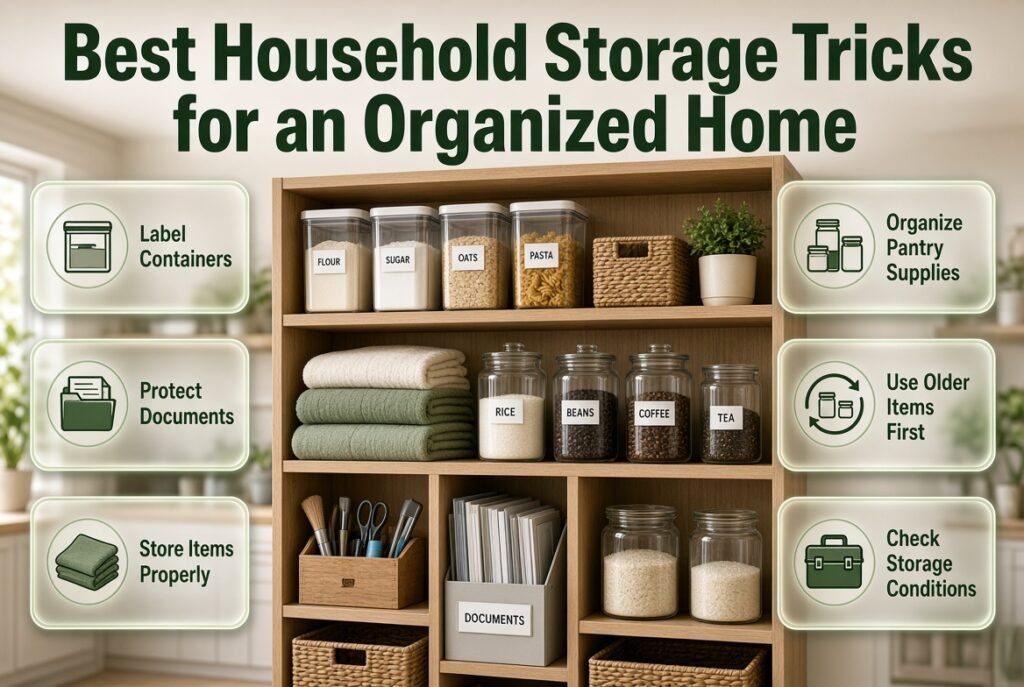
Good storage protects belongings, uses space appropriately, and makes important items easy to locate. The best system is one that suits the contents rather than forcing every item into the same kind of container.
Label containers where it helps
Labels are particularly useful for seasonal decorations, craft materials, spare household supplies, and items stored in opaque boxes.
Use descriptions that are specific enough to identify the contents. A label such as “spare batteries and small torches” is more useful than “miscellaneous.”
Do not rely on labels to replace safe storage practices. Keep medicines, cleaning products, and potentially hazardous materials in suitable secure locations, following their instructions.
Store items according to their needs
Different belongings have different storage requirements.
| Belonging | Storage consideration |
|---|---|
| Important documents | Dry, secure, organized location |
| Seasonal clothing | Clean and completely dry before storage |
| Cleaning supplies | Secure location away from children and pets |
| Tools | Appropriate protection against moisture and damage |
| Pantry ingredients | Suitable containers and required storage conditions |
| Electronics | Manufacturer-recommended conditions and cable organization |
Avoid storing moisture-sensitive belongings in damp areas. Check containers occasionally for signs of damage, pests, or moisture.
Use the first-in, first-out principle
For suitable consumable supplies, place older usable items where they will be selected first and put newer purchases behind them.
This method can help with pantry ingredients, cleaning supplies, and other products, provided their labels and storage requirements are followed.
Never use an item beyond its safety limits merely because it is the oldest. Follow expiry dates, storage instructions, and applicable product guidance.
For more ideas, visit Home Storage Solutions, particularly if you struggle with crowded cupboards or limited storage space.
10. How Can You Make Laundry Less Time-Consuming?
Laundry becomes more manageable when sorting, washing, drying, folding, and putting clothes away are treated as connected steps rather than separate jobs that can remain unfinished indefinitely.
Sort clothes according to care needs
Read garment labels before washing. Separate items when necessary according to colour, fabric type, soil level, and washing requirements.
Avoid assuming that every garment can tolerate the same temperature, detergent, or drying method.
Delicate fabrics, heavily soiled clothing, and items with special care instructions may need different treatment. Follow the washing machine and detergent manufacturers’ guidance.
Establish a realistic laundry routine
Choose laundry days based on the size of your household and how quickly essential clothing is used.
A small household might manage several smaller loads throughout the week, while a larger household may benefit from a more structured schedule.
The important point is to avoid allowing clean laundry to remain in baskets until the next wash cycle creates an even larger pile.
Make putting clothes away easier
Keep everyday clothing in accessible drawers or wardrobe sections. Fold items according to the available space and store similar categories together.
You do not need an elaborate folding system. The goal is to make clothing easy to find without repeatedly searching through piles.
Allow garments to dry appropriately before putting them away, as storing damp clothing can encourage unpleasant odors and mould.
The Laundry Tips and Tricks guide can provide further help with organizing laundry tasks and handling everyday clothing more efficiently.
Quick Tip: Pair a regular laundry task with a natural point in your day, such as starting a suitable load after breakfast or folding dry clothes while watching a programme. Choose a routine that does not interfere with safe machine operation or other responsibilities.
11. How Can You Keep Your Bathroom Clean and Functional?
Bathrooms need regular attention because they combine moisture, frequent contact, plumbing fixtures, and personal-care products in a relatively small space.
Keep frequently used products organized
Store everyday toiletries where they are easy to reach. Keep backup products separate from the items currently in use, and review supplies periodically to identify products that are empty, damaged, or no longer needed.
Use suitable organizers that can be cleaned and dried easily. Avoid overcrowding shelves and counters, particularly around sinks and taps.
Manage moisture and ventilation
After bathing or showering, use the available ventilation system as appropriate. Follow manufacturer guidance for extractor fans and other equipment.
Where practical, dry wet surfaces and hang towels so they can dry properly. Address persistent leaks, recurring condensation, or signs of mould rather than relying solely on repeated surface cleaning.
If mould covers a large area or returns repeatedly, investigate the underlying moisture problem and seek suitable professional advice when needed.
Maintain a safe cleaning routine
Choose products designed for the surface being cleaned. Follow label directions, use appropriate ventilation, and never mix cleaning chemicals.
Store products securely and keep them away from children and pets. Avoid placing electrical appliances where they could come into contact with water.
For more detailed planning advice, explore Bathroom Planning Tips. Thoughtful arrangements can make bathrooms easier to clean, safer to use, and more practical for everyday routines.
12. What Basic Home Maintenance Should You Do Regularly?
Household maintenance involves checking the condition of the home, looking for early signs of problems, and arranging appropriate repairs. It differs from routine cleaning because the objective is to keep building components, fixtures, and equipment functioning properly.
Create a simple maintenance checklist
A basic checklist helps you remember tasks that may otherwise be overlooked.
Consider periodically checking:
- Taps and visible plumbing for leaks.
- Doors and windows for difficult operation or damaged seals.
- Smoke alarms and carbon monoxide alarms, where applicable, according to their instructions.
- Ventilation openings and accessible filters.
- Visible signs of dampness or water damage.
- Household equipment for unusual noises or visible damage.
- Exterior drainage and accessible outdoor areas, where safe.
The frequency of checks depends on the equipment, the property, the local climate, and manufacturer recommendations.
Deal with small warning signs early
A dripping tap, loose handle, unusual appliance sound, or recurring damp patch may indicate a problem that deserves attention.
Record the issue, identify whether it presents an immediate safety concern, and determine whether you can address it safely or need a qualified professional.
Do not attempt electrical, gas, structural, or other high-risk repairs without the necessary qualifications and equipment.
Keep important household information together
Store manuals, warranties, service records, and maintenance dates in an organized place. This information can help you identify the correct replacement parts, follow recommended servicing schedules, and explain previous problems to a professional.
The Basic Home Maintenance Tips guide is a useful next resource for readers who want to establish a more consistent preventive maintenance routine.
Expert Tip: A maintenance checklist should record what needs attention, when it was checked, and what action was taken. This is more useful than a long list of tasks with no dates or follow-up.
13. How Can You Improve Home Comfort Without Spending Much?
A comfortable home supports everyday activities through appropriate lighting, temperature, ventilation, sound management, and practical furniture arrangements. Many improvements begin with adjusting existing resources rather than buying new products.
Make lighting work for each activity
Different rooms and activities require different lighting arrangements. Reading, cooking, cleaning, and relaxing may benefit from different combinations of general and task lighting.
Keep light fixtures clean according to their instructions, replace unsuitable or failed bulbs with compatible options, and avoid placing lamps where cables create trip hazards.
Natural daylight can also make rooms more pleasant when it is available. Use window coverings according to privacy, glare, and temperature needs.
Reduce unnecessary sources of discomfort
Notice what makes a room difficult to use. It may be poor airflow, an uncomfortable chair, cluttered pathways, excessive noise, or a temperature that is difficult to regulate.
Make one practical adjustment at a time. For example, repositioning a chair may improve movement, while rearranging frequently used items may reduce repeated trips across a room.
Avoid blocking vents or making changes that interfere with heating, cooling, or ventilation equipment.
Use soft furnishings thoughtfully
Cushions, curtains, rugs, and bedding can contribute to comfort, but their usefulness depends on the room’s needs and the effort required to maintain them.
Choose washable or otherwise manageable materials where appropriate. Keep rugs secure and avoid arrangements that create tripping hazards.
For further guidance, explore Home Comfort Tips, which can help you consider practical ways to make everyday spaces more enjoyable.
14. How Can You Improve Your Home Without Overspending?
Budget-friendly home improvements begin with identifying a genuine problem and choosing a solution that offers practical value.
A home does not need constant redecorating to remain functional. Sometimes a small repair, a better arrangement, or a careful review of existing belongings makes a greater difference than buying something new.
Prioritize improvements by need
Before spending money, consider three questions:
- Does the issue affect safety or essential household functions?
- Will the proposed improvement solve a recurring problem?
- Is the expected benefit worth the total cost and maintenance involved?
Safety concerns, active leaks, damaged electrical components, and failing essential equipment generally deserve attention before purely decorative changes.
For non-urgent projects, compare the costs of materials, tools, installation, maintenance, and possible professional assistance.
Reuse suitable belongings
Before purchasing organizers or decorations, review what you already own. A suitable tray, existing shelf, or spare container may solve a storage problem without additional spending.
However, reuse should not compromise safety. Food containers should be appropriate for food, electrical components should not be improvised, and storage solutions must support the intended weight.
Make small improvements gradually
You do not need to improve every room at once. Choose one area, establish a budget, complete the task, and evaluate the result before moving to another project.
The Budget-Friendly Home Improvement Tips guide can help you plan practical upgrades while keeping unnecessary expenses under control.
Common Mistake: Buying inexpensive items repeatedly without solving the underlying problem. Several low-cost purchases can become more expensive than one well-planned, durable solution.
15. How Can You Make Home Decorating Easier to Maintain?

Home decorating should support the way you live. A room may look attractive initially but become frustrating if its furniture, fabrics, and accessories are difficult to clean or interfere with everyday activities.
Start with function before decoration
Think about the room’s main purpose, available floor space, storage requirements, lighting, and maintenance needs before choosing decorative details.
For example, a busy family living room may benefit from durable upholstery and accessible storage. A small bedroom may need fewer accessories to preserve usable surface space.
Choose a manageable colour and material scheme
A coordinated selection of colours and materials can make rooms feel more connected. Consider existing furniture, natural light, floor finishes, and the way different materials age or require cleaning.
Before committing to paint or other finishes, test suitable samples in the actual space and review them under different lighting conditions.
Avoid decorating every empty space
Empty space can improve movement and make a room feel less crowded. You do not need to fill every shelf, wall, or corner.
Choose decorative items that contribute something useful or meaningful to the room. Regularly review arrangements that collect dust or interfere with cleaning.
For more ideas, read Home Decorating Tips. Practical decorating choices should improve the experience of living in a room rather than create additional work.
16. How Can Families Share Household Responsibilities Fairly?
Household work becomes easier when responsibilities are visible, realistic, and shared according to people’s abilities and circumstances.
One person should not have to remember every task, notice every problem, and coordinate every other household member’s contribution.
Assign clear responsibilities
Instead of asking everyone to help generally, agree on specific tasks.
For example, one person might prepare dinner while another handles suitable kitchen cleanup. Household members can rotate responsibilities so that the same person is not permanently assigned the least desirable jobs.
Children can participate in age-appropriate activities under suitable supervision, such as putting away their belongings or helping organize their school supplies.
Use a shared checklist
A simple checklist on paper or in an existing digital calendar can make responsibilities easier to track.
Keep it short enough to use consistently. Include recurring essentials and avoid listing every tiny action, as excessive detail can make the system difficult to maintain.
Review the arrangement when circumstances change
Work schedules, school commitments, health needs, and household size can affect how much time each person has available.
Review responsibilities periodically and make adjustments when necessary. Fairness does not always mean dividing every task into identical portions; it means agreeing on a manageable arrangement that considers everyone’s circumstances.
Expert Tip: Focus on completed outcomes rather than expecting everyone to perform tasks in exactly the same way. Shared standards for cleanliness and safety matter more than identical personal routines.
17. How Can You Reduce Household Waste and Use Resources Wisely?
Reducing waste begins with paying attention to what your household buys, uses, stores, and throws away. Small changes can help reduce unnecessary spending while making household management more efficient.
Plan purchases around actual needs
Check existing supplies before shopping. Buying another cleaning product or pantry ingredient when you already have enough creates unnecessary storage demands and increases the risk of products expiring before use.
Keep a short list of essential supplies that need replacing and distinguish them from optional purchases.
Use water and energy thoughtfully
Turn off lights when they are unnecessary, use appliances according to their instructions, and select suitable energy-saving settings where appropriate.
Address dripping taps and report persistent plumbing problems. Use water-efficient methods when they suit the task, but do not compromise hygiene or manufacturer requirements.
Heating and cooling settings should reflect household comfort, health needs, weather conditions, and the capabilities of the equipment.
Handle unwanted belongings responsibly
Donate usable items when appropriate, recycle materials accepted by your local service, and dispose of hazardous products according to local requirements.
Do not put batteries, chemicals, electronics, or other restricted materials into ordinary waste when special handling is required.
These habits make household routines more intentional without demanding major lifestyle changes.
18. What Are the Most Common Household Management Mistakes?
Even well-intentioned household routines can become inefficient when they rely on unrealistic expectations or complicated systems.
Understanding common mistakes helps you choose methods that remain useful over time.
Trying to clean the entire home at once
Why it happens: A large cleaning session can seem like the fastest way to restore order.
Why it becomes a problem: The workload may be too demanding to finish, leaving several areas partially completed.
How to avoid it: Divide the work into rooms or specific tasks. Complete essential areas first and schedule less urgent tasks separately.
Creating storage systems that are difficult to use
Why it happens: Attractive containers and elaborate labels can make organizing seem more effective than it really is.
Why it becomes a problem: If returning an item takes too many steps, people are more likely to leave it out.
How to avoid it: Keep frequently used items accessible, reduce unnecessary sorting steps, and evaluate whether the system works during ordinary daily activities.
Purchasing products before identifying the problem
Why it happens: New cleaning products, furniture, and organizers promise quick improvements.
Why it becomes a problem: The underlying issue may be poor planning, excess belongings, or an inconvenient arrangement rather than a lack of equipment.
How to avoid it: Identify the specific difficulty first. Try rearranging existing items or changing a routine before spending money.
Ignoring maintenance until something fails
Why it happens: Maintenance tasks may not appear urgent while equipment is working.
Why it becomes a problem: Small defects can develop into more disruptive or expensive problems.
How to avoid it: Schedule suitable inspections and follow manufacturer guidance. Arrange qualified help for problems that require specialist knowledge.
Making routines too ambitious
Why it happens: People often design schedules around an ideal day rather than their actual commitments.
Why it becomes a problem: Missed tasks create frustration and make the entire system seem unsuccessful.
How to avoid it: Begin with a few high-value habits, allow flexibility, and add responsibilities only when the existing routine feels manageable.
19. What Household Management Advice Do Professionals Recommend?
Effective household management relies on practical observation, suitable tools, realistic scheduling, and consistent follow-through. The following principles can help you build a routine that works beyond the first few days.
Start with the problems that cause the most disruption
Identify the three household issues that repeatedly waste time or create stress. These might include misplaced keys, overflowing laundry, crowded kitchen counters, or forgotten maintenance tasks.
Choose one issue and create a specific solution. Evaluate whether the change actually reduces the problem before adding more systems.
Keep routines simple and visible
A short checklist is often more useful than an elaborate household planner. Place reminders where they are relevant, such as a shopping list near the place where groceries are checked or a maintenance record with household documents.
Avoid creating duplicate tracking systems that require additional work to update.
Match tools to the task
Use equipment designed for the job, follow operating instructions, and maintain it appropriately. A cleaning tool that is unsuitable for a delicate surface may cause damage instead of improving the result.
The same principle applies to ladders, power tools, household chemicals, and electrical equipment. Choose safe methods and seek professional assistance when a task exceeds your knowledge or capability.
Review results rather than chasing perfection
A successful routine should make the home more functional. If a new system requires constant correction, simplify it.
For example, if a complicated wardrobe arrangement is difficult to maintain, group clothing into fewer categories. If a cleaning schedule consistently takes longer than expected, reduce its scope or divide the work across additional days.
Build flexibility into the system
Household routines must accommodate unexpected visitors, busy workdays, illness, changing weather, and other interruptions.
Prioritize essential hygiene, safety, food preparation, and urgent maintenance when time is limited. Less urgent tasks can wait until the schedule allows.
Expert Tip: The best household system is the one you can return to after a busy week without starting from scratch. Build routines around consistency, not perfection.
20. How Can You Build a Household Routine That Lasts?
A lasting routine develops gradually through repetition, observation, and adjustment. Rather than trying to change every household habit immediately, establish a few useful actions and make them part of your normal day.
Step 1: Identify your biggest daily difficulties
Observe your household for several days. Notice where clutter accumulates, which chores take the longest, and what regularly gets forgotten.
Write down the problems that cause the most inconvenience instead of listing every possible improvement.
Step 2: Select three manageable habits
Choose habits that directly address those difficulties.
For example:
- Return essential belongings to designated places.
- Reset the kitchen after preparing meals.
- Spend a few minutes preparing for the following day.
Keep the habits small enough to complete on ordinary days.
Step 3: Connect each habit to an existing activity
A new habit is easier to remember when it follows something you already do.
You might tidy the kitchen after dinner, review your shopping list before leaving home, or prepare tomorrow’s essentials after checking your calendar.
This reduces the need to remember an entirely separate task.
Step 4: Review the results after two weeks
Ask whether the routine has reduced mess, saved time, or made an area easier to use.
If a habit is difficult to maintain, determine whether the problem is its timing, complexity, or lack of practical benefit. Adjust it instead of assuming that you need more discipline.
Step 5: Add new habits gradually
Once the first few habits feel natural, introduce another routine if it solves a genuine problem.
This gradual approach creates a household system that can grow with your needs without making every day feel like a checklist.
What Are the Best Everyday Household Tips and Tricks for Keeping a Home Organized?
The best everyday household tips and tricks focus on making daily tasks easier rather than trying to keep every room perfectly arranged. Start by giving frequently used belongings a designated place, putting items away after use, and spending a few minutes each day resetting the rooms you use most. These simple habits help prevent clutter from accumulating and reduce the time needed for larger cleaning sessions.
A practical household organization routine should include:
Create designated storage areas: Keep keys, shoes, bags, chargers, and other daily essentials in convenient locations.
Follow a daily reset routine: Return misplaced belongings, clear frequently used surfaces, and manage dishes before the mess becomes overwhelming.
Organize by frequency of use: Store everyday items within easy reach and keep seasonal or rarely used belongings in appropriate secondary storage.
Review clutter regularly: Check drawers, cupboards, and shelves to identify items that no longer serve a useful purpose.
The most important principle is consistency. A simple system that fits your daily routine is more effective than a complicated organizing method that becomes difficult to maintain.
How Can I Keep My House Clean Every Day Without Spending Too Much Time on Chores?
Maintaining a clean home becomes more manageable when you divide household chores into smaller tasks instead of leaving everything until the weekend. Daily cleaning should focus on essential activities, such as managing dishes, wiping appropriate kitchen surfaces, removing rubbish, and keeping frequently used rooms functional. More detailed cleaning can be scheduled throughout the week according to your household’s needs.
A practical approach is to connect small cleaning tasks with activities you already perform. For example, tidy the kitchen after preparing dinner, put dirty clothes in the hamper when changing, and return living room items to their proper places before bedtime.
To make your routine more efficient:
Prioritize high-use areas: Focus on the kitchen, bathroom, and frequently used living spaces.
Clean small messes promptly: Address suitable spills and food residue before they become harder to remove.
Use a weekly schedule: Assign different cleaning tasks to different days rather than attempting everything at once.
Keep suitable supplies accessible: Store essential cleaning tools safely so you can start a task without unnecessary preparation.
Adjust your expectations: Some days require more attention than others, and less urgent tasks can wait.
The goal is to prevent cleaning from becoming an overwhelming project. A realistic routine that you can maintain consistently will generally serve your household better than an ambitious schedule that is difficult to follow.
What Are the Most Effective Ways to Save Money on Everyday Household Expenses?
One of the most effective ways to reduce household expenses is to manage what you already own before buying additional products. Disorganized cupboards, forgotten pantry ingredients, duplicate cleaning supplies, and unnecessary home accessories can lead to avoidable spending. Reviewing existing supplies before shopping helps you make more informed decisions and use available resources efficiently.
You can also reduce unnecessary costs by addressing minor maintenance concerns promptly and following the recommended care instructions for household appliances, furniture, and other belongings.
Consider these practical strategies:
Plan purchases in advance: Check your kitchen cupboards, refrigerator, and household supplies before preparing a shopping list.
Reduce food waste: Plan meals around suitable ingredients you already have and store food according to safety guidance.
Repair when appropriate: Compare the cost, safety, and expected lifespan of repairing an item with the cost of replacing it.
Avoid unnecessary organizers: Rearrange existing storage before purchasing new containers, shelves, or accessories.
Use household resources thoughtfully: Turn off unnecessary lights and use water and energy efficiently without compromising hygiene or comfort.
Maintain essential equipment: Follow manufacturer recommendations to help keep appliances and fixtures in suitable working condition.
Saving money does not mean choosing the cheapest option every time. Durable products, appropriate maintenance, and careful purchasing decisions can provide better long-term value than repeatedly buying inexpensive items that do not solve the original problem.
How Can I Organize a Small Home and Make the Most of Limited Space?
Organizing a small home requires a balance between practical storage and comfortable movement. The objective is not to fill every available corner with belongings but to make essential items accessible while keeping rooms functional. Start by identifying what you use regularly, removing unnecessary clutter, and arranging furniture around the activities that take place in each room.
Vertical storage, multifunctional furniture, and clearly defined storage areas can help make limited space more useful. However, every solution should suit the room’s dimensions and the weight and type of items being stored.
Use these methods to improve a small home’s functionality:
Use vertical space safely: Consider suitable wall shelves and tall storage units, using appropriate fixings and respecting weight limits.
Choose multifunctional furniture: Furniture with built-in storage or more than one practical use can reduce the need for separate pieces.
Keep pathways clear: Avoid overcrowding entrances, doorways, and frequently used areas with furniture or storage containers.
Store items near where they are used: Keep kitchen essentials near preparation areas and everyday belongings close to their normal activity zones.
Review belongings before buying storage: Reducing unnecessary items often creates more useful space than adding another container.
Measure before purchasing furniture: Check room dimensions, drawer access, door swings, and walking space to avoid unsuitable purchases.
A small home does not need to feel crowded. When storage reflects your daily habits and every room has a clear purpose, even limited space can become easier to maintain and more comfortable to use.
How Can I Create a Simple Household Routine That Is Easy to Maintain Long-Term?
A successful household routine should fit your actual schedule, available energy, and living arrangements. Many routines fail because they include too many tasks, rely on unrealistic expectations, or leave one person responsible for remembering everything. A more practical approach is to begin with a few habits that solve recurring problems and gradually add responsibilities when the original routine becomes manageable.
Start by observing which household tasks cause the most inconvenience. You might notice that laundry regularly piles up, kitchen counters become cluttered, or essential belongings are difficult to find. Choose one or two problems and establish a specific action to address each one.
Follow these steps to build a sustainable routine:
Choose three manageable habits: For example, reset the kitchen after dinner, return daily essentials to their designated places, and prepare necessary belongings for the following morning.
Connect tasks to existing activities: Use familiar parts of your day as reminders to complete household responsibilities.
Create a short checklist: Record essential cleaning, laundry, shopping, and maintenance tasks without making the list unnecessarily complicated.
Share responsibilities clearly: Agree on who handles specific tasks and adjust the arrangement according to household members’ abilities and schedules.
Review progress regularly: Identify which habits are helping and which need to be simplified or rescheduled.
Allow flexibility: Prioritize safety, hygiene, and urgent maintenance when time is limited, and postpone less important tasks when necessary.
The best household routine is not the one that includes the most tasks. It is the one that helps you maintain a functional, comfortable home without creating unnecessary stress. Small, repeatable habits are more likely to become lasting improvements than major changes that are difficult to sustain.
Conclusion
Managing a home becomes much easier when you focus on practical habits rather than trying to make everything perfect. The most effective everyday household tips and tricks involve keeping frequently used items organized, maintaining a simple cleaning routine, managing laundry efficiently, reducing unnecessary clutter, and taking care of basic home maintenance before small problems become bigger concerns.
You do not need expensive products or complicated schedules to create a more comfortable living environment. Small changes, such as planning household purchases, organizing storage according to your daily needs, and sharing responsibilities fairly, can save time, reduce unnecessary expenses, and make everyday tasks less stressful.
Start by identifying the household problems that affect your daily routine most. Introduce one or two manageable improvements, evaluate their results, and gradually build habits that work for your household. Consistency matters more than perfection, and a realistic routine is easier to maintain over the long term.
For more practical guidance on cleaning, organization, storage, decorating, and home maintenance, explore the helpful resources available at Heartomenal. With thoughtful planning and simple daily habits, you can create a home that is organized, functional, welcoming, and easier to enjoy every day.
Leave a Reply