
Introduction
Home Renovation Budgeting | Renovating a home can be exciting until the bills start adding up. You might begin with plans to repaint a few rooms, replace outdated flooring, or improve your kitchen, only to discover that labor, materials, repairs, and unexpected expenses cost more than you expected. Without a clear financial plan, even a small renovation can become difficult to manage.
Home renovation budgeting helps you understand how much a project may cost, where your money should go, and how to avoid unnecessary spending without sacrificing quality. Whether you’re planning a single-room makeover or a complete house renovation, a realistic budget gives you a practical starting point and helps you make better decisions at every stage.
For homeowners looking for practical ways to create a more organized and comfortable living space, Heartomenal offers a useful starting point for exploring home improvement ideas alongside a carefully planned renovation budget.
This guide explains how to estimate renovation expenses, divide your budget into manageable categories, compare contractor quotations, plan a contingency fund, prioritize essential repairs, and monitor spending until the project is complete. You’ll also learn which budgeting mistakes commonly cause problems and how to build a financial plan that suits your home, priorities, and available resources.
What Is Home Renovation Budgeting, and Why Does It Matter?
Home renovation budgeting is the process of estimating, organizing, and tracking the money required to improve a property’s condition, appearance, functionality, or comfort. It includes construction materials, professional labor, design work, permits where required, demolition, delivery, finishing, and unexpected repairs.
A renovation budget is more than a list of prices. It is a decision-making tool that helps you determine which improvements are affordable, which should be completed first, and which can wait until additional funds become available.
For example, suppose you want to update your kitchen. You might initially consider cabinets, countertops, and lighting. However, the complete project may also involve plumbing adjustments, electrical work, wall preparation, flooring, installation, and waste removal. A budget that includes only the visible upgrades will underestimate the real cost.
A well-prepared renovation budget helps you:
- Set a realistic spending limit before construction begins.
- Identify essential repairs before optional improvements.
- Compare contractor quotations on a consistent basis.
- Avoid spending too much on decorative features.
- Prepare for unexpected problems discovered during construction.
- Track payments and identify cost increases early.
- Make informed decisions when plans or prices change.
The main objective is not to spend as little as possible. It is to use your available money wisely while completing the work that matters most.
How Do You Set a Realistic Home Renovation Budget?
The first step is to establish how much you can comfortably afford to spend. Your budget should reflect your financial situation, the condition of your property, the type of renovation, and the amount of uncertainty involved.
Start with your available funds rather than choosing expensive upgrades and trying to make the numbers work afterward.
Step 1: Establish Your Maximum Spending Limit
Review your savings, expected project expenses, and ongoing household commitments. Decide how much you can allocate to renovation without putting essential bills, regular expenses, or emergency savings at risk.
If you intend to use financing, consider the full repayment cost, interest, fees, and payment schedule. Avoid relying on borrowing that has not been approved or income that you cannot confidently expect.
Your maximum budget should represent a realistic financial limit, not simply the amount you would like to spend.
Example: If you have $12,000 available for a renovation, you should not automatically commit the entire amount to materials and contractor payments. Part of that money may need to remain available for unexpected repairs and other essential expenses.
Pro Tip: Set your financial limit before visiting showrooms or selecting premium finishes. This reduces the temptation to increase your budget because an attractive product costs more than you originally planned.
Step 2: Decide What Needs to Be Renovated
Walk through your home and list the areas that require attention. Separate visible improvements from maintenance problems that could affect the building’s safety or condition.
A simple inspection list might include:
- Damaged flooring or deteriorating wall finishes.
- Leaking taps, pipes, or other plumbing problems.
- Outdated lighting or electrical installations.
- Poor ventilation or signs of moisture.
- Worn cabinets, doors, or window fittings.
- Insufficient storage or an inefficient room layout.
- Decorative features that you would like to improve.
Do not assume every problem needs to be fixed immediately. Instead, determine its urgency, likely consequences, and the professional assessment it may require.
Active leaks, suspected structural problems, and unsafe electrical installations deserve particular attention because delaying appropriate repairs can create additional costs or safety concerns.
Step 3: Divide Improvements Into Priority Levels
Once you have listed the work, organize it into three groups.
| Priority | Type of work | Budget decision |
|---|---|---|
| Essential | Safety concerns, active leaks, necessary structural repairs | Address first |
| Important | Worn flooring, inefficient storage, outdated but functional fixtures | Plan according to available funds |
| Optional | Decorative panels, premium fittings, cosmetic upgrades | Adjust or postpone |
This system gives you flexibility when estimates exceed your initial expectations.
For example, you might decide to repair a leaking bathroom pipe and replace damaged flooring now while postponing decorative wall panels until a later stage.
The benefit is simple: your renovation remains focused on the improvements that provide the greatest practical value.
Step 4: Research Local Material and Labor Prices
Renovation costs vary according to location, property condition, material availability, project size, and contractor experience. A price estimate from another city may not accurately reflect what you will pay.
Request current prices for the materials and services your project requires. Compare similar products and make sure quotations include the same specifications.
Check whether the quoted amount covers:
- Product cost and required quantities.
- Delivery and transportation.
- Installation and preparation.
- Applicable taxes and fees.
- Removal of existing materials.
- Cleanup and disposal.
- Any specialist work required.
A lower advertised price does not necessarily mean a lower total cost. The complete installed price is usually more useful for budgeting than the purchase price alone.
Step 5: Check Whether the Project Fits Your Budget
After gathering estimates, add the expected costs and compare the total with your available funds.
If the project exceeds your limit, reconsider the scope before construction begins. You might retain serviceable cabinets, select a more affordable finish, complete the renovation in phases, or postpone optional work.
Do not solve an affordability problem by removing essential safety work or assuming that no unexpected costs will arise.
What Expenses Should a Home Renovation Budget Include?
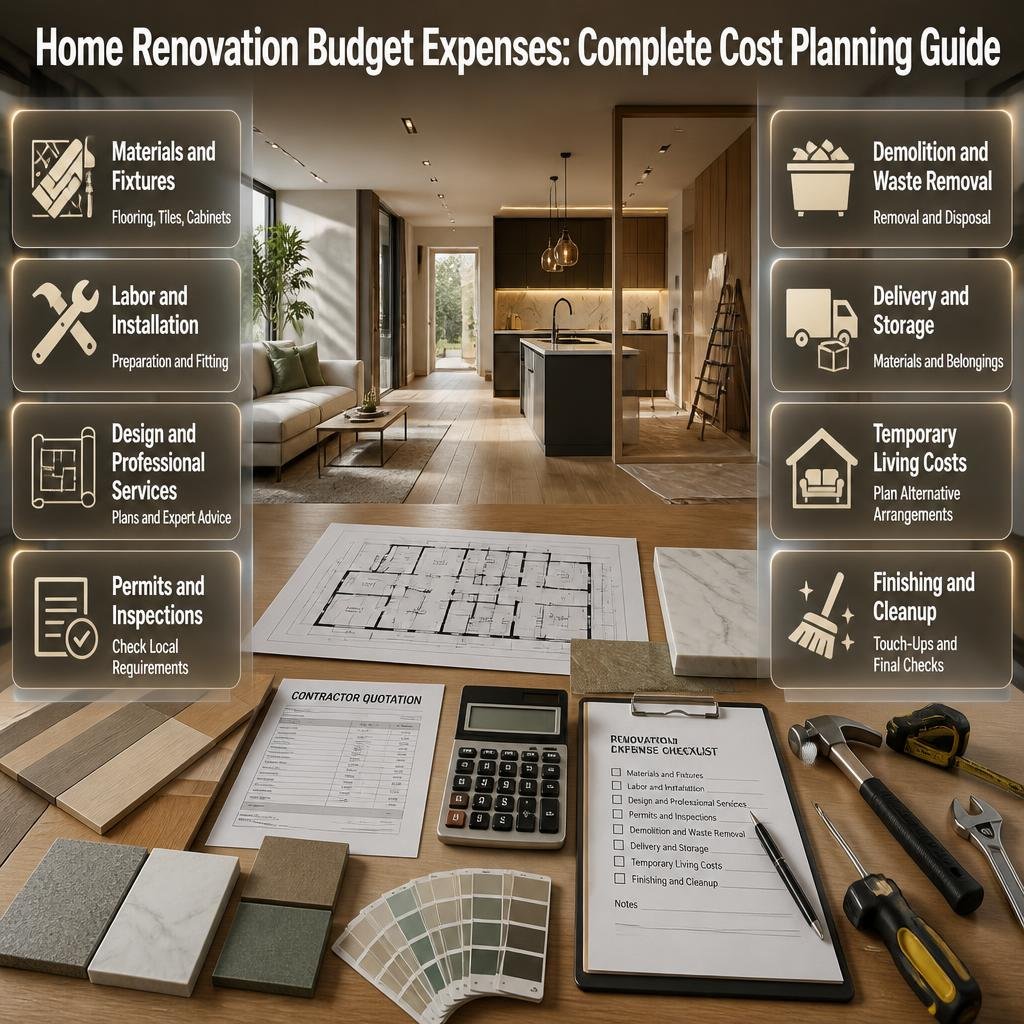
A reliable budget covers the complete renovation process, from initial assessment to final cleanup. Many cost overruns happen because homeowners calculate the price of visible materials but overlook the work required to prepare, install, and finish them.
Materials and Fixtures
Materials often represent a substantial share of the total project cost. Depending on the renovation, they may include paint, flooring, tiles, timber, drywall, cabinets, countertops, windows, doors, lighting, pipes, and bathroom fittings.
Choose products according to their purpose, durability, maintenance requirements, and compatibility with the property.
For example, flooring in a frequently used entrance should be selected for suitable durability and ease of maintenance rather than appearance alone.
Before ordering materials, confirm measurements, quantities, specifications, delivery dates, and return policies. Incorrect dimensions or incompatible products can create waste and additional labor expenses.
Labor and Installation
Labor costs depend on the type of work, the number of tradespeople required, the project’s complexity, and the time needed to complete it.
A quotation should explain which tasks are included. Demolition, surface preparation, installation, finishing, and cleanup may be charged separately.
Ask how the contractor calculates additional work and whether the estimate assumes particular working hours or site conditions.
When multiple trades are involved, coordinate their schedules. Poor sequencing can force workers to return, delay other tasks, or damage previously completed work.
Design and Professional Services
Some projects require architects, designers, structural specialists, engineers, or other qualified professionals.
These services may be particularly important when changing a room layout, removing walls, extending a building, or modifying major plumbing and electrical systems.
Confirm which services are necessary before setting your final budget. Also establish whether drawings, inspections, revisions, and follow-up visits are included in the quoted fees.
Permits and Inspections
Local rules determine whether a renovation requires permits, inspections, or formal approval. Requirements may depend on the type of work, the building, and the property’s location.
Check these obligations before construction begins rather than assuming that every interior improvement can proceed without approval.
Include applicable fees and clarify who will arrange the necessary documentation.
Demolition and Waste Removal
Removing old cabinets, tiles, flooring, fixtures, or damaged materials may require labor, transportation, protective coverings, and disposal services.
Budget for the removal process separately when it is not included in the contractor’s estimate.
Older properties may also contain materials that require specialist assessment or handling. If you suspect a hazardous material, arrange appropriate professional advice before disturbing it.
Delivery, Storage, and Temporary Living Costs
Material delivery charges can increase when products are bulky, heavy, or delivered in several separate orders. Some projects may also require temporary storage for furniture or household belongings.
If renovation work makes your kitchen, bathroom, or bedroom temporarily unusable, consider whether you will need alternative arrangements.
Depending on the circumstances, your budget might include temporary accommodation, transportation, additional meals, storage, or the cost of protecting furniture and belongings.
Finishing and Final Cleanup
The final stage may involve paint touch-ups, sealant, trim, hardware adjustments, cleaning, and correcting minor defects.
These expenses are easy to overlook because they occur after the main construction work. However, leaving them out can create an unfinished result or require additional money after the contractor has completed the primary tasks.
Before approving the final budget, review the entire sequence of work and identify expenses that occur at the beginning, during construction, and at completion.
How Much Contingency Should You Include in a Renovation Budget?
A contingency fund is money reserved for unexpected expenses that arise during a renovation. A common starting point is 10%–20% of the estimated project cost, with a larger allowance potentially appropriate for older properties, structural changes, or projects where hidden conditions are difficult to assess.
The right amount depends on how much you know about the property, how clearly the work has been defined, and whether a professional inspection has identified potential problems.
Calculate Your Contingency Fund
Use this straightforward formula:
Contingency fund = Base renovation estimate × Contingency percentage
Suppose your planned renovation has a base estimate of $10,000 and you choose a 15% contingency allowance.
| Budget calculation | Amount |
|---|---|
| Base renovation estimate | $10,000 |
| Contingency at 15% | $1,500 |
| Total planned funding | $11,500 |
This example assumes the contingency is additional to the base project estimate.
The $1,500 reserve should remain available for genuine unexpected expenses rather than being treated as money for optional upgrades.
When Might You Need a Larger Reserve?
Some projects involve more uncertainty than others.
You may need a larger contingency when:
- The house is older and its maintenance history is incomplete.
- Existing plumbing or electrical installations may need attention.
- Walls, ceilings, or floors will be opened during construction.
- Structural alterations are planned.
- Material availability or delivery schedules are uncertain.
- The original scope depends on findings that cannot be confirmed until work begins.
A professional inspection can help identify risks, but it cannot always reveal every concealed problem.
Expert Tip: Keep your contingency separate from your normal project spending. If an unexpected repair costs $400, record the reason, update the remaining reserve, and check whether the total project still fits your spending limit.
What Should You Do If the Contingency Fund Runs Low?
First, identify why the reserve has been used. A necessary repair discovered during demolition is different from a decorative upgrade added after construction starts.
Ask the contractor to explain the problem, provide a written estimate for the proposed solution, and identify whether delaying the work would create further damage or a safety concern.
If the additional expense is essential, review optional parts of the project that could be postponed. Avoid covering the shortfall with unplanned borrowing without carefully assessing affordability.
How Do You Estimate Renovation Costs Room by Room?
Room-by-room budgeting helps you see how much each part of your home will require. It also makes it easier to compare priorities, revise the project scope, and complete work in stages if your available funds are limited.
Instead of assigning one rough figure to the entire house, create a separate estimate for each room and include the labor, materials, preparation, installation, and finishing work it requires.
Kitchen Renovation Budget
Kitchen renovations can involve cabinets, countertops, appliances, flooring, lighting, plumbing, electrical work, and wall finishes.
Before choosing materials, decide whether you need a complete redesign or simply want the existing kitchen to work better.
Keeping the current layout can reduce costs when it avoids moving plumbing connections, drainage, gas lines, or electrical points. However, the existing installations should still be assessed if they are damaged or unsuitable.
Consider these budgeting priorities:
- Repair or replace damaged cabinets before selecting decorative accessories.
- Measure countertops, cupboards, and appliance spaces carefully.
- Include installation and delivery in the material estimate.
- Confirm electrical and plumbing requirements before ordering fixtures.
- Allow for surface preparation and cleanup.
A kitchen that needs better storage may not require a complete replacement. Adjusting shelves, repairing cabinet doors, or replacing worn handles could address the main problem at a lower cost.
Bathroom Renovation Budget
Bathroom projects need careful planning because several systems operate within a small area. Costs may include plumbing, waterproofing, tiles, ventilation, lighting, sanitary fittings, and installation.
Waterproofing and drainage deserve particular attention. Cutting costs in these areas may result in moisture damage and expensive repairs later.
Before preparing the budget, determine whether the existing layout can remain. Moving a toilet, shower, or basin may require additional plumbing work and changes to flooring or walls.
Include the following items in your estimate:
- Removal of existing tiles and fixtures.
- Plumbing inspection and necessary repairs.
- Waterproofing and appropriate curing time.
- Tiles, adhesives, grout, and installation labor.
- Shower fittings, taps, basins, and other fixtures.
- Ventilation, lighting, and final sealing.
For a more organized approach to this specific room, see Bathroom Planning Tips. Use the guidance to think through layout, practical requirements, and the sequence of decisions before finalizing your bathroom budget.
Bedroom Renovation Budget
Bedroom improvements may involve paint, flooring, wardrobes, lighting, window coverings, doors, and storage.
Begin by identifying what actually needs to change. If the room has good flooring and functional furniture, you may achieve a noticeable improvement through repainting, better storage, or updated lighting.
Built-in wardrobes can improve organization, but their price depends on dimensions, materials, internal fittings, and installation requirements. Obtain measurements and a detailed quotation before committing to a design.
Avoid buying furniture before confirming the finished room dimensions, especially when flooring or wall treatments will change.
Living Room Renovation Budget
Living rooms often offer several opportunities to improve comfort without undertaking major construction.
Potential expenses include repainting, flooring, lighting, curtains, furniture repairs, shelving, and electrical adjustments.
Prioritize changes that solve a real problem. For example, improved lighting may make a room more useful, while reorganizing existing furniture may create a better layout without requiring new purchases.
If your main goal is a more attractive room, compare the cost of repainting, refinishing existing furniture, and replacing decorative features before considering a complete makeover.
You can explore Home Decorating Tips for ideas that complement a practical renovation budget.
Roof, Exterior, and Structural Renovations
Exterior and structural projects require a different approach because the work can affect the building’s safety, weather protection, and long-term condition.
Roof repairs, exterior wall treatment, extensions, and structural modifications may require specialist assessments, permits, inspections, access equipment, and more complex scheduling.
Do not rely on a cosmetic inspection when there are signs of structural movement, persistent water entry, or other significant damage. Arrange an appropriate professional assessment before committing to a final estimate.
For these projects, budget according to the actual scope of work rather than assuming that a simple price per square foot will capture every expense.
Use a Room-by-Room Budget Worksheet
The following example shows how a homeowner might divide an illustrative $10,000 base renovation budget.
| Project area | Estimated allocation |
|---|---|
| Kitchen | $3,000 |
| Bathroom | $2,000 |
| Bedroom | $1,200 |
| Living room | $1,300 |
| Necessary repairs and preparation | $1,500 |
| Delivery, disposal, and finishing | $1,000 |
| Base estimate | $10,000 |
These figures are examples, not recommended market prices. Actual allocations should be based on your property, local quotations, material specifications, and project requirements.
If you also reserve 15% of the base estimate for contingency, your total planned funding becomes $11,500.
How Do You Compare Contractor Quotes and Control Labor Costs?

Contractor quotations help you estimate the cost of completing the renovation, but comparing prices properly requires more than looking at the final figure.
Two contractors may offer different prices because they have included different materials, preparation tasks, installation methods, or finishing requirements. A lower quotation may leave important work outside the agreed scope.
Request Itemized Quotations
Ask each contractor to describe the work in enough detail for you to understand what you are paying for.
A useful quotation should identify:
- The rooms and areas covered by the work.
- The tasks included and excluded.
- Material types, quantities, and specifications.
- Labor charges and expected working duration.
- Permit and inspection responsibilities, where applicable.
- Delivery, waste removal, and cleanup arrangements.
- Payment milestones and additional-work procedures.
- Relevant warranties and completion requirements.
Provide the same project description to each contractor. This makes it easier to compare quotations on a like-for-like basis.
Check the Contractor’s Experience
Look for relevant experience with the type of renovation you are planning. Ask about previous projects, references, appropriate credentials, insurance, and any local licensing requirements.
A contractor who regularly handles bathroom waterproofing may be a better fit for that work than someone whose experience is mainly decorative painting.
Specialist electrical, plumbing, gas, and structural work should be assessed according to applicable local requirements.
Understand Labor-Only and Full-Service Arrangements
Some contractors charge for labor while the homeowner purchases materials. Others provide materials and labor under one agreement.
| Arrangement | Potential advantage | Possible drawback |
|---|---|---|
| Labor only | Greater control over material purchases | You may need to coordinate deliveries and quantities |
| Materials and labor | Simpler coordination through one contractor | Material allowances and markups need careful review |
| Separate specialist contractors | Direct control over specialist appointments | Scheduling and responsibility may become more complicated |
Neither approach is automatically cheaper. Compare the complete cost, time commitment, product quality, and responsibilities before deciding.
Agree on Payment Terms in Writing
Your contract should clearly explain the payment schedule, project scope, expected timeline, and procedures for changes.
Avoid paying the entire project cost before the agreed work has been completed. Instead, use a payment arrangement that is appropriate to the contract, local rules, and actual project milestones.
Keep copies of receipts, invoices, written approvals, and proof of payments.
How Should You Handle Additional Work?
Suppose a contractor discovers a damaged pipe after removing a bathroom cabinet. Ask for a written explanation of the problem, the repair options, the additional cost, and the likely effect on the schedule.
Do not approve a significant variation simply because the contractor says it will be inexpensive. Establish the cost before the extra work proceeds, except where an immediate action is necessary to prevent further harm and the applicable agreement permits it.
This process protects both parties by creating a clear record of what changed and why.
How Can You Reduce Home Renovation Costs Without Sacrificing Quality?
The most effective savings often come from reducing unnecessary work, making decisions early, and choosing materials carefully. Cheap products are not always economical if they require frequent repairs or replacement.
Retain Functional Features
If existing cabinets, doors, windows, flooring, or fixtures remain safe and serviceable, consider whether they can be repaired or refinished.
For example, repainting sound cabinets and replacing damaged handles may improve the appearance of a kitchen without the cost of new cabinetry.
Reuse should be based on condition, compatibility, and expected lifespan. Do not retain defective installations merely to reduce the immediate bill.
Avoid Moving Plumbing and Electrical Points Without a Clear Reason
Changing the location of sinks, toilets, cookers, and electrical connections can increase labor and material requirements.
If the current layout works, keeping it may help control costs. If it creates serious functional problems, compare the long-term benefits of redesigning it against the additional expense.
Any changes to major systems should be assessed by appropriately qualified professionals.
Compare Materials by Durability
Evaluate the purchase price alongside expected maintenance, cleaning requirements, suitability, and replacement frequency.
A product that costs slightly more initially may be more economical if it lasts longer and is easier to maintain.
Ask suppliers about specifications, warranties, installation requirements, and whether replacement products will remain available.
Plan Purchases and Delivery Dates
Prepare a materials list before ordering. Check measurements, quantities, availability, and delivery arrangements with the contractor.
Purchasing materials too early can create storage and damage risks. Purchasing them too late can delay installation or lead to rushed substitutions.
Coordinate orders with the construction schedule so products arrive when the site is ready for them.
Avoid Late Design Changes
Changes made after materials have been ordered or installed can create waste, extra labor, and delivery charges.
Set decision deadlines for major items such as flooring, cabinets, tiles, bathroom fittings, and lighting.
If a change becomes necessary, review its full financial and scheduling impact before approving it.
For further ideas that focus on practical improvements rather than unnecessary spending, explore Budget Friendly Home Improvement Tips.
How Do You Track Renovation Spending From Start to Finish?
A renovation budget is only useful if you update it as the project progresses. Recording expenses regularly helps you identify overspending while there is still time to make sensible adjustments.
You can use a spreadsheet, a notebook, or a budgeting application. The method matters less than maintaining accurate records of estimates, payments, invoices, and approved changes.
Create a Renovation Expense Tracker
Include these columns in your budget sheet:
| Expense | Original estimate | Actual cost | Difference |
|---|---|---|---|
| Materials | $2,500 | $2,650 | +$150 |
| Labor | $2,000 | $1,900 | -$100 |
| Fixtures | $900 | $1,050 | +$150 |
| Waste removal | $250 | $200 | -$50 |
| Total | $5,650 | $5,800 | +$150 |
The figures are illustrative. A positive difference means the expense exceeded its estimate, while a negative difference means it cost less than expected.
When a category goes over budget, investigate the reason. An increase caused by a necessary repair may be justified, while an unplanned decorative purchase may be avoidable.
Review Your Budget Every Week
During active construction, review the budget at least weekly and whenever a major purchase or change is proposed.
Check:
- How much money has already been spent.
- Which invoices and payments are outstanding.
- Whether upcoming material orders fit the remaining budget.
- Whether additional work has been approved.
- How much contingency remains.
- Whether the project still fits your financial limit.
A regular review helps you identify problems early instead of discovering them when the renovation is nearly complete.
Keep Renovation Documents Together
Save quotations, receipts, contracts, warranties, product specifications, permits, and inspection records in one organized location.
These documents help you check charges, confirm agreed specifications, and identify the correct products when future repairs are required.
If several contractors are involved, label records by room or work category. This simple habit makes it easier to locate the information you need.
What Are the Most Common Home Renovation Budgeting Mistakes?
Many budget problems begin before construction starts. Understanding these mistakes can help you avoid unnecessary expenses and protect the quality of your renovation.
Underestimating the Complete Project Cost
Homeowners sometimes calculate the price of their preferred materials without including installation, preparation, delivery, demolition, or finishing.
The result is a budget that looks affordable on paper but does not cover the full project.
How to avoid it: Estimate each stage separately and review the complete scope before agreeing to a spending limit.
Choosing a Contractor Based Only on Price
A low quotation can appear attractive, particularly when funds are limited. However, missing tasks, unsuitable materials, and unclear exclusions can increase the final cost.
How to avoid it: Compare itemized quotations, specifications, relevant experience, and contract terms. Choose the proposal that offers the best overall value for your requirements.
Spending the Contingency on Upgrades
A contingency fund is intended for unexpected expenses. Using it for optional improvements leaves less money available if genuine problems arise.
How to avoid it: Keep contingency funds separate and approve optional upgrades only when the remaining budget can comfortably support them.
Making Too Many Changes During Construction
Changing tile designs, cabinet dimensions, fixtures, or room layouts after work begins can create additional material and labor costs.
How to avoid it: Finalize important selections before construction, and require a written cost assessment for significant changes.
Ignoring the Condition of Older Installations
Covering damaged surfaces without investigating the underlying cause can lead to repeat work. For example, repainting a wall will not resolve a continuing moisture problem.
How to avoid it: Investigate the cause of visible damage and obtain professional advice when necessary before paying for cosmetic repairs.
Forgetting Daily Household Disruption
Renovations can affect cooking, washing, sleeping, and working at home. If these effects are not considered, you may incur unexpected costs for meals, transport, storage, or alternative accommodation.
How to avoid it: Plan how your household will function during each stage and include realistic disruption costs where necessary.
Failing to Document Agreements
Verbal discussions can create confusion about what a contractor promised, which materials were selected, and how much additional work should cost.
How to avoid it: Keep written records of the original agreement, approved changes, payment milestones, and outstanding work.
What Do Professionals Recommend for Better Renovation Budgeting?

Professional renovation planning relies on clear specifications, accurate measurements, sensible sequencing, and regular communication. Homeowners can apply these principles even when managing a relatively small project.
Inspect Before Ordering Materials
Determine what needs to be repaired and measure the relevant areas before purchasing supplies.
For flooring, confirm the actual area and allow for an appropriate quantity of additional material based on the layout and installation method. For cabinets and fixtures, check dimensions and service connections before placing an order.
Buying materials before the requirements are clear can lead to unsuitable purchases and unnecessary returns.
Complete Hidden Work Before Finishes
Where the project requires plumbing, electrical, structural, or waterproofing work, coordinate these tasks before installing finishes that could need to be removed later.
For example, repairing a pipe after new bathroom tiles have been installed may require damaging the completed surface.
Follow the appropriate construction sequence and ensure that necessary inspections or checks are completed before covering relevant installations.
Set Clear Specifications
Avoid vague descriptions such as standard tiles or good-quality paint when preparing quotations.
Identify the required dimensions, finish, product type, quantities, and installation expectations. This helps contractors price the same work and reduces the risk of unexpected substitutions.
If you are still deciding between products, establish a realistic allowance and understand how selecting a more expensive option will affect the budget.
Coordinate Contractors and Deliveries
Create a basic schedule that shows when each trade is expected to work and when essential materials should arrive.
Poor coordination may leave workers waiting for materials or cause completed surfaces to be damaged by later work.
Allow realistic time for delivery, preparation, drying, inspections, and corrections. Do not assume every stage can be completed immediately after the previous one.
Inspect Work Before Final Payment
Compare completed work with the written agreement. Check visible finishes, agreed installations, doors, windows, fixtures, and any specified testing or inspections.
Document defects and follow the contract’s procedure for correcting them. Keep relevant records for future maintenance and warranty claims.
For broader planning guidance, read House Renovation Planning. You can also explore Home Tips & Ideas for related ways to organize and improve your living space.
How Can You Create a Home Renovation Budget Step by Step?
If you are starting from scratch, use this sequence to turn your renovation ideas into a practical financial plan.
- List the work. Identify every repair, replacement, and improvement you want to complete.
- Set priorities. Separate essential repairs from important upgrades and optional decorative changes.
- Assess the property. Inspect visible conditions and arrange specialist assessments where appropriate.
- Collect quotations. Request current material prices and comparable contractor estimates.
- Calculate the base cost. Include labor, materials, fees, delivery, demolition, and finishing.
- Add contingency. Reserve an appropriate amount for uncertain or unexpected expenses.
- Check affordability. Make sure the total fits your available funding and household commitments.
- Finalize the scope. Confirm materials, responsibilities, payment terms, and the proposed schedule.
- Track spending. Record actual costs and review the remaining budget regularly.
- Inspect and close the project. Check the completed work, address outstanding defects, and organize all documents.
This process gives you a structured way to manage decisions without losing sight of your financial limit
How Do You Create a Realistic Home Renovation Budget Without Overspending?
Creating a realistic home renovation budget starts with understanding the full scope of your project before spending money on materials or hiring contractors. Estimate the cost of labor, materials, demolition, delivery, permits, installation, and finishing work. Then compare the total with the amount you can comfortably afford without affecting essential household expenses.
A common budgeting problem occurs when homeowners focus on visible improvements, such as new cabinets, flooring, or decorative finishes, while overlooking hidden repairs and additional labor. A detailed estimate helps identify these expenses before construction begins.
Practical steps to follow:
List all planned repairs and improvements, separating essential work from optional upgrades.
Obtain itemized quotations from contractors and compare similar materials and services.
Set aside a contingency fund, commonly around 10%–20% of the estimated project cost, depending on the property’s condition and renovation complexity.
Track actual expenses regularly and revise the plan when necessary.
The goal is to create a budget that covers the complete project rather than simply choosing a figure that looks affordable at the beginning.
How Much Contingency Money Should You Set Aside for a Home Renovation?
A contingency fund is money reserved for unexpected expenses that arise during renovation work. A planning allowance of approximately 10%–20% of the base renovation estimate is common, although older properties, structural alterations, and projects with uncertain conditions may require a larger reserve.
For example, if your estimated renovation cost is $15,000, a 15% contingency would provide an additional $2,250, bringing your total planned funding to $17,250. These figures are illustrative; your actual allowance should reflect the risks identified during planning and inspection.
Unexpected expenses may include damaged pipes discovered during demolition, deteriorated surfaces beneath old flooring, or additional preparation required before new materials can be installed.
How to manage your contingency effectively:
Keep the reserve separate from your regular construction budget.
Request a written explanation and cost estimate when an unexpected problem appears.
Use contingency funds for necessary unforeseen work rather than optional upgrades.
Reassess the remaining reserve after each additional expense.
A contingency fund cannot prevent every overrun, but it gives you more flexibility to handle problems without immediately abandoning essential work.
What Are the Biggest Hidden Costs in Home Renovation Budgeting?
Hidden renovation costs are expenses that homeowners may overlook when preparing their initial estimates. They often arise from preparation work, concealed damage, project delays, or services that are not included in the original contractor quotation.
For example, replacing bathroom tiles may also require removing old materials, repairing the underlying surface, waterproofing, transporting supplies, and disposing of construction waste. If these tasks are excluded from the original estimate, the final cost can be considerably higher than expected.
Common expenses to include in your budget:
Demolition and disposal of existing materials.
Plumbing and electrical repairs discovered during construction.
Surface preparation, waterproofing, and finishing supplies.
Delivery charges, equipment rental, and material storage.
Permit fees, inspections, and specialist assessments where required.
Temporary accommodation or alternative household arrangements when necessary.
To reduce these surprises, inspect the property before finalizing the scope, ask contractors to identify exclusions, and clarify how additional work will be priced.
The most reliable approach is to budget for the entire renovation process, from the initial inspection to the final cleanup, rather than concentrating only on the materials you can see.
How Can You Reduce Home Renovation Costs Without Sacrificing Quality?
Reducing renovation costs does not necessarily mean purchasing the cheapest materials or choosing the lowest contractor quotation. Better savings usually come from avoiding unnecessary work, making decisions early, comparing suitable alternatives, and retaining features that remain safe and functional.
For instance, if your kitchen cabinets are structurally sound, repairing the doors, refreshing the finish, and replacing worn handles may improve their appearance without the expense of a complete replacement.
Practical ways to control renovation costs:
Keep the existing layout when moving plumbing or electrical connections is unnecessary.
Compare materials based on durability, maintenance, and installation costs.
Reuse serviceable furniture, cabinets, doors, and fixtures where appropriate.
Finalize measurements and material selections before placing orders.
Obtain comparable, itemized quotations from qualified contractors.
Postpone decorative upgrades if they threaten the budget for essential repairs.
Avoid cutting costs on structural safety, required permits, waterproofing, or qualified installation work. Poor workmanship can lead to expensive repairs that outweigh the original savings.
A successful budget balances affordability with durability, functionality, and the long-term condition of your home.
Should You Renovate Your Entire House at Once or Complete One Room at a Time?
The decision depends on your available funds, the condition of your property, the complexity of the work, and how much disruption your household can manage. Renovating several rooms together may make it easier to coordinate contractors, order materials in larger quantities, and complete related work within one schedule.
However, a whole-house renovation generally requires more money upfront and may make parts of the property difficult to use. Completing one room at a time spreads expenses over a longer period, although repeated contractor visits, equipment setup, and separate material deliveries can sometimes increase the overall cost.
Choose the approach that suits your situation:
Whole-house renovation: Consider this when the work is interconnected, the budget is sufficient, and the schedule can be coordinated effectively.
Room-by-room renovation: Consider this when funds are limited, only certain areas need immediate attention, or maintaining access to the rest of the home is important.
Essential repairs first: Address safety concerns, active leaks, and problems that could cause further damage before either approach moves forward.
Before deciding, compare the complete cost of both options, including labor, delivery, temporary living arrangements, and potential delays.
The best strategy is the one that allows you to complete necessary work to an appropriate standard while keeping spending manageable and avoiding unfinished renovation projects.
Conclusion: Plan Your Home Renovation Budget With Confidence
A successful home renovation begins with a realistic budget, careful planning, and a clear understanding of your priorities. Whether you are updating a single room or improving your entire property, knowing how much you can afford before work begins helps you make better decisions, manage expenses, and avoid unnecessary financial pressure. The goal is not simply to spend less, but to invest wisely in improvements that make your home more functional, comfortable, and durable.
Before starting your project, assess the condition of your property, list essential repairs, compare contractor quotations, and research material costs. Include a contingency fund for unexpected problems, such as hidden water damage, outdated wiring, or additional repairs discovered during construction. Track every payment throughout the project and review your spending regularly so you can address budget concerns before they become difficult to manage.
Keep these essential principles in mind:
- Set clear priorities: Complete safety-related repairs and essential improvements before optional decorative upgrades.
- Prepare a detailed budget: Account for labor, materials, permits where applicable, delivery charges, waste removal, and finishing work.
- Allow for unexpected expenses: Maintain a contingency reserve appropriate to the age, condition, and complexity of your property.
- Compare before purchasing: Evaluate material quality, warranties, and installation requirements rather than choosing products solely because they are inexpensive.
- Avoid unnecessary changes: Finalize your design and specifications early to reduce delays, extra labor, and costly last-minute decisions.
- Monitor your spending: Keep written quotations, invoices, receipts, and a record of any approved changes to the original plan.
If you need more practical ideas for improving your living space, explore Heartomenal for helpful home improvement guidance and inspiration. You can also use the principles discussed in this guide alongside your renovation plan to make informed choices at every stage.
Ultimately, effective home renovation budgeting is about balancing affordability, quality, and long-term value. With realistic expectations, organized planning, and consistent cost monitoring, you can transform your home without losing control of your finances. Start with the improvements that matter most, make decisions according to your available budget, and build a renovation plan that supports your household’s needs today and in the years ahead.
Leave a Reply