
Introduction
Laundry Tips and Tricks | Laundry is one of those household tasks that seems easy until clothes come out of the washing machine with stubborn stains, unpleasant odors, faded colors, or wrinkles that are difficult to remove. Sorting clothes, choosing the right detergent, managing different fabrics, and finding enough space to dry everything can make the process more complicated than expected.
The good news is that the right laundry habits can save time, protect your clothes, and make everyday cleaning much easier. With practical Laundry Tips and Tricks, you can improve washing results without buying expensive products or following a complicated routine. The secret is understanding what your clothes need and making small adjustments to how you wash, dry, fold, and store them.
At Heartomenal, practical household guidance focuses on making everyday home care easier to manage. This guide brings together useful laundry techniques for beginners and experienced households alike, covering everything from sorting and stain removal to fabric care, washing machine maintenance, and laundry organization.
Whether you live in a small apartment, manage a busy family household, or simply want your clothes to stay fresh for longer, you’ll learn how to build a laundry routine that fits your lifestyle.
1. What Are the Best Laundry Tips and Tricks for Everyday Washing?
The best laundry tips and tricks focus on five essentials: sorting clothes properly, checking care labels, treating stains before washing, measuring detergent correctly, and selecting the right wash cycle. These habits help remove everyday dirt while reducing fading, fabric damage, detergent residue, and unpleasant odors.
You don’t need to change your entire routine at once. Start by improving the steps you already follow.
Follow a Simple Laundry Routine
A consistent process makes it easier to avoid missed pockets, forgotten stains, and clothes that need special care.
- Check every pocket. Remove tissues, receipts, coins, pens, and other objects before loading the washer.
- Separate the laundry. Group garments by color, fabric type, and washing requirements.
- Read care labels. Check the recommended temperature, cycle, drying method, and ironing instructions.
- Pretreat stains. Use a suitable stain remover before washing when necessary.
- Load the machine correctly. Leave enough space for garments to move freely.
- Measure detergent. Follow the product instructions for your load and water conditions.
- Choose the correct cycle. Match the setting to the clothing and level of soil.
- Remove clothes promptly. Transfer the load to a suitable drying area when the cycle finishes.
- Check that everything is dry. Pay attention to thick seams, pockets, cuffs, and waistbands before storing clothes.
Why Does This Routine Work?
Each step prevents a different problem. Sorting reduces color transfer, pretreating helps tackle stains, and correct loading improves water circulation. Proper drying also prevents damp garments from developing unpleasant smells.
Pro Tip: Keep a small basket for stained clothing and delicate items. This simple separation prevents special-care garments from accidentally going into a regular wash.
2. How Should You Sort Laundry Before Washing?
Sorting laundry means separating garments according to color, fabric, soil level, and care requirements. It helps prevent dye transfer, protects delicate materials, and ensures that each load receives an appropriate wash cycle.
A practical sorting system doesn’t need numerous baskets. Three or four clearly defined categories are often enough for everyday household laundry.
Sort Clothes by Color
| Laundry category | Common examples | Recommended approach |
|---|---|---|
| Whites | White shirts, socks, white towels | Wash separately when practical |
| Light colors | Beige, pale blue, cream, light gray | Group similar shades |
| Dark colors | Black jeans, navy trousers, dark shirts | Use suitable settings to limit fading |
| Bright colors | Red, orange, vivid green | Separate new items that may release dye |
| Delicates | Silk, lace, fine knits | Follow individual care instructions |
New garments with strong dyes deserve special attention. A bright red shirt, for example, may release color during its first few washes. Washing it with white bedding can cause unwanted staining.
Sort by Fabric Type
Different fabrics behave differently during washing. Heavy towels can create friction against lightweight garments, while delicate knits may stretch under the weight of heavier clothing.
Consider separating:
- Towels and other bulky household linens.
- Everyday cotton clothing.
- Lightweight synthetic garments.
- Wool, silk, and other delicate fabrics.
- Heavily soiled workwear or sports clothing.
Should You Wash Heavily Soiled Clothes Separately?
Yes, when the amount or type of soil makes it sensible. Muddy trousers, greasy work clothes, and heavily soiled sportswear may need pretreatment or a different cycle from lightly worn shirts.
However, don’t automatically create a separate load for every garment. Combine compatible items when their colors, fabric types, and washing requirements allow it.
Common Mistake: Putting everything into one load to save time may result in color transfer, lint-covered clothing, or poorly cleaned items. A few minutes spent sorting can prevent much more frustrating problems later.
For additional ways to organize household routines, explore Home Tips & Ideas.
3. How Do You Read Laundry Care Labels Correctly?

Laundry care labels explain how to wash, dry, bleach, and iron garments safely. They matter because clothing made from similar-looking materials may have different finishes, dyes, linings, or construction details that affect how it should be cleaned.
Before washing a new garment, check the label instead of relying only on its appearance.
Understand the Main Care Instructions
| Label instruction | Meaning | What to do |
|---|---|---|
| Washing tub with a temperature | Maximum recommended washing temperature | Select a suitable setting |
| Hand symbol | Hand washing is required or recommended | Follow the specified hand-washing instructions |
| Crossed-out washing tub | Do not wash with water | Seek appropriate professional care |
| Triangle | Bleaching instructions | Use only permitted bleaching methods |
| Square with a circle | Tumble-drying instructions | Check the symbol and any temperature markings |
| Iron symbol | Ironing guidance | Use the indicated temperature restrictions |
| Circle | Professional cleaning instructions | Follow the stated cleaning requirements |
Care symbols can include additional lines, dots, and crosses that change their meaning. When in doubt, consult the garment manufacturer’s guidance.
What If a Garment Has No Care Label?
Use caution. Identify the likely fabric if possible, examine the garment’s construction, and avoid high heat or aggressive washing until you understand its needs.
For an expensive, structured, embellished, or particularly delicate item, professional cleaning may be the safest choice.
Quick Tip: Take a moment to check the labels on frequently worn clothing. Learning the requirements of your favorite garments makes future laundry decisions quicker.
4. What Is the Best Water Temperature for Laundry?
The best water temperature depends on the garment’s care instructions, dye stability, soil level, and cleaning requirements. Cold water is suitable for many everyday loads, warm water can help clean certain fabrics, and hot water should be used only when appropriate for the item and purpose.
Using hotter water does not automatically mean better cleaning.
Cold Water Washing
Cold water works well for many colored garments, dark clothing, and everyday items when paired with a suitable detergent.
Its advantages include:
- Helping reduce color fading.
- Lowering energy consumption when less water heating is needed.
- Reducing the risk of heat-related shrinkage for suitable fabrics.
- Making frequent washing more economical.
Cold water is particularly useful when protecting dark jeans and colorful shirts. However, heavily soiled garments may need pretreatment or a different wash program.
Warm Water Washing
Warm water can be useful for suitable cotton garments, some synthetic blends, and clothing with moderate everyday soil.
It may help remove body oils and certain residues, but the garment label and detergent instructions should guide your decision.
Avoid assuming that warm water is safe for every synthetic or delicate fabric.
Hot Water Washing
Hot water may be appropriate for some durable, colorfast household linens and specific cleaning requirements. However, it can cause shrinkage, fading, or damage to elastic and sensitive fabrics.
| Temperature | Common applications | Main caution |
|---|---|---|
| Cold | Dark clothes and many everyday garments | Choose an effective detergent and suitable cycle |
| Warm | Compatible fabrics with everyday or moderate soil | Check dye and fabric stability |
| Hot | Suitable durable items and specific hygiene needs | Avoid heat-sensitive fabrics |
For laundry associated with illness or a specific hygiene concern, follow appropriate public-health or healthcare guidance. Washing temperature alone does not guarantee that every contamination concern has been addressed.
Expert Tip: When a garment is unfamiliar, begin with its care label rather than experimenting with a hotter setting.
5. How Much Laundry Detergent Should You Use?
Use the amount of detergent recommended for your load size, soil level, water hardness, and washing machine. Too much detergent can leave residue and contribute to buildup, while too little may not clean heavily soiled clothes effectively.
The goal is to use enough detergent for the job without creating unnecessary residue.
What Happens When You Use Too Much Detergent?
Excess detergent can create several problems:
- Clothes may feel stiff or coated after washing.
- Towels may lose some of their absorbency.
- Residue may accumulate inside the washing machine.
- Rinsing may become less effective.
- Unpleasant odors may persist despite repeated washing.
If you notice these symptoms, check the dosage instructions and machine condition before adding more product.
What Happens When You Use Too Little?
An insufficient amount may struggle with heavily soiled clothing or loads washed in hard water. Clothes can retain dirt, body oils, and odors if the detergent and cycle are not suitable for the load.
Use the product manufacturer’s recommendations instead of guessing.
Liquid, Powder, or Pods: Which Is Better?
| Detergent type | Benefits | Limitations |
|---|---|---|
| Liquid detergent | Convenient for many everyday loads and some pretreatment tasks | Easy to pour more than necessary |
| Powder detergent | Useful for many routine loads and can be economical | May dissolve poorly under unsuitable conditions |
| Laundry pods | Convenient premeasured portions | Less flexible for small loads and must be stored securely |
Use high-efficiency detergent where required by your washing machine. If you use pods, follow the packaging instructions and keep them in their original container, away from children and pets.
Pro Tip: If clothes repeatedly smell unpleasant after washing, investigate the washer, load size, drying conditions, and detergent dosage before changing brands.
6. How Can You Remove Common Laundry Stains Effectively?
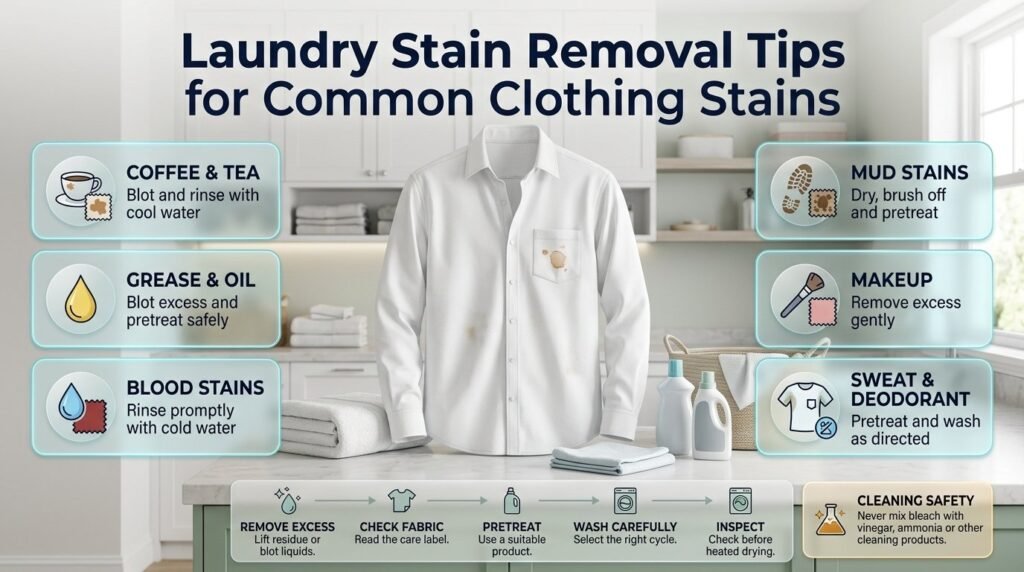
Effective stain removal begins with identifying the stain, removing excess material, choosing a compatible treatment, and following the garment’s care instructions. Treating stains before washing is often more effective than expecting a regular cycle to remove every mark.
Never assume that a stain has disappeared simply because the wash cycle has finished.
How to Treat Different Stains
| Stain | Recommended approach | Avoid |
|---|---|---|
| Coffee and tea | Blot and rinse with cool water, then pretreat with a suitable product | Aggressive rubbing |
| Grease and cooking oil | Blot excess oil and use a fabric-safe stain remover | Applying heat before checking the stain |
| Blood | Rinse promptly with cold water and pretreat appropriately | Starting with hot water |
| Mud | Allow excess mud to dry, brush it away, and then pretreat | Spreading wet mud across the fabric |
| Makeup | Remove excess gently and use a compatible treatment | Harsh scrubbing on delicate material |
| Sweat and deodorant | Apply a suitable pretreatment and wash as directed | Assuming extra detergent will solve the buildup |
Follow These Stain Removal Steps
Step 1: Remove excess material. Lift away solid residue carefully. Blot liquids using a clean cloth.
Step 2: Identify the fabric. Check whether the garment is washable and whether the stain remover is appropriate.
Step 3: Apply a suitable treatment. Follow the product instructions and test an inconspicuous area when necessary.
Step 4: Wash the garment. Choose an appropriate temperature and cycle.
Step 5: Inspect the result. Check the affected area before using a heated dryer. Repeat an appropriate treatment if the stain remains.
Why Should You Avoid Rubbing Stains Aggressively?
Aggressive rubbing can push some stains deeper into the fibers, spread the mark, or damage delicate materials. Blotting and careful pretreatment are generally safer starting points.
Important Safety Rule: Never mix chlorine bleach with vinegar, ammonia, or other cleaning products. Dangerous chemical reactions can occur. Use cleaning products separately and according to their labels.
7. How Can You Keep Clothes Smelling Fresh After Washing?
Fresh laundry depends on effective cleaning, appropriate rinsing, prompt drying, and clean storage. Strong fragrance does not necessarily mean clothing is clean. When clothes smell musty, the cause may be moisture, detergent buildup, poor washing conditions, or a dirty washing machine.
Why Does Laundry Smell Musty?
Common causes include:
- Leaving wet clothes in the washer for an extended period.
- Overloading the drum.
- Using excessive detergent or fabric softener.
- Allowing residue to accumulate inside the appliance.
- Drying clothes in a poorly ventilated space.
- Folding garments before they are completely dry.
- Storing clean laundry in damp cupboards or baskets.
Practical Ways to Prevent Unpleasant Odors
- Transfer clothes promptly after the wash cycle.
- Follow the manufacturer’s instructions for cleaning the drum and detergent drawer.
- Inspect the rubber seal and other areas where moisture can collect.
- Leave the washer door open between loads if the manufacturer permits it.
- Dry clothes thoroughly before folding.
- Keep laundry baskets and storage areas clean and dry.
If the machine continues to smell despite routine maintenance, check the manual and consider whether the drain, filter, or other components need attention.
For a more complete household cleaning routine, visit Easy Home Cleaning Tips.
8. How Can You Make Clothes Last Longer?
Clothes last longer when you reduce unnecessary friction, excessive heat, stretching, and exposure to unsuitable cleaning products. Appropriate washing cycles, careful drying, and sensible storage help maintain fabric quality and garment shape.
Turn Suitable Clothes Inside Out
Turning jeans, printed T-shirts, and many dark garments inside out can reduce friction on their visible surfaces.
Before washing, empty pockets and close zippers where appropriate. Follow the garment’s instructions if a different treatment is recommended.
Use Mesh Bags for Delicate Items
Mesh laundry bags provide an extra layer of protection for suitable delicate garments. They can help prevent snagging and tangling during washing.
They are useful for:
- Bras and delicate underwear.
- Fine knits.
- Lightweight garments with straps.
- Small items that might become tangled.
- Suitable garments with decorative details.
Choose an appropriate wash cycle and avoid overfilling the bags. Mesh protection does not make every delicate garment machine-washable.
Reduce Heat Damage
High drying temperatures can damage elastic, shrink some fabrics, and contribute to unnecessary wear.
Air-dry garments that require it, and use a suitable dryer setting for other items. Avoid leaving clothes in excessive heat longer than necessary.
Prevent Pilling and Stretching
- Avoid overloading the washer.
- Wash delicate knits according to their care labels.
- Avoid excessive friction between delicate and heavy garments.
- Fold heavy sweaters instead of hanging them if hanging may stretch the shoulders.
- Store clean clothing in a dry place.
These habits are especially helpful for frequently worn clothing, school uniforms, workwear, and favorite everyday garments.
9. How Should You Wash Towels and Bedding?
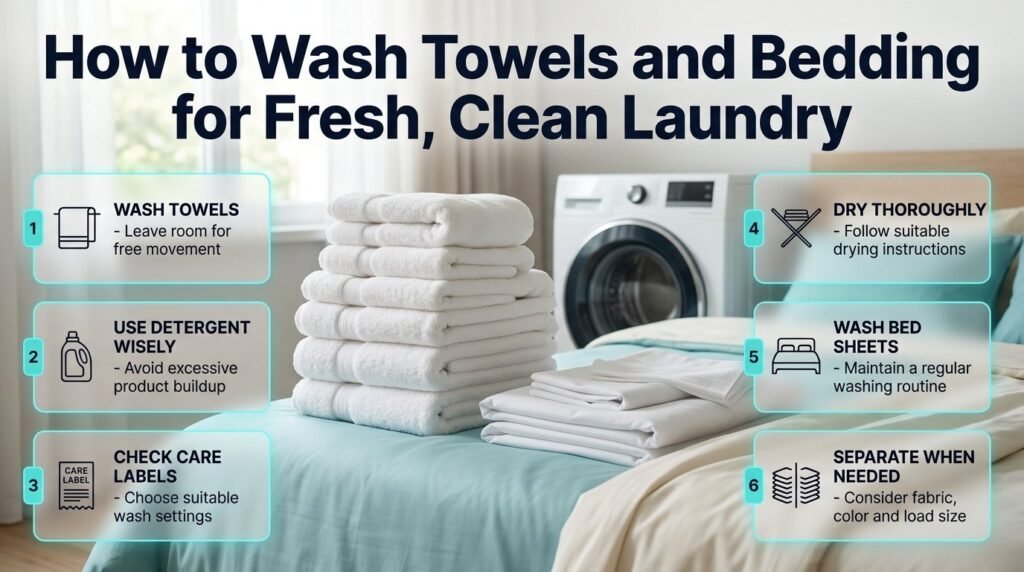
Towels and bedding need regular washing because they collect body oils, sweat, dust, and everyday residue. The right frequency depends on use, household conditions, and individual hygiene needs. Use a suitable detergent, avoid overloading, and follow the fabric care instructions.
Washing Towels Properly
Towels are bulky and absorbent, so they need enough room to move freely in the machine.
For better results:
- Wash towels with compatible items.
- Avoid excessive detergent and fabric softener.
- Select an appropriate temperature according to the care label.
- Dry towels thoroughly.
- Clean the washer regularly to prevent residue buildup.
Fabric softener can reduce towel absorbency when overused. If your towels no longer absorb water well, review your product use and washing routine.
Washing Bed Sheets
Sheets can collect sweat, body oils, dust, and skincare products. Wash them regularly and more frequently when they become visibly soiled or when household circumstances require it.
Separate white sheets from colored bedding when necessary, and check the care label before selecting a hot wash.
Should Towels and Sheets Be Washed Together?
They can sometimes be washed together if their colors, fabrics, soil levels, and care requirements are compatible. However, separate loads may work better because towels are heavier and produce lint, while sheets can wrap around bulky items.
The best choice depends on your machine’s capacity and the specific load.
10. How Can You Dry Clothes Without Shrinking or Wrinkling Them?
The safest drying method is the one recommended for the garment. Air-drying can help protect heat-sensitive clothing, while a tumble dryer offers convenience for suitable fabrics. Correct loading and timely removal can also reduce wrinkles and uneven drying.
Tumble Drying vs. Air-Drying
| Factor | Tumble dryer | Air-drying |
|---|---|---|
| Speed | Usually faster | Depends on airflow and humidity |
| Energy | Requires appliance energy | Generally uses less direct energy |
| Fabric protection | Excess heat may cause damage | Often suitable for delicate items |
| Convenience | Useful during wet weather | Requires drying space |
| Wrinkles | Can reduce wrinkles on suitable fabrics | Garments may need smoothing or ironing |
How to Air-Dry Clothes Properly
- Shake garments gently after washing.
- Smooth collars, seams, and hems.
- Leave enough space between garments.
- Use a well-ventilated drying area.
- Turn thicker items when needed to help them dry evenly.
- Check pockets, cuffs, and waistbands before folding.
Indoor drying in a poorly ventilated room can increase humidity and contribute to condensation or mold. Improve airflow and use suitable ventilation or dehumidification when needed.
How to Reduce Dryer Wrinkles
Remove garments promptly after the cycle finishes. Shake them gently, smooth them by hand, and fold or hang them immediately.
Avoid overloading the dryer because tightly packed garments may dry unevenly. Follow the manufacturer’s instructions for cleaning the lint filter and maintaining ventilation.
Safety Tip: Clean the dryer lint filter according to the appliance instructions and keep the surrounding area clear. Proper maintenance helps the dryer operate safely and efficiently.
11. How Can You Organize Laundry in a Small Home?
An effective laundry system doesn’t require a separate laundry room. A few clearly defined places for dirty clothes, stain treatment, clean laundry, and supplies can make the task much easier in apartments and smaller homes.
Create a Simple Laundry Station
A compact laundry station can include:
- A basket for everyday clothes.
- A separate bag for delicate garments.
- A small container for approved laundry supplies.
- A designated place for stain treatment.
- A folding drying rack.
- A clean surface for folding and sorting.
Store laundry products in their original containers and keep them securely away from children and pets.
Use a Weekly Laundry Schedule
A simple schedule can prevent clothing from accumulating until laundry becomes difficult to manage.
| Day | Suggested laundry task |
|---|---|
| Monday | Everyday clothing |
| Wednesday | Towels and suitable household linens |
| Friday | Dark clothing and workwear |
| Weekend | Bedding, delicates, or remaining loads |
Treat this as a flexible example, not a strict rule. Adjust the schedule to your household size, work commitments, available machine capacity, and the amount of laundry you generate.
Make Folding and Storage Easier
Sort clean clothes by person, room, or destination before folding. Hang garments that wrinkle easily and fold items that fit neatly into drawers.
If limited storage space makes laundry difficult to manage, explore Home Storage Solutions for practical ways to organize household belongings.
12. How Can You Save Time, Water, and Energy on Laundry?
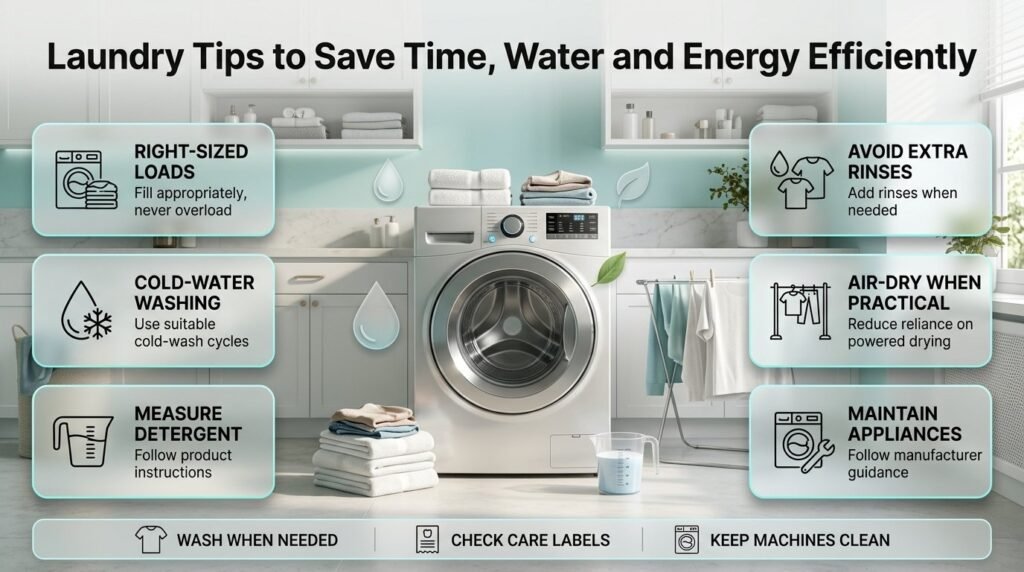
You can make laundry more efficient by washing appropriately sized loads, using suitable cycles, measuring detergent correctly, and avoiding unnecessary rewashing or drying. The aim is to save resources without compromising cleaning quality or appliance safety.
Use the Washing Machine Efficiently
Wash suitable full loads. Running full loads can reduce the number of cycles required, but never exceed the machine’s recommended capacity.
Choose cold water when appropriate. Cold-water cycles can reduce the energy used to heat water, especially when paired with a detergent designed for cold washing.
Avoid unnecessary extra rinses. Use additional rinsing when required by product instructions, fabric needs, or specific care considerations.
Air-dry when practical. A clothesline or drying rack can reduce energy use when weather and ventilation permit.
Maintain your appliances. Follow the manufacturer’s instructions for filters, detergent drawers, drum cleaning, and other routine maintenance.
Should You Wash Clothes Less Frequently?
Some garments, such as outer layers worn briefly, may not need washing after every use if they remain clean and odor-free. Underwear, socks, workout clothing, and garments exposed to substantial sweat or dirt generally need more frequent washing.
Let the garment’s condition, hygiene needs, and care instructions guide your decision. Saving water should not mean wearing clothing that is dirty or unsuitable for reuse.
13. What Laundry Mistakes Should Beginners Avoid?
Most laundry problems arise when people use the same method for every garment. Understanding a few common mistakes can improve washing results, protect fabrics, and reduce unnecessary work.
Mistake 1: Ignoring Care Labels
Why it happens: People assume all garments made from similar materials can be washed alike.
Why it matters: Dyes, finishes, linings, and elastic components may react differently to water and heat.
How to avoid it: Read care labels before washing unfamiliar garments and follow special-care instructions.
Mistake 2: Overloading the Machine
Why it happens: Fewer loads seem faster and more economical.
Why it matters: Garments may not move freely, and cleaning or rinsing can become less effective.
How to avoid it: Follow the machine’s capacity guidelines and leave enough space for movement.
Mistake 3: Using Too Much Fabric Softener
Why it happens: People expect more product to produce softer clothes.
Why it matters: Excess buildup can reduce towel absorbency or affect performance fabrics.
How to avoid it: Follow the dosage instructions and skip softener where the manufacturer advises against it.
Mistake 4: Drying Stained Clothes Immediately
Why it happens: The washing cycle ends, so the garment is assumed to be clean.
Why it matters: Heat can make some remaining stains more difficult to remove.
How to avoid it: Inspect stained garments before using a heated dryer.
Mistake 5: Leaving Wet Clothes in the Washer
Why it happens: People become distracted by work, school, or other household tasks.
Why it matters: Prolonged dampness can contribute to unpleasant odors.
How to avoid it: Transfer the load promptly and follow the manufacturer’s ventilation instructions.
Mistake 6: Mixing Cleaning Products
Why it happens: People assume combining products will improve cleaning.
Why it matters: Certain combinations can release dangerous gases or trigger harmful chemical reactions.
How to avoid it: Never mix bleach with vinegar, ammonia, or other cleaning products.
Mistake 7: Using One Cycle for Everything
Why it happens: Selecting a familiar setting seems easier than reviewing options.
Why it matters: Delicate garments may experience unnecessary agitation, while heavily soiled items may not receive the treatment they need.
How to avoid it: Choose the cycle according to the garment label, soil level, and machine instructions.
14. What Professional Laundry Habits Make the Biggest Difference?
Good laundry results come from observing problems, using the correct treatment, and maintaining a consistent process. Rather than relying on complicated hacks, focus on identifying why a particular load isn’t cleaning, drying, or smelling as expected.
Diagnose Problems Before Changing Products
If clothes feel stiff, review detergent dosage, water hardness, and rinsing. If colors fade quickly, examine temperature and washing intensity. If laundry smells musty, check drying conditions, machine cleanliness, and storage.
Change one factor at a time so you can identify what actually improves the result.
Keep Essential Laundry Supplies Together
Most households can handle routine washing with a modest collection of useful supplies:
- A suitable everyday detergent.
- A compatible stain remover.
- Mesh laundry bags.
- A soft brush for appropriate durable fabrics.
- Clothes hangers or a drying rack.
- A clean cloth for blotting spills.
You don’t need a separate specialty product for every garment. Choose products according to your actual needs and read their labels carefully.
Give Delicate Fabrics Special Attention
Wool, silk, embellished clothing, and structured garments may need additional care. Follow their specific instructions rather than assuming that a gentle machine cycle is always safe.
For garments marked dry-clean-only, consult a qualified cleaner when appropriate.
Create a Routine You Can Maintain
A laundry routine should fit your household rather than create more work. If five separate baskets are difficult to manage, begin with lights, darks, and special-care garments.
Add extra categories only when they solve a genuine problem. A simple system that you follow consistently is more useful than a complicated system you abandon after a few days.
15. How Can You Build a Better Weekly Laundry Routine?
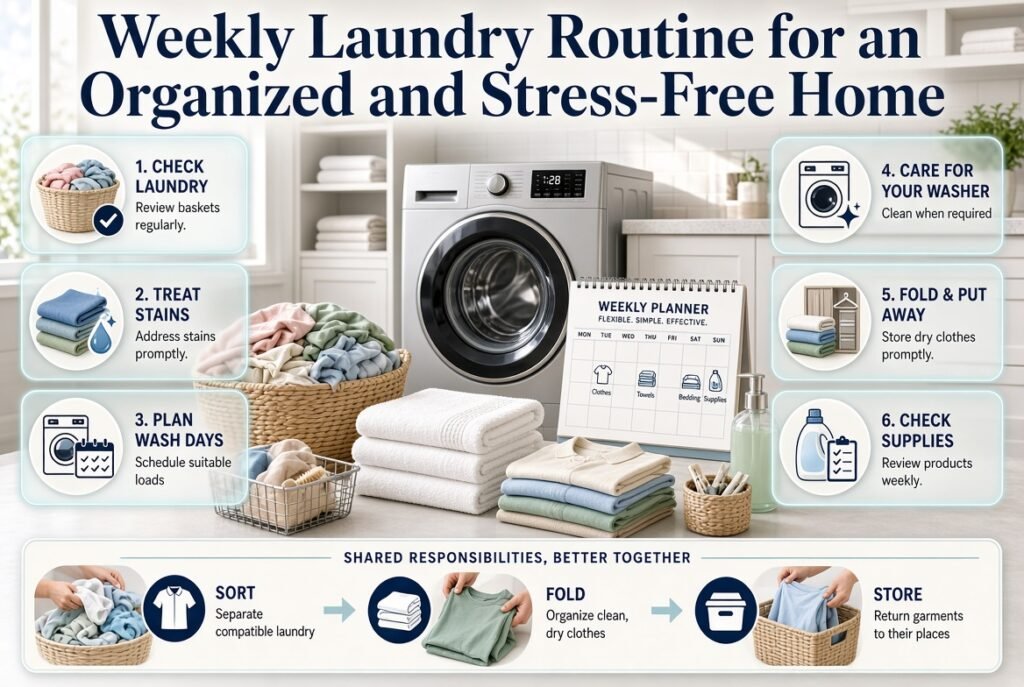
A weekly laundry routine works best when it reflects your household’s actual clothing needs, available time, and machine capacity. Planning a few regular washing sessions helps prevent overflowing baskets and makes it easier to keep clean clothing available.
Create a Practical Weekly Plan
Start by estimating how much laundry your household produces during an ordinary week.
Then decide which categories need separate attention, such as workwear, towels, bedding, or delicate garments. Assign these categories to convenient days rather than forcing every load into a rigid schedule.
A useful routine might include:
- Checking laundry baskets every evening.
- Treating stains as soon as practical.
- Washing everyday clothes on designated days.
- Cleaning the washer when required.
- Folding and putting away dry clothes promptly.
- Reviewing detergent and supply levels once a week.
Make the Routine Easier for Everyone
If several people share the household, give each person a clear responsibility where practical. One person might sort clothing, another might fold clean laundry, and another might manage household linens.
For families or shared homes, Smart Home Organization Tips can help make everyday responsibilities more manageable.
You can also connect laundry habits with broader household routines. For example, organizing bedroom storage makes it easier to put away clean clothes, while a tidy kitchen or living room can provide additional space for folding when necessary.
Explore Bedroom Organization Tips for practical storage ideas and Living Room Home Tips for ways to maintain comfortable, organized shared spaces.
16. How Do Laundry Habits Fit Into a Cleaner, More Organized Home?
Laundry is easier to manage when it becomes part of a broader home-care system. Clean clothes need a place to go, laundry supplies need safe storage, and drying areas need enough ventilation to prevent moisture problems.
Reduce Clutter Around the Laundry Area
Remove empty product packaging, keep frequently used supplies accessible, and return equipment to its designated place after each load.
Avoid storing items on top of the washing machine if vibration could make them fall. Keep walkways clear, especially around wet floors and drying racks.
Connect Laundry With Decluttering
Clothing that no longer fits your needs can take up valuable storage space and make laundry harder to organize. Review your wardrobe occasionally and decide which garments should remain in regular use.
Keep donation or recycling decisions separate from the washing process so that clothing needing special treatment doesn’t get mixed with everyday laundry.
For a more systematic approach, see Home Decluttering Tips.
Maintain the Laundry Space
Wipe up spills, clean lint and residue from the appropriate areas, and follow the manufacturer’s appliance maintenance instructions.
For broader household upkeep, Basic Home Maintenance Tips can help you develop a practical routine for caring for the home and its essential equipment.
The aim is not to keep every surface perfect. It’s to make the laundry area safe, functional, and easy to maintain.
What Are the Best Laundry Tips and Tricks for Cleaner, Fresher Clothes?
The best laundry tips and tricks start with understanding how to wash different fabrics correctly. Sorting clothes by color, checking care labels, choosing the right water temperature, and using the recommended amount of detergent can significantly improve washing results. Clothes should also be removed from the washing machine promptly and dried completely to prevent musty odors. Instead of relying on expensive products, focus on consistent washing habits that protect fabric quality and remove everyday dirt effectively.
Practical tips to follow:
Separate whites, darks, and bright-colored garments before washing.
Pretreat stains with a suitable stain remover instead of relying entirely on the washing cycle.
Avoid overloading the washing machine so clothes can move freely.
Use an appropriate detergent and follow its dosage instructions.
Store clothes only after they are completely dry.
How Can I Remove Stubborn Stains From Clothes Without Damaging the Fabric?
Removing stubborn stains requires the right treatment for the type of stain and fabric. Coffee, grease, makeup, mud, and sweat marks respond differently to cleaning methods, so applying the same product to every stain may not produce good results. Treat stains as soon as practical, remove excess material gently, and check the garment’s care label before using any cleaning product. Avoid putting stained clothes in a heated dryer until you have checked whether the mark has disappeared.
Effective stain-removal practices:
Use cool water first for blood stains and other stains that may be affected by heat.
Blot liquid stains instead of rubbing them aggressively.
Apply a compatible stain remover according to the product instructions.
Test unfamiliar treatments on an inconspicuous area when appropriate.
Repeat a suitable treatment if the stain remains, rather than increasing the water temperature without checking the fabric requirements.
Never mix bleach with vinegar, ammonia, or other cleaning products, as dangerous chemical reactions can occur.
Why Do Clothes Smell Bad After Washing, and How Can I Keep Laundry Fresh?
Clothes can develop unpleasant odors after washing because of detergent buildup, an unclean washing machine, insufficient drying, or leaving wet garments in a closed drum for too long. Adding more detergent or fabric fragrance may only mask the problem rather than solve it. The most effective approach is to identify the cause, maintain the washing machine, use the correct detergent dosage, and ensure that every garment dries completely before storage.
Ways to prevent laundry odors:
Remove wet clothes promptly after the washing cycle finishes.
Clean the washing machine’s drum, drawer, and door seal according to the manufacturer’s instructions.
Avoid using excessive detergent or fabric softener.
Leave the machine ventilated between loads if the manufacturer permits it.
Dry clothes in a well-ventilated area and avoid storing damp garments.
If musty smells continue despite these steps, check the machine’s maintenance instructions and consider whether drainage or other appliance problems need attention.
How Can I Make My Clothes Last Longer and Prevent Fading or Shrinking?
Clothing lasts longer when it is washed, dried, and stored according to its fabric requirements. Excessive heat, aggressive washing cycles, repeated friction, and unsuitable cleaning products can contribute to fading, shrinkage, stretching, and premature wear. Turning suitable dark garments inside out, selecting the correct cycle, and avoiding unnecessary high-temperature drying can help preserve their appearance. Delicate fabrics such as wool and silk may require special treatment, so always follow their individual care labels.
Habits that protect clothing:
Wash dark and brightly colored garments using suitable settings.
Turn printed shirts and appropriate dark clothing inside out.
Use mesh laundry bags for suitable delicate garments.
Avoid overloading the washer and dryer.
Fold heavy knitwear when hanging could stretch its shape.
Follow the recommended drying temperature and method.
These practices are especially useful for frequently worn clothes, workwear, school uniforms, and favorite garments that you want to keep in good condition.
What Is the Most Efficient Way to Organize Laundry and Save Time at Home?
An efficient laundry routine combines a simple sorting system, regular washing days, organized supplies, and a practical method for folding and storing clean clothes. Without a routine, laundry can accumulate, stain treatment may be forgotten, and clean garments may remain in baskets for days. You can make the process easier by separating everyday clothing from delicate items, keeping essential products together, and assigning manageable laundry tasks to specific days.
Simple ways to improve laundry organization:
Use separate baskets for everyday clothes and special-care garments.
Establish a flexible weekly schedule for clothing, towels, and bedding.
Keep detergent, stain remover, and mesh bags in one designated location.
Fold or hang clothes soon after drying to reduce wrinkles.
Put clean garments away promptly to prevent clutter.
Maintain a clean, dry, and well-ventilated laundry area.
The most effective system is one that fits your household size, available storage, and daily schedule. A consistent routine helps reduce unnecessary work and makes laundry easier to manage over time.
Conclusion: Make Laundry Easier With Practical Laundry Tips and Tricks
Following the right laundry tips and tricks can make everyday clothing care easier, more efficient, and less stressful. From sorting clothes and choosing the correct washing temperature to treating stains promptly and drying garments properly, small changes in your routine can help keep fabrics clean, fresh, and comfortable for longer. A consistent approach also reduces common problems such as fading, shrinking, unpleasant odors, and unnecessary wear.
The key to successful laundry is understanding your fabrics and building habits that suit your household. Use the recommended amount of detergent, avoid overcrowding the washing machine, check care labels, and make sure clothes are completely dry before putting them away. Keeping laundry supplies organized and following a simple weekly schedule can also save time and prevent laundry from becoming an overwhelming chore.
Remember that effective laundry care does not require expensive products or complicated methods. Simple, consistent practices often deliver the best results while helping you protect your favorite clothes and manage household tasks more confidently. Start with one or two improvements, maintain them regularly, and gradually create a laundry routine that works for your home. With these practical laundry tips and tricks, you can enjoy cleaner clothes, fresher fabrics, better organization, and a more comfortable everyday living environment.
Leave a Reply