Introduction
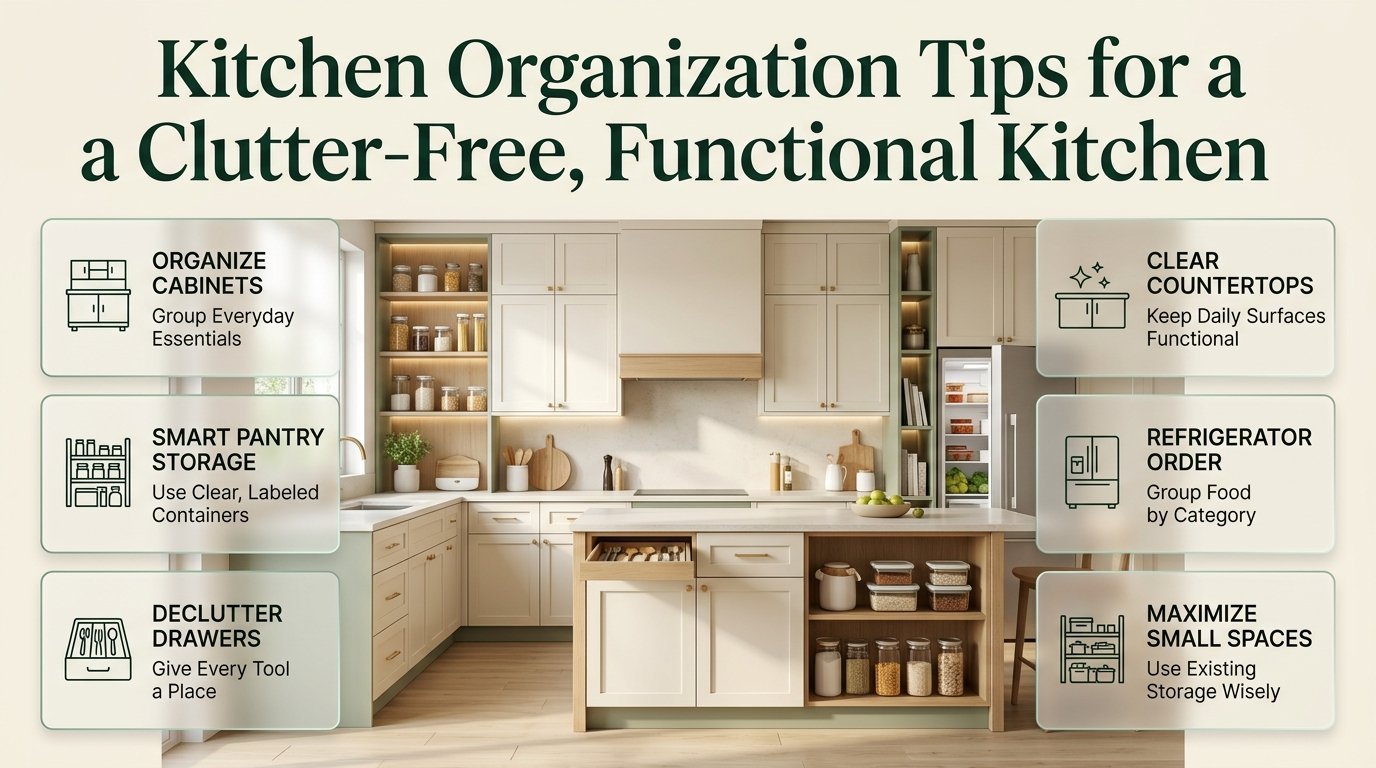
Kitchen Organization Tips | A kitchen can become cluttered surprisingly quickly. Cooking utensils end up in the wrong drawers, food packages take over pantry shelves, containers lose their lids, and countertops gradually become storage areas for things that don’t belong there. Even when you have plenty of cabinets, a poorly organized kitchen can make everyday cooking feel more difficult than it needs to be.
The solution is not necessarily to buy more storage products or replace your existing cabinets. Effective kitchen organization tips focus on making better use of the space you already have, arranging items according to your daily routine, and creating simple systems that are easy to maintain.
At Heartomenal, the goal is to make everyday home management more practical through thoughtful organization and useful household ideas. A well-organized kitchen supports that goal by making cooking, cleaning, grocery storage, and meal preparation easier to manage.
In this guide, you’ll discover how to organize kitchen cabinets, drawers, pantry shelves, countertops, refrigerators, cookware, and small kitchen spaces. You’ll also learn how to avoid common organizing mistakes, choose useful storage solutions, and maintain a functional kitchen without turning organization into another demanding household task.
1. How Do You Start Organizing a Kitchen?
The best way to organize a kitchen is to begin with one area, remove unnecessary items, group similar belongings together, and assign each category a convenient storage location. Starting small prevents unnecessary disruption and helps you build an organization system that works with your everyday habits.
Many people make the mistake of emptying every cabinet and drawer at once. Although this may seem like an efficient way to begin, it can leave the entire kitchen unusable while you try to make decisions about hundreds of items.
A better approach is to work in manageable sections.
Step 1: Identify the Most Frustrating Area
Think about which part of your kitchen causes the most inconvenience.
Perhaps you cannot find cooking utensils when preparing dinner, your pantry shelves are difficult to navigate, or your countertops have very little free space. Choose the area that creates the biggest daily problem.
Solving one specific problem gives your project a clear purpose.
Step 2: Remove and Sort the Contents
Take everything out of the selected drawer, cabinet, or shelf. Separate the contents into practical groups, such as everyday utensils, baking equipment, food-storage containers, or dry ingredients.
Set aside broken tools, duplicate gadgets you rarely use, and items that belong somewhere else.
You do not have to discard everything you have not used recently. Special-occasion cookware, seasonal equipment, and tools needed for particular recipes may still deserve a place in your kitchen.
Step 3: Clean Before Reorganizing
Wipe the empty shelf or drawer and allow it to dry before returning anything. This is also a useful opportunity to check for crumbs, sticky residue, damaged shelf liners, or signs of moisture.
Cleaning first makes it easier to maintain the area afterward.
Step 4: Return Items According to Frequency of Use
Place everyday essentials in accessible locations. Items used occasionally can go on higher shelves or in less convenient cabinets, provided they remain safe to reach.
For example, everyday plates belong somewhere convenient for serving meals, while a large roasting pan used only during special occasions may be stored elsewhere.
Step 5: Test Your New Arrangement
Use the organized area during a normal cooking session. Notice whether you can find what you need without moving several other items.
If an arrangement looks tidy but makes cooking harder, change it. A successful system should improve everyday use, not simply create an attractive appearance.
Pro Tip: Complete one area before starting another. A finished drawer or cabinet provides immediate value and helps prevent an organization project from spreading throughout the kitchen.
2. What Is the Best Way to Organize Kitchen Cabinets?
Kitchen cabinets are most useful when items are grouped according to their purpose and stored close to the activities where they are used. Keep everyday dishes accessible, cooking equipment near the preparation and cooking areas, and heavier objects on sturdy lower shelves.
You do not need to arrange every cabinet identically. Different cabinets serve different purposes, so their contents should reflect your kitchen layout and cooking habits.
Create Functional Cabinet Zones
A cabinet near the dishwasher can hold plates, bowls, and everyday glasses. This makes unloading easier because clean dishes can be returned to their usual places without crossing the kitchen repeatedly.
Cabinets near the cooking area can hold suitable pots, pans, and frequently used cooking tools. A cabinet near your preparation surface can store mixing bowls, measuring cups, and other equipment needed while preparing ingredients.
Use the following arrangement as a starting point.
| Cabinet location | Suitable items | Main benefit |
|---|---|---|
| Near the dishwasher | Plates, bowls, everyday glasses | Easier unloading |
| Near the cooking area | Pots, pans, cooking utensils | Convenient meal preparation |
| Near the preparation surface | Mixing bowls, measuring tools | Faster ingredient preparation |
| Upper cabinets | Mugs, lighter dishes, suitable dry goods | Accessible everyday storage |
| Lower cabinets | Heavy cookware and appliances | Safer lifting and handling |
| Less accessible cabinets | Occasional-use serving pieces | Frees convenient shelves |
Make Better Use of Existing Shelves
Shelf risers can create additional usable levels for lightweight dishes, mugs, or suitable pantry supplies. Vertical dividers help separate baking trays, chopping boards, and flat cookware.
Pull-out organizers can improve access to deep cabinets, especially when items at the back are otherwise difficult to reach.
However, these products are not necessary for every kitchen. First determine whether you need additional storage or simply a better arrangement.
Measure Before Buying Organizers
Measure the internal width, depth, and height of your cabinets. Account for hinges, handles, pipes, and the clearance needed to open doors or remove shelves.
An organizer that technically fits inside a cabinet may still prevent the door from closing properly or make everyday items harder to access.
Expert Tip: Keep frequently used items between comfortable reaching heights whenever possible. Heavy cookware should sit on sturdy lower shelves rather than being stored overhead.
3. How Can You Organize Kitchen Drawers Efficiently?
Kitchen drawers become easier to use when each drawer has a clear purpose and small objects are separated into suitable compartments. Instead of mixing utensils, measuring tools, clips, and miscellaneous items together, create categories that reflect the tasks you perform most often.
Drawers are particularly useful for smaller kitchen essentials because they keep objects accessible without occupying valuable countertop space.
Organize Drawers by Function
Cutlery drawer: Separate forks, spoons, knives, and serving utensils into dedicated compartments.
Cooking utensil drawer: Group spatulas, ladles, tongs, and other tools used during cooking.
Preparation drawer: Store peelers, measuring spoons, small graters, and other frequently used preparation tools.
Baking drawer: Keep measuring cups, pastry tools, and suitable baking accessories together.
Food-storage drawer: Arrange clips, reusable bags, and container accessories so that small items do not become scattered.
These categories are flexible. If you rarely bake, you may not need a dedicated baking drawer. Use the available space according to your actual requirements.
Choose Suitable Drawer Dividers
Adjustable dividers work well when drawer dimensions or contents may change. Fixed compartments are useful for standard cutlery, while small removable trays can hold clips, twist ties, and other tiny objects.
Before purchasing a divider, check the drawer’s internal measurements and available height.
Avoid creating so many compartments that the drawer becomes difficult to rearrange. Simple sections usually work better than a highly complicated system.
Organize Food Containers Separately
Food-storage containers often become disorganized because their lids and bases are stored in different places.
Nest compatible containers by size and keep their matching lids in a nearby compartment or suitable organizer. If you own many containers, remove damaged pieces and those that no longer have useful matching parts.
Common Mistake: Filling every drawer completely. Leaving a little room makes it easier to remove tools, return items after washing, and adjust the arrangement when your needs change.
4. What Are the Best Pantry Organization Tips?
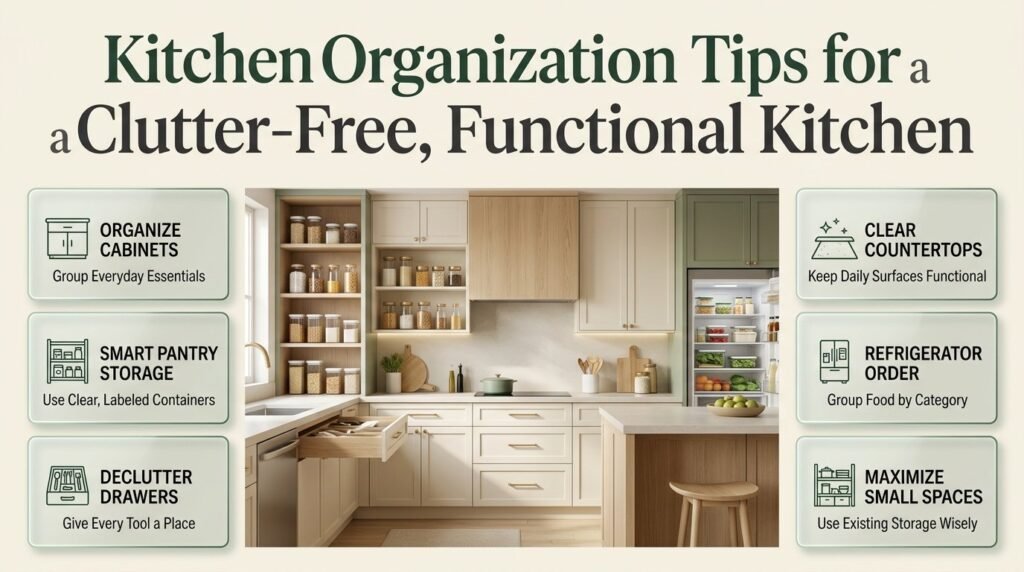
A well-organized pantry makes ingredients easier to find, helps you monitor supplies, and reduces the risk of purchasing duplicates. Group similar foods together, keep frequently used ingredients accessible, and arrange products so that labels and important food information remain visible.
A pantry does not need to be a separate walk-in room. A few shelves or one dedicated cabinet can provide effective food storage when arranged thoughtfully.
Group Pantry Items Into Categories
Start by separating food into practical groups.
Dry staples: Rice, pasta, flour, oats, beans, and other grains.
Canned goods: Vegetables, soups, beans, and preserved ingredients.
Baking supplies: Sugar, cocoa, baking powder, and other baking ingredients.
Snacks: Crackers, packaged snacks, and other convenient foods.
Breakfast supplies: Cereals, oats, spreads, and similar everyday products.
Cooking ingredients: Suitable packaged sauces, seasoning mixes, and other ingredients used during meal preparation.
Store each category together. This makes it easier to check what you have before writing a shopping list.
Use Containers Only When They Help
Clear food-storage containers can make certain dry ingredients easier to identify. They may also help keep suitable ingredients protected from moisture and pests when the containers are appropriately sealed.
However, transferring every pantry item into matching containers is not necessary.
Original packaging often contains important information about ingredients, allergens, storage requirements, and expiration dates. If you transfer food into another container, retain access to the relevant information and label the new container clearly.
Choose food-safe containers that are suitable for the specific ingredient. Ensure they are clean and completely dry before use.
Apply the First-In, First-Out Method
Place older suitable products toward the front and newly purchased products behind them. This simple arrangement helps you use existing supplies before opening newer packages.
Check dates and storage guidance when replenishing your pantry. Discard food that is no longer suitable for consumption, and avoid assuming that a product is safe simply because it looks normal.
Keep Frequently Used Ingredients Accessible
If you regularly prepare breakfast, keep suitable breakfast supplies together. If you cook with rice, pasta, or particular spices most days, arrange those ingredients where you can reach them easily.
Rarely used ingredients can occupy less accessible shelves, provided they remain stored safely.
Quick Tip: Keep a simple pantry inventory or shopping list in a convenient location. Add items when supplies run low instead of waiting until you discover that an ingredient is missing during cooking.
For broader ideas about making everyday household systems more efficient, explore Smart Home Organization Tips.
5. How Do You Organize a Small Kitchen With Limited Storage?
A small kitchen becomes more functional when you use available vertical space, reduce unnecessary duplicates, and keep work surfaces clear. Instead of trying to fit more objects into every cabinet, prioritize essential items and choose storage methods that make the most of the space you already have.
Small kitchens require thoughtful decisions, but they do not automatically need expensive renovations.
Use Vertical Storage
Flat items such as baking trays, chopping boards, and suitable cookware can be stored upright in dividers instead of being stacked horizontally.
Vertical storage allows you to remove one item without moving everything above it. Make sure the organizer is stable and suitable for the weight of the items.
Use Cabinet Doors Carefully
The inside of a cabinet door can sometimes accommodate a lightweight organizer for wraps, bags, or small supplies.
Before installing anything, check whether the organizer will interfere with hinges, shelves, or the cabinet’s closing mechanism. Avoid overloading doors or using unsuitable mounting methods.
Choose Space-Saving Equipment
Nesting bowls, stackable containers, and compact kitchen tools can reduce the amount of storage space needed.
However, space-saving equipment is only useful if it works for your household. Buying several specialized products that you rarely use may create more clutter than it removes.
Keep Countertops Selective
Store occasional-use appliances in suitable cabinets or another accessible location. Leave everyday essentials within reach while preserving enough clear space for chopping, mixing, and serving.
A small kitchen benefits from clear work surfaces because even a few unnecessary objects can make food preparation more difficult.
Create a Dedicated Food-Storage Area
If your kitchen has no separate pantry, use one cabinet or a designated shelf for dry ingredients.
Group products in baskets or suitable bins, keep labels visible, and avoid storing food alongside cleaning chemicals. Heavier supplies should be placed on sturdy lower shelves.
Make the Layout Work for Your Household
If several people use the kitchen, keep common items easy to identify and return. Avoid placing essential equipment in locations that require awkward reaching or moving other objects.
For additional ideas focused on making compact spaces more useful, visit Small Space Home Tips.
6. How Can You Keep Kitchen Countertops Clutter-Free?
The easiest way to maintain clear kitchen countertops is to keep only regularly used items within reach and assign everything else a proper storage location. Clear surfaces provide more room for food preparation, make cleaning easier, and help prevent unrelated household objects from accumulating in the kitchen.
A countertop does not have to be completely empty to be organized. The goal is to preserve practical working space.
Decide Which Items Deserve Counter Space
Before leaving an item on the counter, consider how frequently you use it and whether it makes sense to keep it accessible.
A coffee maker used every morning may deserve a permanent position. A large appliance used only occasionally might be better stored in a suitable cabinet.
Apply these questions:
- Do I use this item regularly?
- Is it convenient and safe to leave here?
- Does it occupy space needed for food preparation?
- Can it be stored nearby without creating inconvenience?
If an item does not serve a regular purpose on the countertop, consider moving it elsewhere.
Create Small Functional Stations
A coffee station can group a coffee maker, mugs, and suitable supplies in one location. A cooking station may hold a small selection of frequently used utensils near the preparation or cooking area.
These arrangements work best when they remain compact. Avoid filling every available corner with jars, trays, decorative accessories, and appliances.
Manage Incoming Clutter
Mail, shopping bags, reusable bottles, and unrelated household items can quickly take over kitchen surfaces.
Create suitable homes for these belongings outside the food preparation area. Return items to those locations instead of allowing the countertop to become a temporary storage space.
Expert Tip: Leave a clear work surface large enough for the meals you normally prepare. Organization should make cooking easier rather than simply make the kitchen look attractive.
7. What Is the Best Way to Organize a Refrigerator?
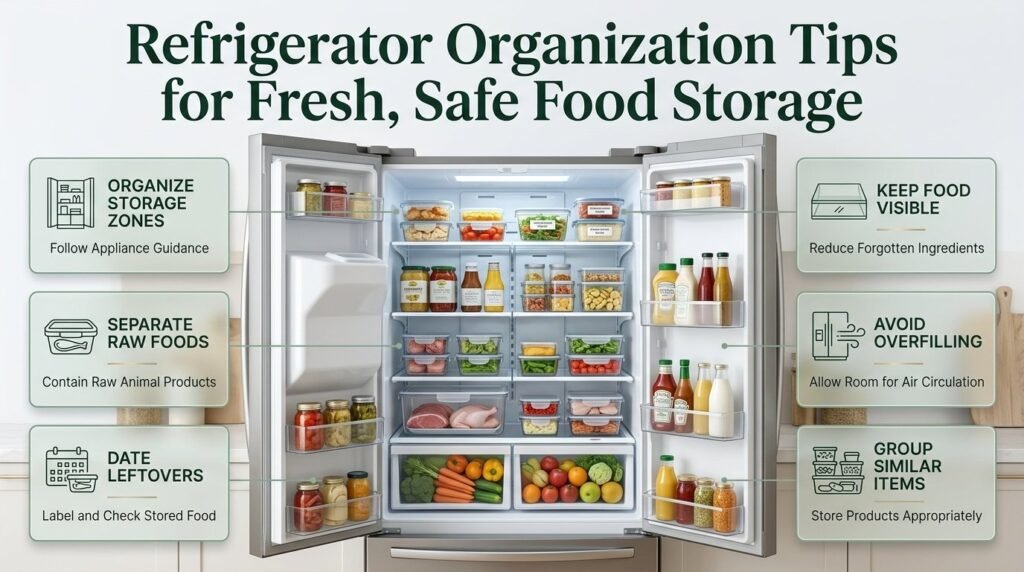
An organized refrigerator helps you locate ingredients quickly, monitor food freshness, and reduce forgotten leftovers. Use the designated compartments correctly, follow your appliance manufacturer’s storage guidance, and keep raw foods safely separated from ready-to-eat items.
Refrigerator organization should prioritize food safety and suitable storage conditions rather than appearance alone.
Arrange Food According to Storage Needs
| Refrigerator area | Organization approach |
|---|---|
| Upper shelves | Suitable ready-to-eat foods and leftovers |
| Middle shelves | Frequently used products according to their storage requirements |
| Lower shelves | Raw meat, poultry, and seafood in sealed, leak-proof containers |
| Produce drawers | Fruits and vegetables stored according to suitable conditions |
| Door shelves | Condiments and products suitable for temperature fluctuations |
The exact arrangement can vary by refrigerator design. Follow the manufacturer’s recommendations and keep raw animal products contained on the lowest appropriate shelf to reduce the risk of drips contaminating other foods.
Label and Date Leftovers
Store leftovers in appropriate covered containers and label them with the preparation date. Place them where they are visible and easy to check.
Follow recognized food-safety guidance for cooling, refrigeration temperatures, and storage periods. Do not rely only on smell or appearance to determine whether food remains safe.
Avoid Overfilling the Refrigerator
An overcrowded refrigerator can make it harder to find ingredients and may interfere with proper air circulation.
Remove empty packaging, check forgotten items regularly, and avoid blocking cooling vents.
Keep Similar Items Together
Group suitable dairy products, sauces, beverages, and other frequently used ingredients to make them easier to locate. Keep products in their appropriate temperature zones rather than moving everything into whichever shelf looks most convenient.
Common Mistake: Organizing the refrigerator so tightly that food disappears behind other containers. Visibility is important because forgotten products are more likely to be wasted.
8. How Should You Organize Spices, Oils, and Cooking Essentials?
Spices and cooking essentials are easier to manage when they are grouped by use and stored in suitable conditions. Keep frequently used seasonings accessible, organize less common ingredients separately, and protect products from unnecessary exposure to heat, light, and moisture.
A practical spice system saves time during meal preparation without requiring every jar to look identical.
Choose a Spice Arrangement
If you own many spices, alphabetical order can make individual jars easier to find.
If your collection is smaller, grouping ingredients by purpose may be more practical. For example, keep everyday seasonings together, baking spices in another group, and less frequently used blends in a separate section.
A tiered shelf, drawer insert, or small suitable organizer can improve visibility. Measure the space before buying anything.
Label Spices Clearly
Labels should be easy to read without removing every jar from the shelf.
Include the ingredient name and any useful date or storage information. If you transfer a spice into another container, retain access to relevant product information and avoid confusing similar-looking ingredients.
Store Oils Properly
Cooking oils should generally be kept in a cool, dark location away from direct sunlight and heat sources. Exposure to heat and light can affect their quality.
Avoid placing oils directly beside the stove if another suitable storage location is available.
Keep Cooking Essentials Near Their Point of Use
Frequently used utensils and ingredients should be convenient to reach, but convenience should not compromise safety.
For example, avoid placing combustible packaging, towels, or unsuitable containers close to burners. Keep ingredients protected from steam and splashes.
Quick Tip: Review your spices periodically. Check their condition, aroma, packaging information, and storage guidance rather than allowing old jars to accumulate indefinitely.
9. How Do You Organize Pots, Pans, and Kitchen Appliances?
Pots, pans, and appliances should be stored according to their weight, size, frequency of use, and handling requirements. Heavy cookware belongs on sturdy lower shelves, while regularly used equipment should be accessible without awkward lifting or unnecessary movement.
The aim is to make cooking equipment easy to retrieve and equally easy to put away.
Store Cookware by Type
Group compatible pots and pans together. Nest suitable pieces to save space, but use protective separators between delicate or nonstick surfaces when necessary.
Keep lids in a dedicated compartment, vertical organizer, or other suitable location so you do not need to search through a stack whenever you cook.
Baking trays and cutting boards can often be stored upright in a stable divider.
Decide Which Appliances Need Accessible Storage
Not every appliance needs to remain on the countertop.
| Appliance usage | Suitable approach |
|---|---|
| Used every day | Accessible countertop or nearby storage |
| Used several times a week | Convenient cabinet or designated shelf |
| Used occasionally | Suitable storage outside the main work area |
| Large or heavy equipment | Stable, sturdy, accessible storage |
| Seasonal equipment | Designated storage area that remains easy to access when needed |
Avoid storing heavy appliances on unstable shelves or in positions that require unsafe lifting.
Keep Appliance Accessories Together
Store removable parts, suitable attachments, and related accessories with their appliance when practical. This reduces the time spent searching for missing components.
However, make sure equipment is clean and completely dry before storage, and follow the manufacturer’s instructions for handling and maintenance.
Avoid Overcrowding Appliance Cabinets
Appliances are easier to use when they can be removed without moving several other objects.
If a cabinet is difficult to navigate, reassess whether all its contents need to remain there. Relocating occasional-use equipment may improve access more effectively than adding another organizer.
10. How Can You Organize Kitchen Cleaning Supplies?
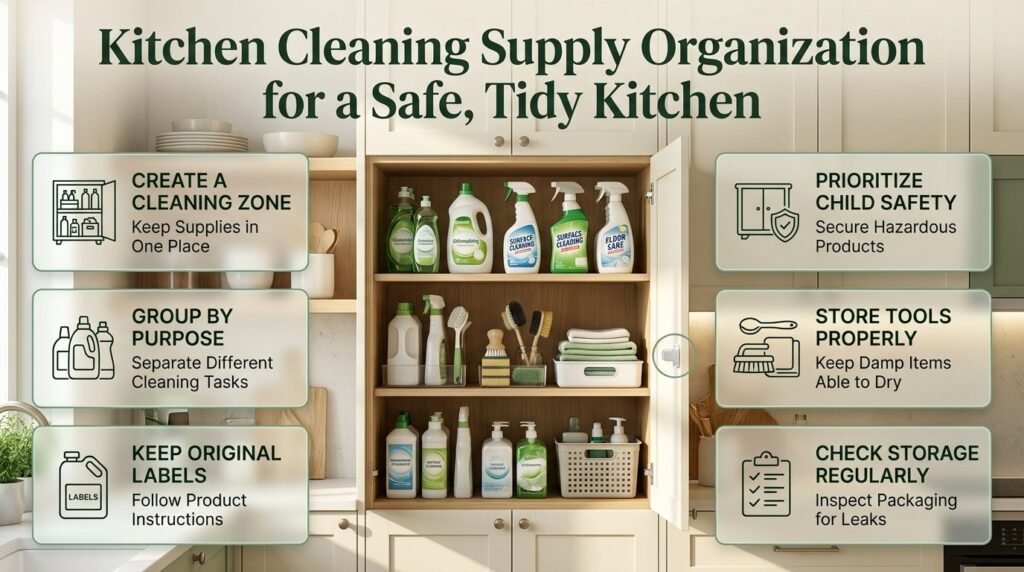
Kitchen cleaning supplies should have a designated storage location that is separate from food, dishes, and food preparation equipment. Keep products in their original labeled containers whenever possible, follow the manufacturer’s storage directions, and ensure that children cannot access hazardous products.
Organization is particularly important in this area because convenience should never compromise safe handling.
Create a Dedicated Cleaning Zone
Choose a suitable cabinet or storage location for the products you use to clean kitchen surfaces, dishes, and floors.
Keep cleaning cloths, brushes, and other tools grouped by purpose. Store items that need to dry in an appropriate location rather than placing damp materials in a closed container.
Separate Different Types of Supplies
Group dishwashing products, surface-cleaning supplies, and floor-care equipment so that each category is easy to locate.
Keep products in their original packaging and retain their labels. Never transfer cleaning chemicals into food or beverage containers, and do not mix cleaning products unless their labels explicitly permit the combination.
Maintain the Storage Area
Check for leaks, damaged packaging, and products that need replacement. Follow label instructions for storage and disposal.
Avoid placing cleaning products beside pantry food or in drawers used for utensils.
For additional advice on maintaining a clean and manageable home, explore Easy Home Cleaning Tips.
11. What Kitchen Organization Mistakes Should You Avoid?
The most common kitchen organization mistakes include buying storage products before measuring, keeping too many unnecessary items, placing everyday essentials in inconvenient locations, and creating systems that require too much effort to maintain.
A kitchen can look organized immediately after a major cleanup but quickly become cluttered again if the system does not suit daily routines.
Mistake 1: Buying Organizers Before Decluttering
Why it happens: Attractive storage products make it tempting to begin shopping immediately.
Why it causes problems: Organizers may be too large, unsuitable for the cabinet, or unnecessary once unwanted items are removed.
How to avoid it: Declutter first, measure the available space, and identify a specific problem before buying anything.
Mistake 2: Keeping Too Many Duplicate Items
Why it happens: People keep extra gadgets, utensils, and containers because they might be useful someday.
Why it causes problems: Rarely used objects occupy the storage space needed for everyday essentials.
How to avoid it: Keep the quantities that reasonably support your cooking habits. Retain duplicates when you genuinely need them for family meals, baking, or entertaining.
Mistake 3: Organizing According to Appearance Alone
Why it happens: Matching containers and perfectly arranged shelves can make a kitchen look appealing.
Why it causes problems: An attractive arrangement may be inconvenient to use or difficult to maintain.
How to avoid it: Test your system during ordinary cooking. Keep items accessible and change arrangements that create unnecessary movement.
Mistake 4: Ignoring Vertical Space
Why it happens: People often concentrate on horizontal shelves and forget that suitable vertical storage may improve access.
Why it causes problems: Trays, boards, and other flat items may become difficult to remove from tall stacks.
How to avoid it: Use stable dividers or appropriate vertical organizers where they fit safely.
Mistake 5: Overfilling Every Cabinet
Why it happens: People try to use every available inch of storage.
Why it causes problems: Items become difficult to reach, and putting things away requires moving several other objects.
How to avoid it: Leave a little room for access and changes in household needs. Move occasional-use equipment elsewhere if a cabinet becomes difficult to use.
Mistake 6: Using Too Many Containers
Why it happens: Matching jars and baskets can make an organization project appear more complete.
Why it causes problems: Containers take up space, require cleaning, and may hide important product information.
How to avoid it: Use containers only when they improve access, visibility, freshness, or space efficiency.
Mistake 7: Creating Complicated Categories
Why it happens: People divide their belongings into too many small groups.
Why it causes problems: Household members may struggle to remember where things belong.
How to avoid it: Choose clear categories that are easy to understand. A simple cooking utensil drawer is often more useful than several tiny compartments with overlapping purposes.
Mistake 8: Forgetting Maintenance
Why it happens: Most attention goes toward the initial organizing project.
Why it causes problems: Small amounts of clutter gradually accumulate, and food products may be forgotten.
How to avoid it: Establish a short daily reset and a regular review of pantry supplies, refrigerator contents, and crowded drawers.
12. What Do Professionals Recommend for Better Kitchen Organization?
Effective kitchen organization begins with workflow, accessibility, and maintenance rather than decorative storage accessories. A practical layout reduces unnecessary movement, keeps preparation surfaces usable, and makes it easier for everyone in the household to find and return everyday items.
The best arrangement depends on the kitchen’s size, existing cabinets, appliances, and the way people prepare meals.
Organize Around Everyday Tasks
Consider the steps involved in preparing a normal meal.
You may take ingredients from the refrigerator or pantry, wash and prepare them, cook them, and then serve the finished meal. Arrange commonly used equipment so these activities flow naturally through your existing kitchen layout.
For example, keep cutting boards and mixing bowls near the preparation surface. Store suitable cookware near the cooking area, and place everyday dishes where serving meals is convenient.
You do not need to redesign the entire kitchen to improve this workflow. Small changes in storage locations can make a noticeable practical difference.
Keep Heavy Items Low
Heavy pots, large appliances, and bulky equipment should be stored on sturdy lower shelves whenever practical.
This reduces awkward lifting and makes items easier to retrieve. Ensure that shelves can safely support the weight of their contents.
Prioritize Visibility
Items are easier to manage when you can identify them without unpacking several containers or moving multiple objects.
Use suitable dividers, clear labels, and sensible categories to make storage easier to understand.
Visibility is particularly useful in pantries and refrigerators because it helps you notice ingredients that need to be used.
Make the System Easy for Everyone
If several people share the kitchen, create storage arrangements that everyone can follow.
Everyday plates, cutlery, cups, and commonly used utensils should have obvious locations. Avoid relying on complicated rules that only one person understands.
Leave Room for Flexibility
Household needs change. You may buy different groceries, cook more frequently during certain periods, or need additional space for seasonal equipment.
An organization system should accommodate those changes. Leaving some spare room in suitable cabinets and drawers makes it easier to adapt without starting over.
Expert Tip: If the same item repeatedly ends up on the counter instead of returning to its assigned cabinet, consider whether the cabinet is too crowded or inconveniently located. Recurring clutter often indicates that the system needs adjustment.
13. How Can You Maintain an Organized Kitchen Every Day?
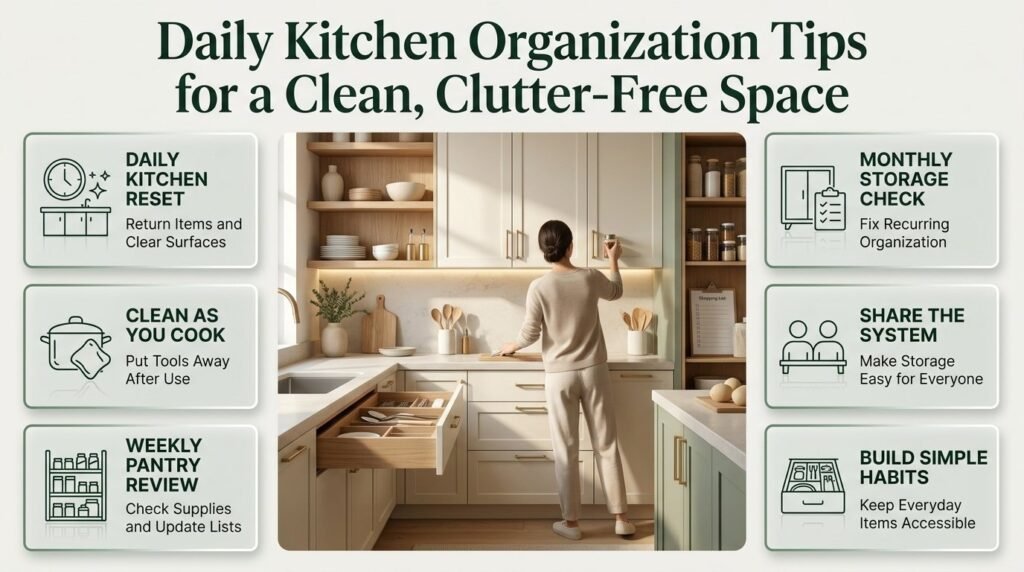
A kitchen stays organized when small habits prevent clutter from accumulating. You do not need to repeat a complete decluttering project every week; a few consistent actions can keep countertops, cabinets, and food-storage areas manageable.
Establish a Short Daily Reset
At the end of the day, return utensils and ingredients to their proper places, clear unnecessary objects from the countertops, and wipe food preparation surfaces.
Wash dishes or load the dishwasher according to your household routine. Check for spills and return misplaced items to their designated locations.
These small actions help prevent mess from building up over several days.
Clean as You Cook
When practical, put ingredients away after use and clean suitable tools while food is cooking.
For example, return a spice jar to its storage location after seasoning a dish. Place used measuring cups in the sink or dishwasher instead of leaving them scattered across the counter.
Cleaning as you cook reduces the amount of work waiting after the meal.
Review the Pantry Weekly
Check which ingredients are running low, which foods need to be used soon, and whether products have been placed in the wrong category.
Update your shopping list before purchasing groceries. This helps you avoid duplicate purchases and makes meal planning easier.
Review Storage Monthly
Every few weeks, check drawers and cabinets for recurring problems.
Are utensils accumulating in the wrong drawer? Are food containers becoming difficult to stack? Is a shelf so full that items fall out whenever the door opens?
Adjust the system where necessary instead of repeatedly reorganizing the same area without addressing the cause.
Make Organization a Shared Habit
If other household members use the kitchen, explain the storage arrangement and keep everyday categories straightforward.
A system is more sustainable when everyone can follow it without needing detailed instructions.
The purpose is not to make the kitchen perfect at every moment. It is to make returning items to their proper places an easy part of daily life.
What Is the Best Way to Organize a Kitchen for Everyday Use?
The best way to organize a kitchen is to create practical storage zones based on your daily cooking routine. Keep frequently used utensils, cookware, ingredients, and dishes close to the areas where you need them. This reduces unnecessary movement, saves preparation time, and makes it easier to maintain a tidy kitchen.
Instead of organizing everything according to appearance, focus on accessibility and convenience. For example, store pots and pans near the cooking area, cutting boards near your food preparation surface, and everyday dishes close to where you serve meals.
Practical tips:
Group similar kitchen items together.
Keep everyday essentials within comfortable reach.
Store heavy cookware on sturdy lower shelves.
Give every item a clearly defined storage location.
Review your arrangement whenever daily tasks become inconvenient.
How Can I Organize a Small Kitchen With Limited Cabinet Space?
Organizing a small kitchen starts with making better use of existing storage rather than immediately purchasing additional furniture or organizers. Remove unnecessary duplicates, use vertical storage where appropriate, and prioritize the items you regularly use. Even a small kitchen can become more functional when cabinets, drawers, and countertops have clearly defined purposes.
Stackable containers, suitable shelf risers, drawer dividers, and vertical organizers can help maximize available space. However, choose these products only after measuring your storage areas and identifying the specific problem you need to solve.
Space-saving strategies:
Store baking trays and chopping boards vertically in suitable dividers.
Nest compatible bowls and cookware to reduce wasted space.
Move occasional-use appliances away from the main preparation area.
Use cabinet doors for lightweight items when the installation is safe and suitable.
Keep countertops clear enough for comfortable food preparation.
How Do I Keep My Kitchen Organized Without Spending Money?
The most common kitchen organization mistakes include buying organizers before measuring, overcrowding cabinets, keeping too many unnecessary items, and storing everyday essentials in inconvenient locations. These problems can make a kitchen look organized initially while making regular cooking and cleaning more difficult.
Another common mistake is creating an overly complicated storage system. If family members cannot easily identify where something belongs, items are more likely to end up on countertops or in the wrong drawers. A successful arrangement should be simple enough for everyone to maintain.
Mistakes to avoid:
Purchasing storage products before decluttering.
Filling every shelf and drawer to capacity.
Storing heavy appliances in awkward overhead positions.
Transferring pantry food without retaining important product information.
Ignoring recurring clutter instead of correcting the storage arrangement.
How Can I Maintain an Organized Kitchen Every Day?
Maintaining an organized kitchen is easier when you develop small, consistent habits rather than waiting until clutter becomes overwhelming. Returning items to their designated places, cleaning as you cook, and reviewing food supplies regularly can prevent everyday mess from accumulating.
A short evening reset is particularly useful. Clear unnecessary objects from countertops, put away ingredients, deal with dishes, and wipe food preparation surfaces. Once a week, review pantry supplies and check the refrigerator for food that needs attention.
Simple maintenance habits:
Return utensils and ingredients immediately after use.
Clean spills before they become difficult to remove.
Keep countertops free from unrelated household objects.
Check grocery supplies before shopping.
Adjust storage locations when an arrangement repeatedly causes clutter.
The most effective approach is to create a system that fits your household’s routine. When every item has a convenient home and daily maintenance takes little effort, keeping your kitchen organized becomes a manageable part of everyday life.
Conclusion: Create a Kitchen That Is Organized, Practical, and Easy to Maintain
A well-organized kitchen is not just about keeping cabinets neat or countertops free from clutter. It is about creating a practical space where cooking, cleaning, and everyday tasks feel easier. By organizing kitchen cabinets, arranging drawers thoughtfully, storing pantry items in accessible locations, and keeping frequently used tools within reach, you can make better use of the space you already have.
The most effective kitchen organization system is one that suits your cooking habits, available storage, and daily routine. You do not need expensive containers or a complete kitchen makeover to achieve noticeable improvements. Start with one area at a time, remove items you no longer need, and give every essential item a designated place.
Consistency is equally important. A few simple habits, such as returning items after use, wiping countertops, checking food supplies, and spending a few minutes resetting the kitchen each evening, can help prevent clutter from building up again.
For more practical ideas, explore Heartomenal and discover helpful guidance on home organization, cleaning routines, and making everyday living spaces more comfortable. With thoughtful planning and small, consistent improvements, you can create a kitchen that looks inviting, functions efficiently, and remains easier to maintain over time.
Leave a Reply