
Introduction
Home Tips & Ideas | A comfortable home isn’t necessarily the biggest, newest, or most expensive one. Sometimes, a few thoughtful changes can make a room feel brighter, a kitchen easier to use, and an ordinary living space much more welcoming. The challenge is knowing which improvements are worth your time, where to start, and how to avoid spending money on changes that don’t solve the real problem.
These Home Tips & Ideas will help you make practical improvements to your living space, whether you live in a small apartment, a family house, or a home you’re gradually updating. You don’t need to renovate every room or purchase expensive furniture to create a noticeable difference.
In this guide, you’ll discover realistic ways to organize your home, decorate with confidence, improve storage, establish manageable cleaning routines, create comfortable rooms, reduce unnecessary energy use, and plan affordable improvements. You’ll also learn how to prioritize projects, avoid common decorating mistakes, and choose changes that fit your household’s needs.
For more practical inspiration for everyday living, visit Heartomenal. The key is to begin with the things that make daily life difficult and improve them one step at a time.
1. How Can You Make Your Home More Comfortable Without Spending Too Much?
The most effective way to make a home more comfortable is to identify the small problems you encounter every day and solve them first. Improve lighting, clear crowded surfaces, arrange furniture for easier movement, and keep frequently used items within reach. These changes can make a home feel more welcoming without requiring a major renovation.
A beautiful home should also work well for the people who live in it. A stylish living room isn’t particularly useful if nobody has a comfortable place to sit, and an attractive kitchen becomes frustrating when everyday cooking items are difficult to find.
Start With the Problems You Notice Most
Walk through your home and pay attention to the things that repeatedly inconvenience you.
For example:
- If your entrance becomes cluttered, create a designated place for shoes, bags, and keys.
- If your living room feels crowded, reconsider the furniture arrangement before buying anything new.
- If your bedroom feels uncomfortable at night, examine the lighting, bedding, room temperature, and noise.
- If your kitchen counters are always full, move rarely used appliances into suitable storage.
- If cleaning takes too long, reduce unnecessary decorative objects and establish simple daily habits.
These improvements are valuable because they address the actual cause of discomfort instead of covering it up with new purchases.
Use a Simple Home Improvement Priority List
Not every project deserves immediate attention. Some improvements solve urgent problems, while others are mainly decorative.
| Priority | Type of improvement | Example |
|---|---|---|
| High | Safety and damage prevention | Repairing a leaking pipe or securing a loose handrail |
| High | Everyday functionality | Improving access to frequently used kitchen items |
| Medium | Comfort | Adding task lighting or improving furniture placement |
| Medium | Organization | Creating a practical storage system |
| Low | Decorative updates | Changing cushion covers or displaying artwork |
Safety issues and active damage should take priority over cosmetic changes. A leaking roof, persistent dampness, or faulty electrical equipment shouldn’t be ignored simply because a room needs decorating.
Pro tip: Before starting a project, write down the problem it should solve. If you can’t identify a clear benefit, consider whether the project is necessary or whether a simpler change would work just as well.
Improve One Area at a Time
Trying to transform the entire house in a single weekend often creates unnecessary pressure. Rooms become temporarily disorganized, purchases exceed the budget, and unfinished tasks accumulate.
Instead, choose one manageable area. You might reorganize a bedside table, improve the entrance, or create a more functional kitchen drawer.
Finish that task before moving to the next one. This approach makes progress easier to see and helps you understand which changes actually improve your daily routine.
2. What Is the Best Way to Declutter Your Home?
Decluttering means removing items you no longer need, use, or want to keep so that your belongings become easier to manage. The best approach is to work in small sections, make decisions based on how you use each item, and give the things you keep a practical place. A gradual system is usually easier to maintain than a whole-house cleanout.
Clutter often develops because objects don’t have designated homes. Shopping bags remain near the entrance, paperwork spreads across the dining table, and small household items collect in drawers because nobody knows where they belong.
Follow a Simple Four-Step Decluttering Method
Step 1: Choose a small area.
Begin with one drawer, one shelf, or one section of a countertop. A small project feels manageable and lets you complete it without turning the entire room upside down.
Step 2: Sort the contents.
Separate items into four groups:
- Keep and use regularly.
- Store because they are genuinely needed but not used every day.
- Donate or give away items that are in suitable condition.
- Recycle or discard items that cannot reasonably be reused.
Follow local waste and recycling guidance, particularly for batteries, electronics, chemicals, and other special waste.
Step 3: Clean the empty space.
Wipe the shelf or drawer before returning anything. This is also a good opportunity to check for moisture, dust accumulation, damaged surfaces, or other problems that need attention.
Step 4: Return items according to frequency of use.
Place everyday essentials where they’re easiest to reach. Store occasional-use items in less accessible locations, provided they’re still safe and practical to retrieve.
How Do You Decide What to Keep?
Ask yourself a few straightforward questions:
- Have I used this item recently?
- Does it serve a clear purpose?
- Is it in usable condition?
- Do I already own something that performs the same function?
- Would keeping it make my home easier or more difficult to manage?
Not every item needs to be useful every day. Sentimental belongings, important documents, seasonal decorations, and emergency supplies may deserve space even when they’re rarely used.
The goal isn’t to own as little as possible. It’s to make your belongings easier to maintain and your rooms easier to use.
Prevent Clutter From Returning
Once a space is organized, maintain it through simple habits rather than repeated major cleanouts.
- Return items to their designated places after use.
- Review incoming paperwork before it accumulates.
- Avoid purchasing storage containers until you know what needs storing.
- Remove packaging when appropriate and safe.
- Review seasonal belongings before adding more.
- Keep frequently used surfaces reasonably clear.
Common mistake: Buying attractive baskets and boxes before sorting your belongings. Containers can hide clutter, but they don’t necessarily solve the underlying problem. Decide what you’re keeping first, then choose storage that fits those items.
3. How Can You Decorate Your Home Without Making It Look Cluttered?
Successful home decorating combines color, texture, lighting, furniture, and personal details in a way that feels balanced. Start with the room’s existing features, choose a manageable color palette, and introduce decorative pieces gradually. Leaving some open space is just as important as deciding what to display.
Decorating doesn’t mean filling every empty wall or surface. A room often looks more intentional when a few meaningful objects have enough space to stand out.
Choose a Color Palette Before Buying Decor
A simple palette makes it easier to coordinate curtains, cushions, rugs, bedding, and artwork.
You can begin with three types of colors:
- Base color: A color used across larger surfaces, such as walls, flooring, or major furniture.
- Supporting color: A complementary shade introduced through curtains, upholstery, or other medium-sized elements.
- Accent color: A smaller amount of a more noticeable color used in accessories and decorative details.
For example, a living room might combine warm cream walls, natural wood furniture, muted green textiles, and a few darker accents. The result can feel cohesive without making every item identical.
The familiar 60-30-10 decorating guideline can serve as a starting point, but it isn’t a strict rule. The best proportions depend on the room’s natural light, existing finishes, furniture, and personal preferences.
Mix Textures to Create Visual Interest
When a room uses mostly neutral colors, texture can prevent it from feeling flat.
Consider combining:
- Smooth wooden furniture with soft upholstery.
- Cotton or linen textiles with a knitted throw.
- Matte ceramic objects with a glass vase.
- Woven baskets with a simple metal lamp.
- A textured rug with a relatively plain sofa.
These differences make a room feel layered without requiring numerous colors or decorative objects.
However, too many competing textures can make a small room feel busy. Choose a few that complement each other and repeat them where appropriate.
Display Personal Items With Intention
Family photographs, travel souvenirs, handmade objects, books, and meaningful artwork help a home reflect its occupants.
Instead of spreading every item across every surface, create a few deliberate displays. Group objects by color, material, theme, or height, and leave some space around the arrangement.
You can also rotate decorative pieces seasonally. This keeps the home feeling fresh without continually purchasing new accessories.
Use the Room’s Existing Features
Before covering a wall or replacing furniture, look at what already works.
Natural wood floors, attractive window frames, interesting architectural details, and well-made furniture can become part of the design rather than obstacles to overcome.
A simple refresh might involve cleaning existing furniture, changing lampshades, repositioning artwork, or replacing worn cushion covers.
Expert tip: Collect paint samples and fabric swatches before committing to a color scheme. Check them in the actual room during morning, afternoon, and evening lighting. Colors can appear quite different under daylight and artificial light.
4. What Are the Best Home Organization Ideas for Every Room?
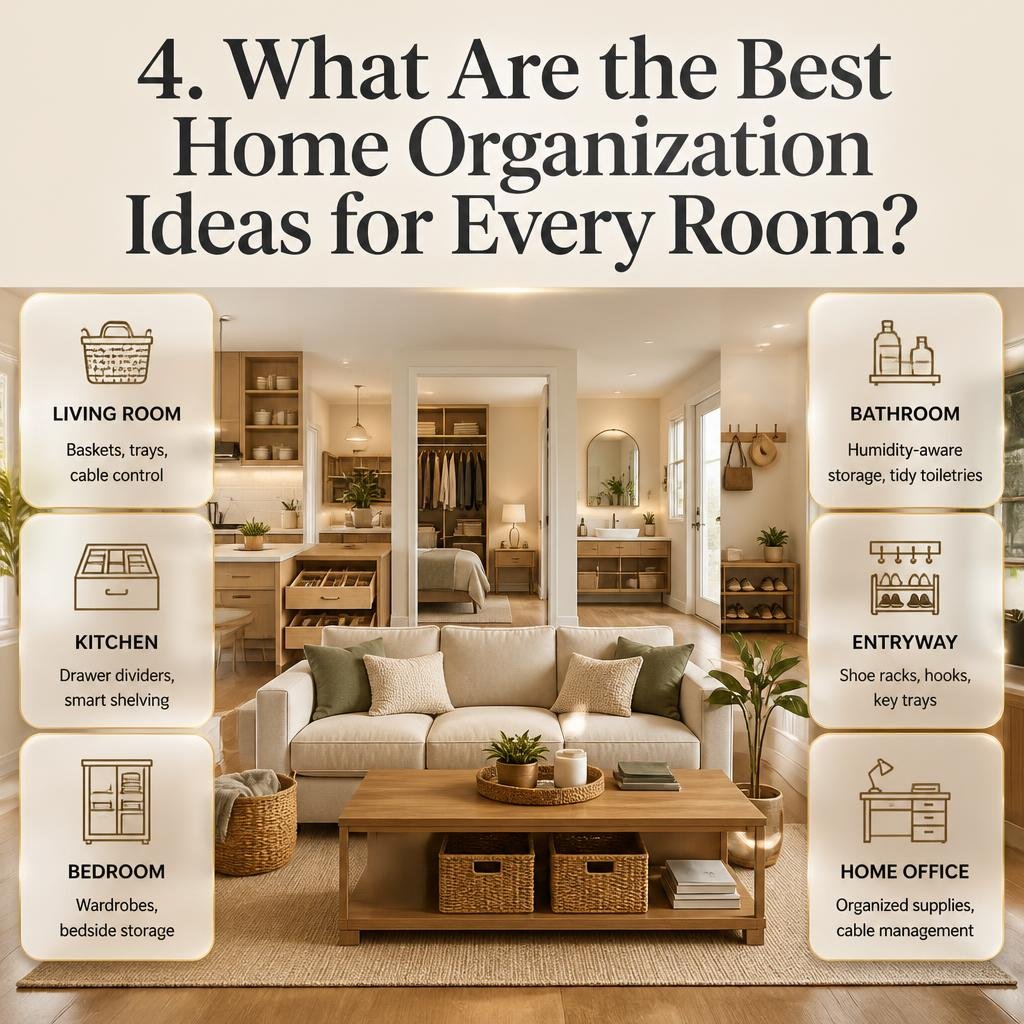
The best home organization system matches the way each room is used. Store cooking tools near preparation areas, keep everyday toiletries together, organize bedroom essentials within easy reach, and create a clear place for items that enter the home. When storage follows daily habits, people are more likely to maintain it.
A practical system doesn’t have to look complicated. Often, a few appropriately sized organizers, shelves, hooks, and labeled containers are enough.
Living Room Organization
The living room often serves several purposes, including relaxing, entertaining guests, watching television, reading, and spending time with family.
Organize it around those activities.
- Use a tray to group remote controls and small accessories.
- Keep frequently used blankets in an accessible basket.
- Store books vertically or horizontally according to available space.
- Use furniture with built-in storage when it genuinely meets your needs.
- Keep walking routes clear, particularly around doorways.
- Use cable management solutions to reduce tangled wires.
If your living room is small, avoid adding large storage furniture simply because it looks attractive. Measure the available area and consider whether existing furniture could serve more than one purpose.
Kitchen Organization
A well-organized kitchen makes preparing meals, cleaning up, and finding ingredients easier.
Begin by arranging items according to the stages of cooking.
Keep everyday cooking utensils near the preparation area. Store plates and glasses where they’re easy to retrieve. Group baking supplies together, and keep frequently used spices accessible without placing them directly beside heat or moisture.
Useful kitchen organization ideas include:
- Drawer dividers for utensils.
- Shelf risers for suitable cupboards.
- Clear, food-safe containers for appropriate dry goods.
- Hooks for selected tools when wall space permits.
- Vertical storage for baking trays and chopping boards.
- A dedicated location for lunch containers and reusable bottles.
Important: Store cleaning products separately from food, and keep chemicals in their original labeled containers. Follow product instructions and keep hazardous products away from children and pets.
Don’t decant everything into matching jars simply for appearance. Original packaging may provide important ingredient, allergen, expiry, and safety information. If you use containers, label them clearly.
Bedroom Organization
The bedroom should support rest rather than function as a general storage room.
Keep the bedside area limited to items you regularly use, such as a lamp, reading material, and essential personal belongings. Use drawer organizers for small items and divide wardrobe storage according to clothing type or frequency of use.
You can make a wardrobe easier to manage by:
- Grouping similar garments together.
- Storing seasonal clothing separately when appropriate.
- Using shelf dividers to keep folded items organized.
- Keeping commonly worn clothing within easy reach.
- Reviewing damaged or unused belongings periodically.
- Leaving enough space to remove clothing without disturbing everything else.
Under-bed storage can help in homes with limited cupboard space. Choose suitable containers that protect belongings from dust and moisture, and avoid blocking ventilation or creating a difficult cleaning problem.
Bathroom Organization
Bathrooms need organization that accounts for humidity, hygiene, and limited counter space.
Use suitable shelves, drawer dividers, and wall-mounted holders where they can be installed safely. Keep daily toiletries together and store backup supplies separately so they don’t crowd the sink.
Check products periodically for changes in condition or expired use dates. Follow the manufacturer’s storage instructions for medicines, cosmetics, and cleaning products.
Avoid storing items in persistently damp areas. Moisture can damage paper packaging, encourage mold growth, and affect some personal-care products.
Entryway Organization
The entrance sets the tone for the rest of the home. It is also where clutter often begins.
Create a small, consistent system for shoes, bags, keys, umbrellas, and incoming mail.
A useful entryway might contain:
- A shoe rack sized to the household’s needs.
- A sturdy hook or rail for bags and coats.
- A small tray for keys.
- A basket for items that need to be carried out.
- A washable mat to catch dirt.
- A designated location for incoming paperwork.
Keep the entrance and exit routes clear. Avoid placing storage where it could obstruct doors or create a tripping hazard.
Home Office Organization
A home workspace should support concentration, comfortable posture, and efficient access to supplies.
Keep essential tools nearby, but remove objects that repeatedly distract you. Use cable organizers to prevent wires from tangling, and arrange documents so that current work remains separate from paperwork that needs long-term storage.
If you use the dining table as a temporary workspace, create a portable work kit containing the items you need. When work is finished, return the kit to its designated location.
This simple arrangement allows one space to serve multiple purposes without leaving work materials scattered around the house.
Practical Everyday Household Tips and Tricks
Managing a home becomes easier when you develop simple routines for cleaning, organizing, and handling common household tasks. From keeping kitchen surfaces clean to reducing clutter and maintaining an orderly living space, small improvements can save time and make everyday responsibilities more manageable. For more practical ideas, explore our guide to everyday household tips and tricks, which offers useful suggestions for making daily home management simpler, more organized, and more efficient.
5. How Can You Make a Small Home Look More Spacious?
A small home can feel more spacious when furniture fits the room, walking paths remain clear, storage uses available vertical space, and light moves through the interior. The objective isn’t to make every room look empty. It’s to remove unnecessary visual and physical obstacles while preserving comfort and useful functionality.
Small spaces require thoughtful choices because every large item affects movement, storage, and the overall appearance.
Choose Furniture That Fits the Room
Oversized furniture can dominate a compact room and make everyday activities awkward.
Before purchasing a sofa, table, wardrobe, or bed, measure the room and check the item’s full dimensions. Consider how far drawers open, how chairs move, and whether doors can swing freely.
A slightly smaller sofa that leaves a comfortable walkway may be more useful than a larger one that barely fits.
Furniture with raised legs can create a sense of openness by allowing more floor area to remain visible. However, practical requirements matter more than appearance, particularly if you need enclosed storage or easy access.
Use Vertical Space Wisely
Walls offer useful storage opportunities when floor space is limited.
Depending on the room, you might use:
- Wall-mounted shelves for books and selected decorative objects.
- Tall storage units that use available height.
- Hooks for bags, coats, and everyday accessories.
- Vertical organizers for appropriate kitchen or office supplies.
- Wall-mounted lights where installation is safe and suitable.
Always check the wall type, load limits, fixing requirements, and location of concealed electrical wiring or plumbing before installing heavy shelves.
Avoid covering every wall with storage. Leave some areas visually quiet so that the room doesn’t feel crowded.
Make Use of Mirrors and Natural Light
Mirrors can reflect light and create a greater sense of depth, especially when positioned to reflect a window or a bright part of the room.
Place mirrors securely and consider what they reflect. A mirror facing a cluttered shelf may simply make the clutter more noticeable.
Keep windows clean, use window treatments that suit the room, and avoid placing unnecessarily bulky objects in front of valuable daylight.
Light-colored walls can help distribute light, but you don’t have to paint everything white. Warm neutrals, pale greens, soft blues, and other muted shades can also work well.
Create Clear Visual Zones
A single room may need to support several activities. For example, a studio apartment might contain a sleeping area, a small dining space, and a work corner.
You can distinguish these zones without building permanent walls.
Try using a rug beneath the seating area, a compact desk near a window, or different lighting for work and relaxation. Keep the furniture arrangement consistent with the room’s main walking routes.
Quick tip: Before moving furniture, sketch the room on paper and mark the doors, windows, outlets, and major furniture dimensions. This makes it easier to test arrangements without repeatedly lifting heavy items.
Simple Home Comfort Tips for Everyday Living
Creating a comfortable home starts with small changes that make your living space more relaxing, functional, and welcoming. From improving room lighting and maintaining a pleasant temperature to choosing soft furnishings and reducing unnecessary clutter, thoughtful adjustments can make everyday life more enjoyable. Explore our guide to home comfort tips for practical ideas to create a cozy, organized, and comfortable home without making unnecessary changes or expenses.
6. What Lighting Ideas Make a Home Feel Better?
Good home lighting combines general illumination, task lighting, and accent lighting. General lighting makes a room usable, task lighting supports activities such as reading or cooking, and accent lighting highlights selected features. Combining these layers provides more flexibility than relying on a single bright ceiling light.
Lighting influences how a room looks and how comfortably you can use it throughout the day.
Understand the Three Main Types of Lighting
General lighting
This provides overall illumination. Ceiling fixtures and suitable recessed lights are common examples.
The goal is to make the room comfortably visible without creating excessive glare or dark patches.
Task lighting
Task lighting directs light toward a specific activity.
Examples include a desk lamp, a reading light beside a chair, or appropriate under-cabinet lighting in a kitchen.
Task lighting can improve visibility without requiring every light in the room to operate at maximum brightness.
Accent lighting
Accent lighting draws attention to selected features, such as artwork, architectural details, or a display shelf.
It works best when used selectively. Too many competing accent lights can make the room feel visually busy.
Choose Light Color for the Activity
Light sources are often described by color temperature in kelvins.
| Light appearance | Common range | Suitable uses |
|---|---|---|
| Warm white | 2700–3000 K | Bedrooms, relaxed living spaces |
| Neutral white | 3500–4000 K | Kitchens, bathrooms, general work areas |
| Cool white | 4000–5000 K | Selected task-oriented spaces where crisp visibility is useful |
These ranges are general guidelines rather than fixed rules. Bulb quality, color rendering, room finishes, and personal preference also affect the result.
A very cool light may feel harsh in a bedroom, while very warm lighting may make detailed work more difficult for some people.
Check the bulb’s brightness, measured in lumens, as well as its color temperature. A high-wattage label alone doesn’t tell you how much useful light a modern LED provides.
Reduce Glare and Dark Corners
A room can contain plenty of light and still feel uncomfortable if it creates glare.
Avoid positioning exposed bright bulbs directly in your line of sight. For desk work, consider how daylight enters the room and whether the light source creates reflections on your screen.
Dark corners may benefit from a floor lamp, table lamp, or suitable wall fixture.
Use lamps and bulbs that match the fixture’s electrical rating and installation requirements. Any new wiring or uncertain electrical work should be handled by a qualified professional.
Use Lighting Controls Where Practical
Dimmers and separate lighting switches allow you to adjust a room to different activities. You might prefer brighter lighting for cleaning and meal preparation but softer illumination for relaxing.
Before installing a dimmer, verify that the bulb and control are compatible. Not every LED bulb works properly with every dimmer.
Smart bulbs can provide scheduling and remote control, but they aren’t essential. A well-positioned standard lamp may solve the problem more simply and affordably.
Home Decorating Tips for a Beautiful and Welcoming Space
Decorating your home does not always require expensive furniture or major renovations. Simple changes, such as coordinating colors, arranging furniture thoughtfully, adding decorative accents, and improving lighting, can make each room feel more balanced and inviting. Choosing decor that reflects your personal style while keeping functionality in mind also helps create a space that looks attractive and feels comfortable. Explore our guide to home decorating tips for practical ideas to refresh your interiors, improve room aesthetics, and make the most of your existing space.
7. How Can You Choose the Right Colors for Your Home?
The right home color scheme balances personal taste, natural light, existing materials, and the atmosphere you want to create. Start with a small group of compatible colors, test samples in the actual room, and repeat selected shades through furniture and accessories. A coordinated palette generally looks more intentional than choosing every item independently.
Color affects how a room is perceived, but no color produces the same result in every home.
Consider the Room’s Natural Light
A room facing a shaded courtyard may receive less direct sunlight than one with large south- or west-facing windows, depending on its location and surroundings.
The same paint color can look warmer, cooler, brighter, or darker under different conditions.
Before painting, observe the room throughout the day. Test samples on more than one wall if possible, and look at them alongside the flooring, curtains, and large furniture pieces.
Don’t rely exclusively on a color displayed on a phone or computer screen. Digital colors may differ considerably from the finished paint.
Use Neutral Colors as a Flexible Foundation
Cream, beige, gray, and soft white can provide a versatile background for furniture and accessories.
However, neutral doesn’t automatically mean plain or colorless. Undertones matter.
A cream with a warm undertone may work beautifully with natural oak and warm fabrics, while a cooler gray may coordinate better with particular stone finishes and modern furnishings.
Test combinations before committing to a large area.
Add Accent Colors Through Smaller Items
If you’re uncertain about using a strong color, introduce it through objects that are relatively easy to change.
Consider cushions, throws, artwork, table lamps, vases, or smaller decorative accessories.
For example, a room with warm neutral walls and wooden furniture could introduce forest green through textiles, with a small amount of brass or dark brown for contrast.
If you later decide to change the palette, replacing a few accessories is usually easier than repainting every wall.
Coordinate Patterns Carefully
Stripes, checks, florals, and geometric designs can work together when they have some visual relationship.
One approach is to combine:
- A dominant pattern with a clear focal role.
- A smaller supporting pattern.
- A mostly plain textile that gives the eye a rest.
The patterns don’t need to use identical colors, but repeating one or two shades can help them feel connected.
Avoid purchasing several patterned items without considering their scale. Large designs can overwhelm small surfaces, while many tiny patterns may compete with each other.
Common mistake: Selecting paint, curtains, cushions, and rugs separately without checking how they look together. Gather samples and view them side by side before making final purchases.
8. What Are the Best Budget-Friendly Home Improvement Ideas?
Budget-friendly home improvements focus on high-impact changes, maintenance, and better use of existing belongings. Cleaning, rearranging furniture, repairing minor defects, improving organization, and updating selected textiles can make a meaningful difference. Set a budget before shopping and prioritize changes that solve practical problems rather than buying items simply because they’re on sale.
A low-cost project isn’t automatically good value. The best improvement is one that lasts, fits your home, and meets a real need.
Refresh What You Already Own
Before replacing furniture, examine its condition and usefulness.
A sturdy table may need cleaning and appropriate refinishing rather than replacement. A sofa might benefit from fresh cushion covers, while an old lamp could look better with a suitable new shade.
Other inexpensive changes include:
- Rearranging existing furniture.
- Cleaning curtains according to their care labels.
- Replacing worn drawer liners.
- Organizing open shelves.
- Removing damaged or unnecessary accessories.
- Improving the placement of artwork.
- Cleaning suitable tile grout using an appropriate product.
Check the material and manufacturer’s care instructions before using cleaning products or refinishing techniques. Some finishes are easily damaged by abrasive cleaners, excessive moisture, or unsuitable chemicals.
Make a Realistic Decorating Budget
Divide your available budget into practical categories.
| Budget category | What to include |
|---|---|
| Essential repairs | Issues affecting safety or preventing further damage |
| Functional improvements | Storage, lighting, or furniture needed for everyday use |
| Decorative updates | Paint, textiles, artwork, and accessories |
| Contingency | Unexpected costs or additional materials |
The appropriate proportions depend on the project. If you have a leak or a faulty electrical installation, essential repairs should take precedence over decorative spending.
For larger projects, request written estimates, check what’s included, and compare materials and workmanship rather than choosing on price alone.
Use a Before-You-Buy Checklist
Before making a purchase, ask:
- What problem will this item solve?
- Do I already own something that could do the same job?
- Have I measured the available space?
- Will it coordinate with the room’s existing materials?
- Is it easy to clean and maintain?
- Are installation costs or additional accessories required?
- Is it likely to remain useful over time?
This checklist helps prevent impulse purchases that create more clutter or expense than value.
Budget-Friendly Home Improvement Tips for Every Home
Improving your home does not have to involve expensive renovations or a large budget. Small, thoughtful upgrades, such as refreshing wall colors, updating cabinet hardware, improving lighting, and reorganizing existing furniture, can make a noticeable difference in your living space. By prioritizing practical changes and reusing items you already own, you can enhance your home’s appearance and functionality while keeping costs under control. Explore our guide to budget-friendly home improvement tips for affordable ideas that help you create a more attractive, comfortable, and functional home without unnecessary spending.
Understand When DIY Is Worthwhile
Simple projects can be satisfying when the required skills, tools, and safety precautions are appropriate.
Examples include reorganizing a cupboard, assembling suitable flat-pack furniture, changing removable cushion covers, or applying paint to a properly prepared surface.
More complex work requires greater caution. Electrical installations, gas work, structural alterations, significant plumbing repairs, and work at height may require qualified professionals or permits under local regulations.
Expert tip: Include tools, preparation materials, disposal, delivery, and cleanup when estimating project costs. The advertised price of a material rarely represents the entire cost of completing the job.
9. How Can You Keep Your Home Clean With Less Effort?

The easiest way to maintain a clean home is to divide cleaning into small, repeatable tasks rather than waiting until every room needs attention. Combine quick daily resets with weekly cleaning and occasional deeper maintenance. Concentrate on high-use areas, follow suitable product instructions, and adjust the schedule to the size of your household.
A practical routine reduces the amount of work that builds up between cleaning sessions.
Create a Simple Daily Cleaning Routine
Daily cleaning doesn’t need to involve every room.
Choose a few tasks that prevent common problems from developing:
- Wash dishes or load the dishwasher after meals.
- Wipe kitchen surfaces with an appropriate cleaner.
- Put frequently used items back in their places.
- Deal with visible spills promptly.
- Keep the entrance clear.
- Spend a few minutes resetting the living room.
- Place laundry in a designated basket.
These tasks are particularly useful in homes where several people share the same spaces.
You don’t have to follow a strict timetable. If your household has different work, school, or caregiving schedules, choose routines that fit those patterns.
Divide Weekly Cleaning by Area
Instead of cleaning the whole home at once, assign different areas to different days when that approach suits your household.
| Cleaning task | Suggested frequency | What to consider |
|---|---|---|
| Kitchen surfaces | Daily or as needed | Food preparation and spills |
| Bathroom fixtures | Regularly, based on use | Hygiene, moisture, and ventilation |
| Floors | As needed, often weekly | Foot traffic, pets, and visible dirt |
| Bedding | According to use and care labels | Personal needs and fabric instructions |
| Dusting | Weekly or as needed | Allergies, ventilation, and surfaces |
| Fridge review | Regularly | Food freshness, spills, and safe storage |
| Windows and tracks | Periodically | Dust, weather, and accessibility |
This table is a flexible starting point, not a universal schedule. A busy family kitchen may need more frequent attention than a rarely used guest room.
Clean From Top to Bottom
When cleaning a room, start with higher surfaces and finish with the floor. This helps prevent dust from settling on areas you’ve already cleaned.
A simple sequence is:
- Remove unnecessary items from the area.
- Dust suitable high surfaces.
- Clean shelves, furniture, and frequently touched areas.
- Clean mirrors or glass where appropriate.
- Vacuum or sweep.
- Mop compatible flooring if needed.
- Return items to their designated places.
Use separate cleaning materials where appropriate for kitchens, bathrooms, and other areas. Follow product labels and never mix cleaning chemicals, especially bleach with acids or ammonia-containing products, because dangerous gases may be released.
Keep Cleaning Supplies Organized
Store cleaning products securely in a designated location. Keep them in their original labeled containers and follow storage instructions.
A small caddy can help you carry appropriate supplies between rooms, but don’t combine incompatible chemicals or transfer them into unmarked bottles.
Store products away from food and keep them inaccessible to children and pets.
Make Cleaning Easier for Everyone
If several people share a home, distribute responsibilities clearly.
One person might manage laundry while another handles dishes or rubbish. Children can participate in age-appropriate tasks, such as putting away toys or organizing their belongings.
The goal is a workable household routine, not a perfectly staged home every day.
Quick tip: When a room looks messy, start by putting away items that belong elsewhere. Removing misplaced objects often makes the remaining cleaning much easier.
10. What Home Maintenance Tasks Should You Never Ignore?
Regular home maintenance helps identify developing problems before they become more expensive or disruptive. Pay attention to leaks, unusual smells, damaged seals, blocked drainage, electrical warning signs, and changes in heating or cooling performance. The correct response depends on the problem, but safety concerns and active damage should always take priority over cosmetic improvements.
A well-maintained home is easier to clean, more comfortable to live in, and less likely to develop avoidable repair problems.
Check for Water Leaks and Moisture
Inspect visible plumbing connections, taps, under-sink cabinets, and accessible areas around toilets and washing machines.
Look for:
- Water stains on ceilings or walls.
- Peeling paint or damaged finishes.
- Persistent damp smells.
- Unexpectedly wet flooring.
- Loose or deteriorated seals.
- Water collecting around appliances.
Not every stain indicates an active leak, but recurring moisture deserves investigation. Concealed leaks can damage building materials and create conditions that support mold growth.
If a leak is active, stop the water supply when safe and practical, protect the affected area, and arrange suitable repairs. Avoid simply painting over stains before the source has been identified and corrected.
Inspect Doors, Windows, and Seals
Doors and windows affect security, comfort, ventilation, and resistance to rain or dust.
Check whether they open and close correctly. Look for damaged weatherstripping, deteriorated sealant, loose handles, and visible gaps.
Replace or repair components when necessary, using materials suitable for the location and exposure.
Don’t seal ventilation openings that are required for safe operation of appliances or building systems. If you’re unsure whether an opening is intentional, seek qualified advice before blocking it.
Pay Attention to Electrical Warning Signs
Damaged cables, loose outlets, repeated circuit-breaker trips, burning smells, and unusual heat around electrical equipment can indicate a safety problem.
Stop using suspect equipment and seek qualified assistance. If you notice smoke, fire, or an immediate electrical hazard, move away and contact local emergency services.
Don’t open electrical fittings or attempt repairs unless you have the appropriate qualifications and authorization.
Maintain Heating, Cooling, and Ventilation Systems
Heating and cooling equipment requires maintenance according to the manufacturer’s instructions.
Tasks may include cleaning or replacing accessible filters, keeping outdoor equipment clear of obstructions, checking visible drainage, and arranging professional servicing at recommended intervals.
In hot climates, air-conditioning systems can work hard for long periods. Restricted airflow, neglected filters, blocked drains, or inadequate servicing can affect performance.
If the system develops unusual noises, persistent water leakage, burning smells, or a major decline in performance, arrange an appropriate inspection instead of repeatedly restarting it.
Check Smoke Alarms and Other Safety Equipment
Smoke alarms, carbon monoxide alarms where relevant, fire extinguishers, and other safety equipment should be maintained according to their instructions and local requirements.
Test alarms as directed, replace batteries or devices when required, and make sure household members know how to respond to an emergency.
Never disable a safety alarm simply because it is inconvenient. Investigate repeated alarms and address the cause.
Use a Seasonal Maintenance Checklist
Some tasks depend on local weather and the building’s design.
Before periods of heavy rain, inspect accessible drainage and look for obvious roof or gutter problems from a safe location. Before hot weather, check cooling equipment and suitable window coverings. In colder climates, follow appropriate winterization procedures.
Do not climb onto a roof or work from an unsafe ladder to inspect an inaccessible area. Hire a qualified professional when the task involves significant fall risk or specialized equipment.
Expert tip: Keep a simple record of repairs, servicing dates, appliance manuals, and warranties. Knowing when a system was last inspected makes future maintenance easier to plan.
Smart Bathroom Planning Tips for a Functional Space
A well-planned bathroom should balance comfort, functionality, storage, and visual appeal. Before making changes, consider the available floor space, placement of fixtures, ventilation, lighting, and storage needs to ensure the room remains practical for everyday use. Even a small bathroom can feel more organized when you choose suitable fittings, use vertical storage, and maintain a clear layout. Explore our guide to bathroom planning tips for practical ideas to plan your bathroom efficiently, make better design decisions, and create a comfortable space that suits your household’s needs.
You’re using the free version of ChatGPT. Upgrade for advanced models, better memory, and higher-quality image creation.
Try Plus free
11. How Can You Make Your Home More Energy-Efficient?
A more energy-efficient home uses energy more thoughtfully while maintaining suitable comfort, ventilation, and safety. Common improvements include using efficient lighting, reducing unnecessary standby consumption, maintaining cooling and heating equipment, managing sunlight, and choosing suitable appliances. The best options depend on your climate, utility costs, building design, and the equipment you already own.
You don’t necessarily need expensive technology to start reducing waste.
Replace Inefficient Lighting When Appropriate
LED lighting generally uses less electricity than traditional incandescent lighting for a comparable amount of light and usually lasts longer.
When replacing bulbs, check brightness, color temperature, fixture compatibility, and the manufacturer’s instructions.
Avoid replacing a functioning bulb solely because a particular style is fashionable. Prioritize frequently used lights and fixtures where an efficient alternative makes practical sense.
Easy Laundry Tips and Tricks for Better Clothing Care
Keeping clothes clean, fresh, and well-maintained becomes much easier when you follow a consistent laundry routine. Sorting garments by color and fabric type, choosing the appropriate wash cycle, measuring detergent correctly, and drying clothes according to their care labels can help prevent common laundry problems. Organizing your laundry supplies and treating stains promptly can also save time and make washing more efficient. Explore our guide to laundry tips and tricks for practical advice on simplifying laundry day, caring for different fabrics, and keeping your household laundry organized.
Reduce Unnecessary Energy Use
Many appliances consume electricity while operating, and some continue to draw power in standby mode.
Useful habits include:
- Turning off lights in unused rooms.
- Using appropriate power-management settings on computers.
- Avoiding unnecessary operation of empty appliances.
- Choosing suitable energy-efficient appliances when replacements are needed.
- Using timers or smart controls when they provide a genuine benefit.
- Following appliance instructions for efficient operation.
Do not disconnect equipment that requires continuous power for safety, medical needs, refrigeration, or proper operation.
Improve Window and Door Performance
Suitable curtains, blinds, weatherstripping, and window treatments can help manage heat and drafts.
In hot climates, external shading can reduce direct solar heat entering a room. In cooler climates, appropriate insulation and draft reduction may be more important.
Keep ventilation needs in mind. A home should not be sealed in a way that creates moisture problems or interferes with the safe operation of fuel-burning appliances.
Use Cooling Systems Wisely
In warm climates, air conditioning can be a major contributor to household electricity use.
Consider these measures:
- Choose a reasonable temperature setting that suits occupants and conditions.
- Clean or replace filters according to instructions.
- Close doors and windows when the cooling system is operating, unless the system is designed otherwise.
- Use suitable blinds or curtains to reduce intense sunlight.
- Avoid obstructing supply or return vents.
- Arrange maintenance when performance declines.
A programmable thermostat may help reduce unnecessary operation when a home is empty, provided the settings remain appropriate for occupants, pets, and local weather.
Don’t switch off necessary cooling in conditions where excessive indoor heat could endanger vulnerable occupants.
Understand the Value of Energy Improvements
Some changes offer immediate benefits, while others require an upfront investment.
| Improvement | Initial cost | Potential benefit |
|---|---|---|
| Switching suitable bulbs to LEDs | Low | Lower lighting energy use |
| Adjusting appliance habits | Little or none | Less unnecessary consumption |
| Improving window shading | Low to moderate | Reduced solar heat gain |
| Servicing cooling equipment | Varies | Better maintenance and performance |
| Adding insulation where suitable | Moderate to high | Reduced heat transfer |
| Replacing an inefficient appliance | High | Potentially lower long-term energy use |
Actual savings depend on the existing equipment, climate, usage, installation quality, and electricity rates. Compare expected savings and installation costs before committing to a large upgrade.
Basic Home Maintenance Tips for Every Homeowner
Regular home maintenance helps keep your living space safe, functional, and comfortable while reducing the risk of unexpected repairs. Simple tasks such as checking for plumbing leaks, inspecting doors and windows, cleaning air filters, monitoring walls for signs of moisture, and maintaining household appliances can prevent minor issues from becoming expensive problems. Creating a seasonal maintenance checklist also makes it easier to track important tasks and keep your property in good condition throughout the year. Explore our guide to basic home maintenance tips for practical advice on maintaining your home, identifying common problems early, and managing everyday upkeep more efficiently.
12. What Are the Best Ideas for a More Sustainable Home?
A sustainable home makes thoughtful use of resources, reduces unnecessary waste, and chooses durable solutions where practical. Everyday actions such as repairing usable items, planning purchases, conserving water, reducing food waste, and selecting long-lasting materials can contribute to more responsible household habits without requiring a complete lifestyle change.
Sustainability isn’t about making every purchase perfect. It’s about improving decisions over time.
Buy Fewer, More Useful Items
Before purchasing furniture or accessories, consider durability, repairability, cleaning requirements, and whether the item will remain useful as your needs change.
A sturdy piece of furniture that can be repaired may offer better long-term value than a cheaper item that quickly becomes unusable.
However, the most sustainable option isn’t always the most expensive one. Consider the product’s actual quality, expected lifespan, and suitability for your home.
Easy Home Cleaning Tips for a Cleaner and Healthier Living Space
Keeping your home clean does not have to take hours every day. Simple habits, such as wiping kitchen surfaces after cooking, cleaning high-touch areas regularly, managing laundry, and putting belongings back in their proper places, can make household cleaning more manageable. Creating a room-by-room cleaning schedule also helps you divide larger tasks into smaller steps and prevent dirt and clutter from accumulating. Using suitable cleaning products for different surfaces can further improve results while protecting household materials. Explore our guide to easy home cleaning tips for practical strategies to simplify daily chores, maintain a tidy home, and establish a cleaning routine that fits your schedule.
Reduce Household Waste
Start by identifying what your household throws away most frequently.
If food waste is common, plan meals around ingredients you already have and store food according to safety guidance. If packaging accumulates, choose reusable alternatives where practical and hygienic.
Other helpful habits include:
- Repairing suitable household items.
- Donating usable belongings.
- Reusing containers designed for repeated use.
- Buying only the quantities you need.
- Sorting recyclables according to local rules.
- Disposing of batteries and electronics through appropriate collection systems.
Don’t assume that every material is recyclable in your area. Local collection systems vary, so check the relevant requirements.
Conserve Water Responsibly
Fix dripping taps, monitor visible plumbing leaks, and choose water-efficient fixtures when replacements are needed.
Use washing machines and dishwashers according to their instructions and load requirements. Avoid running appliances in ways that compromise cleaning or hygiene merely to reduce water use.
If your home has a garden, select plants suited to the local climate and water availability. Appropriate mulching and watering practices can help reduce unnecessary water loss.
Effective Home Decluttering Tips for an Organized Living Space
Keeping your home organized becomes easier when you reduce unnecessary belongings and give everyday items a designated place. Start by sorting one area at a time, such as a kitchen drawer, bedroom closet, or living room shelf, instead of trying to organize the entire house at once. Donate usable items you no longer need, create practical storage zones, and develop simple daily habits to prevent clutter from building up again. Explore our guide to home decluttering tips for practical strategies to create a cleaner, more spacious, and organized home while making everyday routines easier to manage.
Smart Home Organization Tips for a Neat and Functional Home
Keeping your home organized becomes easier when every item has a designated place and everyday routines support a clutter-free environment. Use labeled storage containers, drawer dividers, and practical shelving to organize household essentials, while grouping similar items together for easier access. Establishing simple habits, such as tidying shared spaces daily and returning belongings after use, can also prevent mess from building up. For better results, organize one room or storage area at a time and choose solutions that suit your household’s needs. Explore our guide to smart home organization tips for practical ways to improve storage, simplify household routines, and maintain a more organized and comfortable living space.
Choose Materials for Their Actual Use
When selecting flooring, paint, furniture, or textiles, consider durability, maintenance, indoor comfort, and the conditions in which the material will be used.
For example, a delicate rug may be unsuitable for a busy entrance, while a moisture-sensitive material may perform poorly in a bathroom.
Low-emission products may be worth considering where indoor air quality is a priority. Follow ventilation and application instructions when using paints, adhesives, sealants, or other renovation materials.
Avoid Replacing Everything in the Name of Sustainability
Replacing usable furniture and finishes can create unnecessary expense and waste.
Sometimes, repairing, refinishing, cleaning, or adapting an existing item is the better choice. Replace it when there is a practical reason, such as damage, safety concerns, poor functionality, or an upgrade that provides a meaningful long-term benefit.
13. How Can You Create a More Relaxing Bedroom?
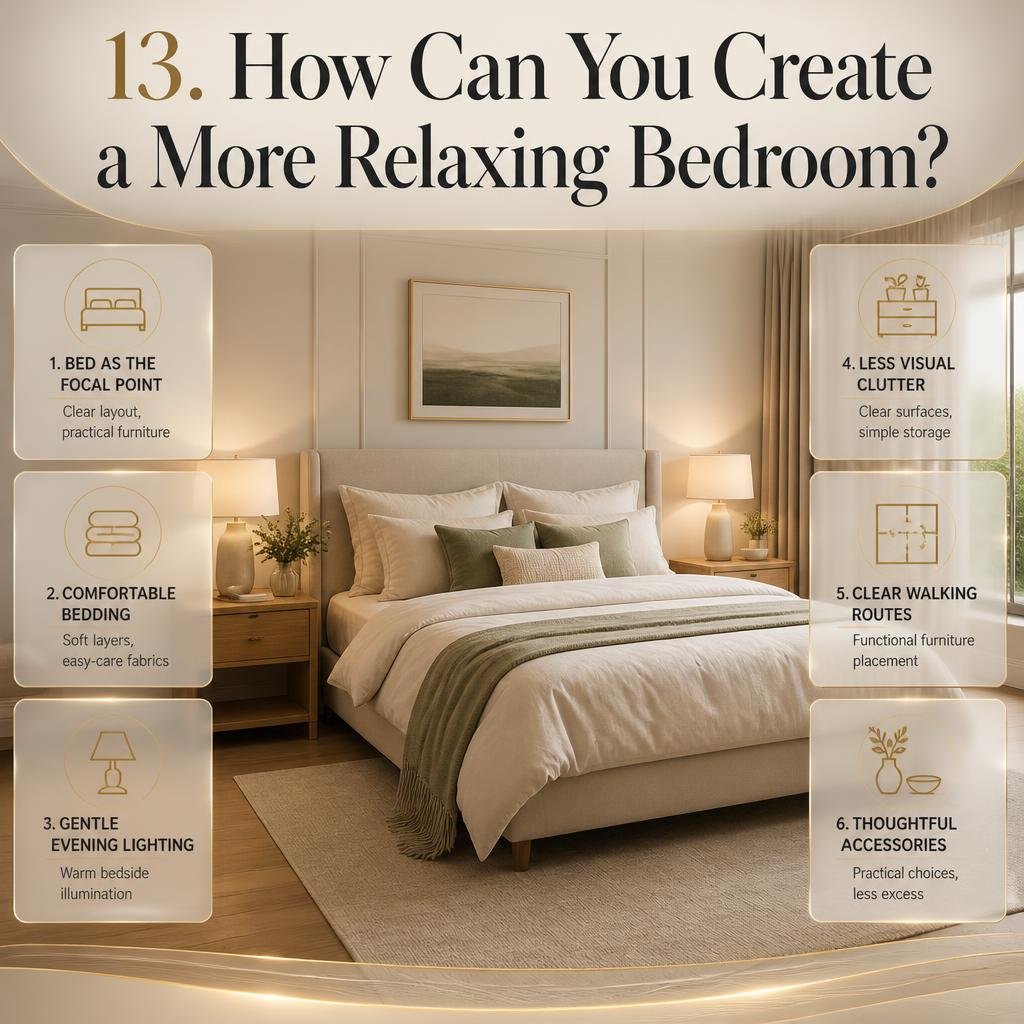
A relaxing bedroom supports rest through comfortable bedding, appropriate lighting, manageable clutter, suitable temperature, and reduced disruption. Focus on the conditions that affect sleep and daily routines rather than copying a decorative style. A bedroom can be attractive and practical without expensive furniture, complicated accessories, or a complete redesign.
Keep the Bed as the Main Focal Point
In many bedrooms, the bed naturally attracts attention.
Arrange furniture so the bed is easy to access and the main walking routes remain clear. Use bedside tables only when they provide useful storage or support everyday activities.
If the room is small, consider whether a narrower bedside table, wall-mounted light, or different furniture arrangement would create more usable space.
Smart Home Storage Solutions for Every Room
Finding enough space for household belongings can be challenging, especially when closets, cabinets, and shelves become overcrowded. Practical storage solutions, such as under-bed containers, vertical shelving, multifunctional furniture, and labeled baskets, can help you make better use of available space while keeping everyday essentials easy to access. Organizing items according to their purpose and frequency of use also helps maintain a tidy and functional living environment. Explore our guide to home storage solutions for useful ideas to maximize storage, reduce household clutter, and create a more organized home without sacrificing comfort or style.
Choose Bedding for Comfort and Care
Select sheets, blankets, and pillows according to personal comfort, climate, allergies, and cleaning needs.
Breathable fabrics may be useful in warm environments, but the best choice depends on the material, weave, and individual preferences.
Wash bedding according to care labels and allow items to dry appropriately before storing them.
You don’t need several decorative pillows to make a bed look finished. A simple arrangement can be easier to maintain and more comfortable to use.
Create Gentle Evening Lighting
Bright overhead lighting may be less relaxing when you’re preparing for sleep.
Consider a bedside lamp with a suitable warm-white bulb, and reduce unnecessary light from screens or other sources when winding down.
Blackout curtains can help if outside light interrupts rest, although some people prefer to wake with natural daylight. Choose a solution that suits your routine.
Reduce Visual and Physical Clutter
Keep laundry, paperwork, and unrelated storage from gradually taking over the room.
If you use your bedroom for studying or working, establish a designated area and return materials there when you’re finished.
Keep the space under control through a short evening reset rather than a major weekly cleanup.
Quick tip: Before buying bedroom accessories, spend a few days observing what’s missing from your current setup. You may discover that better lighting or a more practical laundry arrangement matters more than new decorations.
Practical Living Room Tips for a Comfortable and Stylish Home
The living room is often the central gathering space of a home, so keeping it comfortable, organized, and visually appealing can improve everyday living. Arrange furniture to support easy movement and conversation, use layered lighting to create a welcoming atmosphere, and incorporate practical storage to keep everyday items organized. Choosing coordinated colors, comfortable seating, and easy-to-maintain fabrics can also help balance style with functionality. Explore our guide to living room home tips for practical ideas to improve your living room layout, make better use of available space, and create a welcoming environment for family and guests.
14. What Are the Best Kitchen and Bathroom Improvement Ideas?
Kitchen and bathroom improvements should make daily tasks easier, improve hygiene, and address practical problems before decorative ones. Focus on storage, suitable lighting, durable surfaces, ventilation, and easy-to-clean arrangements. Small updates can be effective, but plumbing, electrical work, and changes involving waterproofing may require professional installation.
Kitchen Ideas That Improve Everyday Use
A useful kitchen layout reduces unnecessary movement between food storage, preparation, cooking, and cleaning areas.
You don’t need to redesign the entire kitchen to improve these routines.
Make preparation space available. Move rarely used appliances away from the main work surface. Keep everyday tools nearby without allowing them to crowd the counter.
Organize cabinets by function. Store cooking utensils together, group food-storage containers, and keep frequently used cookware within convenient reach.
Improve task lighting. Suitable lighting over preparation surfaces helps you see what you’re doing. Choose fixtures designed for the location and have electrical work completed safely.
Review the waste and recycling area. Ensure bins are accessible without obstructing cupboards or walkways. Use containers that are easy to clean.
Maintain the sink area. Address leaks promptly, clean suitable strainers, and avoid allowing food residue to accumulate around drains.
Bathroom Ideas That Balance Comfort and Practicality
Bathrooms need moisture-resistant materials, effective ventilation, and storage that doesn’t interfere with safe movement.
Useful improvements include:
- Adding suitable shelves for everyday toiletries.
- Replacing deteriorated seals with appropriate materials.
- Improving mirror lighting.
- Installing a secure towel rail where practical.
- Using storage that can tolerate the room’s humidity.
- Keeping the floor and shower area free from unnecessary objects.
- Checking for leaks around taps, toilets, and visible plumbing.
A bathroom fan can help remove moisture when correctly sized and installed. Use it according to the manufacturer’s guidance and make sure its discharge arrangement is appropriate.
When Should You Renovate Instead of Refreshing?
A cosmetic refresh may be enough when the fixtures are functional and the layout works.
A more extensive renovation may be worth considering when there’s persistent water damage, deteriorating components, serious storage limitations, or a layout that makes everyday use difficult.
Before beginning, establish the scope of work, identify necessary repairs, compare written estimates, and account for potential surprises behind walls or beneath flooring.
Don’t cover damaged surfaces simply to make them look new. Find out why the damage occurred and address the underlying issue first.
Bedroom Organization Tips for a Tidy and Relaxing Space
An organized bedroom can make daily routines easier and create a more peaceful environment for rest. Start by keeping bedside essentials within reach, organizing clothing in designated storage areas, and removing unnecessary items from dressers and nightstands. Use drawer organizers, closet dividers, and under-bed storage to make better use of available space without overcrowding the room. Maintaining a simple daily tidying routine can also prevent clutter from building up over time. Explore our guide to bedroom organization tips for practical ways to organize bedroom essentials, improve storage, and maintain a clean, functional, and comfortable sleeping space.
15. How Can You Make Your Living Room More Inviting?
An inviting living room provides comfortable seating, practical lighting, clear walking routes, and a layout that encourages people to use the space. Begin by arranging the main furniture around the room’s purpose, then introduce a few coordinated textiles, personal objects, and suitable lighting. The room should feel welcoming without becoming overcrowded.
Arrange Seating for Conversation
If the room is mainly used for family time and conversation, arrange chairs and sofas so people can interact comfortably.
The television doesn’t always need to be the center of the layout. In a multipurpose room, a conversation-friendly arrangement may be more useful.
Leave adequate clearance around furniture, entrances, and frequently used pathways. Exact spacing depends on the furniture and room dimensions, so test the arrangement before making permanent changes.
Use Rugs to Define the Seating Area
A rug can visually connect a sofa, chairs, and coffee table.
Choose a size that suits the furniture arrangement rather than selecting a rug solely because you like its pattern. A rug that’s too small may make the furniture look disconnected.
Check that the rug is appropriate for the flooring and use a suitable nonslip underlay where needed.
Add Warmth Through Textiles and Personal Details
Cushions, throws, curtains, and artwork can introduce color and texture.
You don’t need to match every item precisely. Repeating a few colors or materials can create cohesion while allowing individual pieces to have character.
Family photographs, books, plants suitable for the available light, and meaningful objects can also make the room feel personal.
Keep decorations away from heat sources and avoid arrangements that obstruct ventilation or create safety hazards.
Make the Room Easy to Maintain
Choose materials according to how the room is used.
Homes with pets or young children may benefit from washable covers, durable fabrics, and furniture finishes that are easy to clean.
Keep frequently used items accessible, but avoid letting storage baskets and decorative objects take over the floor.
An inviting living room is one people can comfortably use—not one they feel afraid to disturb.
Kitchen Organization Tips for a Clean and Functional Space
A well-organized kitchen makes meal preparation easier, saves time, and helps keep everyday cooking essentials within reach. Start by grouping similar items together, storing frequently used utensils near your cooking area, and arranging pantry ingredients in clearly defined sections. Drawer dividers, labeled containers, and vertical cabinet organizers can help maximize available storage without overcrowding countertops. Regularly checking food supplies and returning items to their designated places also makes kitchen maintenance simpler. Explore our guide to kitchen organization tips for practical ideas to improve kitchen storage, reduce clutter, and create a more efficient cooking environment.
16. What Home Tips Help Families With Busy Schedules?
Busy households benefit from simple systems that reduce repeated decisions. Assign a place for everyday belongings, keep cleaning routines manageable, prepare frequently used items in advance, and share responsibilities according to each person’s abilities. The aim is to reduce household friction, not to maintain a perfect home every hour.
Create a Household Drop Zone
Choose one location for items that regularly enter or leave the home.
Depending on your needs, this may include hooks, a small shelf, a shoe rack, or separate containers for household members.
Keep important documents secure and avoid leaving keys, personal information, or valuable items visible from outside.
Prepare for the Next Day
A short evening routine can make mornings easier.
You might:
- Put bags and essential belongings in their designated places.
- Check whether clothing needs to be prepared.
- Clear the kitchen work surface.
- Return shared items to their usual locations.
- Review the next day’s essential tasks.
Choose only the activities that genuinely help. A complicated routine can become another source of stress.
Share Household Responsibilities Clearly
When responsibilities are vague, one person may end up doing most of the work.
Create a straightforward task list and divide duties according to age, ability, availability, and household needs.
Children can help with appropriate tasks, while adults should handle activities that require greater judgment, strength, or specialized skills.
Review the arrangement when schedules change rather than expecting the same routine to work indefinitely.
Make Storage Accessible to the People Using It
Frequently used items should be stored where their users can reach them safely.
For example, children’s everyday belongings might be stored on accessible shelves, while cleaning products and hazardous tools remain securely out of reach.
A storage system works best when everyone understands it and can follow it without unnecessary effort.
Smart Small Space Home Tips for Better Use of Every Room
Making a small home feel comfortable and functional starts with thoughtful planning and efficient use of available space. Choose furniture that serves more than one purpose, use vertical storage to free up floor space, and keep frequently used items organized to prevent clutter. Light colors, mirrors, and well-planned lighting can also help rooms feel more open and welcoming. Instead of overcrowding your home with unnecessary furniture, focus on practical layouts that support your daily routines. Explore our guide to small space home tips for creative ways to maximize storage, improve room layouts, and make compact living spaces more comfortable and organized.
17. What Are the Most Common Home Improvement Mistakes to Avoid?

The most common home improvement mistakes include buying furniture before measuring, decorating without a plan, ignoring maintenance, choosing unsuitable materials, and underestimating project costs. These problems often arise when decisions are made too quickly. Taking measurements, identifying priorities, checking compatibility, and allowing time for preparation can prevent avoidable expense and frustration.
Mistake 1: Buying Before Measuring
Why it happens: An item looks suitable in a showroom or online photograph.
Why it’s harmful: Furniture may block doorways, overcrowd the room, or fail to fit into the intended location.
How to avoid it: Measure the room, the item, and the route through which it must be delivered. Consider door swings, drawers, and walking space.
Mistake 2: Trying to Follow Every Design Trend
Why it happens: Social media and interior photographs make particular styles look appealing.
Why it’s harmful: Constantly changing colors, accessories, and furniture can become expensive and leave the home feeling inconsistent.
How to avoid it: Identify the features you genuinely like and adapt them to your existing furniture, budget, and routines. Use easily changed accessories when experimenting with a trend.
Mistake 3: Choosing Appearance Over Function
Why it happens: A decorative item looks attractive, even when it doesn’t suit the space.
Why it’s harmful: Fragile finishes, difficult-to-clean textiles, and impractical furniture can make daily maintenance harder.
How to avoid it: Consider durability, cleaning requirements, room conditions, and household use before purchasing.
Mistake 4: Ignoring Small Maintenance Problems
Why it happens: Minor defects seem inconvenient or unimportant.
Why it’s harmful: Some leaks, damaged seals, or ventilation problems can lead to more serious damage if left unresolved.
How to avoid it: Inspect the home periodically and investigate recurring problems. Don’t assume a stain or smell will disappear permanently on its own.
Mistake 5: Starting Too Many Projects at Once
Why it happens: Several improvements appear equally exciting.
Why it’s harmful: The home becomes disorganized, budgets become difficult to track, and unfinished work accumulates.
How to avoid it: Complete essential repairs first, then work through manageable projects in order of priority.
Mistake 6: Buying Storage Without Decluttering
Why it happens: Containers seem like a quick solution to a messy room.
Why it’s harmful: Unnecessary belongings remain, and new containers consume additional space.
How to avoid it: Sort the items first, measure the remaining storage needs, and purchase only what fits the space.
Mistake 7: Choosing the Wrong Paint or Cleaning Product
Why it happens: A product looks suitable or promises quick results.
Why it’s harmful: The wrong product can damage surfaces, create unwanted finishes, or introduce safety risks.
How to avoid it: Read labels, check material compatibility, test an inconspicuous area when appropriate, and follow ventilation and protective-equipment instructions.
Mistake 8: Underestimating the Full Cost
Why it happens: Planning focuses on the main material or advertised price.
Why it’s harmful: Delivery, tools, preparation, labor, disposal, and unexpected repairs can exceed the budget.
How to avoid it: List all likely costs before beginning and retain a reasonable contingency for uncertainty.
Mistake 9: Overcrowding Rooms With Accessories
Why it happens: Individual items look attractive when considered separately.
Why it’s harmful: Too many objects compete for attention, collect dust, and reduce usable space.
How to avoid it: Display selected items, leave breathing room around them, and rotate accessories when you want a fresh look.
Mistake 10: Attempting Work Beyond Your Skills
Why it happens: DIY tutorials can make complicated tasks appear straightforward.
Why it’s harmful: Incorrect work may create safety hazards, damage the building, or lead to more expensive repairs.
How to avoid it: Be realistic about your skills, tools, and the risks involved. Use qualified professionals for specialized or hazardous work and follow local requirements.
18. What Do Professionals Recommend Before Improving a Home?
A practical home improvement plan begins with observation, accurate measurements, and a clear understanding of how each space is used. Experienced professionals also consider existing building conditions, material compatibility, maintenance requirements, installation constraints, and the total project cost before recommending changes. Good planning helps prevent expensive revisions after work has started.
Inspect Before You Decorate
Before changing the appearance of a room, look for problems that could affect the result.
Check for moisture, loose fixtures, damaged finishes, uneven flooring, and inadequate lighting.
If a wall has recurring stains, determine whether the cause is a leak, condensation, or another issue before repainting it. If furniture rocks or a shelf pulls away from the wall, correct the underlying problem before adding weight.
Measure More Than Once
Accurate measurements are essential when buying furniture, ordering curtains, planning shelves, or selecting flooring.
Record the room’s dimensions and note the location of doors, windows, radiators, outlets, and other fixed features.
For large deliveries, measure the entrance, corridors, stairs, and turns along the route. A sofa that fits the living room may still be impossible to move through a narrow staircase.
Choose Materials for the Environment
Materials that work well in one room may be unsuitable in another.
Bathrooms and other damp areas require products designed for their conditions. Busy entrances benefit from durable flooring and easy-to-clean finishes. Furniture exposed to strong sunlight may need materials that tolerate light exposure.
Always check manufacturer guidance instead of assuming that a product labeled durable or waterproof is suitable for every application.
Plan the Order of Work
For a room renovation, the sequence matters.
A sensible plan often includes:
- Identifying repairs and safety requirements.
- Measuring and finalizing the layout.
- Selecting compatible materials and fixtures.
- Completing necessary building or installation work.
- Painting and finishing surfaces at the appropriate stage.
- Installing furniture and suitable accessories.
- Cleaning, checking the work, and addressing defects.
The correct sequence depends on the project. Plumbing, electrical work, flooring, cabinetry, and painting may need to be coordinated differently.
Keep a Record of Decisions
Write down paint colors, product models, measurements, purchase dates, and maintenance requirements.
Keep receipts and warranties where applicable. Photographing concealed installations before walls are closed can also be useful during future repairs, provided the work is documented safely and accurately.
A small project file prevents unnecessary guesswork when replacing a component or matching an existing finish.
Evaluate Results After Completion
After finishing a project, use the room normally for a few days.
Ask yourself:
- Is the furniture comfortable?
- Are frequently used items easy to reach?
- Does the lighting suit different activities?
- Is there enough space to move around?
- Does cleaning remain manageable?
- Did the improvement solve the original problem?
If the answer to a question is no, consider a small adjustment before spending money on another major change.
19. How Can You Plan a Home Makeover Step by Step?

A successful home makeover starts with a clear goal, a realistic budget, and an order of work that prevents unnecessary expense. You don’t need to replace everything. Assess the existing room, identify what needs improvement, choose a suitable design direction, and complete the project in manageable stages.
Follow this seven-step process.
Step 1: Identify the Main Problem
Write down what isn’t working.
Perhaps the room lacks storage, the furniture arrangement feels awkward, the lighting is insufficient, or the decoration no longer suits your preferences.
Choose one main objective rather than trying to solve every problem simultaneously.
Why it matters: A clear objective helps you distinguish essential improvements from optional purchases.
Step 2: Assess What You Already Have
Look at your existing furniture, flooring, wall finishes, window treatments, and accessories.
Decide which items can remain, which need repair, and which genuinely need replacement.
For example, a living room might need a different furniture arrangement and improved lighting rather than a new sofa.
Why it matters: Reusing suitable items can reduce cost, waste, and unnecessary disruption.
Step 3: Set a Budget
Establish a spending limit before selecting products.
Include materials, labor, tools, delivery, preparation, and disposal where applicable. Set aside a contingency appropriate to the project’s complexity and the uncertainty involved.
If the project exceeds your budget, prioritize the work that provides the greatest practical benefit.
Why it matters: A defined budget makes it easier to compare alternatives and avoid unplanned spending.
Step 4: Plan the Layout
Measure the room and draw a simple floor plan.
Mark doors, windows, fixed installations, and essential walking routes. Then experiment with furniture positions and storage locations.
If you’re purchasing furniture, check both its dimensions and the space needed to use it comfortably.
Why it matters: Planning reduces the risk of buying items that don’t fit or arranging a room in a way that restricts movement.
Step 5: Choose Colors and Materials
Select a small group of compatible colors and materials.
Consider the room’s light, existing finishes, intended use, cleaning requirements, and personal preferences. Test paint and fabric samples where possible.
Don’t finalize expensive choices based solely on photographs or small online previews.
Why it matters: A coordinated plan makes the finished room feel more consistent and helps prevent costly changes later.
Step 6: Complete the Work in the Right Order
Address safety issues, maintenance, and necessary repairs first. Then complete suitable installation and finishing work before arranging furniture and decorative objects.
Protect surrounding surfaces, follow product instructions, and hire qualified professionals for work that requires specialist knowledge.
Why it matters: Correct sequencing reduces rework and helps protect completed surfaces.
Step 7: Review and Adjust
Once the room is usable, evaluate it under normal conditions.
Move accessories if they obstruct daily activities, adjust lighting where practical, and reorganize storage if frequently used items remain difficult to reach.
Allow yourself time to understand how the new arrangement works before buying additional items.
Why it matters: A makeover should improve everyday life, not merely look impressive immediately after completion.
20. How Can You Keep Your Home Organized Long-Term?
Long-term organization depends on maintaining simple habits, reviewing belongings periodically, and adjusting storage as household needs change. The most effective system is one that requires little effort to follow. Rather than relying on occasional intensive cleanouts, establish routines that prevent clutter from accumulating in the first place.
Give Every Frequently Used Item a Home
Keys, chargers, stationery, bags, cleaning tools, and everyday accessories are easier to manage when their locations are predictable.
Choose storage near the place where each item is normally used. For example, cooking tools belong near suitable preparation areas, while paperwork may need a designated space close to where household administration takes place.
Avoid creating complicated storage systems that require several steps to put an item away.
Use a Short Daily Reset
At a convenient time, spend a few minutes returning misplaced items to their locations.
You might clear the main kitchen surface, arrange the living room, prepare the entrance for the next day, or put away clothing.
Keep the routine flexible. The purpose is to reduce tomorrow’s workload, not to turn household maintenance into a demanding obligation.
Review Storage as Your Needs Change
Households change over time. Children grow, work arrangements shift, hobbies develop, and seasonal belongings accumulate.
Review storage periodically and ask whether each area still supports its intended purpose.
A cupboard once used for office supplies might become more useful for household essentials. A guest room might need a different arrangement if it also serves as a workspace.
Make adjustments based on actual use rather than trying to preserve an outdated system.
Avoid Filling Every Available Space
Empty storage capacity is useful. It gives you room to accommodate changes without immediately buying additional furniture.
If every shelf, drawer, and cupboard is full, even a small new purchase can disrupt the entire arrangement.
Leave reasonable flexibility in frequently used storage areas and review belongings before adding more containers.
Keep Maintenance Separate From Decluttering
Decluttering removes unnecessary belongings, while maintenance protects the home and its systems.
Both deserve attention.
A cupboard can be beautifully organized while hiding a leak, and a well-maintained room can still be overcrowded with unused items.
Include both activities in your household routine so that appearance, safety, and functionality receive appropriate attention.
21. How Can You Make Your Home Feel More Personal?
A personal home reflects the people who live in it through meaningful objects, comfortable routines, preferred colors, and practical choices. You don’t need to follow one design trend or make every room match. Instead, combine a few consistent elements with details that express your household’s interests, memories, and way of living.
Display Meaningful Objects
Family photographs, handmade crafts, inherited items, books, and souvenirs can help a room feel distinctive.
Choose a few pieces that matter to you and display them where they’re easy to appreciate.
For example, a small collection of travel photographs can form a coordinated wall display, while a favorite handmade bowl might become a useful centerpiece on a shelf.
Protect valuable or fragile objects from direct sunlight, excessive humidity, and locations where they could be knocked over.
Combine Old and New Pieces
A home doesn’t have to use furniture from the same collection or period.
A modern sofa can work with a traditional wooden table, while a simple contemporary room may benefit from a vintage lamp or a meaningful inherited object.
Look for common elements such as color, material, proportion, or visual weight. These connections help different pieces feel intentional rather than unrelated.
Let Your Lifestyle Guide the Design
If you enjoy reading, create a comfortable reading corner with suitable light and accessible books.
If you frequently host guests, prioritize seating and an adaptable dining arrangement.
If you enjoy cooking, make the kitchen’s preparation and storage areas more practical.
If you need quiet time, create a space where unnecessary noise and visual distractions are minimized.
The most successful design choices reflect how you actually live rather than how a room appears in a photograph.
Change Small Details When You Want Something New
You don’t need a full renovation every time your preferences change.
Try rearranging accessories, rotating artwork, changing cushion covers, or introducing a different accent color through a few smaller objects.
These changes can refresh a room while allowing the larger furniture and finishes to remain in place.
What Are the Best Home Tips & Ideas for Improving Your Home on a Budget?
The best budget-friendly home improvements focus on making existing spaces more functional, comfortable, and visually appealing without unnecessary spending. Start by identifying what needs improvement, then consider rearranging furniture, decluttering, updating lighting, and refreshing existing decor before purchasing new items. Small, well-planned changes can often make a room feel noticeably different without a complete renovation.
Practical ways to improve your home on a budget include:
Rearrange existing furniture: Improve the room’s layout, create clear walking paths, and make better use of available space.
Refresh your decor: Change cushion covers, rearrange artwork, or introduce a coordinated accent color.
Improve lighting: Use suitable lamps and efficient bulbs to make rooms more comfortable and functional.
Organize storage: Remove unnecessary belongings and create designated places for frequently used items.
Prioritize repairs: Address minor damage before it develops into a more expensive problem.
How Can I Make My Home Look More Organized and Spacious?
A home feels more organized and spacious when furniture fits the room, belongings have designated storage locations, and unnecessary objects don’t obstruct movement. Instead of trying to make every surface empty, focus on creating a balanced arrangement that provides enough room for everyday activities while keeping essential items accessible.
Use these practical strategies to improve your space:
Declutter strategically: Begin with crowded countertops, overflowing drawers, and areas that frequently become messy.
Choose appropriately sized furniture: Measure your room before purchasing large items, especially for small living rooms and bedrooms.
Use vertical storage: Install suitable shelves or organizers to make better use of wall space without overcrowding the floor.
Improve natural lighting: Keep windows unobstructed where practical and use mirrors to reflect light thoughtfully.
Maintain clear pathways: Arrange furniture so that doors, entrances, and frequently used areas remain easy to access.
What Are the Best Home Decorating Ideas for Creating a Beautiful and Comfortable Interior?
The best home decorating ideas combine a coordinated color palette, suitable lighting, comfortable furniture, and carefully selected accessories. Rather than following every design trend, choose elements that complement your existing space and reflect your personal preferences. A successful interior should look attractive while remaining comfortable, practical, and easy to maintain.
Consider these decorating principles:
Choose a consistent color palette: Combine a base color with complementary shades and a few accent colors to create visual harmony.
Layer different textures: Mix suitable fabrics, wood, glass, and other materials to add depth without making the room feel busy.
Use lighting effectively: Combine general illumination with task lighting and selected accent lights.
Select meaningful accessories: Display artwork, photographs, books, and decorative objects that reflect your personality.
Balance decoration with open space: Leave enough room around furniture and accessories so that individual elements can stand out.
How Can I Keep My Home Clean and Organized Every Day Without Spending Too Much Time?
Maintaining a clean and organized home becomes easier when small tasks are completed regularly instead of allowing mess to accumulate. A practical routine focuses on high-use areas, returning belongings to their designated places, and dividing larger cleaning jobs into manageable tasks. The best schedule is one that fits your household’s lifestyle and remains realistic over time.
To simplify everyday home maintenance:
Follow a short daily reset: Put away misplaced items, clear kitchen surfaces, and organize frequently used spaces.
Clean as you go: Wipe suitable surfaces after use and deal with spills before they become harder to remove.
Divide weekly tasks: Schedule vacuuming, bathroom cleaning, dusting, and laundry according to household needs.
Keep cleaning supplies organized: Store appropriate products securely and follow their instructions.
Share responsibilities: Divide household tasks among family members according to their abilities and availability.
Which Home Improvements Should I Prioritize to Make My Home Safer, More Comfortable, and Energy-Efficient?
The most valuable home improvements address safety, prevent damage, and improve everyday comfort before focusing on decorative upgrades. Begin by inspecting visible plumbing, ventilation, windows, doors, lighting, and household equipment. Once urgent maintenance issues are addressed, consider improvements that reduce unnecessary energy use and make rooms easier to manage.
Use this priority order when planning improvements:
Address safety concerns first: Investigate electrical warning signs, unstable fixtures, damaged handrails, and other potential hazards.
Prevent water damage: Check for leaks, deteriorating seals, persistent moisture, and drainage problems.
Maintain cooling and heating systems: Follow manufacturer recommendations for filters, servicing, and equipment care.
Improve energy efficiency: Use suitable LED lighting, manage sunlight, and reduce unnecessary appliance use.
Upgrade comfort and functionality: Improve storage, furniture placement, ventilation, and task lighting according to your needs.
Professional recommendation: Prepare a simple home maintenance plan that separates urgent repairs, routine upkeep, and optional upgrades. This helps you allocate your budget sensibly, prevent avoidable damage, and make improvements that provide lasting value rather than short-term visual appeal.
Conclusion: Make Your Home More Comfortable With Practical Home Tips & Ideas
Creating a beautiful, comfortable, and well-organized home does not require a complete renovation or a large budget. The most effective approach is to understand your household’s needs, make thoughtful decorating choices, maintain a practical cleaning routine, and improve one area at a time. Small changes, such as improving lighting, reducing clutter, arranging furniture more effectively, and choosing useful storage solutions, can make everyday living easier while giving your home a more welcoming appearance.
The best results come from combining style with functionality. Before purchasing new furniture or decorative accessories, consider how each change will improve your space, support your daily routine, and fit within your budget. Regular maintenance, energy-conscious habits, and simple organization systems can also help prevent avoidable expenses and keep your home in better condition over time.
Start with the area that needs the most attention, set realistic priorities, and build on your progress gradually. Whether you want to refresh a living room, organize a small kitchen, improve your bedroom, or create a more efficient household routine, practical ideas can help you achieve meaningful results without unnecessary spending.
For more inspiration, useful decorating guidance, and everyday solutions, explore Heartomenal and discover home ideas that help you create a space that feels organized, comfortable, and genuinely yours.

Leave a Reply