Introduction
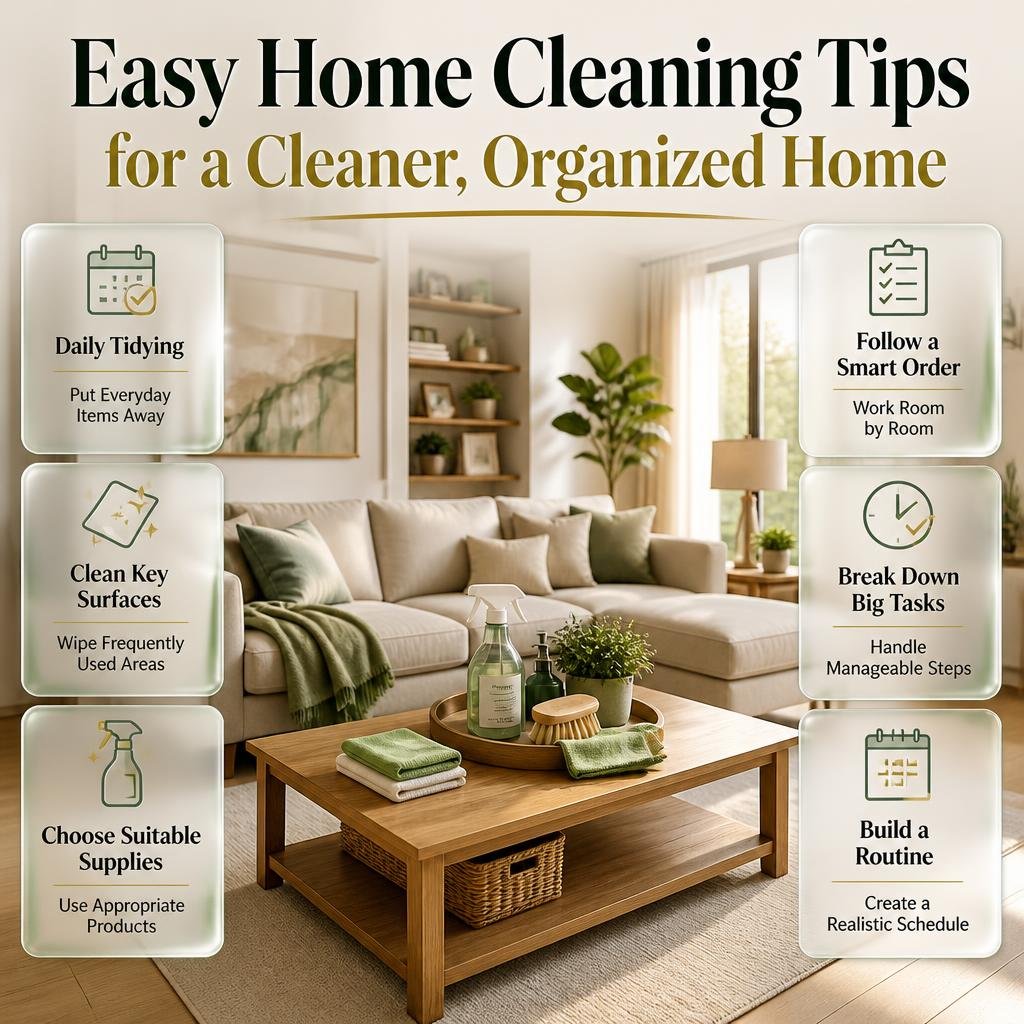
Easy Home Cleaning Tips | Keeping a home clean can feel like a full-time job. You finish washing the dishes, and another meal creates more mess. You tidy the living room, but everyday belongings soon find their way back onto the table. Before long, the entire house seems to need attention at the same time.
The solution isn’t to spend every free hour cleaning. It’s to develop practical habits that prevent mess from building up and make everyday household tasks easier to manage. With the right easy home cleaning tips, you can maintain a comfortable living space without turning cleaning into an exhausting responsibility.
Whether you live in a small apartment, share a family home, or manage several busy rooms, a simple routine can make a meaningful difference. You can begin by focusing on frequently used surfaces, choosing appropriate cleaning products, following an efficient cleaning order, and dividing larger jobs into manageable tasks.
At Heartomenal, practical home care is about making everyday living more comfortable. This guide explains how to clean different rooms, organize your cleaning routine, choose suitable supplies, avoid common mistakes, and create a realistic schedule that works with your lifestyle.
What Are the Best Easy Home Cleaning Tips for Beginners?
The best easy home cleaning tips are simple habits that prevent dirt, clutter, and residue from accumulating. Clean kitchen surfaces after preparing food, put belongings away after use, manage dishes regularly, dust before cleaning floors, and give frequently touched areas appropriate attention. These habits reduce the amount of work needed during longer cleaning sessions.
You don’t need an elaborate cleaning system to get started. A few consistent actions can make your home easier to maintain.
1. Start With the Most Noticeable Mess
When a room looks messy, it can be difficult to decide where to begin. Rather than trying to clean everything simultaneously, identify the tasks that will make the biggest practical difference.
For example, if your kitchen counter is covered with dishes, packaging, and crumbs, clear those items before polishing cabinet handles or organizing a drawer.
Begin with:
- Collecting visible rubbish.
- Moving dishes to the kitchen sink or dishwasher.
- Placing dirty clothes in a laundry basket.
- Returning frequently used belongings to their proper places.
- Clearing the surfaces that need cleaning.
This approach creates a manageable starting point and prevents you from wasting time cleaning around unnecessary objects.
2. Follow a Consistent Cleaning Order
A consistent cleaning sequence helps prevent repeated work. In most rooms, remove clutter first, clean higher surfaces, wipe furniture and counters, and finish with the floor.
A practical sequence looks like this:
Declutter → Dust → Wipe surfaces → Clean touchpoints → Vacuum or sweep → Mop if needed
The exact order can change depending on the task. For example, a fresh kitchen spill should be handled promptly rather than left until the end of a general cleaning session.
Pro Tip: Use the same basic sequence whenever you clean a room. Familiar steps reduce decision-making and make it easier to notice anything you have missed.
3. Clean Small Messes Before They Become Larger Jobs
Fresh spills, crumbs, and everyday residue are generally easier to manage before they dry or accumulate.
Wipe a suitable kitchen surface after food preparation, pick up crumbs after meals, and address bathroom splashes before they leave visible marks.
This doesn’t mean every minor mark requires an immediate deep clean. Focus on messes that affect hygiene, may cause damage, or are likely to become more difficult to remove.
4. Make Everyday Cleaning Supplies Easy to Find
A cleaning routine becomes less convenient when you spend several minutes searching for cloths, brushes, or suitable products.
Keep frequently used supplies together in a designated storage area. If you use a portable cleaning caddy, make sure it is stable, safely stored, and kept away from children and pets.
A basic cleaning collection may include:
- Microfiber cloths.
- A suitable all-purpose cleaner.
- Dishwashing liquid.
- An appropriate bathroom cleaner.
- A non-scratch sponge or scrub brush.
- A broom, dustpan, or vacuum.
- A mop suitable for your flooring.
- Cleaning gloves when recommended.
You don’t need a separate product for every object in your home. Choose supplies based on the surfaces you need to clean and the instructions provided by their manufacturers.
5. Avoid Trying to Make Every Room Perfect
A common beginner mistake is treating every cleaning session like a complete deep clean.
You might begin by wiping the kitchen counter, then decide to organize the cupboards, clean the refrigerator, rearrange the pantry, and wash every appliance. A small task can quickly become an overwhelming project.
Instead, decide what the current session needs to accomplish. Daily maintenance can focus on visible mess and hygiene, while more detailed tasks can be scheduled separately.
Practical Tips for Making the Most of Small Spaces
Making a small home feel comfortable and functional starts with using the available space thoughtfully. Instead of filling every corner with furniture or decorative items, focus on practical storage, multipurpose furniture, clear pathways, and simple organization habits. Vertical shelving, storage baskets, and furniture with built-in compartments can help keep everyday essentials accessible without creating unnecessary clutter. For more practical ideas, explore our guide to small space home tips to discover ways to improve room layouts, organize belongings, and make compact living areas feel more open and manageable. With a few well-planned adjustments, even a limited space can become a more organized, welcoming, and comfortable place to live.
How Can You Clean Your Home Quickly Without Missing Important Areas?
To clean your home efficiently, remove clutter first, work in a consistent order, and prioritize areas that receive the most daily use. Concentrate on the kitchen, bathroom, living room, and main walking routes when time is limited. Finish with the floors so that dust and loose dirt collected during cleaning are removed at the end.
Step 1: Collect Items That Don’t Belong in the Room
Walk through the area and collect rubbish, dishes, laundry, and misplaced belongings.
Don’t start sorting every document or opening storage containers. Those activities can distract you from the immediate cleaning task.
Place items in a basket if they belong in other rooms. Return them after the main cleaning work is complete.
Step 2: Clear the Surfaces
Remove loose objects from counters, tables, desks, and other areas you intend to clean.
Wipe surfaces using an appropriate cloth and product. Follow the label instructions, especially when a product requires dilution, rinsing, or a particular contact time.
For electronic equipment, use the manufacturer’s recommended cleaning method. Never spray liquid directly onto a screen, keyboard, or electrical connection.
Step 3: Prioritize Frequently Used Areas
If you have limited time, focus on the spaces that influence everyday comfort and hygiene.
A kitchen with clean food preparation surfaces, a bathroom with maintained fixtures, and a tidy living area may matter more immediately than perfectly organized storage cupboards.
Use this flexible guide:
| Available time | Practical cleaning goal |
|---|---|
| 5 minutes | Collect rubbish and clear one important surface |
| 10 minutes | Tidy a small room and wipe frequently used surfaces |
| 15–20 minutes | Refresh a kitchen or bathroom |
| 30 minutes | Complete a focused room-by-room maintenance session |
| 45–60 minutes | Handle several routine tasks across the home |
These are examples, not deadlines. The time required depends on the size of your home, the amount of clutter, and how much cleaning is needed.
Step 4: Finish With the Floor
Once you have cleaned surfaces, vacuum or sweep the floor to remove loose dirt.
Mop suitable hard floors when needed, following the flooring manufacturer’s instructions. Avoid excessive water on wood, laminate, and other moisture-sensitive materials.
You don’t need to move heavy furniture during every routine clean. Concentrate on accessible areas and schedule more detailed floor care periodically.
Quick Tip: If guests are arriving soon, prioritize the entrance, bathroom, kitchen counters, and main seating area. These areas often have the greatest immediate impact on how comfortable your home feels.
What Is the Best Room-by-Room Home Cleaning Routine?

A room-by-room cleaning routine works because different spaces collect different types of dirt. Kitchens need attention to food residue and grease, bathrooms require regular care for moisture and soap buildup, bedrooms benefit from clean bedding and dust control, and living rooms need routine tidying. Cleaning each space according to its use is more effective than applying one identical method everywhere.
How to Clean the Kitchen Efficiently
The kitchen often requires frequent attention because food preparation creates crumbs, grease, spills, and residue.
Start by putting away food, collecting rubbish, and washing dishes. Once the counter is clear, clean the food preparation surfaces and other areas that have become dirty.
A practical kitchen routine includes:
- Wash dishes or load the dishwasher.
- Remove food scraps and loose crumbs.
- Clean counters using a suitable product.
- Wipe the stovetop when it is safe to do so.
- Clean frequently touched handles and switches as needed.
- Check the sink for residue.
- Sweep or vacuum the floor.
Pay attention to the surfaces that come into contact with food. Use products suitable for those surfaces and follow any instructions about rinsing before food preparation.
The refrigerator also needs periodic attention. Remove spoiled food, wipe spills, and clean shelves according to the manufacturer’s guidance.
Expert Tip: Address cooking spills promptly once the surface is safe to handle. Fresh residue is often easier to remove than grease that has been left to accumulate.
How to Keep the Bathroom Clean
Bathrooms collect soap residue, water marks, hair, and dirt from everyday use. Regular maintenance helps prevent these deposits from becoming more difficult to remove.
Start by clearing the sink area. Wipe the basin and faucet with a suitable product, clean the mirror, and maintain the toilet and shower according to their materials and cleaning instructions.
Remember to:
- Clean the toilet using a suitable toilet cleaner.
- Wipe sink and faucet surfaces.
- Remove visible soap residue from the shower or bathtub.
- Replace used towels as needed.
- Clean frequently touched handles and switches.
- Allow wet surfaces to dry when practical.
- Improve ventilation to reduce persistent moisture.
Different bathroom materials may require different cleaning products. Acidic cleaners, for example, can damage some natural stone surfaces.
Never mix cleaning chemicals. Bleach must not be mixed with ammonia, vinegar, acids, or other cleaning products because hazardous reactions or gases may result.
Common Mistake: Assuming that a strong fragrance proves a bathroom is clean. A pleasant smell doesn’t establish whether dirt has been removed or whether a surface has been properly disinfected.
How to Clean a Bedroom Without Spending Hours
A bedroom is easier to maintain when everyday belongings have designated storage locations.
Begin by making the bed, collecting dirty clothes, and putting away items scattered across the floor or furniture. Dust accessible surfaces before vacuuming or sweeping.
A useful bedroom routine includes:
- Changing bedding regularly according to household needs.
- Wiping bedside tables and other furniture.
- Cleaning accessible shelves.
- Keeping dirty laundry in a basket.
- Removing unnecessary objects from the floor.
- Vacuuming carpets or cleaning suitable hard flooring.
- Checking areas where dust accumulates.
A slightly damp microfiber cloth may help capture dust more effectively than moving it around with a dry cloth. Use the method appropriate for the furniture’s finish.
You don’t need to reorganize the entire wardrobe during an ordinary cleaning session. Keep routine cleaning separate from larger decluttering projects.
How to Refresh the Living Room
Living rooms often collect remote controls, books, blankets, packaging, crumbs, and dust.
Start by returning everyday items to their proper places. Straighten cushions, fold blankets, clear the coffee table, and collect rubbish.
Then dust furniture, clean suitable glass surfaces, and vacuum the floor. Upholstered furniture should be cleaned according to its care instructions.
Frequently touched objects, including remote controls and door handles, may also need regular cleaning.
If the room becomes cluttered quickly, consider whether everyday items have convenient storage locations. A simple basket for blankets or a designated shelf for books may reduce the time needed for future cleaning.
How to Keep Hallways and Entryways Clean
Entryways collect dirt brought in on shoes, bags, and clothing. Keeping this area manageable can also reduce the amount of dirt transferred into the rest of the home.
Use a suitable doormat, store shoes in a designated place, and keep bags and outdoor accessories off walking routes.
Sweep or vacuum the floor regularly, especially during wet or dusty weather. Wipe visible marks from suitable surfaces as needed.
Avoid overcrowding the entrance with storage items. Clear walking space makes the area easier to clean and safer to use.
How Often Should You Clean Different Areas of Your Home?
The right cleaning frequency depends on household activity, pets, cooking habits, the number of occupants, and the rate at which dirt accumulates. High-use surfaces may require daily attention, while less frequently used areas can often be cleaned weekly or periodically. A flexible schedule helps maintain hygiene without repeating unnecessary tasks.
| Cleaning task | Suggested frequency |
|---|---|
| Wash dishes | Daily or after meals |
| Clean food preparation surfaces | After use |
| Collect visible rubbish | Daily or as needed |
| Tidy shared spaces | Daily or as needed |
| Wipe bathroom sink | Daily or as needed |
| Clean toilet and shower | Regularly, often weekly or more frequently |
| Change bedding | Commonly weekly, adjusted to household needs |
| Dust furniture | Weekly or as needed |
| Vacuum high-traffic floors | Weekly or more frequently |
| Clean refrigerator spills | Promptly |
| Wash curtains and clean window tracks | Periodically, according to dirt and care instructions |
| Clean behind accessible furniture | Periodically or when needed |
This is a starting point rather than a universal rule. A home with pets or several occupants may need more frequent floor cleaning than a home used by one person.
Which Cleaning Tasks Should You Prioritize?
Some tasks deserve attention because they affect food hygiene, moisture control, or frequently touched surfaces.
Prioritize:
- Cleaning food preparation areas after use.
- Removing food waste and addressing spills.
- Maintaining clean bathroom fixtures.
- Replacing damp towels when necessary.
- Addressing persistent moisture.
- Cleaning visible dirt from frequently touched surfaces.
- Keeping bedding and frequently used fabrics reasonably clean.
Cleaning and disinfecting are different processes. Cleaning removes dirt and many germs, while disinfecting uses a suitable product to kill specified germs under the conditions stated on its label. Routine household cleaning doesn’t automatically require disinfecting every surface.
What Cleaning Supplies Do You Really Need?
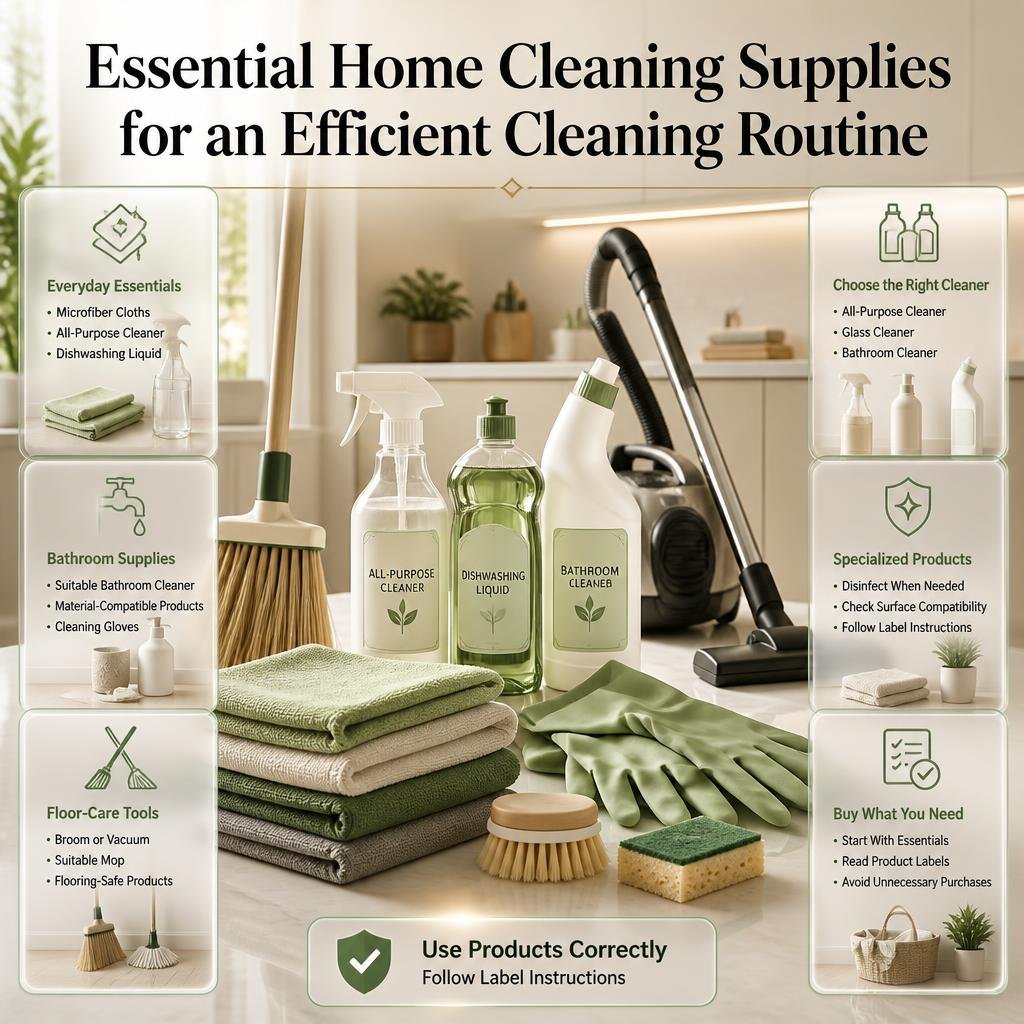
A practical cleaning kit should make routine work easier without filling cupboards with unnecessary products. Most households can begin with a small collection of suitable cloths, brushes, basic cleaners, and floor-cleaning equipment. Add specialized products when a particular surface, stain, or maintenance requirement makes them necessary.
Essential Supplies for Everyday Cleaning
Microfiber cloths: Useful for dusting and wiping many compatible surfaces. Wash them according to the care instructions and keep bathroom cloths separate from those used around food.
All-purpose cleaner: Convenient for compatible household surfaces. Check the label before using it on wood, stone, electronics, or delicate finishes.
Dishwashing liquid: Useful for washing dishes and some suitable washable surfaces when used according to instructions.
Bathroom cleaner: Choose a product suitable for your sink, toilet, shower, and other bathroom materials.
Broom or vacuum: Use the equipment appropriate for your flooring and the type of dirt you need to remove.
Mop: Select one that suits your floor’s material and moisture tolerance.
Cleaning gloves: Wear them when recommended or when they help reduce contact with irritating products.
How to Choose Between Similar Cleaning Products
Compare products according to their intended use rather than fragrance or marketing claims.
| Product type | Best suited for | Important consideration |
|---|---|---|
| All-purpose cleaner | Compatible general surfaces | Not suitable for every material |
| Glass cleaner | Appropriate glass and mirrors | Avoid unsuitable coatings |
| Bathroom cleaner | Specific bathroom deposits | Check compatibility with stone and metal |
| Disinfectant | Situations requiring disinfection | Follow the stated contact time |
| Floor cleaner | Compatible flooring | Avoid excess water on sensitive floors |
You don’t need to purchase every category immediately. Start with the tasks you perform most often, then add products when a clear need arises.
Pro Tip: Read the instructions before your first use of any product. The recommended amount, application method, contact time, and rinsing requirements can affect both safety and results.
Are Natural and Budget-Friendly Cleaning Methods Effective?
Budget-friendly cleaning often depends more on choosing the right method than buying an expensive product. Reusable cloths, basic cleaning tools, and suitable everyday cleaners can handle many routine jobs. However, natural ingredients aren’t automatically safer or more effective, and homemade mixtures should never be combined casually with commercial chemicals.
Use Microfiber Cloths for Dusting
Microfiber cloths can capture dust and reduce the need for disposable wipes.
Use separate cloths for general surfaces, bathrooms, and food preparation areas. Wash them according to the manufacturer’s care instructions.
Replace or wash a cloth when it becomes visibly dirty rather than continuing to spread residue around the home.
Understand the Limits of Vinegar
Vinegar is acidic and may help with certain compatible mineral deposits. However, it can damage natural stone, some finishes, and other acid-sensitive materials.
It should not be treated as a universal household cleaner or disinfectant.
Never mix vinegar with bleach or other cleaning products. Use it only when the surface manufacturer confirms that the material is compatible.
Use Baking Soda Carefully
Baking soda may help with selected mild scrubbing tasks, but abrasive rubbing can damage delicate surfaces.
Before applying it to a visible area, check the surface care instructions and test a small, inconspicuous spot when appropriate.
Don’t assume that combining baking soda with another ingredient automatically makes the mixture more effective.
Save Money Through Prevention
The most reliable budget-friendly strategy is to prevent avoidable mess and damage.
For example:
- Use a suitable mat to reduce dirt entering the home.
- Wipe fresh spills before they dry.
- Maintain appliances according to their manuals.
- Wash reusable cloths rather than constantly buying disposable wipes.
- Purchase products for specific, genuine needs.
- Address leaks and moisture problems promptly.
Preventive habits often save more effort than repeatedly treating the same problem after it has become severe.
How Can You Make Home Cleaning Easier in a Busy Household?
The easiest routine is one that fits naturally into your daily activities. Instead of leaving every task until the weekend, connect small cleaning actions to things you already do. Return items after use, manage dishes regularly, and share household responsibilities fairly.
Create a Short Daily Reset
A daily reset restores order to the most frequently used areas.
For example, before going to bed:
- Put away items left in the living room.
- Place dirty dishes in the kitchen.
- Wipe the dining table if needed.
- Collect clothes that need washing.
- Prepare frequently used items for the next day.
Adjust the routine according to your household and available time. The aim is to make tomorrow easier, not to complete every possible chore.
Give Everyday Belongings a Permanent Home
Keys, chargers, shoes, paperwork, and bags often become clutter because they don’t have convenient storage locations.
Choose a practical place for each category. A tray near the entrance, a basket for everyday accessories, or a designated shelf may prevent belongings from spreading across the home.
For more ideas that support practical household routines, explore Smart Home Organization Tips. Focus on simple systems that make putting items away easier rather than adding complicated storage projects to your cleaning workload.
Share Responsibilities Fairly
If several people live in the same home, routine cleaning doesn’t need to fall to one person.
Responsibilities can be divided according to age, ability, availability, and household needs. One person might manage dishes, another might help with rubbish, and another might keep shared belongings organized.
Clear responsibilities reduce confusion. Specific tasks, such as wiping the dining table after a meal, are easier to understand than a general instruction to clean everything.
Separate Cleaning From Decluttering
Cleaning and decluttering are related, but they aren’t the same job.
Cleaning removes dirt and residue. Decluttering involves deciding what belongings to keep, relocate, donate, or discard.
Trying to do both at once can make a routine cleaning session unnecessarily long. Put belongings away first, clean the accessible surfaces, and schedule larger organization projects separately.
For additional practical household guidance, Home Tips & Ideas can complement a simple cleaning routine without turning everyday maintenance into a large project.
What Are the Most Common Home Cleaning Mistakes?
Many cleaning problems arise from rushing, using unsuitable products, or trying to handle too many tasks at once. Avoiding these mistakes can protect household surfaces, reduce repeated work, and make your routine more effective.
1. Cleaning Around Clutter
Why it happens: People begin wiping surfaces while clothes, papers, and other belongings remain scattered around.
Why it’s harmful: Cleaning takes longer because objects must repeatedly be moved, and some areas remain inaccessible.
How to avoid it: Collect loose items and clear the surface before wiping.
2. Using Too Much Cleaning Product
Why it happens: People assume that extra product will produce better results.
Why it’s harmful: Excess residue may leave streaks, require additional rinsing, or create unnecessary exposure to cleaning chemicals.
How to avoid it: Follow the product label and use the recommended amount.
3. Reusing the Same Dirty Cloth Everywhere
Why it happens: Reusing one cloth seems convenient.
Why it’s harmful: Dirt and germs can transfer between surfaces, particularly between bathrooms and food preparation areas.
How to avoid it: Use separate cloths for different areas and wash or replace them when needed.
4. Ignoring Frequently Touched Surfaces
Why it happens: People notice dusty shelves and dirty floors more easily than handles and switches.
Why it’s harmful: Frequently touched objects can be overlooked in routine cleaning.
How to avoid it: Include suitable cleaning of door handles, faucet handles, light switches, and remote controls in your regular routine.
5. Using an Incompatible Cleaner
Why it happens: A product works well on one surface, so it is used throughout the home.
Why it’s harmful: Unsuitable chemicals or abrasive tools can damage natural stone, wood finishes, metals, and delicate coatings.
How to avoid it: Check the product label and the material manufacturer’s care instructions.
6. Mixing Cleaning Chemicals
Why it happens: Some people believe combining products will make them stronger.
Why it’s harmful: Certain combinations can produce dangerous gases or other hazardous reactions.
How to avoid it: Never mix cleaning products unless the manufacturers explicitly instruct you to do so. Keep chemicals in their original containers and store them securely away from children and pets.
7. Deep-Cleaning the Entire House in One Session
Why it happens: People wait until several jobs have accumulated before starting.
Why it’s harmful: The workload becomes exhausting, and the routine may be difficult to repeat.
How to avoid it: Maintain everyday essentials and divide deeper tasks across the week.
8. Ignoring Moisture and Persistent Odors
Why it happens: People clean the visible surface without investigating the underlying problem.
Why it’s harmful: A recurring odor or damp patch may return because its source remains unresolved.
How to avoid it: Check for leaks, inadequate ventilation, and other moisture sources. Seek appropriate professional help for persistent or extensive mold or unexplained household odors.
What Do Cleaning Professionals Recommend for Better Results?

Effective cleaning relies on preparation, the correct order of work, suitable products, and consistency. A repeatable process helps reduce unnecessary movement and prevents the same surfaces from being cleaned repeatedly.
Work From Higher Surfaces to Lower Surfaces
Dust shelves and other accessible higher surfaces before cleaning furniture and floors.
This allows falling dust to be removed during the later stages of the routine. Use suitable equipment and avoid climbing on unstable chairs or furniture to reach high places.
Clean Relatively Clean Areas Before Heavily Soiled Ones
When practical, begin with relatively clean areas and move toward dirtier ones.
Use separate cloths and tools when contamination could spread. A cloth used to clean a toilet should not be reused on a kitchen counter.
Allow Products to Work as Directed
Some cleaners need a specified contact time, while others should be wiped away promptly. Disinfectants may need to remain visibly wet for the period specified on their labels.
Follow the manufacturer’s instructions rather than assuming that wiping a product away immediately will produce the intended result.
Use the Right Tool for the Surface
A soft microfiber cloth may be appropriate for furniture, while a suitable brush may work better for certain bathroom deposits.
Avoid abrasive tools on delicate surfaces. Choose a vacuum attachment that suits the material, and use only cleaning methods recommended for the item.
Protect Yourself and Your Household
Read safety instructions, ventilate areas when necessary, and use suitable protective equipment.
Keep cleaning products away from food and never transfer chemicals into drinking bottles or other unmarked containers. Follow appliance instructions when cleaning electrical equipment.
If you encounter extensive mold, persistent moisture, or a potentially hazardous material, don’t treat it as an ordinary cleaning task. Address the underlying cause and seek appropriate professional guidance.
How Can You Build a Simple Weekly Home Cleaning Schedule?
A weekly schedule divides household tasks into manageable groups. Instead of trying to clean everything on one day, assign a few jobs to each day and leave room for unexpected messes.
The best schedule is one you can follow consistently.
Example of a Weekly Cleaning Plan
| Day | Main focus | Suggested tasks |
|---|---|---|
| Monday | Kitchen | Clean counters, stovetop, and visible spills |
| Tuesday | Bathroom | Clean sink, toilet, mirror, and shower surfaces |
| Wednesday | Bedrooms | Tidy belongings, dust, and change bedding when needed |
| Thursday | Living areas | Dust furniture and organize shared spaces |
| Friday | Floors | Vacuum or sweep and mop suitable flooring |
| Saturday | Extra tasks | Clean selected appliances or neglected areas |
| Sunday | Light reset | Put away clutter and prepare for the coming week |
Continue everyday essentials throughout the week, including managing dishes, removing food waste, and wiping food preparation surfaces.
How Should You Adapt the Schedule?
A small apartment may need only a few short cleaning sessions each week. A larger home may benefit from assigning different rooms to different days.
Households with pets or frequent visitors may need to vacuum more often. Shared homes may benefit from dividing responsibilities.
If a particular day becomes busy, move the task rather than abandoning the entire routine.
Quick Tip: Start with a small schedule. Once it becomes comfortable, add occasional tasks such as cleaning window tracks or maintaining appliance interiors.
How Can You Keep Your Home Cleaner for Longer?
Keeping a home clean for longer depends on reducing the sources of mess, maintaining practical storage systems, and addressing problems before they become larger.
Reduce Dirt at the Entrance
Use suitable doormats and designate a place for outdoor shoes. Clean the entrance regularly, particularly during dusty or wet weather.
This can reduce the amount of dirt carried into living spaces.
Maintain Frequently Used Surfaces
Kitchen counters, dining tables, and bathroom sinks are easier to maintain when residue is addressed regularly.
Choose a convenient moment to wipe these surfaces, such as after preparing food or completing a bathroom routine.
Prevent Clutter From Spreading
Return objects to their designated locations instead of moving them from one surface to another.
If an item repeatedly ends up in the wrong place, consider whether its storage location is inconvenient. A small change in where you keep something may improve the entire routine.
Address Small Maintenance Problems Promptly
Cleaning cannot solve every household issue. A leaking pipe, damaged seal, or persistent moisture problem needs appropriate attention.
Deal with visible spills promptly, inspect accessible areas when necessary, and follow manufacturer guidance for maintaining household appliances and fixtures.
Preventing damage is often easier than repairing it after the problem has progressed.
What Is the Easiest Way to Keep Your House Clean Every Day?
The easiest way to keep your house clean every day is to build small cleaning habits into your regular routine instead of waiting until the entire home becomes messy. Focus on everyday tasks such as washing dishes, wiping kitchen counters after preparing food, putting belongings away, and keeping frequently used rooms tidy. These simple actions prevent dirt and clutter from accumulating, making weekly cleaning less demanding.
Practical tips:
Spend a few minutes each day clearing visible clutter.
Wipe kitchen surfaces after food preparation.
Return frequently used items to their designated places.
Complete a short evening reset to prepare your home for the next day.
Focus on maintaining cleanliness rather than making every room perfect.
What Should You Clean First When Cleaning Your Entire House?
Start by collecting rubbish, dishes, laundry, and misplaced belongings before cleaning individual surfaces. Once the clutter is removed, work from higher surfaces to lower ones, clean furniture and counters, and finish with the floors. This sequence prevents dust and loose dirt from settling on areas you’ve already cleaned and reduces unnecessary repeated work.
A practical cleaning order:
First: Collect rubbish, dishes, and laundry.
Second: Clear tables, counters, and other surfaces.
Third: Dust shelves and accessible higher surfaces.
Fourth: Wipe furniture and frequently touched areas.
Finally: Vacuum or sweep, then mop suitable hard floors if needed.
Professional tip: Address fresh spills and hygiene-related messes promptly, even when they don’t fit your usual cleaning order.
How Often Should You Clean Your Kitchen and Bathroom?
Kitchens and bathrooms generally need more frequent attention than less-used areas because they are exposed to food residue, moisture, soap buildup, and regular contact. Kitchen food preparation surfaces should be cleaned after use, while dishes and food waste should be managed daily. Bathrooms benefit from regular cleaning of sinks, toilets, showers, and frequently touched surfaces, with the frequency adjusted to household activity.
Recommended cleaning routine:
Kitchen: Clean food preparation surfaces after use and manage dishes and rubbish daily.
Bathroom sink: Wipe regularly, especially when visible residue develops.
Toilet and shower: Clean on a consistent schedule, often weekly or more frequently when needed.
Floors: Clean according to visible dirt and how heavily the areas are used.
High-touch surfaces: Include handles and switches in your routine.
Important reminder: Follow cleaning product labels and never mix chemicals. Bleach must not be combined with vinegar, ammonia, or other cleaning products.
What Cleaning Supplies Do You Really Need for an Easy Home Cleaning Routine?
You can maintain a clean home with a small collection of suitable cleaning supplies rather than purchasing a separate product for every surface. Start with microfiber cloths, an appropriate all-purpose cleaner, dishwashing liquid, a suitable bathroom cleaner, a non-scratch sponge, and a broom or vacuum. Add a mop and specialized products according to your flooring and other household materials.
Essential supplies to consider:
Microfiber cloths for dusting and wiping compatible surfaces.
An all-purpose cleaner for suitable household surfaces.
Dishwashing liquid for dishes and appropriate cleaning tasks.
A bathroom cleaner designed for your fixtures and materials.
A broom, vacuum, or dustpan for loose dirt.
A suitable mop for hard floors.
Cleaning gloves when recommended by product instructions.
Professional tip: Check the manufacturer’s directions before using a cleaner on wood, natural stone, electronics, or delicate finishes. Using the wrong product can cause damage that costs more to repair than the cleaning supplies themselves.
How Can You Clean Your Home Quickly When You Have Very Little Time?
When time is limited, focus on the tasks that make the biggest difference to hygiene and everyday comfort. Remove rubbish, collect dishes, clear visible clutter, wipe frequently used surfaces, and clean the main walking areas. You don’t need to deep-clean every room in one session. A short, focused routine is often more manageable than starting several tasks and leaving them unfinished.
A practical 15-minute cleaning plan:
Minutes 1–3: Collect rubbish, dishes, and misplaced items.
Minutes 4–7: Clear and wipe important kitchen or living-room surfaces.
Minutes 8–11: Refresh the bathroom sink and other visibly dirty areas.
Minutes 12–15: Tidy the main living space and address visible floor dirt where time permits.
Adjust the plan to your home’s condition and size. If the kitchen or bathroom needs more attention, prioritize that area rather than rushing through every room.
Professional tip: Keep a short list of your highest-priority cleaning tasks. When an unexpected visitor arrives or your schedule becomes busy, you’ll know exactly where to begin.
Conclusion: Make Easy Home Cleaning Tips Part of Your Daily Routine
Keeping your home clean does not have to involve spending hours on household chores or following a complicated schedule. With the right approach, easy home cleaning tips can help you maintain a fresher, more comfortable living space while making everyday tasks easier to manage. The key is to focus on small, consistent actions rather than waiting until every room needs a complete cleaning.
Start by making your bed, wiping frequently used surfaces, washing dishes regularly, and returning everyday items to their proper places. Divide larger tasks into manageable sections, follow a realistic weekly cleaning schedule, and give extra attention to kitchens, bathrooms, and other high-use areas. Choosing suitable cleaning supplies and using them safely can also make your routine more effective.
Remember that every household has different needs. Create a cleaning plan that fits your available time, household size, and daily responsibilities instead of trying to achieve perfection. For more practical ideas that support a cleaner, more organized, and comfortable home, explore Home Tips and Tricks Heartomenal and discover helpful ways to simplify everyday household tasks.
Ultimately, a clean home is built through consistent habits, thoughtful planning, and realistic expectations. Begin with one small improvement today, maintain the routines that work for you, and gradually develop a cleaning system that keeps your home welcoming without making housework feel overwhelming.
Leave a Reply