Introduction
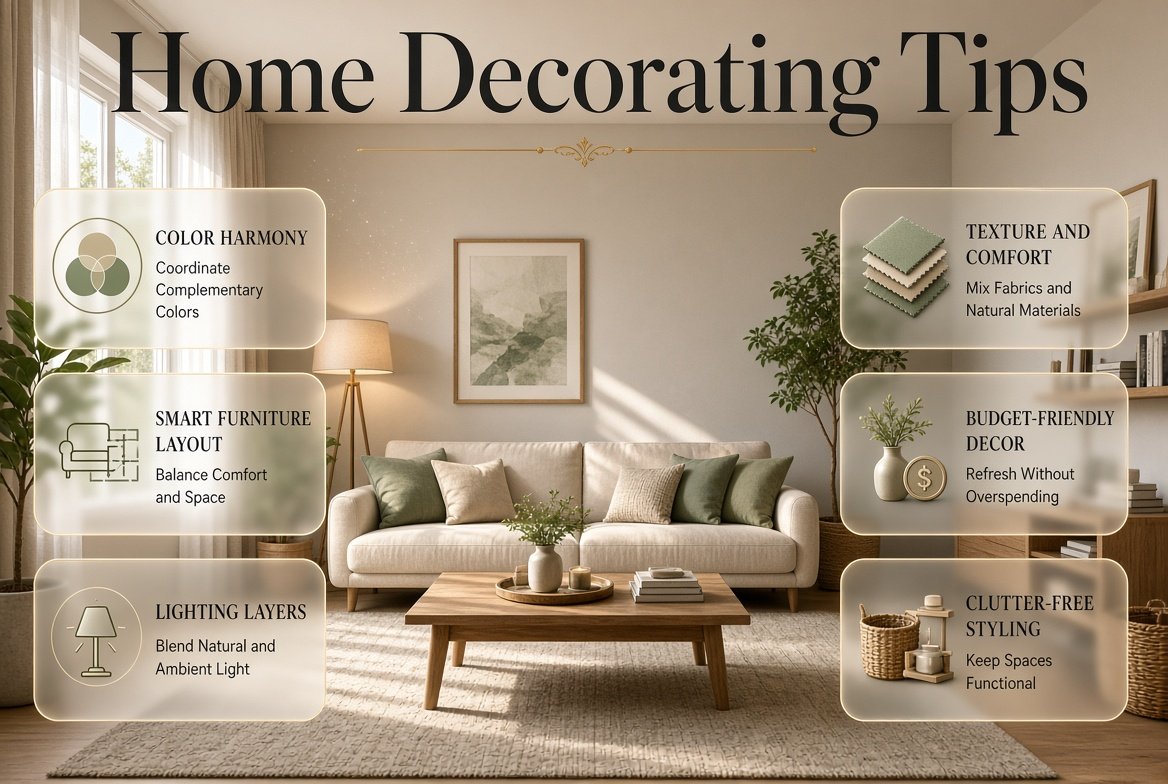
Home Decorating Tips | Have you ever looked around your home and felt that something was missing, even though you already have furniture, curtains, and decorative accessories? Perhaps your living room feels crowded, your bedroom lacks warmth, or your walls look unfinished. These problems are common, and they don’t necessarily mean you need to buy expensive furniture or completely renovate your home.
The right home decorating tips can help you transform ordinary rooms into attractive, comfortable, and functional spaces. By understanding how colors, furniture, lighting, textures, and accessories work together, you can improve your home gradually without wasting money on unnecessary purchases.
Home decorating is not simply about following trends or copying pictures from magazines. It’s about understanding your personal preferences, considering the practical needs of your household, and creating an environment that feels welcoming every day. A beautifully decorated room should look good, but it should also be easy to use, maintain, and enjoy.
Whether you’re decorating a new house, refreshing an apartment, or updating a single room, this guide will help you make informed decisions. You’ll learn how to select a decorating style, build a balanced color palette, arrange furniture, improve lighting, decorate on a budget, and avoid common beginner mistakes.
For more inspiration and practical household guidance, explore Heartomenal and discover ways to make your home more organized, comfortable, and visually appealing.
1. How Should You Start Decorating Your Home?
The best way to start decorating your home is to identify what needs improvement, decide how you want each room to function, and create a realistic plan before shopping. Assess your existing furniture, measure the available space, and choose a consistent design direction that suits your lifestyle.
Starting with these fundamentals helps you avoid expensive mistakes and creates a clear path toward your decorating goals.
Identify the purpose of each room
Every room serves a different purpose, so its decoration should support the activities that happen there.
A living room may need comfortable seating for family conversations, while a bedroom should provide a relaxing environment for rest. A kitchen requires practical work surfaces, and a home office benefits from focused lighting and an efficient furniture arrangement.
Write down the three most important things you want each room to accomplish. For example, a living room might need to accommodate guests, provide comfortable family seating, and offer storage for everyday belongings.
This simple exercise helps you prioritize functional improvements before decorative purchases.
Evaluate what you already own
Walk through the room and identify the items worth keeping, repairing, relocating, or replacing.
An existing wooden table might work perfectly after a thorough cleaning. A sofa may look different with new cushion covers, while a lamp from another room might provide the missing light you need.
Separate your belongings into three categories:
- Keep: Items that work well and suit your decorating direction.
- Improve: Furniture or accessories that need cleaning, repair, or a simple update.
- Replace: Items that are damaged, unsuitable, or no longer meet your needs.
Avoid discarding useful belongings simply because they don’t match a new trend. Reusing suitable furniture is often the most economical way to begin.
Set a decorating budget
Decide how much you can comfortably spend before choosing new products. Include essential furniture, lighting, textiles, delivery charges, and any necessary installation costs.
Keep a small reserve for unexpected expenses. If the budget is limited, prioritize improvements that affect daily comfort, such as a suitable mattress, practical storage, or adequate lighting.
Decorative accessories can be purchased later when the main arrangement is working well.
2. How Do You Choose a Home Decorating Style?
Choose a decorating style by considering the interiors you naturally enjoy, the architecture of your home, your existing furniture, and the atmosphere you want to create. You don’t need to follow one style strictly; combining compatible elements can produce a more personal and comfortable result.
A clear style helps you make consistent decisions about furniture, colors, materials, and accessories.
Modern decorating
Modern interiors generally emphasize clean lines, simple shapes, practical furniture, and restrained decoration. They can include neutral colors, natural materials, and carefully selected statement pieces.
This approach works well when you prefer an uncluttered appearance and furniture that serves a clear purpose.
However, too many hard surfaces or overly minimal arrangements can feel cold. Introduce softer textiles, warm lighting, and natural materials to create balance.
Traditional decorating
Traditional interiors often feature classic furniture shapes, decorative details, symmetrical arrangements, and established color combinations.
You might combine a wooden dining table with upholstered chairs, framed artwork, and coordinated curtains. The result can feel timeless without requiring every piece to come from the same collection.
Avoid overcrowding the room with too many ornate details. A few well-chosen traditional elements often create a stronger effect than decorating every surface.
Cozy decorating
Cozy interiors emphasize comfort through soft textiles, warm lighting, natural materials, and inviting seating.
Layer a comfortable throw over a sofa, add a textured rug, and use table lamps to create a softer evening atmosphere. Warm neutral colors can support the effect, although muted greens and blues can also feel relaxing.
Comfort should remain the priority. Avoid filling the room with accessories that interfere with movement or make cleaning difficult.
Minimalist decorating
Minimalist decorating focuses on simplicity, functional furniture, and carefully chosen belongings.
It doesn’t mean a room must be empty or completely neutral. Instead, each item should contribute to the room’s function, appearance, or personal meaning.
This style works particularly well when you prefer clear surfaces and straightforward storage solutions.
Preppy and classic decorating
Preppy interiors often combine stripes, checks, tailored furniture, coordinated colors, and traditional decorative details. Navy, green, cream, and white can form a balanced palette, while patterned cushions or framed prints add character.
Keep the patterns connected through shared colors. For example, navy striped cushions can work with a cream sofa and a small green accessory without making the room feel overly busy.
Create a personal style guide
Collect a few decorating references and identify the features they share. You may discover that you consistently prefer natural wood, simple furniture, botanical details, or warm neutral colors.
Use these preferences as a practical guide rather than copying an entire room exactly.
For further inspiration, browse Home Tips and Ideas and identify decorating approaches that suit your home’s needs.
3. How Can You Choose the Right Colors for Each Room?
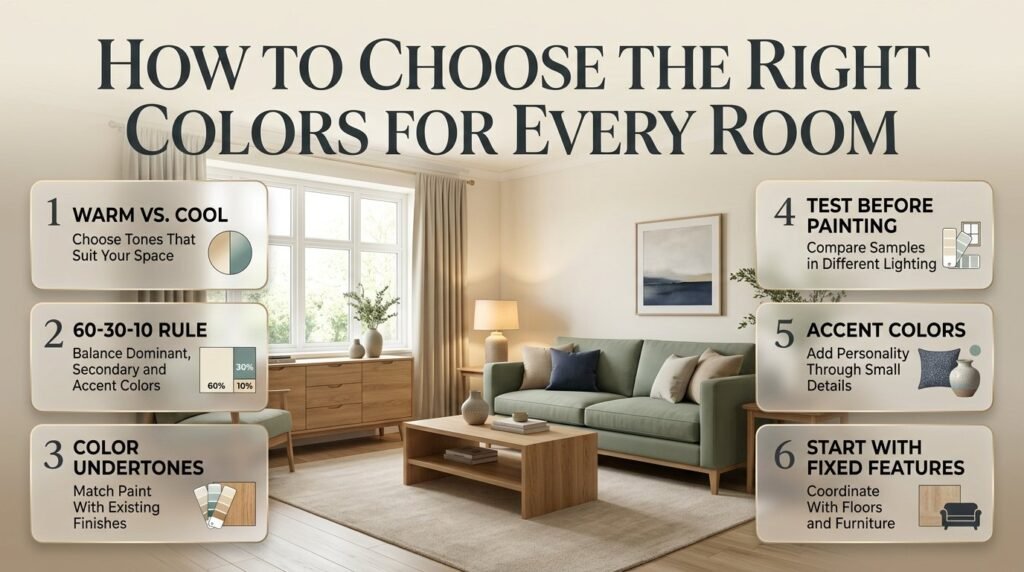
Choose colors by considering natural light, existing furniture, room dimensions, and the mood you want to create. Begin with a dominant color, introduce one or two supporting shades, and use accents to add interest without overwhelming the space.
A coordinated palette makes different materials and decorative elements feel connected.
Understand warm and cool colors
Warm colors include shades such as terracotta, warm beige, muted yellow, and some soft whites. They can create an inviting atmosphere and complement natural wood.
Cool colors include many blues, greens, and gray-based shades. Depending on their undertones and lighting, they can make a room feel calm, fresh, or sophisticated.
Neither group is automatically better. A warm neutral may work beautifully in a room with limited sunlight, while a soft green can complement a bright space filled with natural materials.
Use the 60-30-10 rule
The 60-30-10 rule is a helpful starting point for distributing color.
- 60% dominant color: Usually appears on walls, large surfaces, or the main furniture.
- 30% secondary color: Appears on curtains, upholstery, rugs, or other substantial elements.
- 10% accent color: Appears in smaller decorative details.
Imagine a bedroom with cream walls, muted green bedding, and small navy accents. The colors create variety while maintaining a consistent appearance.
These proportions are a guideline rather than a strict requirement. Adjust them according to the room’s size, furniture, and your preferences.
Consider undertones
Two shades that appear similar in a store may look noticeably different beside your flooring or furniture.
A white paint with a cool undertone may clash with warm wooden cabinets, while a warmer white may complement them. Gray can also contain blue, green, or brown undertones.
Test paint samples on the actual wall and observe them in daylight and artificial lighting before making a final decision.
Use accent colors carefully
Accent colors provide personality without requiring major changes.
If your room is mostly neutral, introduce color through cushions, artwork, a decorative vase, or a small upholstered chair. These elements are relatively easy to replace if your preferences change.
Common mistake: Selecting paint before considering permanent features such as flooring, countertops, and existing furniture. Start with the elements that are difficult to change, then select colors that complement them.
4. How Do You Arrange Furniture for a Balanced Room?
Arrange furniture according to the room’s purpose, focal point, and natural walking routes. Keep entrances accessible, leave enough space to use drawers and doors, and position seating so people can comfortably interact.
A balanced layout improves the room’s appearance while making everyday activities easier.
Find the focal point
A focal point is the feature that naturally attracts attention. It might be a fireplace, a large window, a television, a statement bed, or a piece of artwork.
Arrange furniture so the focal point feels intentional rather than competing with several unrelated features.
In a living room, orient the main seating toward the feature that matters most to your household. In a bedroom, position the bed where it can serve as the main visual element without blocking access to wardrobes or windows.
Measure furniture before buying
Measure the room, doorways, staircases, and furniture carefully before ordering large items.
A sofa might fit the available wall but prove impossible to move through the entrance. A dining table might fit on paper but leave too little room for chairs.
Create a basic floor plan showing:
- Doors and their opening directions.
- Windows and radiators.
- Main walking routes.
- Existing electrical outlets.
- Furniture dimensions.
- Storage doors and drawers.
When possible, mark the proposed furniture positions on the floor with removable tape. This gives you a better sense of the available space before committing to a purchase.
Balance furniture sizes
Large furniture pieces usually need enough surrounding space to avoid overwhelming a room.
In a compact living room, a streamlined sofa and a modest coffee table may work better than a bulky sectional and several large chairs. In a spacious room, a small rug and tiny accessories may appear disconnected from the scale of the furniture.
Think about the relationship between each piece and its surroundings rather than considering items individually.
Create functional zones
Open-plan rooms often serve several purposes. You can define different zones using furniture placement, rugs, lighting, or shelving.
For example, a sofa and rug can identify the living area, while a dining table and pendant light establish the eating area. A small desk positioned near a window can form a work zone without requiring a separate room.
Keep the transitions between these areas open and practical.
For more ideas about creating a comfortable seating arrangement, explore Living Room Home Tips.
5. How Can Lighting Improve Your Home Decor?
Good lighting combines general illumination, task lighting, and accent lighting to make rooms functional and visually comfortable. Instead of relying entirely on a single ceiling fixture, use several suitable light sources that support different activities and create a balanced atmosphere.
Lighting can change how colors appear, highlight decorative details, and improve the usefulness of a room.
Use three layers of lighting
Ambient lighting illuminates the overall room. Ceiling fixtures, recessed lights, and suitable overhead lighting can provide this foundation.
Task lighting helps with specific activities. Examples include reading lamps, desk lights, and under-cabinet lighting for kitchen preparation.
Accent lighting draws attention to selected features. Picture lights, decorative lamps, and carefully positioned spotlights can highlight artwork or architectural details.
Not every room needs all three layers in equal amounts. A hallway may need effective general lighting, while a living room benefits from a more flexible arrangement.
Make natural light work for you
Natural light can make rooms feel brighter and reveal the true appearance of colors and materials.
Keep windows clean, avoid unnecessarily blocking daylight with bulky furniture, and select curtains according to your privacy needs.
Mirrors can reflect available light when placed thoughtfully. However, consider what the mirror reflects: a pleasant view or a bright window may improve the room, while a cluttered corner may become more noticeable.
Select suitable bulb characteristics
Consider both brightness and color appearance when choosing bulbs. Warm-looking light often suits relaxing spaces, while brighter, more focused illumination may help with detailed tasks.
For work areas, choose lighting that provides sufficient visibility without producing uncomfortable glare. In bathrooms and kitchens, select fixtures and bulbs appropriate for the environment.
Practical tip: Test lighting during the evening as well as during the day. A room that looks balanced in sunlight may feel too dark or harsh when the sun goes down.
6. How Can You Decorate Walls Without Overcrowding Them?
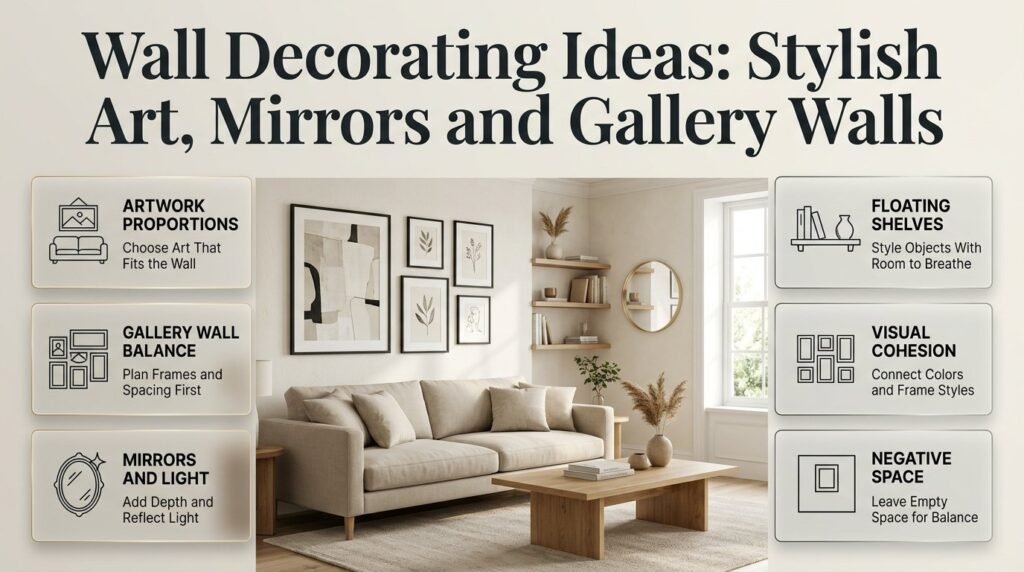
Decorate walls by selecting artwork, mirrors, shelves, or other features that suit the wall’s proportions and the surrounding furniture. Use consistent spacing and a clear visual arrangement, and remember that leaving some areas empty can make the entire room feel more balanced.
Select artwork that suits the space
Large artwork can work well above a sofa, bed, or dining table, while smaller prints can complement narrow walls or shelves.
Consider the colors already present in the room. Artwork doesn’t have to match everything exactly, but a few shared tones can help it feel connected to the overall design.
Before hanging anything, temporarily position the artwork against the wall and assess it from different viewpoints.
Create a gallery wall
A gallery wall allows you to combine photographs, illustrations, prints, and personal mementos.
For a coordinated arrangement:
- Select the frames and images you want to display.
- Arrange them on the floor before hanging them.
- Keep the spacing reasonably consistent.
- Balance large pieces with smaller ones.
- Check the overall arrangement from across the room.
You can combine different images successfully when their frames, colors, or subject matter share a visual connection.
Use mirrors and shelves thoughtfully
Mirrors can introduce depth and reflect light, especially in entryways and compact living spaces.
Floating shelves provide a place for books and decorative objects, but they should not become crowded storage areas. Combine a few objects of different heights and leave some space between groups.
Avoid decorating every available wall simply because it looks empty. A carefully chosen feature often works better than multiple competing displays.
7. How Can Textiles Make a Room Feel More Comfortable?
Textiles add softness, warmth, color, and texture to a room. Curtains, rugs, cushions, bedding, and throws can connect furniture and decorative accessories while improving everyday comfort.
They are also among the easiest decorating elements to update when you want a change without replacing major furniture.
Combine different textures
A room can look flat when every surface has a similar finish. Introducing a few different textures adds depth without requiring a complicated color scheme.
Consider combining:
- Cotton cushions with a woven throw.
- Smooth wooden furniture with textured upholstery.
- Linen curtains with a soft rug.
- Ceramic accessories with natural woven baskets.
- Structured bedding with a softer blanket.
The goal is to create contrast without making the room feel disorganized.
Choose the right rug
A rug should relate to the size and arrangement of the furniture. A rug that is too small can make a seating area feel disconnected, while an appropriately sized rug can help unify the room.
Consider the practical requirements as well. A frequently used hallway needs a durable, easy-to-clean option, while a bedroom may benefit from a softer surface beside the bed.
Measure the intended area before purchasing, and check how the rug will interact with doors and furniture legs.
Select curtains for appearance and function
Curtains influence privacy, daylight, and the perceived proportions of a window.
Lightweight fabrics can preserve brightness, while thicker curtains may help reduce unwanted light and improve privacy. The appropriate choice depends on the room’s orientation, climate, and daily use.
Measure the window and decide how you want the curtains to sit before ordering them.
Refresh cushions and bedding
Cushions and bedding can introduce seasonal or personal colors without changing the room’s foundation.
Instead of buying many matching pieces, choose a few complementary shades and textures. A cream bedspread, muted green cushions, and a textured throw can create interest while remaining visually calm.
Washable, durable materials are particularly useful in busy households.
8. How Can You Decorate Your Home on a Budget?
Decorate on a budget by reusing suitable furniture, making small cosmetic improvements, shopping selectively, and focusing on changes that have a noticeable effect. A thoughtful arrangement of existing belongings can often improve a room more than purchasing numerous inexpensive accessories.
Rearrange before replacing
Try moving a chair, relocating a lamp, or changing the position of artwork before buying anything new.
Furniture that appears unsuitable in one location may work well elsewhere. An occasional table might serve as a bedside surface, while a bookshelf could provide useful storage in a home office.
Make changes one at a time so you can identify what genuinely improves the room.
Update small details
Affordable changes can make familiar furniture feel more current.
Consider replacing worn cushion covers, updating suitable cabinet handles, refreshing a lampshade, or repainting a piece of furniture when its material and condition make that practical.
Check whether the proposed finish is appropriate for the surface and follow product instructions. Some furniture requires sanding, preparation, or specialist coatings for a durable result.
Shop secondhand carefully
Secondhand shops and local resale listings may offer solid wood tables, bookshelves, mirrors, and other useful pieces at lower prices.
Inspect each item before purchasing. Check its stability, dimensions, condition, odors, and signs of moisture damage. Upholstered furniture deserves particular attention because its condition may be difficult to assess from photographs alone.
Calculate transport and repair costs before deciding whether the item offers genuine value.
Prioritize spending
| Priority | Examples | Reason |
|---|---|---|
| Essential | Functional furniture and suitable lighting | Supports everyday use |
| Important | Curtains, bedding, practical rugs | Improves comfort and usability |
| Optional | Artwork, plants, decorative accessories | Adds personality |
| Later | Trend-driven purchases and extra ornaments | Can wait until needs are clear |
This order isn’t absolute, but it helps keep essential improvements ahead of impulse purchases.
For practical projects that make a visible difference without a complete renovation, explore Budget-Friendly Home Improvement Tips.
9. What Are the Best Decorating Tips for Small Homes?
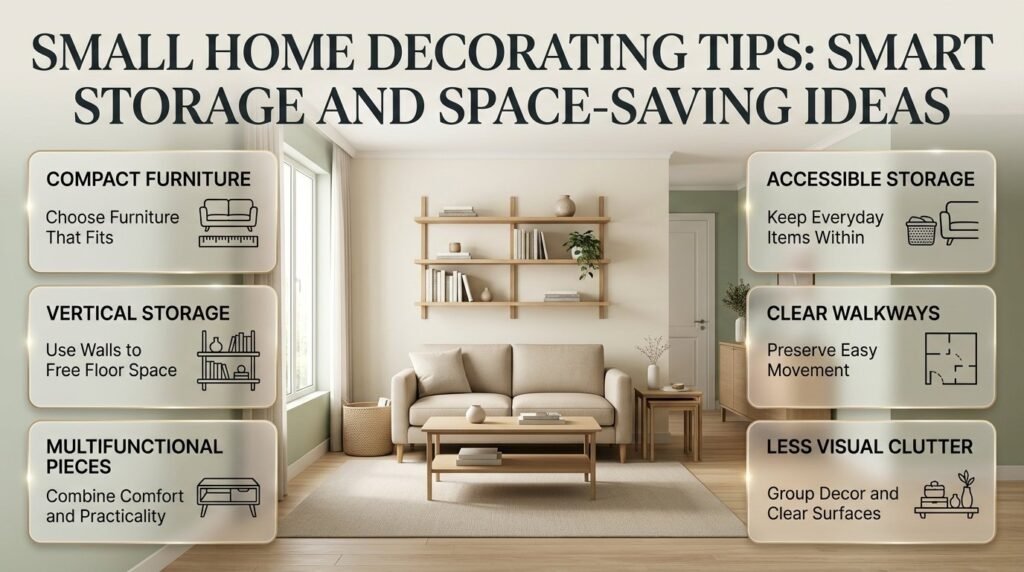
Small homes benefit from appropriately sized furniture, efficient storage, clear walking routes, and a thoughtful use of color and lighting. Rather than trying to make every room appear empty, focus on using available space efficiently while preserving comfort and personality.
Select furniture carefully
Measure the room before choosing a sofa, dining table, or wardrobe. A compact piece that fits your needs is often more useful than oversized furniture with features you rarely use.
Consider nesting tables, extendable dining tables, and furniture with built-in storage where these options suit your household.
Avoid buying multifunctional furniture simply because it offers several features. It should still be comfortable, durable, and practical for its main purpose.
Use vertical space
Wall-mounted shelves, hooks, and tall storage units can free up valuable floor space.
Place frequently used belongings where they’re easy to reach, and reserve higher shelves for items you need less often. Make sure heavy items are stored safely and that wall-mounted furniture is installed using suitable fixings.
Keep storage accessible
Good storage should match the way you use your belongings.
A basket near the sofa can hold everyday items, while a dedicated drawer can keep small accessories organized. In an entryway, hooks and a narrow shoe cabinet may prevent belongings from spreading across the floor.
For more detailed ideas, read Small Space Home Tips.
Control visual clutter
Open surfaces can help a small room feel more spacious, but you don’t need to eliminate every decorative object.
Group accessories together, keep useful surfaces available, and use closed storage for items that don’t need to remain visible.
If belongings are making rooms difficult to use, Home Decluttering Tips can help you decide what to keep, donate, or relocate.
10. How Should You Decorate Different Rooms?
Each room needs a different balance of comfort, storage, lighting, and decoration. A coordinated home doesn’t require every room to look identical; it requires each room to function well while sharing a few visual elements with the rest of the house.
Living room decorating
Start with comfortable seating and a practical arrangement. Choose a focal point, position the main furniture, and select a rug that connects the seating area.
Introduce layered lighting, then add cushions, artwork, and a small number of personal accessories.
Leave enough room for everyday movement and consider where household members naturally place drinks, books, remote controls, and other frequently used belongings.
Bedroom decorating
A bedroom should support rest and make everyday routines convenient.
Choose suitable bedding, bedside lighting, and accessible storage. Coordinate the main colors and introduce texture through curtains, cushions, or a throw.
Avoid overcrowding the bedside tables and make sure wardrobes and drawers remain easy to open.
You can find practical ideas for keeping sleeping spaces organized in Bedroom Organization Tips.
Kitchen decorating
Kitchen decoration should complement the way you cook, prepare food, and clean.
Keep frequently used utensils accessible, maintain clear preparation surfaces, and choose accessories that tolerate the kitchen environment. A coordinated set of containers, a suitable lamp or fixture, and a few carefully selected decorative items can improve the appearance without sacrificing function.
Avoid placing decorations where they interfere with cooking, cleaning, ventilation, or food safety.
For ideas focused on practical kitchen storage and everyday usability, visit Kitchen Organization Tips.
Bathroom decorating
Bathrooms need materials and accessories that suit moisture and frequent cleaning.
Choose coordinated towels, practical storage, and suitable lighting. Use materials designed for humid environments, and avoid placing decorative items where they obstruct surfaces or make cleaning difficult.
Check that rugs and mats are appropriate for wet areas and do not create a slipping hazard.
When planning a bathroom update, Bathroom Planning Tips can help you think through the layout and practical requirements.
Entryway decorating
The entrance should feel welcoming without becoming a storage obstacle.
A mirror, a small surface for keys, wall hooks, and a practical shoe solution can make the area more useful. In narrow hallways, select slim furniture and keep the main route clear.
Choose durable finishes because entryways often experience frequent movement, dirt, and moisture.
11. How Can You Make Your Home Feel Organized Without Changing Its Style?
An organized home is easier to decorate because furniture, artwork, and accessories remain visible instead of competing with everyday clutter. Use storage that fits your routines, assign belongings specific places, and keep frequently used surfaces practical.
Match storage to everyday habits
Think about where clutter appears most often. If shoes gather near the entrance, create a convenient shoe-storage area. If books and blankets collect around the sofa, provide a nearby basket or cabinet.
Storage is most effective when it is easy to use consistently.
For a broader approach to practical household systems, explore Smart Home Organization Tips.
Use decorative storage
Baskets, boxes, storage ottomans, and cabinets can hold belongings while contributing to the room’s appearance.
Choose containers that fit the available space and the items they need to hold. Oversized baskets can become awkward, while very small containers may require several separate pieces.
Use labels when they make shared storage easier to understand.
Keep surfaces functional
A coffee table needs enough space for everyday use. A kitchen counter should support food preparation, and a bedside table should accommodate the items you regularly need.
Decorate these surfaces with restraint. One or two accessories can add personality without making the area difficult to use.
Build simple household routines
Return items to their designated places after use, review crowded shelves periodically, and avoid bringing home decorative items without considering where they’ll go.
These habits help preserve the appearance of your home without requiring a complete reorganization every few weeks.
12. What Common Decorating Mistakes Should You Avoid?
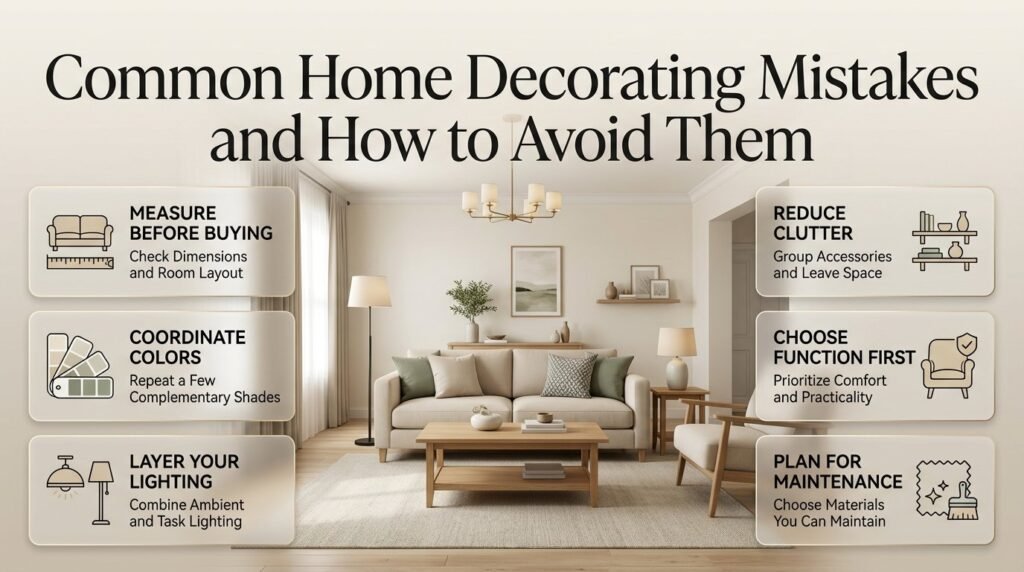
The most common decorating mistakes involve poor planning, unsuitable proportions, excessive accessories, inconsistent colors, and decisions based entirely on trends. These problems often arise when people focus on individual products instead of considering how the entire room will function.
Buying furniture without measuring
Why it happens: A product looks attractive in a showroom or online.
Why it’s harmful: It may overwhelm the room, block movement, or fail to fit through the entrance.
How to avoid it: Measure the space, check product dimensions, and plan furniture placement before purchasing.
Choosing too many colors and patterns
Why it happens: Individual patterns and colors look appealing on their own.
Why it’s harmful: Too many unrelated elements compete for attention.
How to avoid it: Establish a main palette and repeat selected colors across furniture, textiles, and accessories.
Relying on one light source
Why it happens: A ceiling fixture seems sufficient.
Why it’s harmful: Certain areas may remain dark, and the room may feel less comfortable in the evening.
How to avoid it: Add task or accent lighting where it serves a clear purpose.
Decorating every surface
Why it happens: Empty shelves or walls may appear unfinished.
Why it’s harmful: Too many objects create visual clutter and make cleaning harder.
How to avoid it: Group accessories, leave some empty space, and keep practical surfaces available.
Following trends without considering daily life
Why it happens: Popular decorating ideas can be persuasive.
Why it’s harmful: A trendy piece may not suit the room’s dimensions, maintenance needs, or long-term preferences.
How to avoid it: Use trends selectively in changeable details and make major purchases according to comfort, durability, and function.
Ignoring cleaning and maintenance
Why it happens: The focus remains on the room’s appearance immediately after decorating.
Why it’s harmful: Dust, stains, and disorganization can gradually reduce the effect of the design.
How to avoid it: Choose manageable materials, allow access for cleaning, and establish routines using Easy Home Cleaning Tips.
13. What Do Interior Design Professionals Recommend?
Professional-looking rooms generally depend on proportion, thoughtful editing, consistent materials, and a clear relationship between furniture and the room’s purpose. You can apply these principles without hiring a designer or buying luxury products.
Repeat materials and finishes
Repeated elements help create continuity. For example, you might use a similar wood tone in a side table and picture frame, or repeat a metal finish across a lamp and cabinet handles.
Avoid making every item identical. A little variation keeps the room interesting while maintaining a visual connection.
Balance visual weight
Large, dark, or heavily patterned objects often attract more attention than smaller, lighter pieces.
If one side of the room feels visually heavy, consider balancing it with artwork, a lamp, or another suitable feature on the opposite side. The objects don’t need to match exactly; they simply need to work together.
Edit before adding
When a room feels unfinished, adding another accessory isn’t always the answer.
Try removing objects that compete with the focal point, rearranging existing pieces, or changing the position of a lamp. Editing can reveal which elements actually contribute to the design.
Consider maintenance from the beginning
Choose furniture and textiles that suit the household’s routines. Families with children or pets may benefit from durable upholstery and washable covers, while frequently used areas may need hard-wearing flooring and easy-to-clean surfaces.
The best decorating choice is not necessarily the most fashionable one. It is the option that balances appearance, comfort, cost, and long-term use.
Review the room from different viewpoints
Look at the room from the doorway, the main seating position, and other frequently used areas.
Notice whether the focal point is clear, the furniture arrangement feels balanced, and the lighting supports the room’s activities.
Small adjustments at this stage can make a meaningful difference.
14. How Can You Maintain a Beautiful Home Over Time?
Maintaining a decorated home means caring for surfaces, keeping storage practical, and reviewing the arrangement when household needs change. Regular attention helps preserve the appearance of your furniture and prevents minor problems from becoming larger ones.
Keep textiles and surfaces clean
Follow the care instructions for curtains, rugs, bedding, and upholstery. Different materials require different cleaning methods, so avoid using products that could damage the finish.
Dust shelves and decorative objects regularly, and clean spills promptly using an appropriate method.
Check furniture and fixtures
Look for loose handles, unstable furniture, damaged finishes, and other issues that affect safety or usability.
Address small problems when practical, and use qualified professionals for electrical work, plumbing, or repairs that require specialist skills.
For general household upkeep, explore Basic Home Maintenance Tips.
Keep laundry and household supplies manageable
Laundry routines can affect how organized bedrooms, bathrooms, and shared spaces feel.
Use practical storage for clean towels, bedding, and laundry supplies. Keep frequently used products accessible without allowing them to occupy valuable decorative surfaces.
For help developing a smoother household routine, read Laundry Tips and Tricks.
Refresh without starting over
You don’t need to redecorate an entire room whenever your preferences change.
Move artwork, rearrange accessories, introduce a new cushion cover, or relocate a lamp. These small changes can refresh the room while preserving the elements that already work well.
For additional home inspiration and practical guidance, visit Heartomenal and continue improving your space according to your needs.
15. Home Decorating Checklist for Beginners
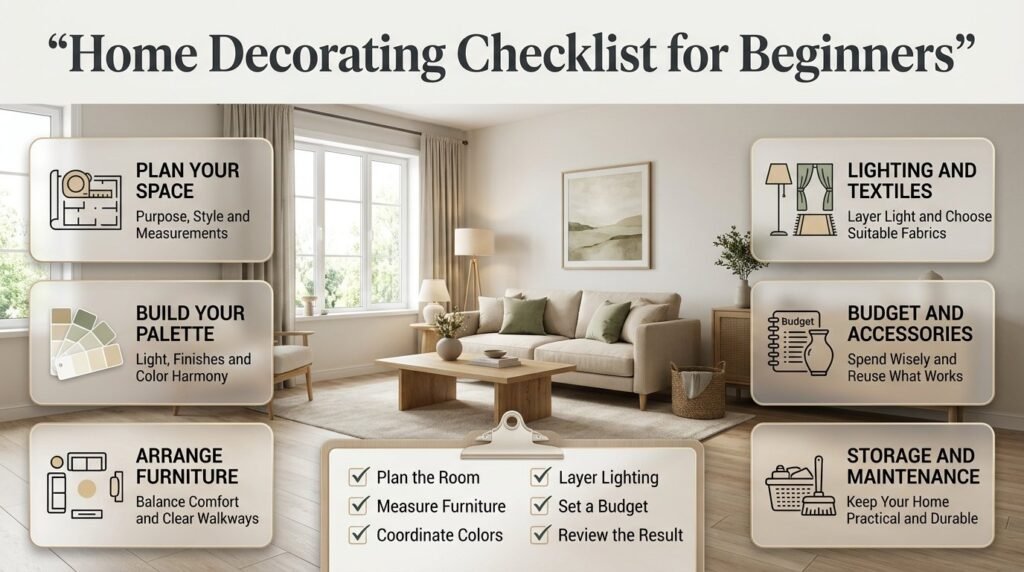
Before completing a decorating project, review the following checklist to make sure the room looks coordinated and remains practical.
- Identify the room’s main purpose.
- Choose a decorating style that suits your preferences.
- Measure the room and existing furniture.
- Consider natural light and permanent finishes.
- Select a manageable color palette.
- Arrange furniture around a clear focal point.
- Keep doors, drawers, and walking routes accessible.
- Combine general, task, and accent lighting where appropriate.
- Choose suitable rugs, curtains, and textiles.
- Set a realistic budget before shopping.
- Reuse furniture and accessories whenever practical.
- Introduce artwork and decorative objects gradually.
- Provide convenient storage for everyday belongings.
- Consider cleaning requirements and long-term durability.
- Review the finished room from different viewpoints.
Following these steps helps you make decisions in a sensible order. It also reduces the likelihood of buying accessories that don’t suit the finished arrangement.
What Are the Best Home Decorating Tips for Beginners?
The best home decorating tips for beginners focus on creating a practical plan, choosing a coordinated color palette, arranging furniture correctly, and adding decorative elements gradually. You don’t need expensive furniture or professional design experience to create a beautiful home. Understanding how colors, lighting, textures, and furniture work together can help you achieve a balanced appearance while avoiding unnecessary expenses.
Start by identifying the purpose of each room and deciding what you want to improve. Evaluate your existing furniture before purchasing new items, and select colors that complement your flooring, walls, and larger furnishings. Once the essential elements are in place, introduce artwork, cushions, rugs, and accessories that reflect your personal style.
Practical tips to follow:
Choose a decorating style that suits your lifestyle and preferences.
Measure your room before buying furniture or rugs.
Use a consistent color palette to create visual harmony.
Combine different lighting sources for comfort and functionality.
Avoid filling every wall, shelf, and surface with decorations.
How Can I Decorate My Home on a Budget Without Compromising Style?
Decorating your home on a budget becomes easier when you focus on improvements that create a noticeable difference without requiring major purchases. Rearranging furniture, updating cushion covers, refreshing suitable furniture finishes, improving lighting, and organizing existing accessories can transform a room at a relatively low cost.
Before shopping, establish a budget and identify the areas that genuinely need attention. For example, a living room may benefit more from better lighting and a suitable rug than from an expensive new sofa. Similarly, changing bedding and adding coordinated curtains can refresh a bedroom without replacing its main furniture.
Secondhand furniture can also offer good value when you inspect its condition, dimensions, and repair requirements carefully. Prioritize durability and practical use rather than buying inexpensive decorative products that may need frequent replacement.
Budget-friendly decorating ideas:
Repurpose furniture and accessories you already own.
Update small details, such as cabinet handles or lampshades.
Shop secondhand for suitable, well-maintained furniture.
Use artwork and textiles to introduce color affordably.
Purchase essential items first and decorative extras later.
What Colors Make a Home Look Modern, Elegant, and Inviting?
A modern, elegant, and inviting home usually benefits from a coordinated color palette that balances the dominant shades with complementary colors and carefully selected accents. Warm white, cream, beige, muted green, soft blue, and natural wood tones are versatile options, but the best combination depends on the room’s lighting, existing finishes, and intended atmosphere.
Begin with the elements that are expensive or difficult to replace, such as flooring, kitchen cabinets, and major furniture. Select wall colors that complement these features rather than choosing paint in isolation. If you prefer a more expressive interior, introduce stronger colors through artwork, cushions, decorative objects, or a feature wall.
Lighting also affects color perception. A shade that looks neutral in a store may appear warmer or cooler at home, so test samples in the actual room before committing to a final choice.
Professional color-selection tips:
Use two or three main colors as a starting point.
Apply the 60-30-10 rule as a flexible color-balancing guide.
Consider the undertones of paint, flooring, and furniture.
Test colors in both daylight and artificial lighting.
Repeat selected colors through textiles and accessories for consistency.
How Can I Make a Small Home Look Bigger and More Beautiful?
A small home can feel more spacious when furniture fits the available area, walking routes remain clear, and storage is planned around everyday needs. The goal is not to eliminate personality or make every room minimalist. Instead, create a functional arrangement that reduces unnecessary visual clutter while keeping the space comfortable.
Choose furniture according to the room’s dimensions and avoid oversized pieces that restrict movement. Multifunctional furniture, wall-mounted shelves, storage ottomans, and compact tables can improve usability when they suit your household. Mirrors may also help reflect available light, particularly when positioned opposite a bright window or another attractive feature.
Color and lighting contribute to the overall effect. Coordinated shades can create continuity, while layered lighting helps prevent dark corners from making the room feel closed in. Keep decorative accessories selective, but retain meaningful items that make your home feel personal.
Small-space decorating strategies:
Measure furniture before purchasing it.
Use vertical storage to free up floor space.
Keep frequently used items accessible.
Select appropriately sized rugs and curtains.
Leave some open surfaces and wall space.
Use mirrors and suitable lighting to improve brightness.
What Are the Most Common Home Decorating Mistakes to Avoid?
The most common home decorating mistakes include buying furniture without measuring, combining too many unrelated colors, relying on a single light source, overcrowding decorative surfaces, and following trends without considering personal needs. These mistakes can make a room feel unbalanced and lead to unnecessary spending, even when individual products look attractive.
One of the most effective ways to avoid these problems is to plan the room as a complete space rather than selecting items separately. Consider how the sofa relates to the rug, how artwork complements the wall color, and how lighting supports the room’s activities. Before buying something new, check whether rearranging existing furniture or removing unnecessary accessories could solve the problem.
It’s also important to consider maintenance. Delicate fabrics, difficult-to-clean surfaces, and excessive ornaments may look appealing initially but can become impractical in busy households. Select materials and decorative elements that suit your daily routine and long-term budget.
Mistakes worth avoiding:
Purchasing furniture before measuring the room.
Choosing paint without considering existing finishes.
Using too many competing patterns and accent colors.
Blocking natural light or essential walking routes.
Buying accessories simply to fill empty spaces.
Prioritizing trends over comfort, durability, and function.
Ignoring storage and regular cleaning requirements.
Conclusion: Home Decorating Tips for a Beautiful and Comfortable Home
Creating a beautiful home does not require expensive furniture, luxury accessories, or a complete renovation. The most effective home decorating tips focus on understanding your space, choosing colors that complement one another, arranging furniture thoughtfully, improving lighting, and adding personal details that make every room feel welcoming. Small, carefully planned changes can transform the atmosphere of your home while helping you stay within your budget.
Start by identifying your decorating priorities and selecting a style that reflects your personality and everyday needs. Use a balanced color palette, combine different textures, choose appropriately sized furniture, and avoid filling every available space with decorative items. Pay attention to practical details such as storage, cleanliness, organization, and routine maintenance to keep your home attractive and functional over time.
Remember that successful decorating is a gradual process rather than a one-time project. You can explore more practical inspiration through Home Tips and Ideas and discover additional ways to improve your living environment at Heartomenal. By making thoughtful decisions, prioritizing comfort, and working with what you already own, you can create a home that looks inviting, supports your lifestyle, and remains enjoyable for years to come.
Leave a Reply