Introduction
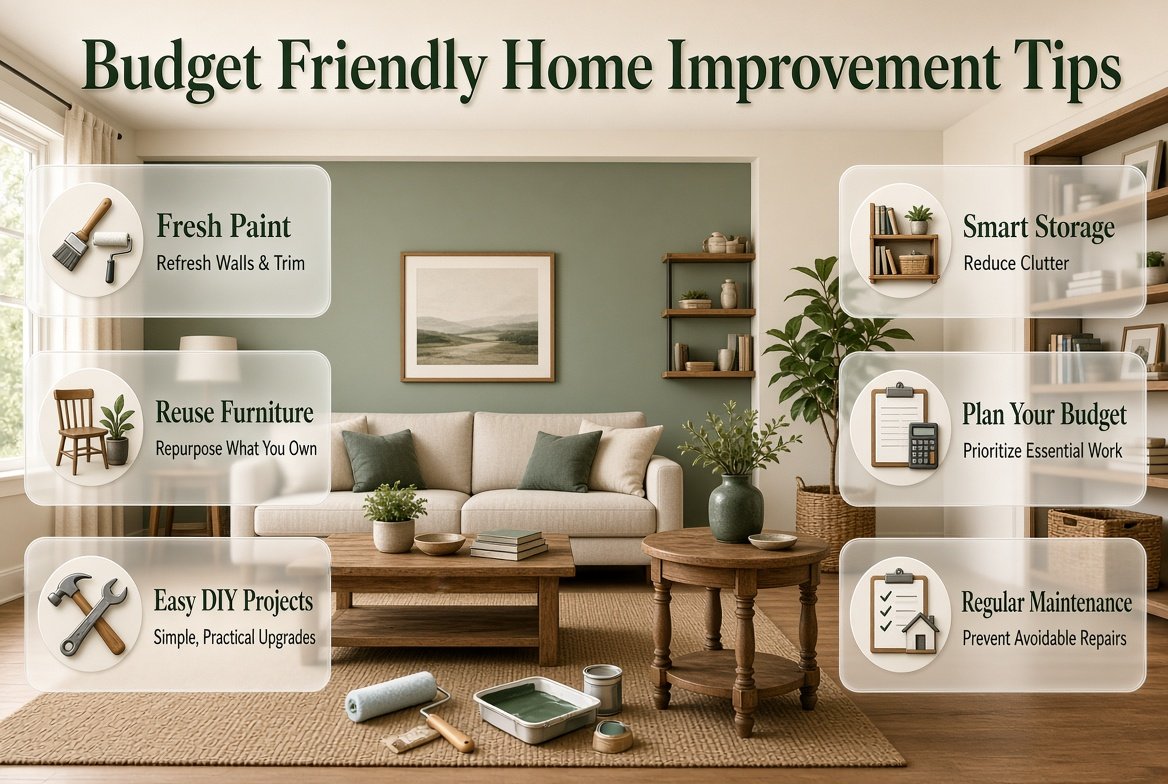
Budget Friendly Home Improvement Tips | Improving your home can feel expensive when you start thinking about fresh paint, better furniture, kitchen upgrades, bathroom repairs, and additional storage. You might want your living space to look more attractive and function better, but a limited budget can make it difficult to decide where to begin. The good news is that you don’t need a complete renovation to make meaningful improvements.
Budget friendly home improvement tips help you identify affordable ways to refresh your living space, solve everyday household problems, and make your home more comfortable without unnecessary spending. The secret is to focus on practical changes, reuse what you already own, plan purchases carefully, and understand which projects deserve professional attention.
Whether you’re living in a small apartment, maintaining an older house, decorating your first home, or updating rooms that have started to look tired, a sensible approach can help you achieve better results with less money.
In this guide, you’ll learn how to improve individual rooms, plan affordable DIY projects, choose materials, reduce renovation expenses, avoid common mistakes, and create a realistic home improvement budget. You’ll also discover how regular maintenance and better organization can protect your investment over time.
For more practical inspiration, Heartomenal offers ideas for creating a more beautiful, organized, and comfortable home.
1. How Can You Improve Your Home on a Small Budget?
You can improve your home on a small budget by starting with the problems that affect your daily comfort. Simple changes such as repainting suitable surfaces, repairing damaged fittings, rearranging furniture, improving lighting, and organizing storage can make a noticeable difference without requiring major renovation work.
The most effective improvements are not always the most expensive. A room may feel uncomfortable because furniture blocks the walkway, storage is poorly arranged, or lighting is inadequate. Solving these problems can be more valuable than buying new decorations.
Identify what needs improvement
Walk through your home and make a list of the things you would like to change. Separate practical problems from cosmetic preferences so you can prioritize spending.
For example, a dripping tap deserves attention before a decorative kitchen accessory. A loose handrail should be repaired before purchasing a new hallway rug. Once essential issues are addressed, you can focus on improvements that make your home more attractive.
Use these questions to evaluate each project:
- Does this change solve a real household problem?
- Can I improve the existing item instead of replacing it?
- Will the improvement be easy to maintain?
- Do I have the tools and skills to complete the work safely?
- Is the cost reasonable compared with the benefit?
Start with a manageable project
Choose one room or one specific problem rather than trying to renovate the entire property. If your bedroom feels cluttered, begin with storage and furniture placement. If the kitchen looks dated, consider cleaning, suitable cabinet refinishing, or replacing worn handles.
Pro Tip: Complete a project before starting another. This keeps materials organized, makes spending easier to track, and reduces the frustration of having several unfinished areas around the home.
2. What Are the Best Low-Cost Home Improvement Ideas?
The best low-cost home improvement ideas improve appearance, comfort, or functionality without requiring expensive structural changes. Painting, updating hardware, repairing minor defects, improving storage, and reusing suitable furniture are useful starting points for many households.
Refresh walls with paint
Paint can transform a room when the existing walls are structurally sound and suitable for repainting. Light, neutral colors can help a room feel brighter, while carefully chosen accent colors can introduce personality without requiring extensive decoration.
Before buying paint, measure the wall area and check the product’s coverage information. Include primer, rollers, brushes, masking materials, and preparation supplies in your estimate.
Clean the surface, repair suitable minor defects, and allow repairs to dry before painting. If you notice persistent dampness, peeling associated with moisture, or unusual staining, investigate the cause instead of simply covering it.
Replace worn hardware
Cabinet handles, drawer pulls, hooks, and other small fittings can influence the appearance of a room. Replacing worn or damaged hardware is often simpler than replacing the furniture itself.
Measure existing screw spacing before purchasing replacements. Matching the original dimensions may allow you to avoid filling holes, drilling new ones, or damaging the finish.
Rearrange furniture
Furniture rearrangement is one of the most affordable ways to improve a room because it uses items you already own.
Try moving a chair closer to a window, positioning seating around a shared activity, or removing a small table that blocks movement. Keep entrances, electrical outlets, and important walking routes accessible.
Refresh existing textiles
Curtains, cushions, bedding, throws, and rugs can change the atmosphere of a room. You don’t need to replace everything. Select a few items that complement the colors and materials already present.
Wash or clean existing textiles according to their care instructions before deciding whether they need replacement.
Repair before replacing
A loose cabinet hinge, squeaky door, damaged drawer runner, or unstable furniture fitting may be repairable. Inspect the problem carefully and use suitable replacement parts rather than purchasing a completely new item unnecessarily.
Expert Tip: Before buying anything, spend fifteen minutes identifying items that could be cleaned, repaired, moved, or reused. This simple exercise often reveals improvements you can make without additional purchases.
3. How Can You Improve Your Living Room Without Spending Much?

A living room can feel more welcoming through better furniture placement, balanced lighting, organized surfaces, and coordinated accessories. These changes can improve the room’s appearance while preserving your existing sofa, tables, chairs, and other useful furniture.
Create a practical furniture layout
Begin by identifying the room’s main purpose. A family living room may need open floor space, comfortable seating, and accessible storage. A room used for conversation may benefit from seating arranged to make talking easier.
Avoid pushing furniture into every available corner simply because space is available. Leave enough room for comfortable movement and ensure doors can open fully.
Make lighting work harder
Clean windows and lampshades, remove obstructions from natural light sources, and replace failed bulbs with compatible energy-efficient alternatives.
Consider whether different activities need different lighting. A reading corner may benefit from a suitable task lamp, while general room lighting can provide broader illumination.
Check bulb specifications, fixture limits, and manufacturer instructions before making changes. Electrical installation work should be handled by a qualified professional when required.
Reduce visual clutter
A living room can feel crowded when every shelf and table is covered with objects. Keep frequently used items accessible and group decorative pieces thoughtfully.
A tray can organize small objects on a coffee table, while a basket may provide a convenient place for blankets. These solutions work best when they genuinely support your routine.
Reuse decorations creatively
Move suitable accessories from one room to another instead of purchasing new decorations immediately. A small lamp, framed print, or storage basket may work better in a different location.
For more ideas, explore Living Room Home Tips.
Common Mistake: Buying accessories before measuring the available space can create more clutter. Decide where each item will go and whether it serves a practical or decorative purpose before spending money.
4. What Are the Best Budget-Friendly Kitchen Improvements?
Budget-friendly kitchen improvements should make cooking, cleaning, and storage easier while preserving useful cabinets and appliances. Organizing drawers, improving cabinet interiors, refreshing suitable surfaces, and repairing minor defects can help an existing kitchen work better without the expense of a full renovation.
Organize cabinets and drawers
Remove expired products, unused utensils, and items that belong elsewhere. Group the remaining supplies according to how you use them.
Keep everyday dishes near the washing area, place frequently used cooking tools near the preparation space, and store heavy items where they can be accessed safely.
Before buying drawer dividers or shelf organizers, measure the available space. Reuse suitable containers if they are clean, durable, and appropriate for the items being stored.
Refresh existing cabinet doors
If the cabinets are structurally sound, cleaning, suitable refinishing, or replacing handles may offer better value than installing new units.
Kitchen surfaces often collect grease, so preparation is particularly important. Use a suitable cleaner, follow the coating manufacturer’s instructions, and check whether the existing surface needs sanding or a compatible primer.
Test the proposed finish in an inconspicuous area before treating every cabinet.
Improve the sink area
Check the sink, faucet, visible pipework, and surrounding surfaces for signs of leaking or deterioration. Clean the area regularly and remove unnecessary products that occupy valuable counter space.
A persistent leak should be investigated promptly. Cosmetic changes cannot solve damaged plumbing or moisture affecting the cabinetry.
Improve lighting and working space
Good lighting helps you prepare food and clean surfaces more effectively. Replace failed bulbs with compatible options and keep preparation areas as clear as possible.
For additional ideas, read Kitchen Organization Tips.
A practical kitchen upgrade should solve a specific problem. If you constantly struggle to find cooking utensils, better drawer organization may help more than buying new decorative containers.
5. How Can You Upgrade a Bathroom on a Tight Budget?
You can upgrade a bathroom affordably by improving storage, replacing worn accessories, maintaining seals, refreshing suitable surfaces, and improving ventilation. These changes can make the room feel cleaner and more functional without replacing every tile, fixture, or cabinet.
Improve everyday storage
Keep toiletries, cleaning products, and towels in suitable locations. Use existing shelves and cabinets efficiently before purchasing additional storage.
If the bathroom is small, choose organizers that fit the available space without obstructing movement or access to plumbing fixtures.
Replace worn accessories
A damaged towel hook, deteriorating shower curtain, or worn toilet-roll holder may be relatively inexpensive to replace. Measure the available space and select products suitable for the bathroom’s moisture levels.
Check permission requirements before drilling into walls if you rent your property.
Maintain grout and sealant
Inspect accessible grout lines and sealant around sinks, baths, and showers. Cracks or failed seals may allow water to reach surfaces behind them.
Repair methods depend on the materials and the extent of damage. Persistent dampness, loose tiles, or recurring mold may indicate a problem that needs professional assessment.
Improve ventilation
Use the existing ventilation system as intended and keep suitable vents clear. If condensation remains excessive, investigate whether ventilation is adequate.
For more planning ideas, explore Bathroom Planning Tips.
Quick Tip: Make a list of the bathroom problems you encounter every day. Prioritize improvements that solve those problems rather than buying a matching set of accessories simply because they look attractive.
6. What Are the Cheapest Ways to Refresh a Bedroom?

The cheapest ways to refresh a bedroom include decluttering, improving furniture placement, organizing clothing, cleaning existing furnishings, and updating a few textiles. A comfortable bedroom does not require matching furniture or expensive decorative pieces.
Improve the furniture arrangement
Make sure the bed, wardrobe, and bedside furniture allow you to move around comfortably. Avoid blocking drawers, windows, or doors.
In a small bedroom, consider whether a large piece of furniture is being used efficiently. A compact bedside table or suitable under-bed storage may improve the available space.
Refresh the bedding
Clean bedding and coordinated pillow covers can improve the room’s appearance without changing the bed or mattress. Choose washable fabrics appropriate for your climate and household needs.
Reuse suitable curtains and cushions if they still function well. Replacing only the items that are worn or damaged can keep the project affordable.
Organize clothing and accessories
Separate frequently worn clothing from seasonal items and belongings you no longer use. Keep everyday essentials accessible and store less frequently used items in suitable containers.
Avoid buying storage boxes before measuring the wardrobe or under-bed space. A container that does not fit properly may create another organizational problem.
Repair existing furniture
Tighten loose handles, check drawer runners, and clean furniture using suitable products. If repainting or refinishing is appropriate, check the material and existing coating before beginning.
For more practical ideas, read Bedroom Organization Tips.
7. How Can You Make a Small Home Feel Bigger Without Renovating?
You can make a small home feel more spacious by improving storage, reducing unnecessary furniture, using natural light effectively, and maintaining clear walking routes. These changes help you use the available space more efficiently without the expense of extending the property.
Use vertical storage
Wall-mounted shelves, hooks, and tall storage units can make better use of unused wall space. Choose a storage solution appropriate for the wall construction and secure it using suitable fixings.
Heavy objects should never be placed on shelves that are not designed or installed to support them.
Choose furniture that fits
Measure rooms and doorways before purchasing furniture. Consider how the furniture will be delivered, assembled, and moved through the home.
Furniture with built-in storage can be useful when it replaces a separate storage item. However, multifunctional furniture is only worthwhile if you will genuinely use its additional features.
Keep pathways clear
Move unnecessary items away from entrances and frequently used routes. Position furniture so that doors, windows, and important household equipment remain accessible.
Create visual consistency
Using a limited color palette and coordinating a few textiles can help rooms feel more connected. This does not mean every room must look identical; consistent finishes can simply reduce visual distraction.
For more space-saving ideas, explore Small Space Home Tips.
8. How Can Better Organization Reduce Home Improvement Costs?
Better organization can reduce home improvement costs by helping you identify what you already own, prevent duplicate purchases, and use available storage more effectively. Before purchasing furniture or containers, assess how belongings are used and where they should be kept.
Declutter before buying storage
Many households purchase storage products because cupboards and shelves feel overcrowded. However, storing unnecessary belongings simply moves the problem from one location to another.
Review each category of belongings and decide what should remain accessible, what can be stored elsewhere, and what is no longer needed.
Create a simple storage system
Assign practical locations to frequently used items. Keep cleaning products in appropriate secure storage, place paperwork in a designated area, and organize everyday essentials where they are easiest to reach.
Labeling can help when several people share the same storage areas.
Use existing containers first
Shoeboxes, suitable baskets, and containers you already own may help organize small belongings. Reuse them only when they are clean, safe, and appropriate for the intended purpose.
For additional strategies, visit Smart Home Organization Tips.
You can also explore Home Storage Solutions for ideas that make better use of cupboards, shelves, and underused spaces.
9. How Can Decluttering Improve a Home Without Costly Upgrades?
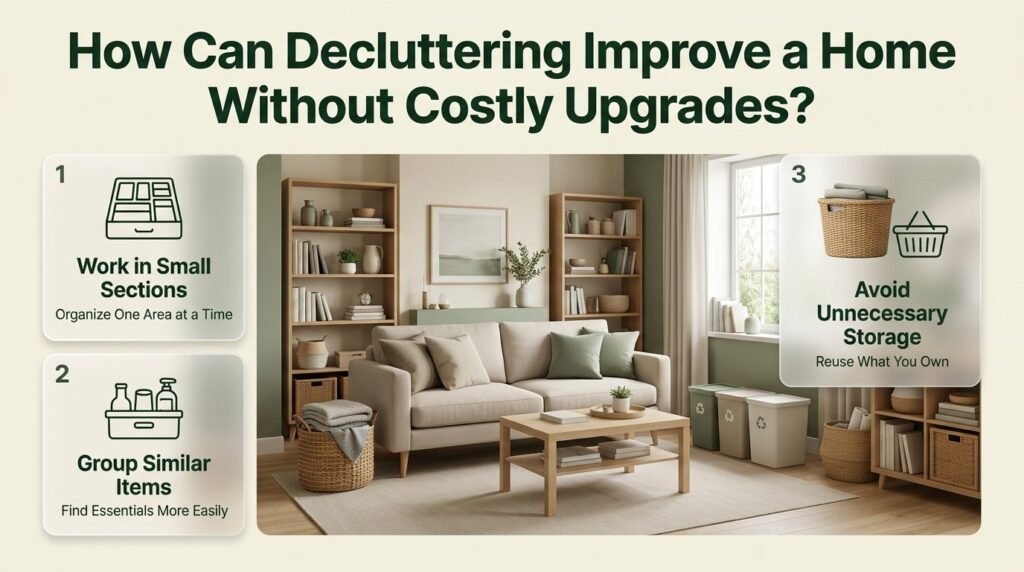
Decluttering improves a home by reducing unnecessary belongings, freeing useful surfaces, and making rooms easier to clean and maintain. It can also reveal whether a storage problem requires a new product or simply a better arrangement of existing items.
Work in small sections
Choose one drawer, shelf, or cupboard at a time. Remove everything, clean the area, and return only the items that belong there.
Small sections are easier to finish and less likely to leave the home in a state of disorder.
Establish practical categories
Group similar items together, such as stationery, kitchen utensils, personal care products, or cleaning supplies. This makes it easier to identify duplicates and locate items later.
Dispose of unwanted belongings responsibly, and donate suitable usable items where appropriate.
Avoid replacing clutter with decorative storage
A beautiful basket is not automatically a useful purchase. Buy storage only when you understand what it will contain and where it will be placed.
For more guidance, read Home Decluttering Tips.
10. How Do You Create a Realistic Home Improvement Budget?
A realistic home improvement budget includes materials, labor, tools, delivery, disposal, and a reserve for unexpected costs. Setting a spending limit before shopping helps you make decisions based on priorities rather than impulse.
Step 1: Define the project
Write down the exact result you want. Instead of planning to renovate the kitchen, specify whether you intend to organize cabinets, refresh suitable surfaces, or replace damaged handles.
A clearly defined project is easier to estimate and complete.
Step 2: Measure accurately
Measure wall areas, furniture dimensions, shelf lengths, or the number of fittings required. Check product coverage and package quantities before calculating how much to buy.
Follow manufacturer recommendations for additional material needed to account for cutting or waste.
Step 3: Compare complete costs
Compare products with similar specifications, durability, and intended uses. Include delivery, accessories, installation, and any required equipment.
The cheapest item may not be the least expensive option over its useful life.
Step 4: Set aside a contingency
Where practical, reserve around 10–20% of the estimated cost for minor unexpected expenses. Older properties and projects involving concealed damage may need a larger reserve.
Do not treat the contingency as money available for extra decorations.
Step 5: Track spending
Record purchases and compare them with the original estimate. If costs begin to rise, reconsider optional parts of the project before reducing the budget for essential repairs.
Example of a small improvement budget
The following figures are illustrative and do not represent current supplier quotations.
| Expense | Example allocation |
|---|---|
| Paint and preparation supplies | $60 |
| Replacement cabinet handles | $25 |
| Storage organizers | $30 |
| Compatible lighting accessories | $35 |
| Miscellaneous supplies | $20 |
| Estimated project total | $170 |
Actual costs vary according to local prices, product quality, room dimensions, and existing conditions. Adapt the categories and amounts to your own budget.
11. How Can You Save Money on Home Improvement Materials?
You can save money on materials by comparing equivalent products, reusing suitable items, purchasing accurate quantities, and planning projects before shopping. Material savings are most effective when they do not compromise safety, durability, or suitability.
Reuse before replacing
Inspect furniture, shelving, fittings, and accessories before deciding to buy new ones. Cleaning, tightening, repairing, or refinishing a sound item may provide the result you need.
However, reuse only materials that remain safe and suitable for their intended purpose.
Compare unit prices
A larger package is not always better value if you only need a small quantity. Compare the price per litre, square metre, or individual item where appropriate.
Check product specifications and coverage rather than comparing prices alone.
Consider clearance products carefully
Clearance sales may offer savings on suitable materials, but confirm that the products are undamaged and appropriate for the project. If multiple matching items are required, check that enough stock is available.
Keep purchase records and review applicable return conditions.
Borrow or rent occasional-use tools
If a tool is required for only one small project, borrowing or renting it may be more economical than purchasing it.
Make sure you know how to use the tool safely and have the necessary protective equipment.
Plan purchases together
Prepare a complete shopping list before visiting suppliers. Combining suitable purchases can reduce repeated delivery charges and unnecessary trips.
For broader household routines that help you use resources efficiently, explore Easy Home Cleaning Tips.
12. How Can Regular Maintenance Prevent Expensive Repairs?
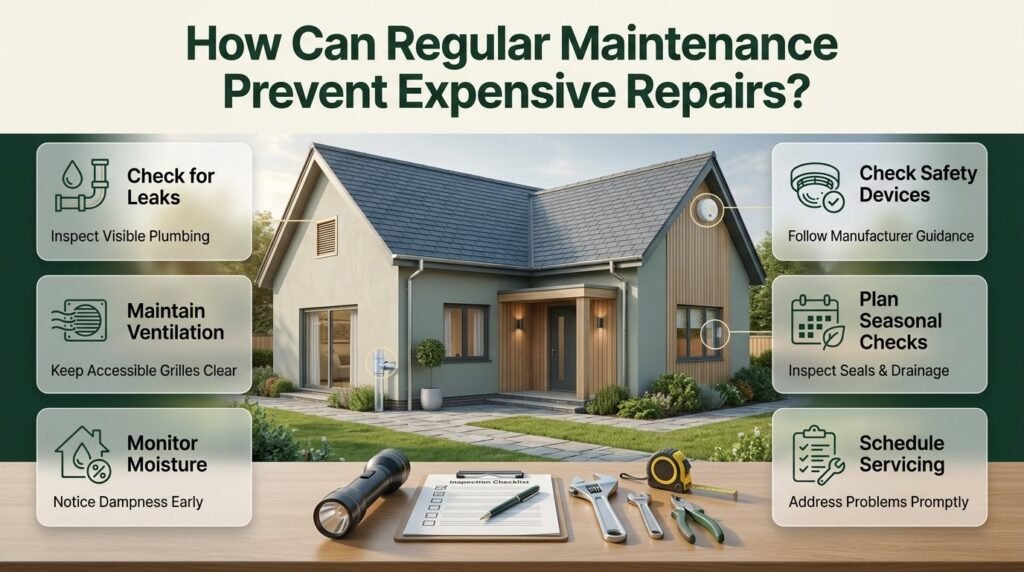
Regular maintenance helps identify developing problems before they cause more extensive damage. Checking visible plumbing, keeping ventilation clear, monitoring moisture, and maintaining equipment according to manufacturer instructions can help protect your home and control long-term costs.
Follow a practical maintenance schedule
Monthly checks
- Look for visible plumbing leaks.
- Clean accessible ventilation grilles.
- Check for unusual moisture or musty odors.
- Test smoke alarms according to manufacturer instructions.
- Inspect frequently used doors, handles, and fittings.
Seasonal checks
- Inspect accessible window and door seals.
- Review visible drainage and gutter conditions where safely accessible.
- Check outdoor areas for deterioration.
- Look for signs of water entering the property.
- Prepare suitable equipment for seasonal weather conditions.
Annual checks
- Arrange required servicing for heating, cooling, and other equipment.
- Review recurring maintenance issues.
- Check whether damaged finishes or fittings require repair.
- Review household safety equipment and replacement schedules.
Adapt the schedule to your property, climate, and equipment. Tasks involving heights, electrical hazards, or specialist systems should be handled by appropriately qualified people.
Repair small problems promptly
A dripping tap, deteriorating seal, or damaged fitting may appear minor, but ignoring it can allow the problem to worsen.
If a defect continues after a basic appropriate repair, investigate its underlying cause rather than repeatedly treating the visible symptoms.
For a more detailed routine, read Basic Home Maintenance Tips.
13. How Can Laundry Improvements Make a Home More Efficient?
Affordable laundry improvements focus on making washing, drying, folding, and storing clothes easier. Better organization can reduce wasted time, protect clothing, and make even a small laundry area more practical.
Organize the laundry area
Keep detergents, fabric-care products, and cleaning tools in suitable storage away from children and pets. Use clearly defined locations for laundry baskets and frequently used supplies.
If space is limited, choose a compact arrangement that does not obstruct ventilation, appliance access, or safe movement.
Improve clothing care
Read garment care labels before washing or drying clothes. Using appropriate settings and avoiding unnecessary high-temperature cycles can help protect suitable fabrics and reduce avoidable wear.
Clean appliance filters and maintain equipment according to the manufacturer’s instructions.
Create a simple folding station
A clear counter or suitable folding surface can make laundry easier to manage. If a permanent counter is not practical, consider an existing table or another safe surface that can be used when needed.
For additional practical ideas, visit Laundry Tips and Tricks.
14. Should You Choose DIY Home Improvements or Hire a Professional?
DIY improvements can save labor costs when the task is straightforward, low-risk, and within your abilities. Professional help is appropriate when the work involves structural changes, complex plumbing, electrical systems, hazardous materials, or specialist equipment.
| Project | Usually suitable approach | Main consideration |
|---|---|---|
| Painting a suitable interior wall | DIY | Surface preparation |
| Organizing drawers | DIY | Measurements and storage needs |
| Replacing compatible cabinet handles | DIY | Correct dimensions |
| Assembling simple furniture | DIY when instructions are clear | Stability and safe assembly |
| Persistent plumbing leaks | Professional assessment may be needed | Find the underlying cause |
| Electrical wiring changes | Qualified electrician | Safety and regulations |
| Structural wall alterations | Qualified structural professionals | Load-bearing requirements |
| Major roof repairs | Qualified roofing professional | Height and weather hazards |
Before deciding, estimate the complete cost of each option. DIY projects can require tools, equipment rental, transport, waste disposal, and time that would otherwise be spent elsewhere.
A professional quotation may initially look expensive but can offer better value when a job requires specialist knowledge or carries significant risks.
Expert Tip: Ask for a written scope of work and a breakdown of major costs when comparing professional quotations. Make sure you’re comparing equivalent materials, responsibilities, and services rather than choosing solely by the lowest price.
15. What Home Improvement Mistakes Should Beginners Avoid?
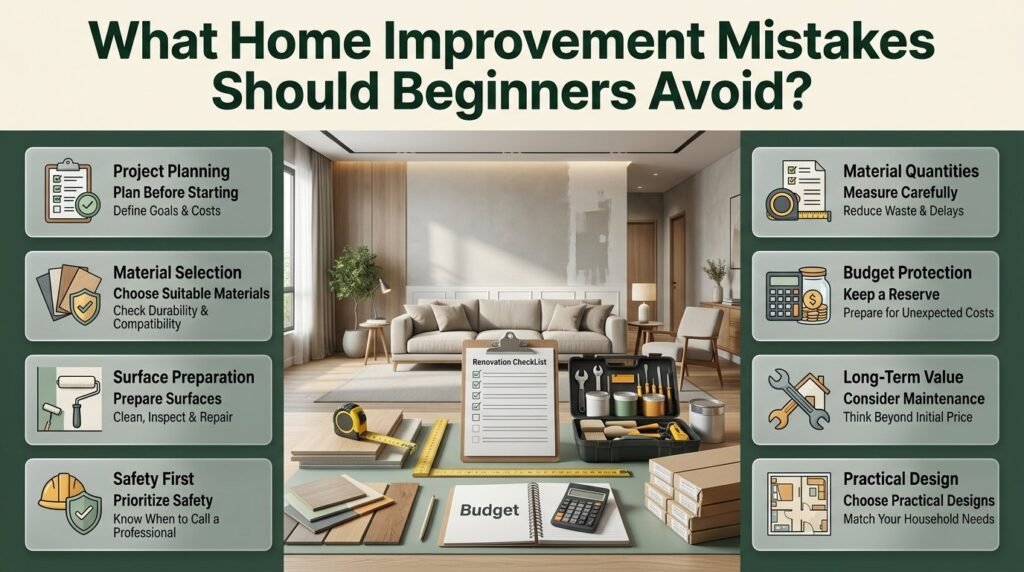
Beginners commonly overspend by shopping without a plan, choosing unsuitable materials, underestimating preparation, and starting more projects than they can finish. Understanding these mistakes helps you protect your budget and achieve more reliable results.
Mistake 1: Starting without a clear plan
When a project is poorly defined, it becomes easier to buy unnecessary products or change direction halfway through the work.
How to avoid it: Write down the desired outcome, measure the area, prepare a materials list, and decide how much you can spend.
Mistake 2: Choosing materials based on price alone
A product that is unsuitable for moisture, heavy use, or outdoor conditions may fail earlier than expected.
How to avoid it: Check compatibility, durability, maintenance requirements, installation instructions, and warranty information before purchasing.
Mistake 3: Skipping preparation
Paint and other finishes may fail when applied over dirt, grease, loose material, or damp surfaces.
How to avoid it: Prepare the surface according to the product instructions and investigate underlying defects before applying a new finish.
Mistake 4: Ignoring safety
Unfamiliar electrical, plumbing, structural, or hazardous-material work can cause serious problems.
How to avoid it: Recognize the limits of your skills and seek appropriately qualified assistance when needed.
Mistake 5: Buying too much material
Excess materials waste money and can create storage problems. Underestimating quantities can also cause delays if matching products become unavailable.
How to avoid it: Measure carefully, calculate quantities, account for reasonable waste, and confirm package coverage before purchasing.
Mistake 6: Spending the entire budget immediately
Unexpected problems can leave essential work unfinished if no money remains.
How to avoid it: Keep a contingency reserve and complete improvements in stages.
Mistake 7: Forgetting long-term maintenance
A low-cost finish may require frequent cleaning, repairs, or replacement.
How to avoid it: Consider the expected lifespan, maintenance requirements, and repairability of the product before making a decision.
Mistake 8: Following trends without considering household needs
A popular design may not suit your room dimensions, lifestyle, or existing furniture.
How to avoid it: Choose improvements that support the way you actually use your home.
16. What Do Home Improvement Professionals Recommend for a Limited Budget?
A sensible professional approach is to protect the property’s condition first, improve functionality second, and focus on appearance third. This order helps prevent money being spent on decorative changes that later need to be removed to complete essential repairs.
Inspect before improving
Look for visible water damage, deteriorating finishes, loose fittings, and other problems that could affect the success of the project.
For example, repainting a wall without addressing persistent moisture may lead to another repair expense.
Choose appropriate materials
Select products that suit the intended location and expected use. A material suitable for a dry bedroom may not be appropriate for a damp bathroom or exposed outdoor surface.
Check the manufacturer’s recommendations and follow the specified installation method.
Complete one project properly
Finishing one useful improvement is often better than beginning several projects that remain incomplete.
Prepare the area, gather the necessary materials, and allow enough time for the work and drying or curing periods where applicable.
Keep product records
Save receipts, product specifications, warranties, and maintenance instructions. These records can help you identify compatible replacements and understand how to care for newly installed materials.
Consider the future
Think about how the improvement will affect cleaning, storage, accessibility, and future repairs. A practical upgrade should continue to serve your household after the initial excitement has passed.
Maintain a realistic standard
Not every room needs a complete makeover. A clean, functional room with sound surfaces and suitable storage may be more useful than an expensive redesign.
For more ideas that support a comfortable, organized home, explore Home Tips & Ideas.
What Are the Best Budget Friendly Home Improvement Tips for Homeowners?
The best budget friendly home improvement tips focus on practical changes that improve your home’s appearance, comfort, and functionality without requiring a major renovation. Painting suitable surfaces, updating cabinet handles, improving lighting, organizing storage, and repairing minor defects are excellent starting points. Before purchasing new items, evaluate what you already own and determine whether cleaning, repairing, or rearranging it could achieve the desired result.
Practical ways to improve your home affordably:
Refresh walls or suitable furniture with an appropriate paint finish.
Rearrange existing furniture to improve movement and use of space.
Replace worn hardware instead of replacing entire cabinets.
Improve storage by organizing cupboards and drawers.
Repair minor maintenance issues before they become more expensive.
The most effective approach is to prioritize improvements according to their practical value. Address safety concerns and essential repairs first, then spend your remaining budget on upgrades that make everyday living easier.
How Can I Renovate My Home on a Very Small Budget?
Renovating a home on a very small budget requires careful planning, realistic expectations, and a willingness to reuse suitable materials. Instead of attempting a complete makeover, divide your renovation into smaller projects and complete the most important ones first. Free improvements, such as decluttering and rearranging furniture, can create a useful starting point before you spend money on materials.
Ways to control renovation expenses:
Prepare a detailed list of required materials before shopping.
Compare prices, product specifications, and durability.
Reuse existing furniture, shelves, and accessories when practical.
Borrow or rent tools that you will only need occasionally.
Reserve part of your budget for unexpected expenses.
Avoid cosmetic upgrades until essential repairs are complete.
For example, refreshing sound kitchen cabinets and improving their internal organization may be more economical than replacing the entire kitchen. However, if cabinets are damaged by persistent moisture, investigate and resolve the underlying problem first. A small renovation budget works best when every purchase has a clear purpose.
Which Home Improvements Add the Most Value Without Costing Too Much?
Home improvements that address maintenance problems, improve functionality, and make a property easier to maintain can offer meaningful value without requiring extensive renovation. The best investment depends on the property’s current condition, local market expectations, and the needs of the people living there. No improvement guarantees a particular increase in resale value.
Improvements worth considering include:
Repairing visible damage and addressing water leaks.
Refreshing worn but structurally sound walls and finishes.
Improving storage and making better use of existing space.
Replacing damaged or inefficient fittings with suitable alternatives.
Maintaining bathrooms, kitchens, doors, and windows.
Improving lighting where existing illumination is inadequate.
Before spending money, compare the total project cost with the practical benefit you expect. A repair that prevents further damage may be more valuable than an expensive decorative upgrade. If you intend to sell the property, consider the local housing market rather than assuming that every renovation will produce a financial return.
Is DIY Home Improvement Cheaper Than Hiring a Professional?
DIY home improvement can be cheaper when the project is straightforward, low-risk, and within your abilities. Tasks such as painting suitable walls, organizing cupboards, assembling furniture, and replacing compatible cabinet handles can often be completed without paying for professional labor. However, the lowest initial cost does not always mean the lowest overall expense.
Consider these factors before choosing DIY:
The cost of materials, tools, and equipment rental.
The time needed to complete the project properly.
Your experience with the specific task.
The risk of damaging existing surfaces or fittings.
The cost of correcting mistakes or repeating the work.
Electrical wiring, structural alterations, complex plumbing, and hazardous-material removal require appropriate professional expertise. For these projects, the potential consequences of incorrect work can outweigh any savings on labor. Request a clear quotation, compare the proposed materials and scope of work, and choose a qualified professional when the task requires specialist skills.
How Can I Make My Home Look More Expensive Without Spending More Money?
You can give your home a more polished appearance by improving cleanliness, organization, lighting, and consistency rather than purchasing expensive furniture or decorations. Rooms often look more finished when surfaces are maintained, furniture is arranged thoughtfully, and colors and accessories work together. The aim is to create a cohesive space that suits your home, not to imitate an expensive interior at any cost.
Affordable ways to create a polished appearance:
Clean windows, lampshades, mirrors, and visible surfaces.
Keep countertops and frequently used tables organized.
Coordinate a few existing accessories through color or material.
Repair chipped paint and damaged hardware where appropriate.
Arrange furniture to maintain clear walking routes.
Use suitable lighting to make rooms more comfortable.
Choose a few useful decorations instead of filling every surface.
Avoid purchasing decorative products before addressing clutter or maintenance problems. A well-organized room with clean finishes and functional furniture can look more inviting than a room filled with expensive but poorly coordinated items. Start with what you already own, identify the changes that matter most, and spend only where a purchase provides a clear improvement.
Conclusion: Budget Friendly Home Improvement Tips
Improving your home does not have to involve expensive renovations, costly materials, or a large financial investment. With thoughtful planning, practical decisions, and a little creativity, you can make your living space more attractive, comfortable, organized, and functional while staying within your budget. The most effective budget friendly home improvement tips focus on identifying your home’s real needs, prioritizing high-impact changes, and making the most of the resources you already have.
Start with manageable projects such as refreshing walls with paint, rearranging furniture, improving lighting, organizing storage, updating cabinet hardware, and repairing minor maintenance issues. These simple improvements can create noticeable results without requiring a complete room makeover. Before purchasing anything, compare prices, prepare a realistic budget, and consider whether an existing item can be repaired, reused, or repurposed.
Remember that affordable home improvement is not just about saving money today. Regular maintenance, durable materials, energy-conscious choices, and well-planned upgrades can also help reduce future expenses. While DIY projects are useful for many cosmetic tasks, electrical work, major plumbing changes, and structural repairs should be handled by qualified professionals when necessary.
Most importantly, improve your home gradually instead of trying to change everything at once. Choose projects that suit your lifestyle, available space, and financial priorities. For more practical inspiration, explore Heartomenal and discover ideas for creating a cleaner, more organized, and more comfortable home. A beautiful home is not defined by how much money you spend, but by how wisely you use the space, materials, and budget you have.
Leave a Reply