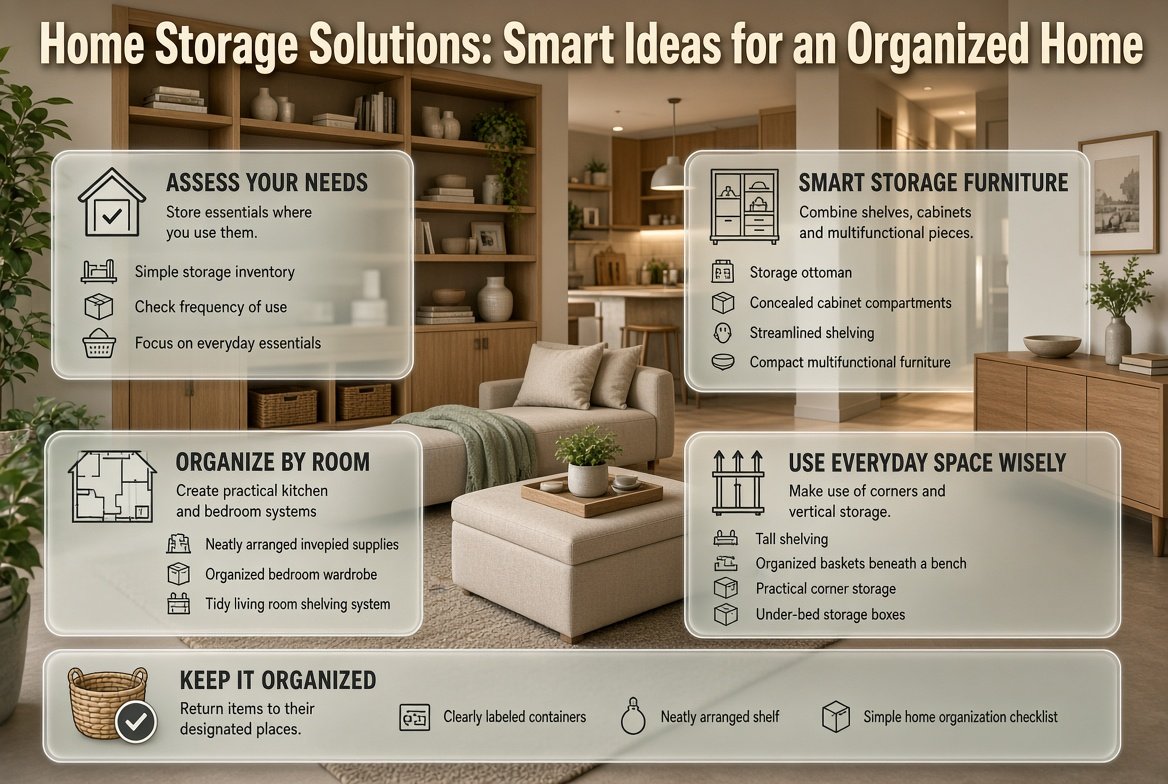
Introduction
Home Storage Solutions | A cluttered home can make everyday life more stressful than it needs to be. Kitchen counters fill with supplies, bedroom closets become difficult to manage, and living rooms gradually collect items that have no permanent place. Even when you have enough belongings to meet your needs, finding the right thing at the right time can become a daily frustration.
The best home storage solutions aren’t necessarily expensive cabinets, custom furniture, or a collection of matching containers. They’re practical systems that help you use available space wisely, keep essential belongings accessible, and maintain an organized home without constant effort. Whether you live in a small apartment, a busy family house, or a home with limited built-in storage, a few well-planned changes can make a meaningful difference.
This guide explains how to assess your storage needs, organize individual rooms, choose appropriate furniture and containers, make better use of unused spaces, and maintain your results over time. You’ll also learn how to avoid common mistakes, control your budget, and create storage arrangements that suit your everyday routines.
If you’re looking for broader ideas to improve your surroundings, Heartomenal provides a starting point for exploring practical approaches to home organization, maintenance, and comfortable living.
What Are Home Storage Solutions, and Why Do They Matter?
Home storage solutions are furniture pieces, organizers, containers, shelving systems, and everyday habits that help you keep household belongings in designated places. They include wardrobe organizers, kitchen drawer dividers, bathroom shelves, storage benches, pantry containers, and simple methods for organizing paperwork or seasonal items.
Their main purpose is to make a home easier to use. Good storage reduces the time spent searching for belongings, prevents frequently used surfaces from becoming overcrowded, and makes cleaning more straightforward. It can also help you recognize what you already own before buying replacements.
For example, a family might keep school supplies in one labeled drawer near the study area rather than spreading notebooks, pens, and craft materials across several rooms. Someone living in a small apartment might store spare bedding beneath the bed instead of filling the wardrobe with items used only occasionally.
Effective storage also improves the relationship between your belongings and the available space. Instead of forcing every object into the nearest cupboard, you establish a logical location based on its purpose and frequency of use.
What Makes a Storage System Effective?
A useful storage system should meet five practical requirements:
- Accessibility: You can retrieve and return items without unnecessary effort.
- Capacity: The system accommodates the belongings you genuinely need to keep.
- Visibility: You can identify contents without opening every container.
- Safety: Shelves, furniture, and containers suit the weight and type of items stored.
- Maintainability: Everyone using the system can keep it organized with reasonable effort.
Not every storage product needs to meet all five requirements in the same way. A decorative cabinet might prioritize appearance and concealment, while a pantry organizer should prioritize visibility and convenient access.
The important thing is to choose storage according to its intended purpose rather than buying products simply because they look attractive.
How Should You Plan Home Storage Before Buying Anything?
The most effective way to improve storage is to understand the problem before purchasing a solution. Start by identifying which areas cause the most frustration, what belongings need a permanent home, and how much usable space is available.
Step 1: Identify Your Main Storage Problems
Walk through your home and notice where clutter repeatedly gathers. You might find shoes beside the entrance, toiletries covering the bathroom counter, clothing overflowing from drawers, or paperwork accumulating on the dining table.
Write down the three areas that cause the greatest inconvenience.
For each area, ask:
- Which items are creating the problem?
- Are these belongings used daily, weekly, or occasionally?
- Do they already have a designated storage location?
- Is the existing storage inconvenient, too small, or poorly arranged?
- Could some items be removed instead of stored?
This assessment prevents you from spending money on products that address the appearance of clutter without solving its underlying cause.
Step 2: Declutter Before Organizing
Decluttering and organizing are related, but they aren’t the same task. Decluttering reduces the number of belongings you need to manage, while organizing establishes suitable places for the items you decide to keep.
Sort belongings into practical categories:
- Items you use regularly.
- Items you need occasionally.
- Seasonal or sentimental belongings.
- Items that belong elsewhere.
- Items suitable for donation, reuse, or recycling.
- Damaged or unusable items that should be discarded appropriately.
Avoid making quick decisions about important documents, sentimental objects, or items that may have legal, financial, or practical value. Review those carefully.
Pro Tip: Complete one drawer, shelf, or cupboard at a time. Smaller projects are easier to finish and help prevent the frustration of having an entire room covered in unsorted belongings.
Step 3: Measure Your Available Space
Measure the width, depth, and height of the area where you intend to add storage. For furniture, consider the room’s dimensions, door openings, drawer clearance, and walking routes.
For example, a tall shelving unit might offer excellent capacity, but it won’t be a good choice if it blocks a window or makes a narrow walkway difficult to use.
Also consider how items will be removed. A container that fits beneath a bed but cannot slide out easily may become inconvenient. A shelf that sits too high for everyday use might be better reserved for seasonal belongings.
Step 4: Assign a Purpose to Every Storage Area
Decide what each cupboard, drawer, basket, and shelf will hold before returning items to their places.
A hallway drawer might be reserved for keys and small everyday essentials. A kitchen cabinet could hold breakfast supplies, while a bedroom drawer might be dedicated to accessories.
The clearer each storage area’s purpose, the easier it becomes to return belongings correctly.
For more guidance on creating consistent systems, explore Smart Home Organization Tips.
What Are the Best Home Storage Solutions for Small Spaces?
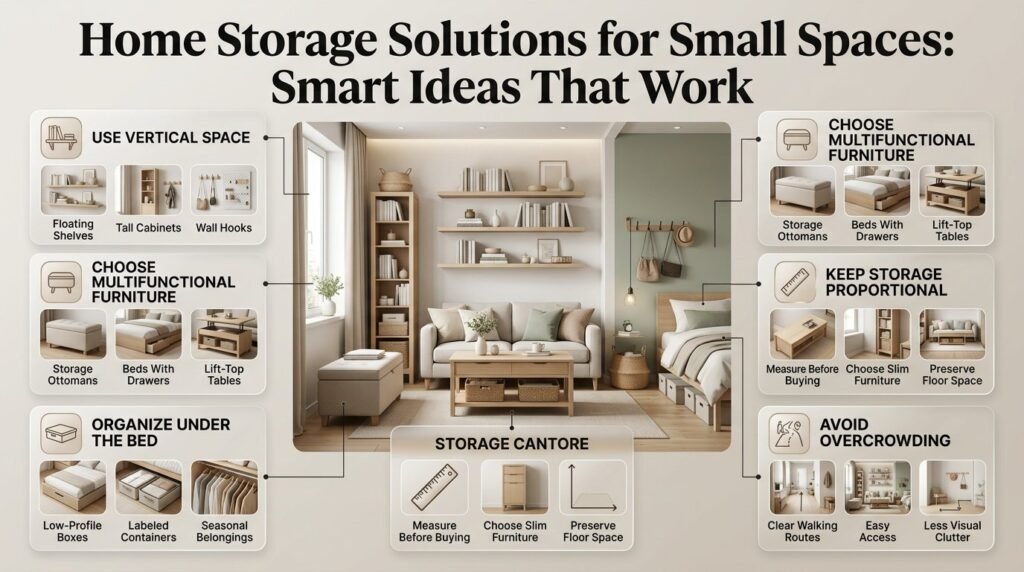
Small homes benefit from storage that uses vertical space, makes furniture work harder, and keeps essential belongings close at hand. Wall-mounted shelves, under-bed containers, narrow cabinets, and multifunctional furniture can increase practical storage without filling every available floor area.
Use Vertical Space Efficiently
Walls provide useful storage opportunities when floor space is limited. Shelves, hooks, pegboards, and tall cabinets can help keep belongings organized while leaving more room for movement.
Consider these options:
- Floating shelves for books and lightweight decorative objects.
- Wall hooks for bags, coats, and frequently used accessories.
- Tall shelving units for folded linens and suitable household supplies.
- Pegboards for lightweight craft materials or tools.
- Over-door organizers for selected accessories and small items.
Before installing wall-mounted storage, check the wall material, choose suitable fixings, and follow the product’s load limits. Heavy objects should be placed securely, and shelves above beds or seating should not hold items that could cause injury if they fall.
Choose Multifunctional Furniture
Multifunctional furniture combines everyday use with additional storage. It can be especially helpful in studio apartments, small bedrooms, and shared living spaces.
| Furniture type | Storage purpose | Best use |
|---|---|---|
| Storage ottoman | Holds blankets or accessories | Living room or bedroom |
| Bed with drawers | Stores linens or clothing | Bedroom |
| Storage bench | Holds shoes or bags | Entryway |
| Lift-top coffee table | Conceals frequently used items | Living room |
| Desk with drawers | Organizes paperwork and stationery | Study area |
| Shelving unit with baskets | Separates different categories | Living room or utility area |
Choose furniture that suits the room’s actual dimensions. A large storage ottoman may hold plenty of belongings but create an obstacle if the living room is narrow.
Make Under-Bed Storage More Useful
The space beneath a bed is often suitable for seasonal clothing, spare bedding, and other lightweight items that aren’t needed every day.
Use low-profile containers that fit comfortably beneath the frame. Transparent containers help you identify contents, while labeled opaque boxes create a more uniform appearance.
Store only clean, dry belongings, and consider the room’s humidity. In damp environments, check stored textiles periodically and choose materials appropriate for the conditions.
Keep heavy or fragile objects out of awkward under-bed spaces if removing them would require excessive lifting or bending.
Create Storage Without Overcrowding the Room
A common mistake in small homes is trying to use every available gap. A room can become difficult to navigate when baskets, cabinets, and organizers occupy too much of the floor.
Prioritize clear walking routes and easy access to furniture. Choose a few well-planned storage pieces rather than several small products that create visual clutter.
For additional ideas tailored to compact homes, read Small Space Home Tips.
How Can You Improve Kitchen Storage and Pantry Organization?
Kitchen storage should support the way you prepare meals, cook, clean, and serve food. Grouping related items together reduces unnecessary movement, makes ingredients easier to find, and helps prevent cupboards and counters from becoming overcrowded.
Organize Kitchen Cabinets by Function
Begin by removing expired food, empty packaging, duplicate utensils, and equipment you no longer use. Clean the shelves and return items according to their purpose.
For example, keep everyday plates and glasses near the area where meals are served. Place frequently used cooking tools near the food preparation area, and group baking supplies in a dedicated cabinet section.
Adjustable shelf risers can help you use vertical cabinet space more effectively. Drawer dividers can separate cutlery, cooking utensils, and small accessories.
Heavy cookware should be stored on stable, lower shelves where it can be retrieved safely. Avoid stacking too many objects in high cabinets where removing one item might disturb the others.
Create a Pantry That Is Easy to Maintain
A practical pantry makes it easy to see available ingredients and recognize what needs replenishing.
Follow this process:
- Remove expired products and items that no longer need to be stored.
- Group similar foods, such as grains, baking supplies, snacks, and canned goods.
- Place frequently used ingredients at convenient heights.
- Keep older products accessible so they can be used first.
- Label containers when contents or important product information might otherwise become unclear.
- Review the pantry before grocery shopping.
Food-safe containers can help protect suitable dry ingredients and keep shelves tidy. However, transferring food into another container should never mean losing important expiration, allergen, or preparation information.
Keep food storage areas clean and dry, and follow the storage directions provided with the product.
Make Better Use of Kitchen Drawers
Kitchen drawers often become cluttered because different tools are placed together without a clear arrangement.
Use adjustable dividers to separate cutlery, measuring spoons, cooking utensils, and other small items. Store frequently used tools near the areas where they’re needed.
If you have limited drawer space, remove duplicate tools and relocate occasional-use equipment to a designated cabinet.
Common Mistake: Purchasing a complete set of matching pantry containers before measuring the shelves. Check available height and depth first, and buy only the sizes that suit the ingredients you regularly store.
Use Cabinet Doors for Lightweight Storage
The inside of suitable cabinet doors can accommodate small organizers for measuring spoons, lightweight accessories, or selected cleaning tools.
Check that the organizer won’t prevent the door from closing or interfere with drawers and neighboring cabinets. Use products appropriate for the cabinet material and intended load.
For more practical ideas, visit Kitchen Organization Tips.
What Are the Most Effective Bedroom Storage Solutions?
Bedroom storage should keep clothing, accessories, bedding, and personal belongings organized without making the room feel crowded. A practical combination of closet organization, drawer dividers, suitable shelving, and under-bed storage can make everyday routines easier.
Organize Your Wardrobe by Category
Start by removing items that belong elsewhere and grouping the clothing you intend to keep.
Useful categories include:
- Everyday tops and shirts.
- Trousers, skirts, and other bottoms.
- Work or school clothing.
- Sleepwear.
- Seasonal garments.
- Occasion wear.
- Accessories.
You can arrange clothing by category, frequency of use, or a combination of both. The best method is one that makes it easy to identify what you need.
Use hangers suitable for the garments, and avoid packing the wardrobe so tightly that clothing becomes difficult to remove. Fold suitable garments on shelves or in drawers, placing heavier items on stable lower shelves.
Store seasonal clothing in clearly labeled containers when you need to free up space for current-use items.
Improve Drawer Organization
Drawer dividers create separate spaces for smaller belongings, such as socks, accessories, sleepwear, and personal items.
Adjustable dividers are useful when drawer dimensions vary. Avoid filling every compartment to its limit, because tightly packed drawers become difficult to use.
For deeper drawers, use smaller sections or shallow containers so that items don’t disappear beneath other belongings.
Store Bedding Without Wasting Space
Keep spare sheets, pillowcases, and blankets grouped by bed size or set. Store clean, dry textiles in a linen cupboard, a suitable drawer, or breathable fabric storage.
If you have limited space, reserve the easiest-to-reach shelves for bedding you use most often. Extra blankets and seasonal textiles can occupy less accessible areas, provided they remain protected and easy to retrieve.
Create Storage for Accessories
Belts, bags, jewelry, and other accessories can become difficult to manage when they’re scattered across drawers and shelves.
Use suitable hooks, small trays, divided drawers, or designated shelf sections. Store delicate items in ways that prevent tangling or damage.
Avoid buying specialized organizers for every category. Sometimes one well-divided drawer can hold several related items more efficiently than multiple separate boxes.
For more bedroom-specific advice, explore Bedroom Organization Tips.
How Do You Keep a Living Room Organized Without Hiding Everything?
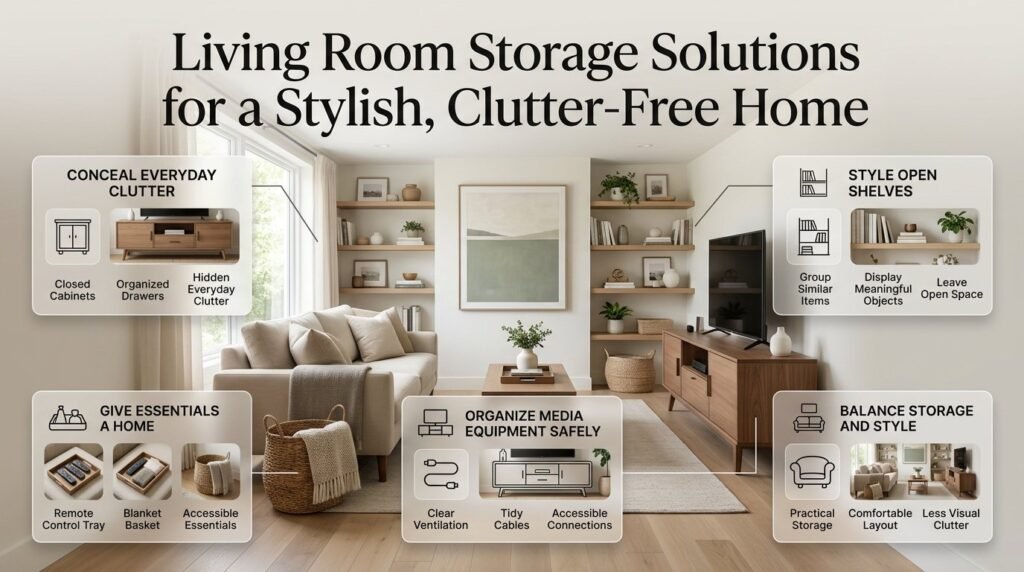
Living room storage should balance convenience, comfort, and appearance. Closed cabinets, media consoles, decorative baskets, and multifunctional tables can help control clutter while keeping frequently used belongings accessible.
Use Closed Storage for Everyday Clutter
Remote controls, cables, games, books, and miscellaneous accessories can quickly take over a living room.
Use drawers or cabinets for items that don’t need to remain visible. Keep a small number of books, meaningful decorative objects, or plants on open shelves if they contribute to the room’s overall design.
Closed storage can create a calmer appearance, but it still needs an internal organization system. Otherwise, clutter simply moves behind cabinet doors.
Create Designated Places for Frequently Used Items
Assign simple storage locations to belongings that regularly appear around the room.
For example:
- Keep remote controls in a tray or drawer.
- Place blankets in a basket near the sofa.
- Store board games together in a cabinet.
- Organize suitable cables with purpose-made cable-management products.
- Use a magazine holder if you regularly read printed publications.
Choose locations that make returning items easy. If a blanket basket is far from the sofa or a game cupboard is difficult to open, people may continue leaving belongings elsewhere.
Organize Entertainment Equipment Safely
Media equipment often creates storage challenges because it combines devices, accessories, and cables.
Use a suitable media console to group related items. Keep ventilation openings clear and follow the equipment manufacturer’s guidance for heat management.
Avoid tightly bundling cables in ways that damage them, and don’t overload electrical outlets. Keep power strips and connections accessible for inspection rather than burying them beneath piles of belongings.
Prevent Shelves From Looking Overcrowded
Open shelving works best when objects are arranged with enough space to be identified and retrieved.
Group similar books or objects together, and avoid filling every shelf simply because space is available. Leave some clear surfaces so that the room doesn’t feel visually crowded.
For further ideas, read Living Room Home Tips.
What Storage Ideas Work Best for Bathrooms and Laundry Areas?
Bathrooms and laundry spaces require storage that suits moisture levels, cleaning routines, and the products used in those areas. Wall shelves, vanity organizers, divided drawers, and suitable cabinets can keep essentials accessible without allowing counters to become crowded.
Organize Bathroom Cabinets and Counters
Separate everyday toiletries from backup supplies. Keep daily skincare products or grooming essentials in a convenient organizer, and store spare products in a separate cabinet section.
This arrangement helps you identify what you need without moving several items every morning.
Choose containers that can be cleaned easily and tolerate the room’s conditions. Ordinary cardboard and untreated materials may deteriorate if exposed to persistent moisture.
Store medicines and household chemicals according to their labels, secured appropriately and away from children. Keep products in their original packaging when necessary for safe identification.
Use Vertical Bathroom Storage Carefully
A suitable wall shelf or narrow cabinet can provide extra room for towels, toiletries, and lightweight accessories.
Make sure wall-mounted products are installed securely and that stored items cannot easily fall. Avoid placing heavy objects above areas where someone could be injured if they came loose.
Keep essential surfaces around sinks and showers clear enough for cleaning and everyday use.
Create a Practical Laundry Storage System
Laundry areas often contain detergents, fabric-care products, cleaning cloths, baskets, and items waiting to be washed or put away.
A simple system can include:
- Separate baskets for different laundry categories when useful.
- A designated shelf for laundry products.
- A container for suitable small accessories.
- A clear area for folding clean clothing.
- A specific place for items that need repair or special attention.
Keep cleaning products in their original containers when appropriate, follow label instructions, and store them safely. Never mix cleaning chemicals unless the product directions explicitly permit it.
A practical laundry system reduces the chance of supplies being misplaced and makes routine household tasks easier to complete.
How Can You Organize Entryways, Hallways, and Utility Spaces?
Entryways and utility spaces benefit from compact storage that keeps frequently used items close at hand without blocking movement. A shoe rack, wall hooks, a narrow cabinet, or a small basket can provide a useful home for everyday essentials.
Set Up an Organized Entryway
Choose storage according to the space available.
A small entryway may need only a few hooks and a tray for keys. A larger entrance might accommodate a shoe cabinet, a storage bench, or a designated basket for reusable shopping bags.
If several people share the home, assign each person a specific hook, shelf, or basket. Individual spaces make it easier to identify belongings and return them after use.
Keep shoes arranged so they don’t obstruct the doorway. Avoid placing loose bags, boxes, or footwear on stairs and narrow walkways.
Make Hallway Storage Work for the Space
A slim cabinet can be useful in a wider hallway, while wall-mounted hooks may be more appropriate where floor space is limited.
Before installing storage, check door clearance and the available walking width. Furniture that projects too far into the hallway may make everyday movement difficult.
Use higher shelves for lightweight items that are accessed occasionally, and reserve convenient areas for frequently used belongings.
Organize Household Supplies in a Utility Area
If your home has a utility cupboard, use it to store suitable cleaning tools, spare light bulbs, maintenance supplies, and other household essentials.
Separate categories instead of placing everything in one large box. Label containers when their contents aren’t obvious, and keep potentially hazardous products secured appropriately.
Store heavy items on stable, low shelves. Keep equipment and supplies away from heat sources and damp conditions when the product instructions require it.
What Are the Best Budget-Friendly and DIY Home Storage Solutions?
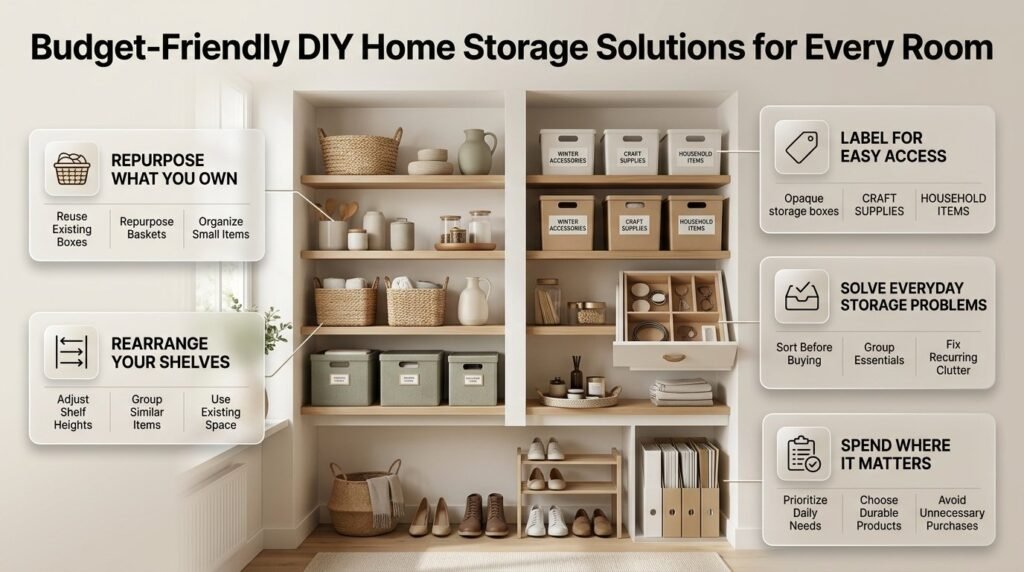
Affordable storage often starts with rearranging existing furniture, reusing suitable containers, and creating clearer categories. Before buying new organizers, identify what you already own and determine whether a small change could solve the problem.
Repurpose Containers You Already Have
Sturdy boxes, baskets, trays, and unused drawer organizers can be useful for grouping belongings.
Suitable examples include:
- Reusing a small tray for everyday accessories.
- Using a sturdy box to separate craft supplies.
- Repurposing baskets for blankets or lightweight household items.
- Reorganizing existing drawer dividers for different categories.
- Using clearly labeled containers for suitable seasonal belongings.
Check that reused containers are clean, durable, and appropriate for their intended location. Avoid ordinary cardboard in damp areas or containers that cannot safely support their contents.
Rearrange Existing Shelves
Sometimes the problem is not a lack of storage but inefficient use of the space you already have.
Adjust shelf heights where possible, group similar items, and remove objects that don’t belong in the area. A tall unused gap above a row of small containers might accommodate a shelf adjustment or a suitably sized organizer.
Before buying additional furniture, test a new arrangement with the shelves and containers you already own.
Use Labels to Reduce Confusion
Labels are particularly useful for opaque boxes, seasonal storage, shared cupboards, and household supplies.
Use short descriptions that identify the contents clearly. For example, a container labeled “Winter Accessories” is more useful than one labeled “Miscellaneous.”
Avoid labeling every visible object if it adds unnecessary work. Use labels where they make retrieval easier or help other household members understand the system.
Decide Where to Spend Your Budget
| Storage problem | Low-cost first step | Possible investment |
|---|---|---|
| Crowded kitchen drawer | Remove duplicates and sort utensils | Adjustable drawer dividers |
| Overfilled wardrobe | Reorganize clothing by category | Additional shelving |
| Shoes near the entrance | Set a designated shoe area | Slim shoe rack |
| Blankets left on furniture | Choose an existing basket | Storage ottoman |
| Cluttered bathroom counter | Group everyday toiletries | Vanity organizer |
| Scattered paperwork | Sort documents into categories | Suitable file organizer |
Prioritize recurring problems rather than purchasing every product at once. A small, durable organizer that solves a daily inconvenience can be more valuable than a large furniture purchase that doesn’t suit the room.
For broader ideas about maintaining an orderly home, Easy Home Cleaning Tips can complement your storage routine.
What Are the Most Common Home Storage Mistakes, and How Can You Avoid Them?
Many storage problems occur because people concentrate on hiding clutter rather than building a convenient system. Recognizing these mistakes early helps you avoid wasted money, inaccessible belongings, and repeated organizing work.
Mistake 1: Buying Organizers Before Decluttering
Why it happens: New containers appear to offer an immediate solution.
Why it causes problems: Unnecessary belongings occupy the new storage space, leaving little room for items you actually use.
How to avoid it: Sort your belongings first, identify what needs to stay, and measure the available space before purchasing products.
Mistake 2: Storing Items Too Far From Where They’re Used
Why it happens: People arrange storage according to available cupboards rather than daily routines.
Why it causes problems: Retrieving and returning items requires extra effort, so belongings often end up on nearby surfaces.
How to avoid it: Keep cooking tools near food preparation areas, laundry supplies near the laundry area when practical, and daily accessories close to where you get ready.
Mistake 3: Overfilling Shelves and Containers
Why it happens: Using every inch of available space seems efficient.
Why it causes problems: Items become difficult to retrieve, containers become heavy, and shelves may be overloaded.
How to avoid it: Respect load limits, keep heavy objects on stable lower shelves, and leave enough room to remove belongings without disturbing everything else.
Mistake 4: Choosing Appearance Over Practicality
Why it happens: Matching baskets and decorative containers look appealing.
Why it causes problems: Some products are too small, difficult to clean, or inconvenient for everyday use.
How to avoid it: Prioritize dimensions, accessibility, durability, and safety. Choose attractive finishes once the practical requirements are met.
Mistake 5: Ignoring Household Habits
Why it happens: A system is designed around an ideal routine rather than the way people actually live.
Why it causes problems: Family members may not return items to complicated or inconvenient storage locations.
How to avoid it: Make the system easy to understand. Use straightforward categories, accessible shelves, and clear locations that suit everyone using the home.
Mistake 6: Keeping Too Many Empty Containers
Why it happens: People save boxes and organizers in case they might be useful later.
Why it causes problems: The containers themselves become another source of clutter.
How to avoid it: Keep only containers with a clear purpose and a realistic place in your home. Recycle or donate suitable extras rather than storing unlimited supplies.
Mistake 7: Forgetting About Maintenance
Why it happens: The initial cleanup feels like the end of the project.
Why it causes problems: New belongings accumulate, categories become mixed, and the system gradually loses its usefulness.
How to avoid it: Establish short daily and weekly routines. If an area repeatedly becomes cluttered, review the storage arrangement rather than assuming you simply need to tidy more often.
What Practical Storage Principles Do Experienced Organizers Recommend?
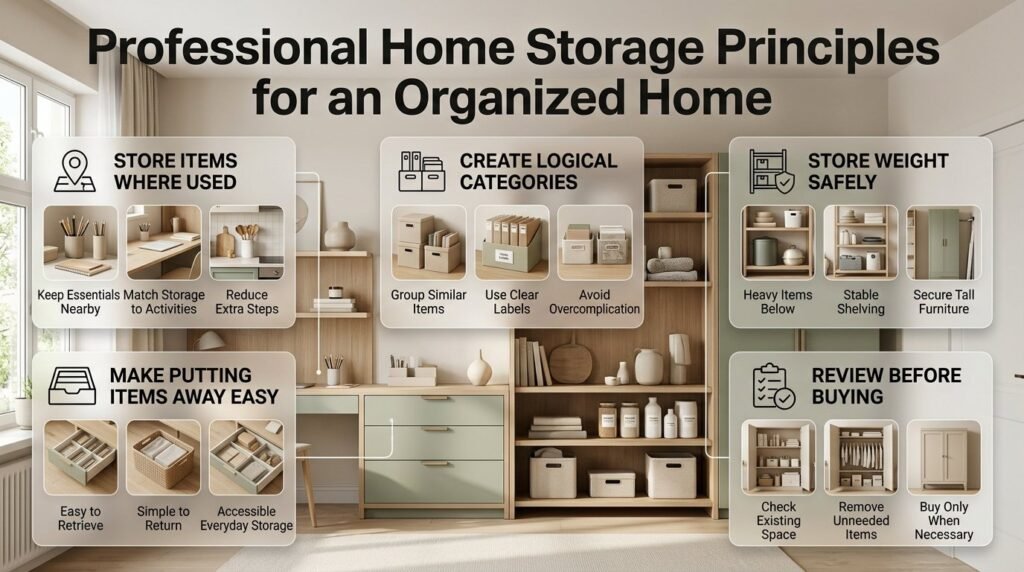
A dependable storage system should reduce effort, not create additional chores. The most useful principles focus on accessibility, logical grouping, appropriate capacity, and routines that work for the people living in the home.
Follow the Point-of-Use Principle
Store belongings close to the activities they support.
Keep food preparation tools in the kitchen, stationery near the desk, and commonly used cleaning supplies in an appropriate nearby location.
This arrangement reduces unnecessary movement and makes it easier to return items immediately after use.
Make Returning Items as Easy as Retrieving Them
Consider how an item will be put away, not just how it will be removed.
A shallow drawer organizer may be more convenient than a deep box containing several layers of accessories. An open basket may suit frequently used blankets, while a closed cabinet may be better for paperwork or items that need protection.
If putting an item away requires moving several other objects, reconsider the arrangement.
Use Logical Categories Rather Than Excessive Subcategories
Categories help people locate items, but too many small divisions can make storage complicated.
For example, grouping everyday stationery together may be sufficient. You might separate pens, paper, and office supplies if the volume justifies it, but creating numerous tiny categories can add unnecessary maintenance.
Start with broad groups and introduce smaller divisions only when they solve a recurring problem.
Plan for Safe Weight Distribution
Place heavy objects on stable, lower shelves and use furniture according to the manufacturer’s instructions. Secure tall storage units when required, particularly in households with children.
Avoid storing heavy items in overhead containers or high shelves where retrieval would be difficult. Keep fragile belongings protected and positioned where they are unlikely to be knocked over.
Review Storage Before Buying More
When a cupboard becomes overcrowded, purchasing another organizer isn’t always the answer.
First check whether belongings belong elsewhere, whether unused items can be removed, and whether the existing arrangement uses space efficiently.
If the storage area is genuinely too small for the belongings you need, consider a measured, appropriate addition rather than an improvised pile of containers.
For more ideas that connect organization with everyday household routines, visit Heartomenal.
How Can You Maintain an Organized Home Without Spending Hours Tidying?
A sustainable storage system depends on small, repeated actions rather than occasional major cleanups. Short resets, regular reviews, and clear rules for incoming belongings can prevent clutter from becoming overwhelming.
Create a Daily Reset Routine
Choose a convenient time to return misplaced items to their designated locations.
A daily reset might include:
- Returning shoes, bags, and accessories to the entryway.
- Clearing kitchen counters after meals.
- Putting away clothing and laundry.
- Returning remote controls, books, and blankets to living room storage.
- Sorting loose paperwork into an appropriate location.
You don’t need to complete every task every day. Focus on the areas where clutter most often interferes with everyday activities.
Use a Weekly Review
Once a week, inspect the places that become crowded most quickly.
Check kitchen supplies, entryway storage, frequently used drawers, and shared family areas. Return misplaced belongings, remove empty packaging, and adjust categories that no longer work.
A brief review helps you notice small problems before they require a complete reorganization.
Establish a Place for New Belongings
New purchases, gifts, paperwork, and household supplies can gradually overwhelm an organized home if they have no designated location.
Before bringing new belongings into a storage area, decide where they belong. If a cupboard is already full, review its contents before adding more items.
For clothing, kitchen tools, and other categories that tend to accumulate, consider whether the new item serves a genuine need and whether you have suitable space for it.
Adjust the System When Your Needs Change
Storage requirements change with seasons, household routines, and family circumstances.
A home office may need additional document storage during a busy period, while seasonal clothing may require more accessible space at certain times of the year.
Review your arrangements when they become inconvenient. Moving a shelf, changing a category, or relocating occasional-use items may solve the problem without requiring a complete redesign.
What Are the Best Home Storage Solutions for Small Spaces?
The best home storage solutions for small spaces focus on maximizing existing areas without making rooms feel crowded. Vertical shelving, under-bed containers, multifunctional furniture, wall-mounted organizers, and slim cabinets can provide additional storage while preserving valuable floor space. The right choice depends on your room dimensions, the items you need to store, and how frequently you use them.
Before purchasing new storage products, remove unnecessary belongings and measure the available space. This helps you avoid buying organizers that don’t fit your furniture or interfere with everyday movement.
Practical ways to maximize small spaces:
Install suitable wall shelves to use vertical space.
Choose beds, benches, or ottomans with built-in storage.
Store seasonal clothing and spare bedding in suitable under-bed containers.
Use narrow cabinets in entryways and other compact areas.
How Can I Organize My Entire Home on a Budget?
Organizing your home on a budget starts with using what you already have instead of immediately purchasing new storage products. Rearranging shelves, sorting belongings, repurposing suitable baskets, and creating designated places for everyday items can improve organization without requiring a major investment.
Begin with the areas that cause the most inconvenience, such as an overcrowded kitchen drawer, a disorganized wardrobe, or an entryway filled with shoes. Complete one area before moving to another, and purchase additional organizers only when a specific storage problem remains.
Budget-friendly storage strategies:
Declutter before buying baskets, boxes, or drawer dividers.
Reuse sturdy containers that suit the items being stored.
Adjust existing shelves to make better use of available space.
Use simple labels to identify the contents of opaque containers.
Prioritize durable products that solve recurring problems rather than buying decorative organizers you don’t need.
How Do I Keep My Home Organized and Prevent Clutter From Returning?
Maintaining an organized home requires a storage system that fits your daily habits. When belongings have convenient, clearly defined places, returning them becomes easier and clutter is less likely to accumulate. Instead of waiting until a room becomes untidy, establish short routines that keep frequently used areas manageable.
A practical approach combines a daily reset, a weekly review, and occasional decluttering. Spend a few minutes returning misplaced items, clearing frequently used surfaces, and checking whether household supplies belong in their designated locations. If clutter repeatedly gathers in one place, reconsider the storage arrangement rather than relying on repeated cleanups.
Habits that support long-term organization:
Return belongings to their designated places after use.
Clear kitchen counters and entryway surfaces regularly.
Review crowded drawers and cupboards each week.
Avoid keeping unnecessary duplicates and unused containers.
Reassess storage arrangements when your household needs change.
What Should I Consider Before Buying Home Storage Furniture and Organizers?
Before purchasing storage furniture or organizers, consider the available dimensions, the type and weight of the items, accessibility, durability, and your budget. A product may look attractive but still be unsuitable if it blocks a walkway, cannot accommodate your belongings, or makes frequently used items difficult to retrieve.
Measure the intended location carefully, including the height and depth of shelves, door clearance, and the space required to open drawers. Consider whether you need open shelving for visibility or closed cabinets to conceal clutter. For wall-mounted products and tall furniture, also check installation requirements and appropriate safety measures.
Important buying considerations:
Measure the space before ordering furniture or containers.
Check weight limits and choose suitable materials.
Prioritize easy access to everyday belongings.
Compare open and closed storage according to your needs.
Choose products that can adapt to changing household requirements.
How Can I Choose the Best Storage Solutions for Every Room in My Home?
The best approach is to organize each room according to its primary activities rather than using the same storage method everywhere. Kitchens need accessible spaces for cooking equipment and food supplies, bedrooms benefit from wardrobe organizers and bedding storage, and living rooms often need a combination of concealed cabinets and convenient everyday storage.
Bathrooms require materials suitable for their moisture conditions, while entryways benefit from compact solutions for shoes, bags, and keys. Assess the items used in each room, identify where clutter develops, and select storage that makes those belongings easy to access and return.
Room-by-room storage priorities:
Kitchen: Drawer dividers, pantry organizers, and practical cabinet layouts.
Bedroom: Wardrobe organization, divided drawers, and suitable under-bed storage.
Living room: Media cabinets, storage ottomans, and designated spaces for accessories.
Bathroom: Moisture-appropriate organizers, vanity storage, and suitable shelving.
Entryway: Shoe racks, wall hooks, and small trays for everyday essentials.
A room-by-room strategy helps you use available space more effectively while keeping your home functional, comfortable, and easier to maintain.
Conclusion
Effective home storage solutions are not about filling every corner with containers or buying expensive organizing products. They are about creating practical systems that make everyday life easier, keep essential items accessible, and help each room feel comfortable and organized. By understanding your household’s needs, using available space wisely, and giving every item a designated place, you can improve your home without making organization complicated.
Start with one area, such as a kitchen cabinet, bedroom wardrobe, entryway, or living room shelf. Remove items you no longer need, group similar belongings together, and choose storage options that suit the space. Vertical shelving, under-bed containers, drawer dividers, baskets, and multifunctional furniture can all help reduce clutter when used thoughtfully.
For lasting results, focus on simple habits rather than occasional major reorganizations. Return items to their proper places, review stored belongings regularly, and adjust your systems as your needs change. You can also explore more practical ideas through Heartomenal and discover ways to improve your home’s organization, cleanliness, and everyday functionality.
Ultimately, the best home storage solutions are those that fit your space, budget, and lifestyle. With consistent effort and thoughtful planning, you can create a home that feels more spacious, functions more efficiently, and remains easier to maintain over time.
Leave a Reply