Category: Uncategorized

  • Home Decluttering Tips

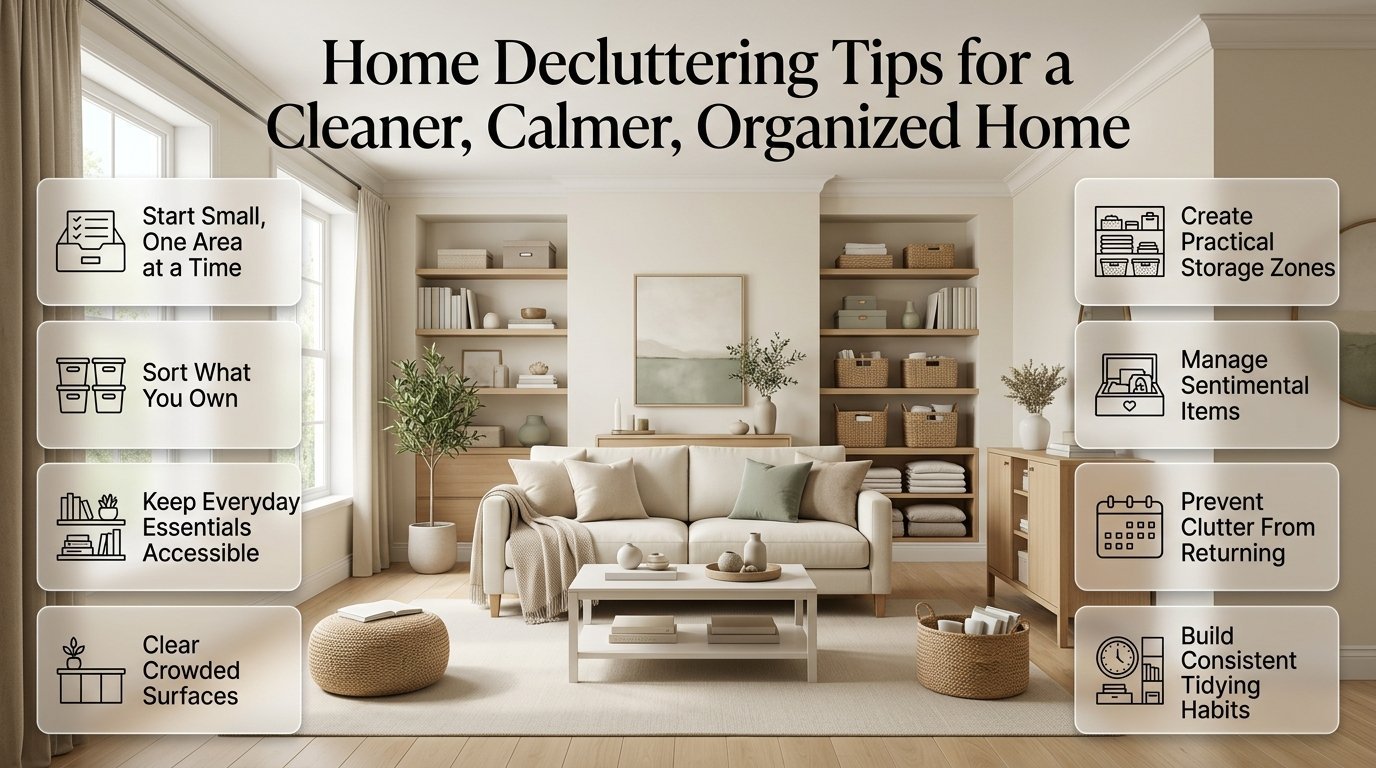
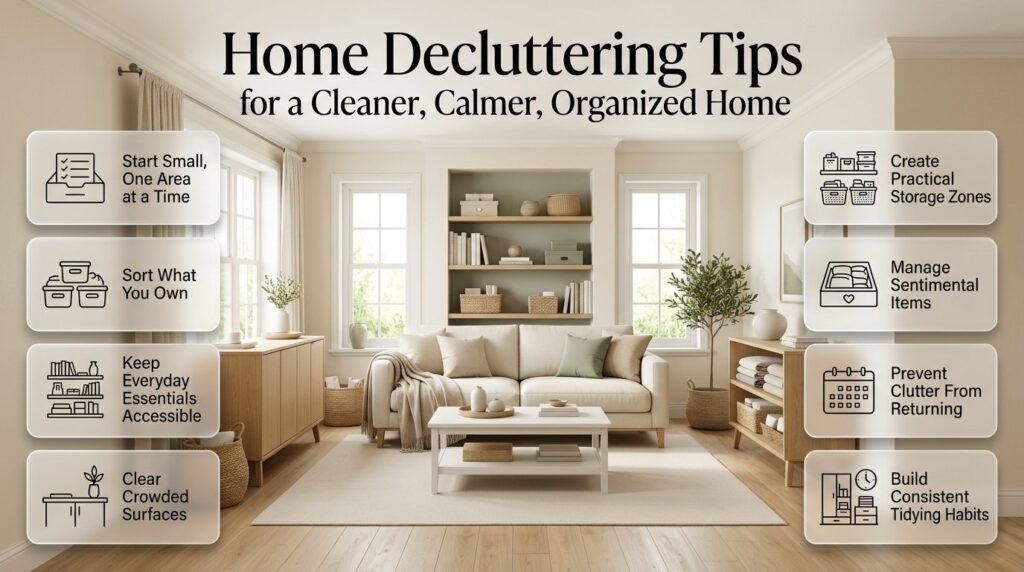
    Home Decluttering Tips

    Introduction

    Home Decluttering Tips | A cluttered home can make even simple daily tasks feel difficult. Kitchen counters become crowded, wardrobes fill with clothes you rarely wear, and drawers collect items you forgot you owned. You may clean regularly and still feel that your home never looks organized. The reason is often that cleaning removes dirt, while decluttering addresses the belongings that make a space difficult to manage.

    These Home Decluttering Tips will help you create a more functional, comfortable, and organized living environment without spending unnecessarily on storage products or trying to change your entire home in one day.

    At Heartomenal, the focus is on practical ideas that make everyday home life easier. Decluttering is an important part of that approach because it helps you use your existing space more effectively, find essential belongings quickly, and spend less time managing unnecessary items.

    This guide explains how to start decluttering, decide what to keep, organize each room, manage sentimental possessions, prevent clutter from returning, and establish routines that fit your lifestyle. Whether you live in a small apartment or a larger family home, you’ll find practical steps that you can apply at your own pace.

    1. What Is Home Decluttering, and Why Does It Matter?

    Home decluttering is the process of identifying belongings you no longer need, use, or want and removing them from your living space. It also involves making thoughtful decisions about the items you keep so that your home supports everyday activities rather than becoming crowded with unnecessary possessions.

    Decluttering is different from simply tidying a room. Tidying puts objects back in place, while decluttering reduces the number of objects that need a place in the first place.

    For example, arranging twenty kitchen utensils inside a drawer may make them look neater. Removing duplicate utensils that you never use can make the drawer easier to manage and leave more room for the tools you actually need.

    How Does Decluttering Improve Everyday Life?

    A well-decluttered home can make daily routines more convenient because frequently used belongings are easier to locate and surfaces are easier to clean.

    The benefits often include:

    • Less time searching: Keys, documents, clothing, and household tools are easier to find when unnecessary items no longer compete for space.
    • Simpler cleaning: Clear surfaces and accessible floors make dusting, vacuuming, and wiping down rooms more straightforward.
    • Better use of space: Existing cupboards, drawers, and shelves can accommodate useful belongings more effectively.
    • Fewer unnecessary purchases: Reviewing what you own helps prevent buying duplicates of items that are already available.
    • More practical rooms: Living areas, bedrooms, kitchens, and workspaces can serve their intended purposes without unnecessary obstacles.
    • Easier household routines: Family members can return belongings to designated locations instead of creating new piles.

    Decluttering does not mean that every room must look empty or that decorative belongings are unnecessary. A comfortable home can contain books, photographs, collections, and meaningful decorations. The goal is to make deliberate choices about what occupies your space.

    Decluttering Versus Organizing

    Understanding the difference between these two activities helps you avoid wasting time.

    ActivityMain purposeExample
    DeclutteringReduce unnecessary belongingsRemoving duplicate cooking tools
    OrganizingArrange useful belongingsGrouping remaining tools in a drawer
    CleaningRemove dirt and residueWiping the drawer and its contents
    MaintenanceKeep the system workingReturning tools after cooking

    The most effective sequence is usually to declutter first, organize second, and clean the newly cleared area before returning belongings.

    2. How Should You Start Decluttering Your Home?

    The easiest way to start decluttering is to choose one small area, set a realistic time limit, and make decisions about individual belongings rather than trying to organize the entire house simultaneously. A finished drawer or clear countertop provides visible progress without creating several unfinished projects.

    Step 1: Identify Your Biggest Clutter Problem

    Walk through your home and notice which areas cause the most inconvenience.

    Perhaps your kitchen counter is difficult to use, your bedroom chair has become a place for unworn clothing, or your entryway is crowded with shoes and bags. Identify the problem that affects your daily routine most often.

    Write down three priority areas and start with the easiest one.

    For example:

    1. Clear the kitchen counter.
    2. Sort the bedside table.
    3. Organize the shoes near the entrance.

    This creates a manageable starting point and helps you avoid switching between unrelated tasks.

    Step 2: Choose a Small, Defined Area

    A broad goal such as decluttering the bedroom can become overwhelming because it includes furniture, clothing, accessories, paperwork, and storage.

    A smaller task has a clear endpoint.

    Choose one of the following:

    • One drawer.
    • One shelf.
    • One section of a wardrobe.
    • One kitchen cupboard.
    • One bathroom cabinet.
    • One area of a desk.
    • One surface that collects miscellaneous items.

    Work through that area before moving to another. If you have limited time, a single completed task is more useful than emptying several cupboards and leaving them unfinished.

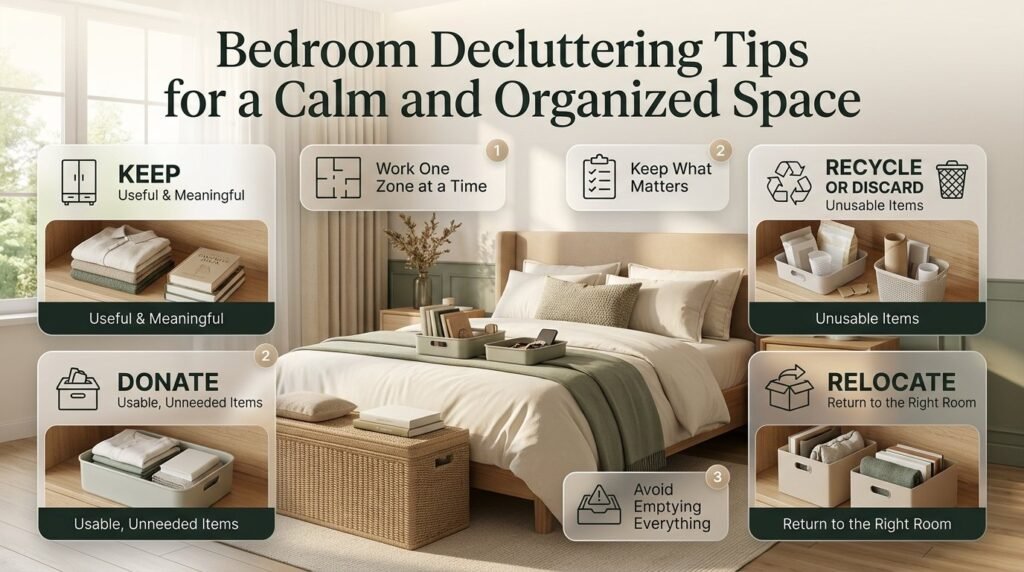
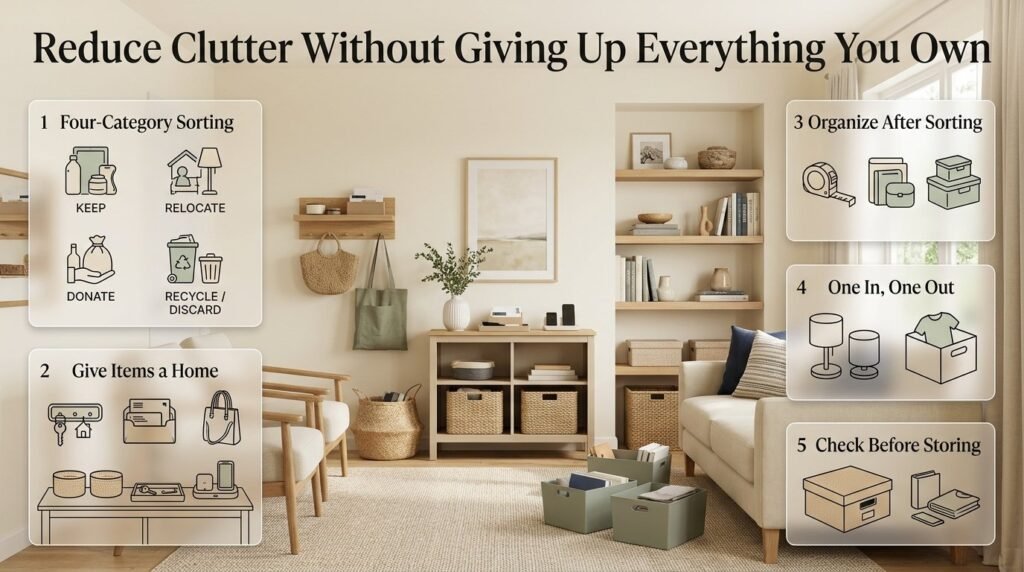
    Step 3: Prepare Four Sorting Categories

    Use existing boxes, bags, or separate areas to classify your belongings.

    CategoryWhat to do
    KeepRetain items that serve a useful purpose or hold genuine personal value
    Donate or give awayPass on suitable items that are still usable
    Recycle or discardDispose of unwanted items according to their condition and local rules
    RelocateReturn belongings to the rooms or storage areas where they belong

    Avoid creating too many categories. A complicated sorting system can slow down decisions and make the process harder to maintain.

    Remember that not everything should be donated. Damaged, contaminated, unsafe, or unsuitable items may require responsible disposal instead.

    Step 4: Remove the Easy Decisions First

    Start with items that clearly no longer serve a purpose.

    Examples include empty packaging, dried-out stationery, broken objects you do not intend to repair, unnecessary duplicates, and rubbish that has accumulated in drawers.

    Once these items are removed, consider belongings that require more thought.

    Pro Tip: If you are unsure about an ordinary item, ask yourself whether you would deliberately choose to keep it if you were organizing the area from scratch. This question can help you separate genuine usefulness from automatic keeping.

    Step 5: Complete the Area Before Stopping

    Once sorting is finished, clean the cleared surface, return the items you are keeping, and remove the unwanted belongings from the work area.

    Put relocated objects in their appropriate rooms. Arrange donations for collection or delivery, and handle recycling and rubbish correctly.

    A completed area should be usable again without requiring another major organizing session.

    3. How Do You Decide What to Keep and What to Remove?
    Decluttering tips showing belongings sorted into keep, donate, sell, and discard categories, with organized household items and storage baskets.
    Learn how to decide what to keep and what to remove when decluttering your home. Evaluate usefulness, condition, sentimental value, duplicates, and replacement needs to make practical decisions with confidence.

    The best way to decide what stays in your home is to consider usefulness, condition, frequency of use, replacement difficulty, and personal importance. No single rule works for every possession, so combine practical questions with common sense instead of following strict numerical limits.

    Ask These Questions About Each Item

    When you are uncertain, consider the following:

    • Have I used this item recently?
    • Does it serve a specific purpose?
    • Is it in suitable working condition?
    • Do I own another item that does the same job?
    • Is there a realistic situation in which I will need it?
    • Is it difficult or expensive to replace?
    • Does it hold genuine sentimental or personal value?

    You do not need to answer every question for every object. The aim is to make a reasonable decision without spending excessive time evaluating ordinary belongings.

    For example, keeping a spare torch for emergencies makes sense even if you rarely use it. Keeping several broken torches that cannot be repaired is less useful.

    Use the One-Year Rule as a Guide, Not a Requirement

    The one-year rule encourages you to consider whether you have used an item during the previous twelve months.

    It can help with everyday clothing, unused kitchen gadgets, decorative accessories, and duplicate household supplies. However, it should not automatically determine what stays.

    Seasonal decorations, travel equipment, formal clothing, emergency supplies, and special-purpose tools may be used infrequently but remain valuable.

    Before removing an item, consider when it is needed, how much space it occupies, and whether keeping it serves a clear purpose.

    What Should You Do With Expensive Items You No Longer Use?

    People often retain expensive purchases because letting them go feels like admitting a mistake. However, money already spent cannot be recovered simply by keeping an unwanted object.

    Consider whether the item can be sold, returned if eligible, donated, or passed to someone who can use it.

    Set a reasonable deadline for selling belongings. If an item remains unsold after your chosen period, decide whether another destination makes more sense.

    This prevents resale projects from becoming permanent clutter.

    How Should You Handle Duplicates?

    Duplicates are not always unnecessary. Spare towels, basic tools, kitchen utensils, and household supplies may serve useful purposes.

    The important question is whether the quantity matches your actual needs.

    For example, a family that regularly prepares large meals may need several cooking utensils. A person who rarely cooks may find that a smaller selection is easier to manage.

    Keep the quantity that supports your routine without allowing duplicates to occupy space needed for other belongings.

    4. How Can You Declutter Your Living Room Effectively?

    The living room should provide comfortable space for relaxing, entertaining, reading, and spending time together. Decluttering this area means removing items that interfere with those activities while preserving decorations and belongings that make the room feel personal.

    Start with the visible surfaces because these areas often collect unrelated objects.

    Clear Coffee Tables and Side Tables

    Remove cups, packaging, unused stationery, misplaced accessories, and items that belong elsewhere.

    Keep only the objects that support how you use the room. A small tray can hold frequently used remotes, while a suitable basket can contain a few regularly used blankets.

    Avoid filling every cleared surface with new decorations simply because space has become available.

    Review Books, Magazines, and Decorative Objects

    Books and decorations can add character to a room, but overcrowded shelves may become difficult to clean and maintain.

    Review magazines you have already read, books you no longer want, and decorative objects that no longer suit the space.

    Keep meaningful collections intentionally. You do not need to remove everything to create a more organized appearance.

    Organize Toys, Games, and Entertainment Accessories

    If your living room is shared by children or several household members, create accessible locations for toys, board games, charging cables, and remote controls.

    Group similar items together and make sure everyone knows where they belong.

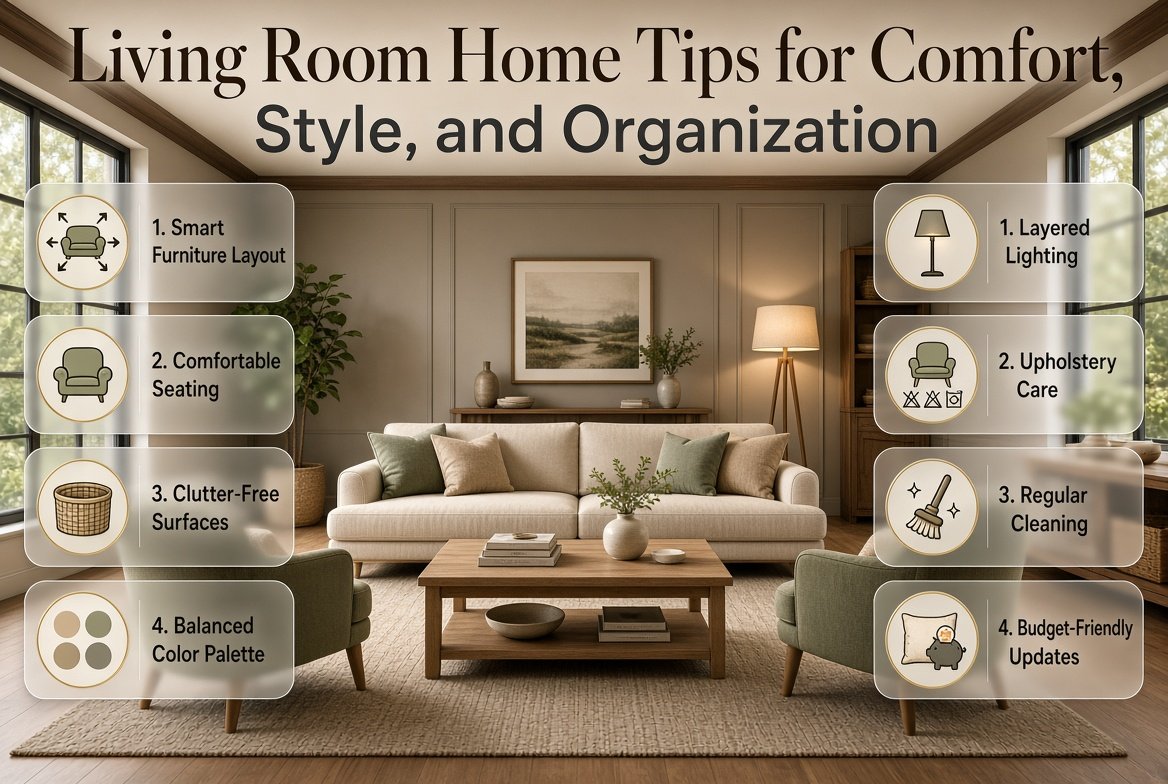
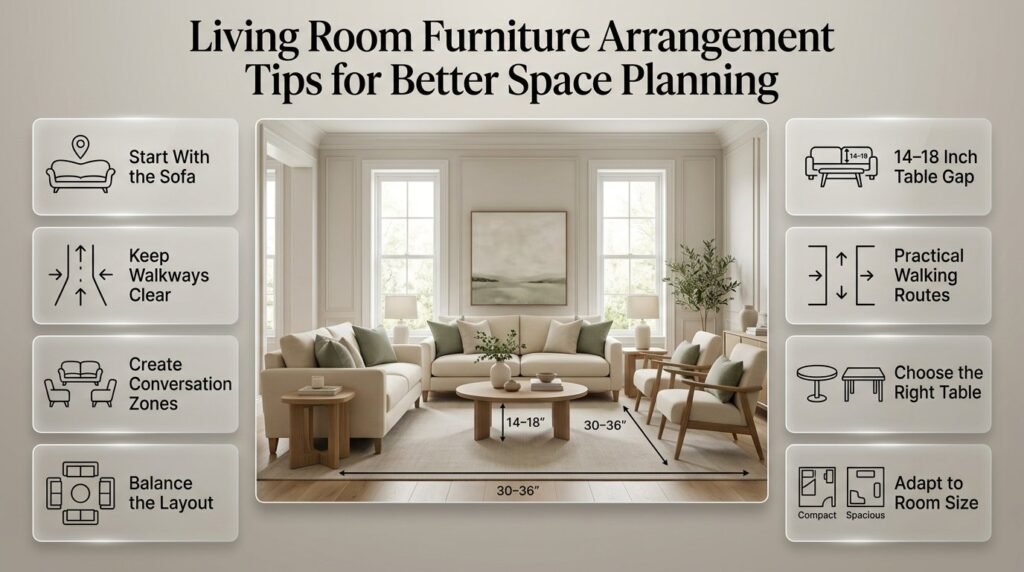
    For more detailed guidance on arranging a functional shared space, explore Living Room Home Tips.

    5. What Is the Best Way to Declutter a Bedroom?

    A bedroom is easier to use when clothing, personal accessories, bedding, and bedside belongings are stored according to everyday needs. Start by clearing the floor and visible surfaces, then review wardrobes and drawers without emptying every storage area at once.

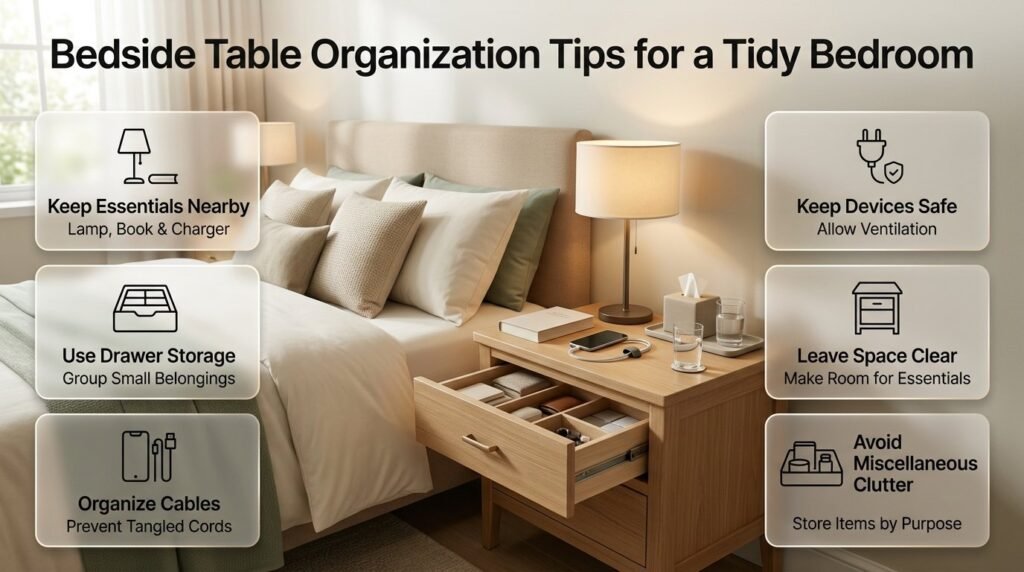
    Start With the Bedside Table

    Bedside tables often collect books, charging cables, receipts, water glasses, medicines, and miscellaneous objects.

    Remove rubbish and relocate anything that does not need to remain beside the bed.

    Keep regularly used items accessible, such as a reading light, the book you are currently reading, or other personal essentials.

    Review Clothing One Category at a Time

    Wardrobes can become crowded when clothing is retained without considering comfort, condition, or current use.

    Sort clothing into manageable groups:

    • Everyday clothing.
    • Work or school clothing.
    • Special-occasion outfits.
    • Seasonal garments.
    • Sportswear and activity-specific clothing.
    • Accessories.

    Consider whether each item is comfortable, suitable for your current needs, and in wearable condition.

    Clothing that no longer serves you may be suitable for donation or resale, provided it meets the recipient’s requirements.

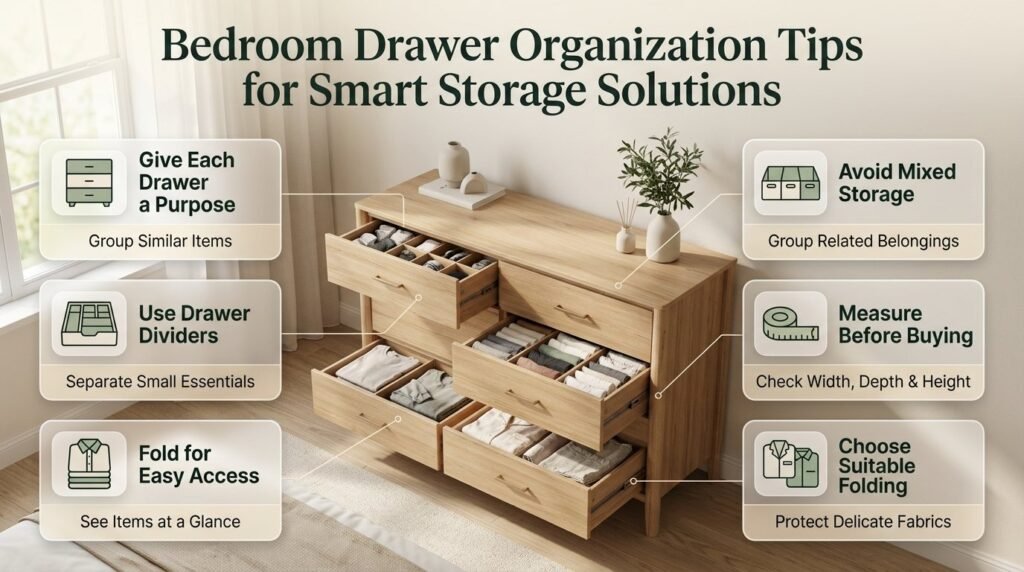
    Declutter Drawers and Under-Bed Storage

    Check drawers for duplicate accessories, unused stationery, old packaging, and items that belong elsewhere.

    Under-bed storage can be useful for seasonal bedding or clothing, but it should not become a place where unwanted belongings disappear from view.

    Keep stored items accessible and use containers suitable for protecting them from dust and moisture.

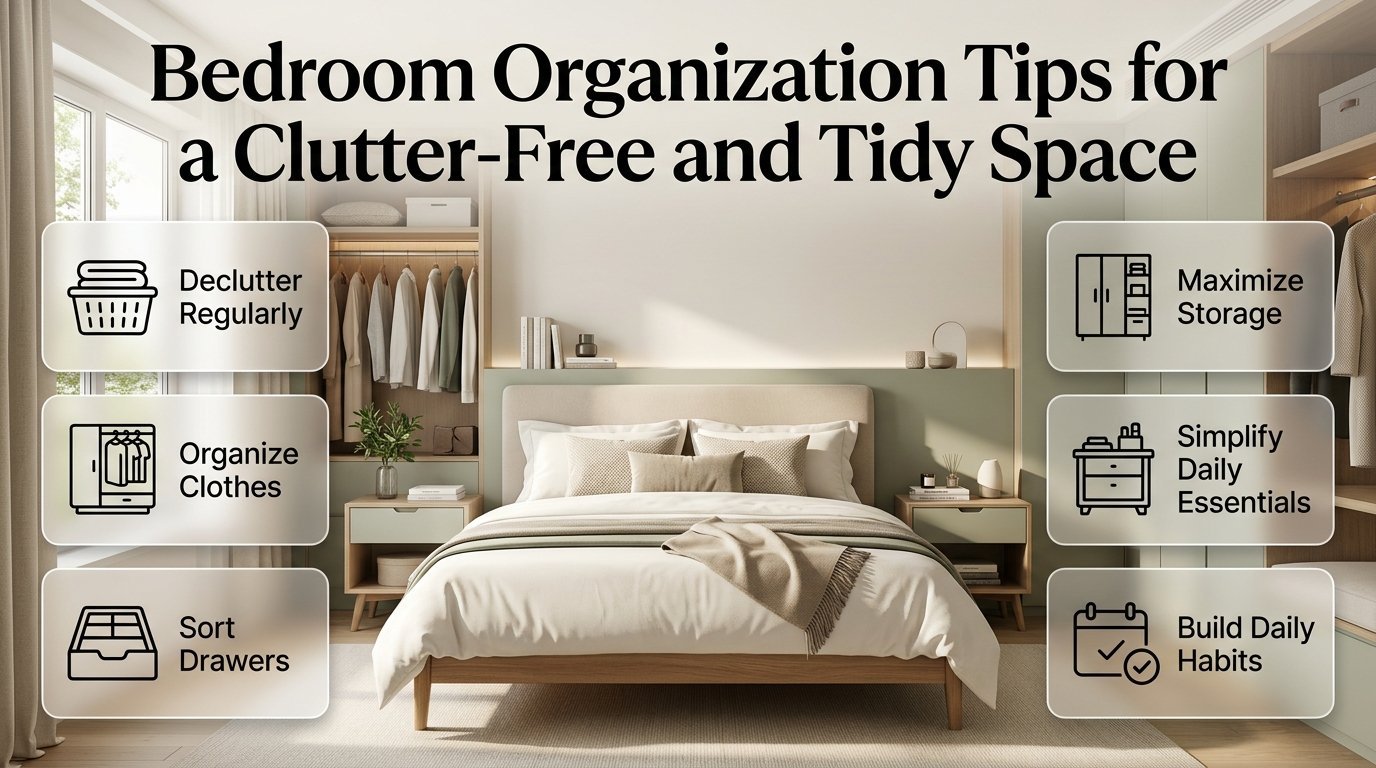
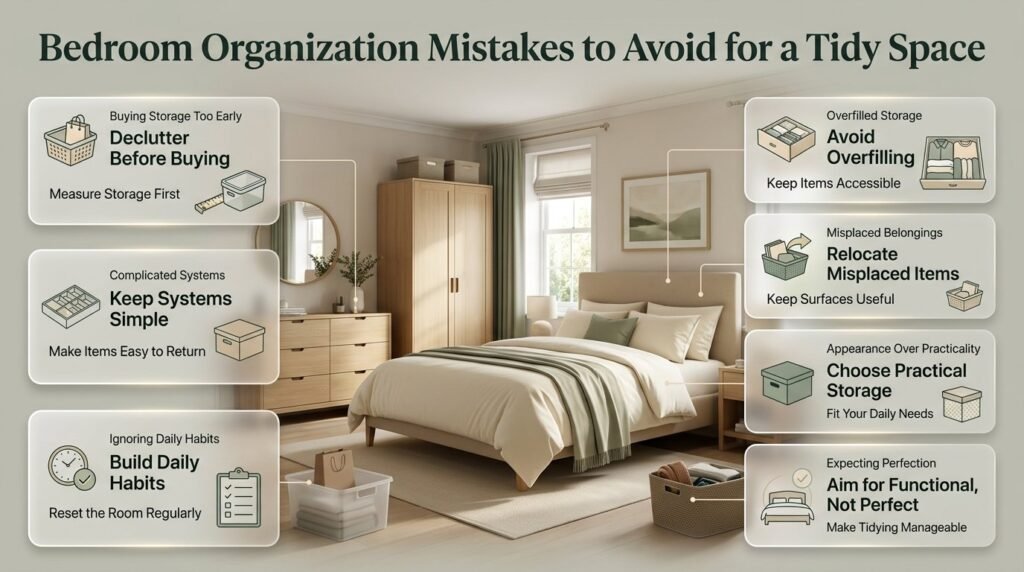
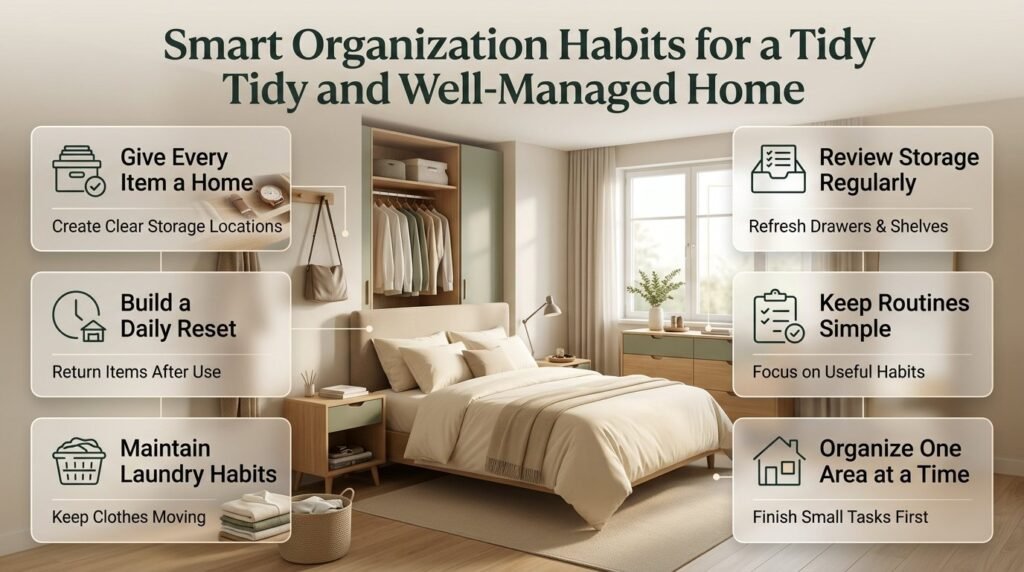
    For more room-specific guidance, visit Bedroom Organization Tips.

    6. How Do You Declutter a Kitchen Without Disrupting Daily Cooking?

    Kitchen decluttering should make meal preparation easier by improving access to frequently used utensils, cookware, ingredients, and food containers. Work on one cabinet or category at a time so that essential cooking items remain available throughout the process.

    Declutter Kitchen Countertops

    Counters are useful work surfaces, but they often become storage areas for items that have no designated home.

    Remove unrelated paperwork, empty packaging, unused decorations, and equipment that can be stored safely elsewhere.

    Keep appliances on the counter when they are used frequently and fit the available space. There is no need to remove a useful appliance merely to achieve a minimalist appearance.

    Sort Drawers and Cooking Utensils

    Take out unnecessary duplicates and review the condition of tools you rarely use.

    Keep cooking utensils together, place knives in appropriate safe storage, and arrange commonly used tools where they are easy to reach.

    Avoid keeping damaged utensils simply because they may be useful someday if a replacement is inexpensive and the item is no longer safe or functional.

    Organize the Pantry

    Review pantry items by category, such as grains, baking ingredients, canned foods, snacks, and cooking essentials.

    Check dates, storage instructions, and packaging condition. Remove expired or spoiled products appropriately, and place frequently used ingredients where they are easy to access.

    Use original packaging when it helps preserve important ingredient, allergen, or expiration information. Decorative matching containers are optional, not a requirement.

    Review Food Containers and Kitchen Gadgets

    Match food containers with their lids and identify pieces that are cracked, damaged, or no longer useful.

    For kitchen gadgets, consider how often you use them and whether another tool already performs the same function.

    If you use a specialist appliance regularly, keep it. If you bought a gadget for a single recipe and have not used it since, consider whether it deserves the storage space.

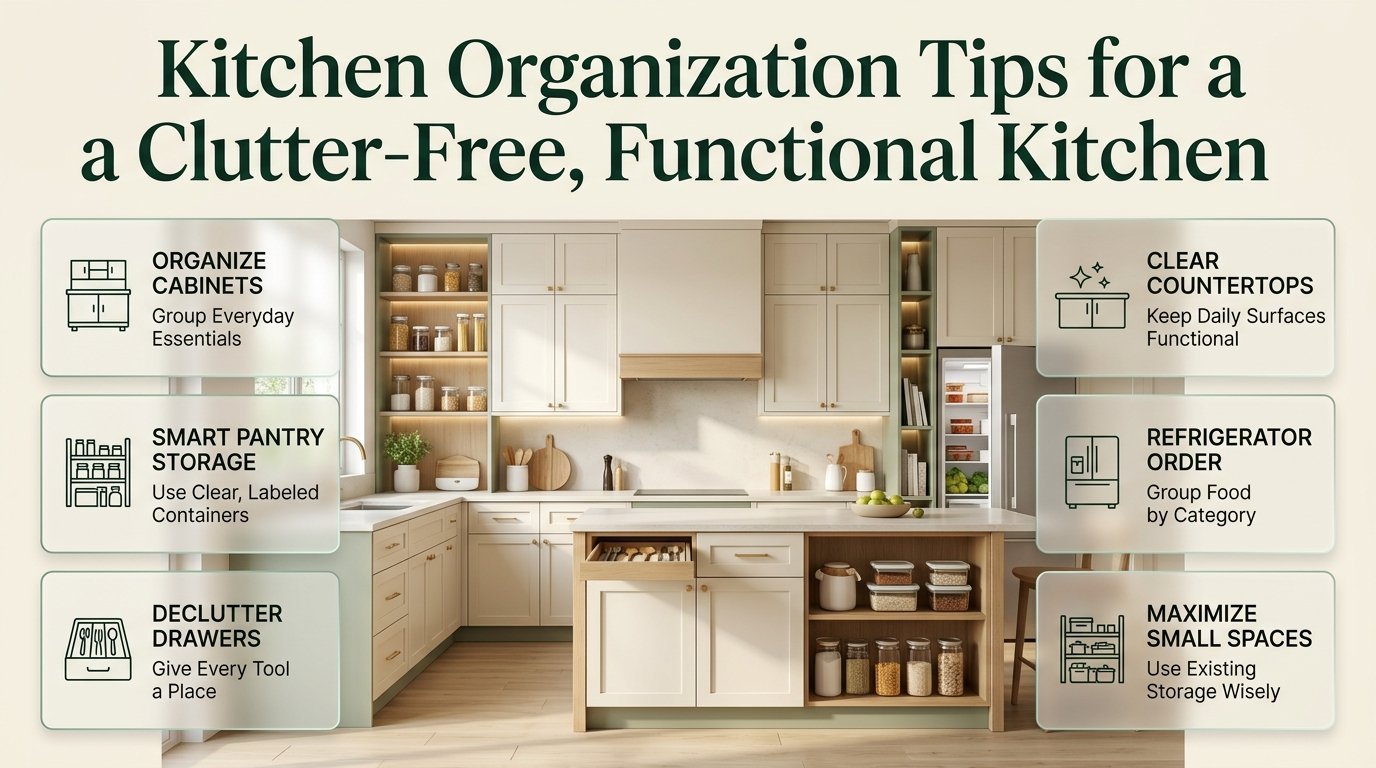
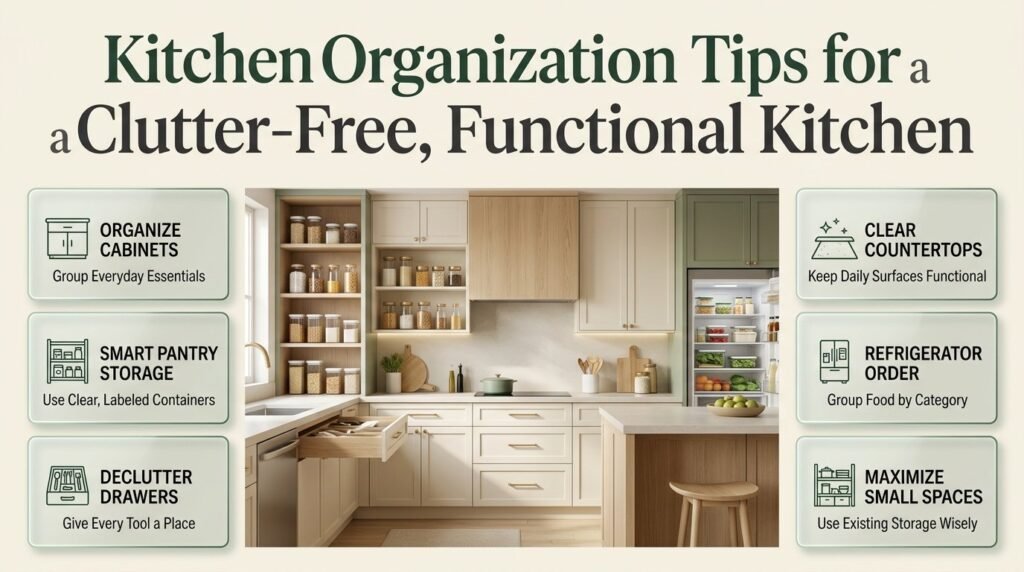
    For additional guidance, see Kitchen Organization Tips.

    7. How Can You Declutter Bathrooms and Laundry Areas?
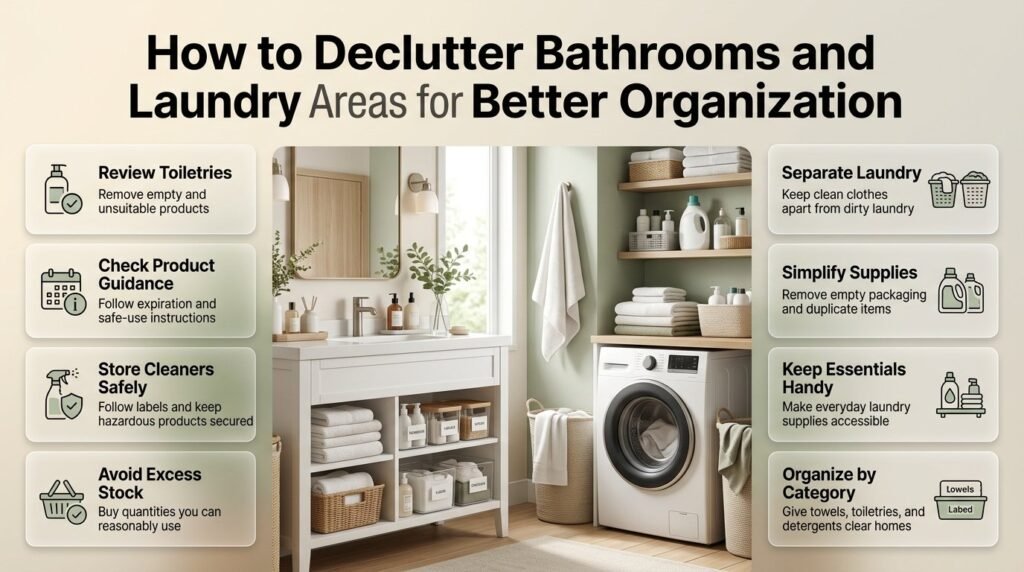
    Bathroom and laundry decluttering ideas featuring organized toiletries, safely stored cleaning supplies, neatly folded towels, and efficient laundry storage.
    Create cleaner, more functional bathrooms and laundry areas by organizing personal care products, storing cleaning supplies safely, and simplifying everyday laundry essentials.

    Bathrooms and laundry spaces become cluttered when products, cleaning supplies, towels, and everyday essentials accumulate faster than they are used. The most effective solution is to keep suitable quantities of useful items and create clear storage locations for each category.

    Review Toiletries and Personal Care Products

    Begin with the bathroom vanity, shower area, and storage cabinets.

    Remove empty containers and review products that no longer suit your needs. Follow manufacturer instructions for expiration dates and safe use.

    Avoid keeping large quantities of products simply because they were purchased on sale. Buying more than you can reasonably use can create unnecessary storage problems.

    Store Cleaning Supplies Safely

    Group suitable cleaning products together and store them according to their labels.

    Keep hazardous products away from children and pets, and never mix cleaning chemicals unless the product instructions explicitly allow it.

    Dispose of unwanted chemicals according to local guidance rather than pouring them down drains when prohibited.

    Simplify Laundry Storage

    Laundry areas work better when clean clothes, dirty laundry, detergents, and household linens have separate locations.

    Remove empty product packaging and review unused accessories or duplicate supplies.

    Keep frequently used detergents accessible while ensuring that products remain safely stored. If space is limited, prioritize the items needed for regular laundry rather than filling shelves with rarely used products.

    8. How Do You Declutter an Entryway and Home Office?

    Entryways and home offices need different decluttering strategies because one manages items moving into and out of the home, while the other supports paperwork, technology, and focused tasks.

    Create a Practical Entryway System

    Shoes, bags, keys, coats, umbrellas, and delivery packages often collect near the entrance.

    Assign everyday items a convenient location:

    • Use hooks for frequently carried bags and coats.
    • Store everyday shoes in an accessible rack.
    • Keep keys in one consistent place.
    • Remove delivery packaging promptly.
    • Relocate seasonal accessories when they are not needed.

    Do not add bulky storage furniture if it blocks the walking route. A small, well-planned arrangement is often more useful than a large cabinet that makes the entrance difficult to navigate.

    Reduce Paper and Desk Clutter

    Start by separating active documents from paperwork that no longer needs to remain on your desk.

    Create a simple system for current projects, bills, important records, and documents requiring action.

    Before discarding paperwork, check whether it contains financial, legal, educational, medical, or other information that should be retained. Dispose of sensitive documents securely.

    Organize Cables and Digital Files

    Group useful cables and accessories together, label them when necessary, and remove damaged items through appropriate disposal channels.

    Digital decluttering can also help reduce the time spent searching for information.

    Review duplicate downloads, unnecessary screenshots, old files, and outdated desktop shortcuts. Back up important information before deleting files, and check whether any records are needed for future reference.

    9. How Can You Declutter a Small Home With Limited Storage?

    Small homes benefit from thoughtful decisions about what to keep, where to store it, and how each area is used. When space is limited, reducing unnecessary possessions is often more effective than adding another storage container.

    Prioritize the Most Important Belongings

    Identify the items you use daily, weekly, seasonally, or only for specific occasions.

    Everyday essentials should be easy to reach. Less frequently used belongings can occupy suitable secondary storage, provided they remain accessible when needed.

    Avoid keeping large quantities of items simply because they fit into a cabinet. Storage capacity is not a reason to retain unnecessary belongings.

    Use Vertical Space Where Appropriate

    Wall shelves, hooks, tall cabinets, and suitable over-door organizers can increase storage capacity without occupying much floor space.

    However, vertical storage should remain practical and safe.

    Secure shelves correctly, respect weight limits, and avoid storing heavy objects where they could fall or require unsafe reaching.

    Choose Furniture Based on Function

    Furniture with built-in storage can be helpful, but it should suit the room’s dimensions and everyday needs.

    Before buying a storage bench, cabinet, or additional shelving, consider whether removing unnecessary belongings would solve the problem more simply.

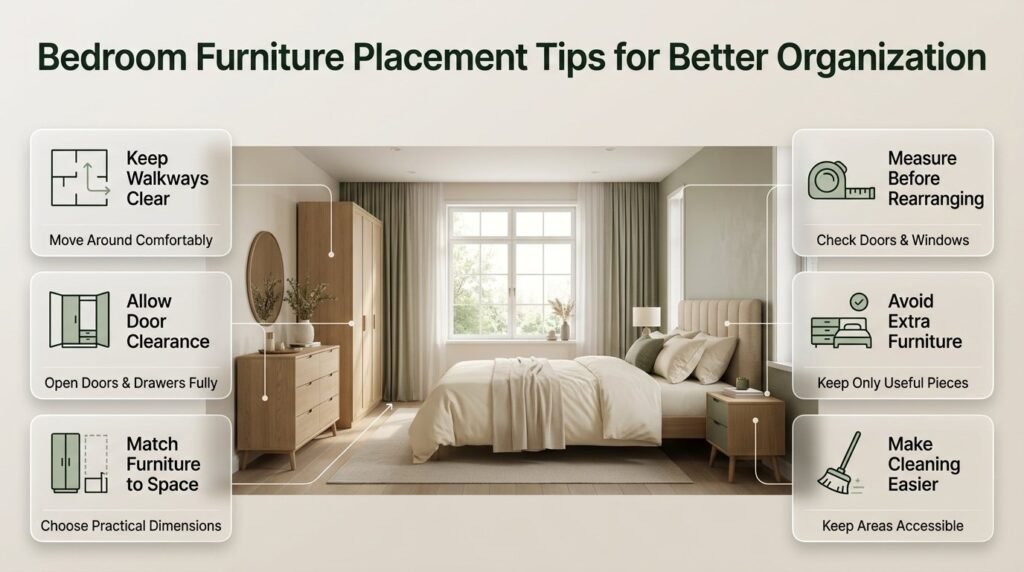
    Keep walking routes clear and avoid furniture that makes frequently used areas difficult to access.

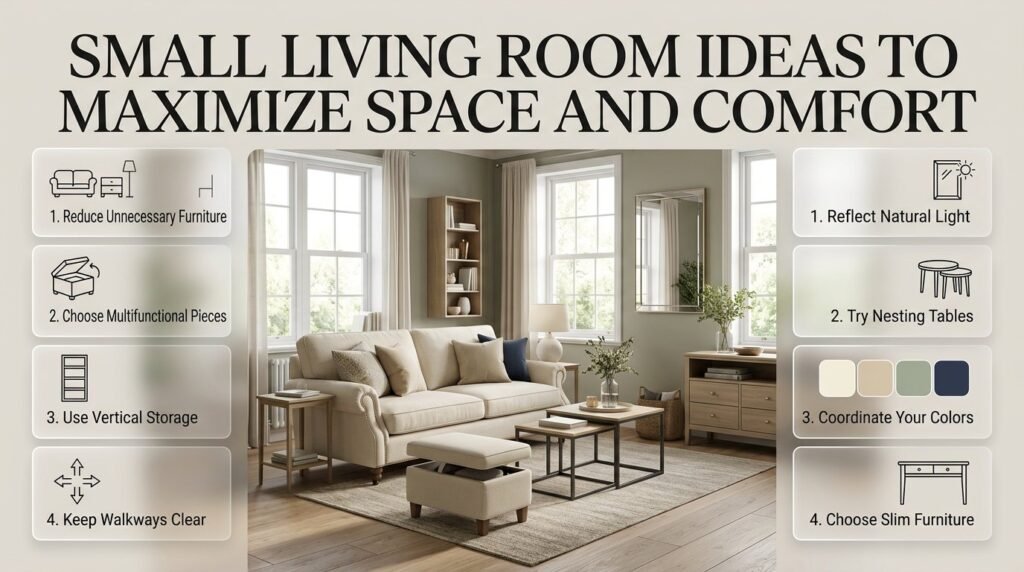
    For further ideas, explore Small Space Home Tips and Home Storage Solutions.

    10. How Do You Declutter Sentimental Belongings Without Regret?

    Sentimental belongings require a different approach because their importance may come from personal memories rather than practical usefulness. You can preserve meaningful connections while reducing unnecessary clutter by deciding which objects deserve space and how you want to store them.

    Keep Meaningful Items Intentionally

    Photographs, letters, gifts, family heirlooms, and souvenirs may represent important experiences.

    Instead of asking whether an item is useful, consider what it means to you and whether keeping it contributes to your life today.

    You do not need to discard sentimental belongings to prove that you are organized.

    Select Representative Items From Large Collections

    If you have many objects connected to the same event or person, choose the ones that hold the most meaning.

    For example, you might retain a few particularly meaningful travel souvenirs instead of keeping every ticket, brochure, and small purchase from the trip.

    Photographs can preserve memories of objects you no longer wish to store, although they do not need to replace every physical keepsake.

    Create a Defined Keepsake Area

    A dedicated box, shelf, or suitable cabinet can protect meaningful possessions and prevent them from spreading throughout the home.

    Choose storage that protects items from dust, moisture, and physical damage.

    If a decision feels difficult, put the item aside and return to it later. Decluttering is more sustainable when you can make thoughtful choices without rushing.

    11. What Are the Best Decluttering Methods for Busy Households?
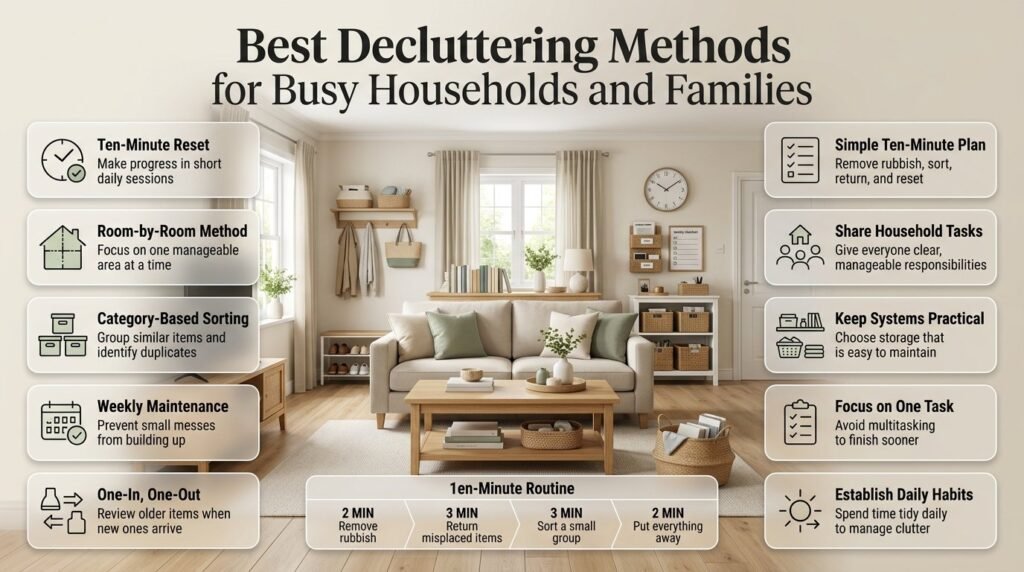
    Decluttering methods for busy households featuring a ten-minute reset, organized storage baskets, room-by-room cleaning, and simple family routines.
    Discover practical decluttering methods for busy households, from quick ten-minute resets to category-based sorting and weekly maintenance routines that help keep shared spaces organized.

    The best decluttering method is one that fits your schedule and can be repeated consistently. Some people prefer short daily sessions, while others make more progress by working on a single category or room during a planned block of time.

    MethodBest suited toMain benefit
    Ten-minute resetBusy weekdaysFits into short periods of free time
    Room-by-room methodLarger home projectsCreates clear, measurable progress
    Category methodClothes, books, or kitchen toolsHelps identify duplicates
    One-in, one-outManaging new purchasesLimits accumulation in selected categories
    Weekly maintenanceShared family spacesPrevents small messes from becoming larger problems

    Try the Ten-Minute Method

    Choose one area and work for ten minutes.

    • Spend two minutes removing rubbish.
    • Spend three minutes returning misplaced belongings.
    • Spend three minutes sorting a small group of items.
    • Spend two minutes putting things away and preparing the area for future use.

    Adjust the timing to suit the task. If the area requires more work, stop at a safe, convenient point and continue later.

    Use the One-In, One-Out Rule Selectively

    When a new item enters your home, consider whether an older item in the same category can leave.

    For example, if you purchase a new mug, you might donate one you no longer use. If you replace a kitchen appliance, decide whether the old one should be sold, donated, recycled, or discarded.

    This method is useful for categories that frequently accumulate, but it should not become an unnecessary rule for essential supplies or items that serve different purposes.

    Involve Household Members

    Shared spaces stay organized more easily when everyone understands the storage arrangement.

    Give family members clear, manageable responsibilities, such as returning shoes to the rack or putting away their own books.

    Avoid assigning complicated systems that require constant supervision. Simple categories and convenient storage locations are more likely to work over time.

    12. What Common Decluttering Mistakes Should You Avoid?

    Decluttering becomes unnecessarily difficult when people take on too much, buy storage products before sorting, or create systems that do not match their routines. Understanding these mistakes helps you make progress without adding more work.

    Mistake 1: Emptying Every Cupboard at Once

    Why it happens: People expect a large project to produce faster results.

    Why it creates problems: Multiple unfinished areas disrupt daily activities and make it difficult to locate essential belongings.

    Better approach: Finish one manageable section before moving to the next.

    Mistake 2: Buying Organizers Too Early

    Why it happens: Containers appear to offer an immediate solution.

    Why it creates problems: They may hide unnecessary belongings without reducing clutter.

    Better approach: Declutter first, measure your remaining storage needs, and purchase only what solves a specific problem.

    Mistake 3: Keeping Everything Because It Might Be Useful

    Why it happens: People want to avoid waste or future inconvenience.

    Why it creates problems: Low-value belongings accumulate and compete with items that are genuinely important.

    Better approach: Consider realistic future use, replacement difficulty, condition, and storage requirements.

    Mistake 4: Setting Unrealistic Deadlines

    Why it happens: Initial motivation encourages ambitious plans.

    Why it creates problems: A schedule that conflicts with work, school, family, or other responsibilities is difficult to maintain.

    Better approach: Set small goals that fit your available time and energy.

    Mistake 5: Moving Clutter Instead of Removing It

    Why it happens: Transferring belongings to another room makes the original area look cleaner.

    Why it creates problems: The total amount of clutter remains unchanged.

    Better approach: Relocate useful items to their proper homes and make deliberate decisions about everything else.

    Mistake 6: Expecting a Perfectly Minimalist Home

    Why it happens: Images of highly simplified interiors can create unrealistic expectations.

    Why it creates problems: People may remove useful or meaningful belongings unnecessarily and feel dissatisfied with a perfectly functional home.

    Better approach: Define success according to your household’s needs, available space, and preferred way of living.

    13. What Professional Organizing Principles Help Prevent Clutter?

    Practical organizing systems are designed around how people actually use their homes. The most useful principles make belongings easy to find, reduce unnecessary movement, and simplify the process of putting things away.

    Follow the Point-of-Use Principle

    Store items near the activities they support.

    Keep cooking tools near the food preparation area, work supplies near the desk, and everyday shoes near the entrance.

    This reduces unnecessary movement and makes it easier to return belongings after use.

    If an item repeatedly ends up in the wrong place, consider whether its designated storage location is inconvenient.

    Make Storage Easy to Maintain

    An organizing system should work on an ordinary day, not only immediately after a thorough cleanout.

    For example, a basket may be more practical for frequently used blankets than a complicated arrangement requiring careful folding every time.

    Likewise, a simple tray for keys may work better than a storage system that requires opening several drawers.

    Avoid Filling Every Available Space

    Empty space is useful because it allows you to access belongings, put away new items when necessary, and maintain clear surfaces.

    You do not need to fill every shelf or drawer to make your home feel complete.

    Leave enough room for ordinary movement and for the storage system to function without constant rearrangement.

    Use Labels Only When They Solve a Problem

    Labels can be helpful for shared cupboards, pantry categories, paperwork, children’s belongings, and seasonal storage.

    However, labeling every small container may create unnecessary work.

    Use labels when they reduce confusion or help other household members return items correctly.

    Review the System After Using It

    After a few weeks, notice which arrangements work and which ones repeatedly fail.

    Perhaps a drawer is too crowded, a frequently used item is stored too far away, or a donation box has no convenient destination.

    Make small adjustments rather than rebuilding the entire system.

    14. How Can You Prevent Clutter From Returning?
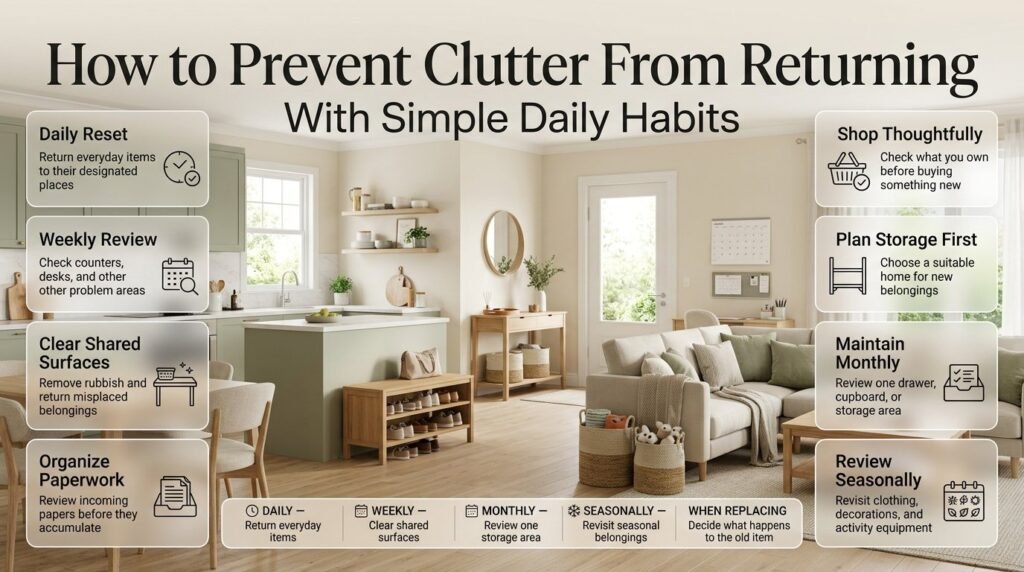
    Home organization infographic showing clutter prevention routines, tidy kitchen counters, organized entryway storage, weekly decluttering, and mindful shopping habits.
    Keep your home organized for the long term with simple daily resets, weekly reviews, thoughtful purchasing decisions, and a flexible maintenance schedule.

    Long-term clutter prevention depends on managing incoming belongings, maintaining convenient storage locations, and dealing with small messes before they become larger projects. You do not need to keep your home perfectly tidy every hour; you need a practical routine that suits your household.

    Establish a Simple Daily Reset

    Choose a short period to return everyday belongings to their designated locations.

    You might clear the kitchen counter, put away living-room items, return shoes to the rack, and gather misplaced objects.

    The routine should be short enough to repeat without creating additional stress.

    Review Problem Areas Weekly

    Certain spaces may require more frequent attention because they naturally collect belongings.

    These often include:

    • Kitchen counters.
    • Entryway tables.
    • Bedside surfaces.
    • Laundry areas.
    • Home office desks.
    • Family activity areas.

    Spend a few minutes reviewing these spaces each week. Remove rubbish, return misplaced items, and address anything that has begun to accumulate.

    Be Thoughtful About New Purchases

    Before bringing something home, consider whether you already own a suitable alternative and where the new item will be stored.

    You can reduce unnecessary accumulation by declining unwanted promotional items, reviewing shopping carts before purchasing, and borrowing occasionally used equipment when practical.

    Avoid purchasing storage products simply because a sale makes them seem attractive.

    Create a Flexible Maintenance Schedule

    FrequencySuggested task
    DailyReturn frequently used items to their designated places
    WeeklyClear shared surfaces and review incoming paperwork
    MonthlyRevisit one drawer, cupboard, or storage area
    SeasonallyReview clothing, decorations, and activity-specific equipment
    When replacing itemsDecide what happens to the old belongings

    Adjust this schedule to your household’s needs. The objective is to make maintenance predictable, not to create another demanding checklist.

    For additional practical routines, explore Smart Home Organization Tips and Easy Home Cleaning Tips.

    15. What Should You Do With Belongings You No Longer Need?

    Once you decide that an item should leave your home, choose a suitable destination and complete that step rather than allowing unwanted belongings to accumulate in bags and boxes.

    Donate Useful Items

    Clothing, books, household goods, and other belongings may be suitable for donation if they are clean, functional, and accepted by the receiving organization.

    Check donation requirements before transporting items. Some organizations cannot accept particular materials or damaged goods.

    Sell Items With Realistic Resale Value

    Selling may be worthwhile for useful products that retain meaningful secondhand value.

    However, photographing, listing, answering messages, and arranging collection all take time. Choose a reasonable deadline and reconsider the plan if an item remains unsold.

    Recycle Suitable Materials

    Use local recycling services for materials they accept. Electronics, batteries, and certain household products may require specialist collection.

    Do not assume that every plastic item, electrical product, or mixed-material object belongs in ordinary recycling.

    Dispose of Unusable Items Responsibly

    Broken, contaminated, unsafe, or unsuitable items may need to be discarded according to local rules.

    Special waste should be handled through appropriate channels rather than placed in ordinary rubbish when prohibited.

    Quick Tip: Keep a small donation bag in a convenient location, but empty it regularly. A donation bag is a temporary collection point, not a permanent storage solution.

    16. A Practical Seven-Day Home Decluttering Plan

    A short plan can help you turn general intentions into specific tasks. This seven-day schedule focuses on manageable areas and allows you to make progress without disrupting every room simultaneously.

    DayFocus areaMain task
    Day 1Living roomClear visible surfaces and return misplaced belongings
    Day 2BedroomReview bedside tables and one clothing category
    Day 3KitchenSort one drawer, cabinet, or pantry section
    Day 4BathroomReview toiletries and remove empty packaging
    Day 5EntrywayOrganize shoes, bags, keys, and coats
    Day 6Home officeSort desk supplies and review unnecessary paperwork
    Day 7MaintenanceComplete donation arrangements and review progress

    Spend as much time as your schedule allows. You may need more than one day for a particular area, and that is perfectly reasonable.

    The schedule is intended to create structure, not pressure. If you cannot finish a task, divide it into smaller sections and continue when convenient.

    How to Measure Your Progress

    Do not measure success solely by how many bags you remove or how empty your cupboards look.

    Instead, ask practical questions:

    • Can I find frequently used belongings more easily?
    • Are the main surfaces available for their intended purposes?
    • Is cleaning easier than before?
    • Can household members return items to the right places?
    • Have I reduced unnecessary purchases or duplicate belongings?
    • Does the arrangement work with my everyday routine?

    These measures reflect whether decluttering has improved the way you use your home.

    What Is the Best Way to Declutter Your Home Without Feeling Overwhelmed?

    The best way to declutter your home is to work on one small area at a time instead of trying to organize every room in a single day. Begin with a space that affects your daily routine, such as a kitchen counter, bedroom drawer, or crowded entryway. Remove unnecessary belongings, group similar items, and return the things you need to their designated places. Completing one area before starting another makes the process easier to manage and helps you maintain consistent progress.
    Practical tips:
    Set aside 10–20 minutes for one specific task.
    Use separate categories for items to keep, donate, recycle, or relocate.
    Finish each area before moving to another.
    Take short breaks when sorting becomes tiring.

    How Do You Decide What to Keep and What to Get Rid of When Decluttering?

    Deciding what to keep becomes easier when you evaluate each item’s usefulness, condition, frequency of use, and personal importance. Ask yourself whether you use it, whether it serves a specific purpose, and whether you already own something that performs the same function. Avoid keeping unnecessary belongings solely because they were expensive or might become useful someday. However, seasonal equipment, emergency supplies, important documents, and sentimental possessions may deserve space even when they are not used regularly.
    Practical tips:
    Remove broken items you have no realistic plan to repair.
    Donate usable belongings that no longer meet your needs.
    Review duplicate kitchen tools, clothing, and household accessories.
    Keep meaningful keepsakes without feeling pressured to discard them.
    Check document-retention requirements before disposing of important paperwork.

    How Can You Declutter a Small Home With Limited Storage Space?

    Decluttering a small home starts with reducing unnecessary possessions and making the best use of the storage space already available. Rather than purchasing additional cabinets immediately, review what you own and prioritize belongings that support your everyday activities. Use vertical shelves, wall hooks, drawer organizers, and suitable under-bed storage when they improve accessibility. Keep frequently used items within easy reach, and avoid filling every available shelf simply because space exists.
    Practical tips:
    Store belongings close to where you use them.
    Choose furniture with built-in storage when it suits your room.
    Keep floors and walking routes clear.
    Use vertical storage safely and respect weight limits.
    Measure available space before purchasing organizers.

    How Often Should You Declutter Your Home to Keep It Organized?

    The best decluttering schedule combines small daily habits with regular reviews of areas that tend to accumulate belongings. A short evening reset can help keep surfaces clear, while a weekly review can address paperwork, misplaced items, and crowded shared spaces. Monthly or seasonal sessions are useful for reviewing wardrobes, storage cupboards, decorations, and equipment that changes with the weather. The ideal schedule depends on your household, available time, and how quickly clutter returns.
    Practical tips:
    Spend a few minutes each day returning items to their proper places.
    Review clutter-prone areas once a week.
    Check seasonal belongings when their storage needs change.
    Follow the one-in, one-out approach for categories that accumulate.
    Adjust your routine instead of setting unrealistic deadlines.

    What Should You Do With Items You No Longer Need After Decluttering?

    Once you have decided to remove an item, choose a suitable destination based on its condition and usefulness. Clean, functional belongings may be donated or given to someone who needs them, while valuable items may be worth selling if you can manage the process within a reasonable timeframe. Materials accepted by local recycling services should be recycled appropriately, and damaged or hazardous items may require special disposal arrangements. Completing this step promptly prevents unwanted belongings from collecting in bags, boxes, or spare rooms.
    Practical tips:
    Check donation requirements before dropping off belongings.
    Set a deadline for selling unwanted items.
    Recycle accepted materials according to local guidelines.
    Dispose of electronics, batteries, and chemicals through appropriate channels.
    Schedule donation collection or delivery instead of leaving bags indefinitely.

    Conclusion: Create a Cleaner, Calmer Home With Practical Decluttering Tips

    Effective home decluttering is not about removing everything you own or creating a perfectly styled space. It is about making thoughtful decisions, keeping useful belongings accessible, and creating an environment that supports your daily routine. With a clear plan and consistent habits, you can make your home feel more organized, comfortable, and easier to maintain without trying to complete everything in one day.

    Start with one manageable area, such as a drawer, kitchen counter, wardrobe shelf, or bedside table. Sort your belongings into practical categories, give frequently used items a designated place, and make a realistic plan for donating, recycling, or responsibly disposing of things you no longer need. Small improvements can gradually transform crowded rooms into functional spaces that feel easier to use and maintain.

    Remember that successful decluttering depends on consistency rather than perfection. Simple routines, regular reviews, and suitable storage solutions can help prevent unnecessary clutter from returning. Whether you live in a spacious house or a small apartment, the right approach can help you make better use of your available space and establish more sustainable organizing habits.

    For more practical inspiration, Heartomenal offers helpful ideas for creating a cleaner, more organized, and comfortable home. Start with one small change today, build on your progress, and make decluttering a practical part of your everyday home care routine.
  • Home Storage Solutions

    Home Storage Solutions

    Introduction

    Home Storage Solutions | A cluttered home can make everyday life more stressful than it needs to be. Kitchen counters fill with supplies, bedroom closets become difficult to manage, and living rooms gradually collect items that have no permanent place. Even when you have enough belongings to meet your needs, finding the right thing at the right time can become a daily frustration.

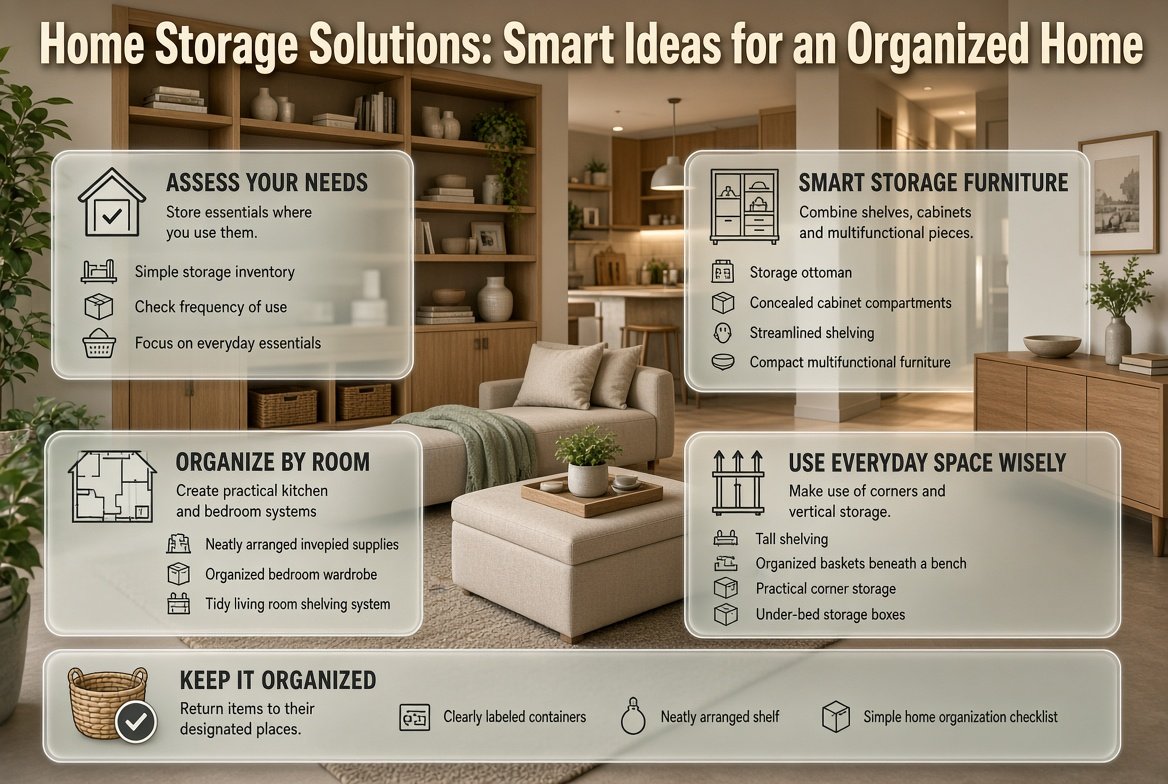
    The best home storage solutions aren’t necessarily expensive cabinets, custom furniture, or a collection of matching containers. They’re practical systems that help you use available space wisely, keep essential belongings accessible, and maintain an organized home without constant effort. Whether you live in a small apartment, a busy family house, or a home with limited built-in storage, a few well-planned changes can make a meaningful difference.

    This guide explains how to assess your storage needs, organize individual rooms, choose appropriate furniture and containers, make better use of unused spaces, and maintain your results over time. You’ll also learn how to avoid common mistakes, control your budget, and create storage arrangements that suit your everyday routines.

    If you’re looking for broader ideas to improve your surroundings, Heartomenal provides a starting point for exploring practical approaches to home organization, maintenance, and comfortable living.

    What Are Home Storage Solutions, and Why Do They Matter?

    Home storage solutions are furniture pieces, organizers, containers, shelving systems, and everyday habits that help you keep household belongings in designated places. They include wardrobe organizers, kitchen drawer dividers, bathroom shelves, storage benches, pantry containers, and simple methods for organizing paperwork or seasonal items.

    Their main purpose is to make a home easier to use. Good storage reduces the time spent searching for belongings, prevents frequently used surfaces from becoming overcrowded, and makes cleaning more straightforward. It can also help you recognize what you already own before buying replacements.

    For example, a family might keep school supplies in one labeled drawer near the study area rather than spreading notebooks, pens, and craft materials across several rooms. Someone living in a small apartment might store spare bedding beneath the bed instead of filling the wardrobe with items used only occasionally.

    Effective storage also improves the relationship between your belongings and the available space. Instead of forcing every object into the nearest cupboard, you establish a logical location based on its purpose and frequency of use.

    What Makes a Storage System Effective?

    A useful storage system should meet five practical requirements:

    • Accessibility: You can retrieve and return items without unnecessary effort.
    • Capacity: The system accommodates the belongings you genuinely need to keep.
    • Visibility: You can identify contents without opening every container.
    • Safety: Shelves, furniture, and containers suit the weight and type of items stored.
    • Maintainability: Everyone using the system can keep it organized with reasonable effort.

    Not every storage product needs to meet all five requirements in the same way. A decorative cabinet might prioritize appearance and concealment, while a pantry organizer should prioritize visibility and convenient access.

    The important thing is to choose storage according to its intended purpose rather than buying products simply because they look attractive.

    How Should You Plan Home Storage Before Buying Anything?

    The most effective way to improve storage is to understand the problem before purchasing a solution. Start by identifying which areas cause the most frustration, what belongings need a permanent home, and how much usable space is available.

    Step 1: Identify Your Main Storage Problems

    Walk through your home and notice where clutter repeatedly gathers. You might find shoes beside the entrance, toiletries covering the bathroom counter, clothing overflowing from drawers, or paperwork accumulating on the dining table.

    Write down the three areas that cause the greatest inconvenience.

    For each area, ask:

    • Which items are creating the problem?
    • Are these belongings used daily, weekly, or occasionally?
    • Do they already have a designated storage location?
    • Is the existing storage inconvenient, too small, or poorly arranged?
    • Could some items be removed instead of stored?

    This assessment prevents you from spending money on products that address the appearance of clutter without solving its underlying cause.

    Step 2: Declutter Before Organizing

    Decluttering and organizing are related, but they aren’t the same task. Decluttering reduces the number of belongings you need to manage, while organizing establishes suitable places for the items you decide to keep.

    Sort belongings into practical categories:

    • Items you use regularly.
    • Items you need occasionally.
    • Seasonal or sentimental belongings.
    • Items that belong elsewhere.
    • Items suitable for donation, reuse, or recycling.
    • Damaged or unusable items that should be discarded appropriately.

    Avoid making quick decisions about important documents, sentimental objects, or items that may have legal, financial, or practical value. Review those carefully.

    Pro Tip: Complete one drawer, shelf, or cupboard at a time. Smaller projects are easier to finish and help prevent the frustration of having an entire room covered in unsorted belongings.

    Step 3: Measure Your Available Space

    Measure the width, depth, and height of the area where you intend to add storage. For furniture, consider the room’s dimensions, door openings, drawer clearance, and walking routes.

    For example, a tall shelving unit might offer excellent capacity, but it won’t be a good choice if it blocks a window or makes a narrow walkway difficult to use.

    Also consider how items will be removed. A container that fits beneath a bed but cannot slide out easily may become inconvenient. A shelf that sits too high for everyday use might be better reserved for seasonal belongings.

    Step 4: Assign a Purpose to Every Storage Area

    Decide what each cupboard, drawer, basket, and shelf will hold before returning items to their places.

    A hallway drawer might be reserved for keys and small everyday essentials. A kitchen cabinet could hold breakfast supplies, while a bedroom drawer might be dedicated to accessories.

    The clearer each storage area’s purpose, the easier it becomes to return belongings correctly.

    For more guidance on creating consistent systems, explore Smart Home Organization Tips.

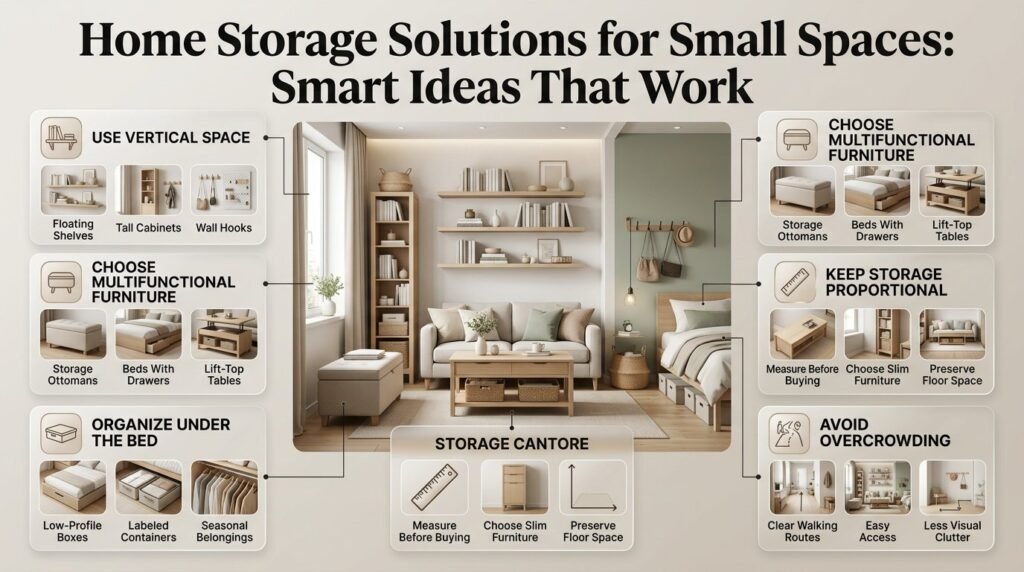
    What Are the Best Home Storage Solutions for Small Spaces?

    Home storage solutions for small spaces featuring vertical shelving, multifunctional furniture, under-bed containers, and space-saving organization ideas.
    Discover practical home storage solutions for small spaces using vertical shelving, multifunctional furniture, and under-bed organizers. Create a more organized, comfortable home while preserving valuable floor space.

    Small homes benefit from storage that uses vertical space, makes furniture work harder, and keeps essential belongings close at hand. Wall-mounted shelves, under-bed containers, narrow cabinets, and multifunctional furniture can increase practical storage without filling every available floor area.

    Use Vertical Space Efficiently

    Walls provide useful storage opportunities when floor space is limited. Shelves, hooks, pegboards, and tall cabinets can help keep belongings organized while leaving more room for movement.

    Consider these options:

    • Floating shelves for books and lightweight decorative objects.
    • Wall hooks for bags, coats, and frequently used accessories.
    • Tall shelving units for folded linens and suitable household supplies.
    • Pegboards for lightweight craft materials or tools.
    • Over-door organizers for selected accessories and small items.

    Before installing wall-mounted storage, check the wall material, choose suitable fixings, and follow the product’s load limits. Heavy objects should be placed securely, and shelves above beds or seating should not hold items that could cause injury if they fall.

    Choose Multifunctional Furniture

    Multifunctional furniture combines everyday use with additional storage. It can be especially helpful in studio apartments, small bedrooms, and shared living spaces.

    Furniture typeStorage purposeBest use
    Storage ottomanHolds blankets or accessoriesLiving room or bedroom
    Bed with drawersStores linens or clothingBedroom
    Storage benchHolds shoes or bagsEntryway
    Lift-top coffee tableConceals frequently used itemsLiving room
    Desk with drawersOrganizes paperwork and stationeryStudy area
    Shelving unit with basketsSeparates different categoriesLiving room or utility area

    Choose furniture that suits the room’s actual dimensions. A large storage ottoman may hold plenty of belongings but create an obstacle if the living room is narrow.

    Make Under-Bed Storage More Useful

    The space beneath a bed is often suitable for seasonal clothing, spare bedding, and other lightweight items that aren’t needed every day.

    Use low-profile containers that fit comfortably beneath the frame. Transparent containers help you identify contents, while labeled opaque boxes create a more uniform appearance.

    Store only clean, dry belongings, and consider the room’s humidity. In damp environments, check stored textiles periodically and choose materials appropriate for the conditions.

    Keep heavy or fragile objects out of awkward under-bed spaces if removing them would require excessive lifting or bending.

    Create Storage Without Overcrowding the Room

    A common mistake in small homes is trying to use every available gap. A room can become difficult to navigate when baskets, cabinets, and organizers occupy too much of the floor.

    Prioritize clear walking routes and easy access to furniture. Choose a few well-planned storage pieces rather than several small products that create visual clutter.

    For additional ideas tailored to compact homes, read Small Space Home Tips.

    How Can You Improve Kitchen Storage and Pantry Organization?

    Kitchen storage should support the way you prepare meals, cook, clean, and serve food. Grouping related items together reduces unnecessary movement, makes ingredients easier to find, and helps prevent cupboards and counters from becoming overcrowded.

    Organize Kitchen Cabinets by Function

    Begin by removing expired food, empty packaging, duplicate utensils, and equipment you no longer use. Clean the shelves and return items according to their purpose.

    For example, keep everyday plates and glasses near the area where meals are served. Place frequently used cooking tools near the food preparation area, and group baking supplies in a dedicated cabinet section.

    Adjustable shelf risers can help you use vertical cabinet space more effectively. Drawer dividers can separate cutlery, cooking utensils, and small accessories.

    Heavy cookware should be stored on stable, lower shelves where it can be retrieved safely. Avoid stacking too many objects in high cabinets where removing one item might disturb the others.

    Create a Pantry That Is Easy to Maintain

    A practical pantry makes it easy to see available ingredients and recognize what needs replenishing.

    Follow this process:

    1. Remove expired products and items that no longer need to be stored.
    2. Group similar foods, such as grains, baking supplies, snacks, and canned goods.
    3. Place frequently used ingredients at convenient heights.
    4. Keep older products accessible so they can be used first.
    5. Label containers when contents or important product information might otherwise become unclear.
    6. Review the pantry before grocery shopping.

    Food-safe containers can help protect suitable dry ingredients and keep shelves tidy. However, transferring food into another container should never mean losing important expiration, allergen, or preparation information.

    Keep food storage areas clean and dry, and follow the storage directions provided with the product.

    Make Better Use of Kitchen Drawers

    Kitchen drawers often become cluttered because different tools are placed together without a clear arrangement.

    Use adjustable dividers to separate cutlery, measuring spoons, cooking utensils, and other small items. Store frequently used tools near the areas where they’re needed.

    If you have limited drawer space, remove duplicate tools and relocate occasional-use equipment to a designated cabinet.

    Common Mistake: Purchasing a complete set of matching pantry containers before measuring the shelves. Check available height and depth first, and buy only the sizes that suit the ingredients you regularly store.

    Use Cabinet Doors for Lightweight Storage

    The inside of suitable cabinet doors can accommodate small organizers for measuring spoons, lightweight accessories, or selected cleaning tools.

    Check that the organizer won’t prevent the door from closing or interfere with drawers and neighboring cabinets. Use products appropriate for the cabinet material and intended load.

    For more practical ideas, visit Kitchen Organization Tips.

    What Are the Most Effective Bedroom Storage Solutions?

    Bedroom storage should keep clothing, accessories, bedding, and personal belongings organized without making the room feel crowded. A practical combination of closet organization, drawer dividers, suitable shelving, and under-bed storage can make everyday routines easier.

    Organize Your Wardrobe by Category

    Start by removing items that belong elsewhere and grouping the clothing you intend to keep.

    Useful categories include:

    • Everyday tops and shirts.
    • Trousers, skirts, and other bottoms.
    • Work or school clothing.
    • Sleepwear.
    • Seasonal garments.
    • Occasion wear.
    • Accessories.

    You can arrange clothing by category, frequency of use, or a combination of both. The best method is one that makes it easy to identify what you need.

    Use hangers suitable for the garments, and avoid packing the wardrobe so tightly that clothing becomes difficult to remove. Fold suitable garments on shelves or in drawers, placing heavier items on stable lower shelves.

    Store seasonal clothing in clearly labeled containers when you need to free up space for current-use items.

    Improve Drawer Organization

    Drawer dividers create separate spaces for smaller belongings, such as socks, accessories, sleepwear, and personal items.

    Adjustable dividers are useful when drawer dimensions vary. Avoid filling every compartment to its limit, because tightly packed drawers become difficult to use.

    For deeper drawers, use smaller sections or shallow containers so that items don’t disappear beneath other belongings.

    Store Bedding Without Wasting Space

    Keep spare sheets, pillowcases, and blankets grouped by bed size or set. Store clean, dry textiles in a linen cupboard, a suitable drawer, or breathable fabric storage.

    If you have limited space, reserve the easiest-to-reach shelves for bedding you use most often. Extra blankets and seasonal textiles can occupy less accessible areas, provided they remain protected and easy to retrieve.

    Create Storage for Accessories

    Belts, bags, jewelry, and other accessories can become difficult to manage when they’re scattered across drawers and shelves.

    Use suitable hooks, small trays, divided drawers, or designated shelf sections. Store delicate items in ways that prevent tangling or damage.

    Avoid buying specialized organizers for every category. Sometimes one well-divided drawer can hold several related items more efficiently than multiple separate boxes.

    For more bedroom-specific advice, explore Bedroom Organization Tips.

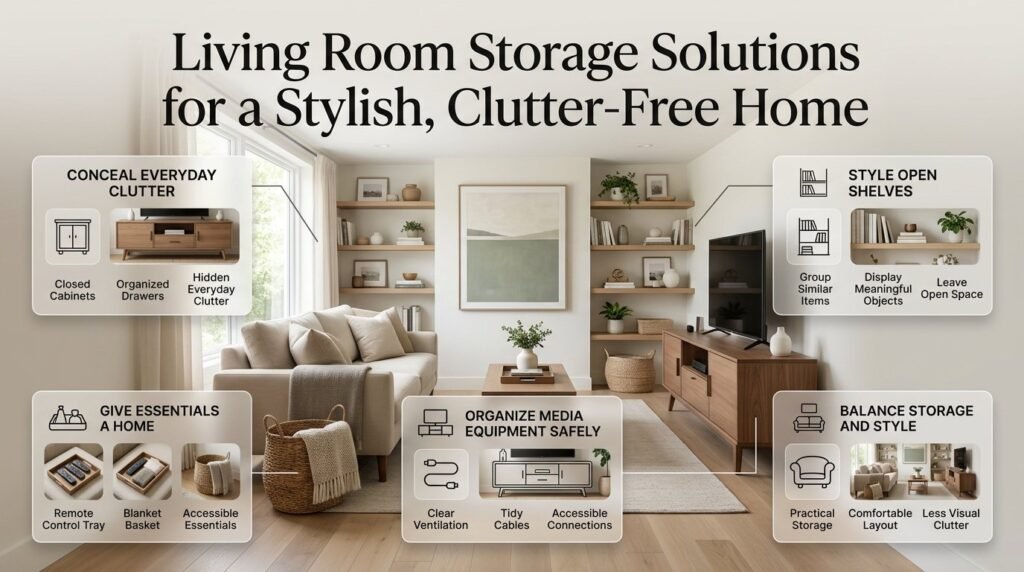
    How Do You Keep a Living Room Organized Without Hiding Everything?

    Living room storage solutions featuring closed cabinets, decorative baskets, organized media consoles, cable management, and uncluttered open shelving.
    Create a comfortable, organized living room with stylish cabinets, decorative baskets, accessible everyday essentials, and thoughtfully arranged open shelves. Keep clutter under control without hiding the personality of your space.

    Living room storage should balance convenience, comfort, and appearance. Closed cabinets, media consoles, decorative baskets, and multifunctional tables can help control clutter while keeping frequently used belongings accessible.

    Use Closed Storage for Everyday Clutter

    Remote controls, cables, games, books, and miscellaneous accessories can quickly take over a living room.

    Use drawers or cabinets for items that don’t need to remain visible. Keep a small number of books, meaningful decorative objects, or plants on open shelves if they contribute to the room’s overall design.

    Closed storage can create a calmer appearance, but it still needs an internal organization system. Otherwise, clutter simply moves behind cabinet doors.

    Create Designated Places for Frequently Used Items

    Assign simple storage locations to belongings that regularly appear around the room.

    For example:

    • Keep remote controls in a tray or drawer.
    • Place blankets in a basket near the sofa.
    • Store board games together in a cabinet.
    • Organize suitable cables with purpose-made cable-management products.
    • Use a magazine holder if you regularly read printed publications.

    Choose locations that make returning items easy. If a blanket basket is far from the sofa or a game cupboard is difficult to open, people may continue leaving belongings elsewhere.

    Organize Entertainment Equipment Safely

    Media equipment often creates storage challenges because it combines devices, accessories, and cables.

    Use a suitable media console to group related items. Keep ventilation openings clear and follow the equipment manufacturer’s guidance for heat management.

    Avoid tightly bundling cables in ways that damage them, and don’t overload electrical outlets. Keep power strips and connections accessible for inspection rather than burying them beneath piles of belongings.

    Prevent Shelves From Looking Overcrowded

    Open shelving works best when objects are arranged with enough space to be identified and retrieved.

    Group similar books or objects together, and avoid filling every shelf simply because space is available. Leave some clear surfaces so that the room doesn’t feel visually crowded.

    For further ideas, read Living Room Home Tips.

    What Storage Ideas Work Best for Bathrooms and Laundry Areas?

    Bathrooms and laundry spaces require storage that suits moisture levels, cleaning routines, and the products used in those areas. Wall shelves, vanity organizers, divided drawers, and suitable cabinets can keep essentials accessible without allowing counters to become crowded.

    Organize Bathroom Cabinets and Counters

    Separate everyday toiletries from backup supplies. Keep daily skincare products or grooming essentials in a convenient organizer, and store spare products in a separate cabinet section.

    This arrangement helps you identify what you need without moving several items every morning.

    Choose containers that can be cleaned easily and tolerate the room’s conditions. Ordinary cardboard and untreated materials may deteriorate if exposed to persistent moisture.

    Store medicines and household chemicals according to their labels, secured appropriately and away from children. Keep products in their original packaging when necessary for safe identification.

    Use Vertical Bathroom Storage Carefully

    A suitable wall shelf or narrow cabinet can provide extra room for towels, toiletries, and lightweight accessories.

    Make sure wall-mounted products are installed securely and that stored items cannot easily fall. Avoid placing heavy objects above areas where someone could be injured if they came loose.

    Keep essential surfaces around sinks and showers clear enough for cleaning and everyday use.

    Create a Practical Laundry Storage System

    Laundry areas often contain detergents, fabric-care products, cleaning cloths, baskets, and items waiting to be washed or put away.

    A simple system can include:

    • Separate baskets for different laundry categories when useful.
    • A designated shelf for laundry products.
    • A container for suitable small accessories.
    • A clear area for folding clean clothing.
    • A specific place for items that need repair or special attention.

    Keep cleaning products in their original containers when appropriate, follow label instructions, and store them safely. Never mix cleaning chemicals unless the product directions explicitly permit it.

    A practical laundry system reduces the chance of supplies being misplaced and makes routine household tasks easier to complete.

    How Can You Organize Entryways, Hallways, and Utility Spaces?

    Entryways and utility spaces benefit from compact storage that keeps frequently used items close at hand without blocking movement. A shoe rack, wall hooks, a narrow cabinet, or a small basket can provide a useful home for everyday essentials.

    Set Up an Organized Entryway

    Choose storage according to the space available.

    A small entryway may need only a few hooks and a tray for keys. A larger entrance might accommodate a shoe cabinet, a storage bench, or a designated basket for reusable shopping bags.

    If several people share the home, assign each person a specific hook, shelf, or basket. Individual spaces make it easier to identify belongings and return them after use.

    Keep shoes arranged so they don’t obstruct the doorway. Avoid placing loose bags, boxes, or footwear on stairs and narrow walkways.

    Make Hallway Storage Work for the Space

    A slim cabinet can be useful in a wider hallway, while wall-mounted hooks may be more appropriate where floor space is limited.

    Before installing storage, check door clearance and the available walking width. Furniture that projects too far into the hallway may make everyday movement difficult.

    Use higher shelves for lightweight items that are accessed occasionally, and reserve convenient areas for frequently used belongings.

    Organize Household Supplies in a Utility Area

    If your home has a utility cupboard, use it to store suitable cleaning tools, spare light bulbs, maintenance supplies, and other household essentials.

    Separate categories instead of placing everything in one large box. Label containers when their contents aren’t obvious, and keep potentially hazardous products secured appropriately.

    Store heavy items on stable, low shelves. Keep equipment and supplies away from heat sources and damp conditions when the product instructions require it.

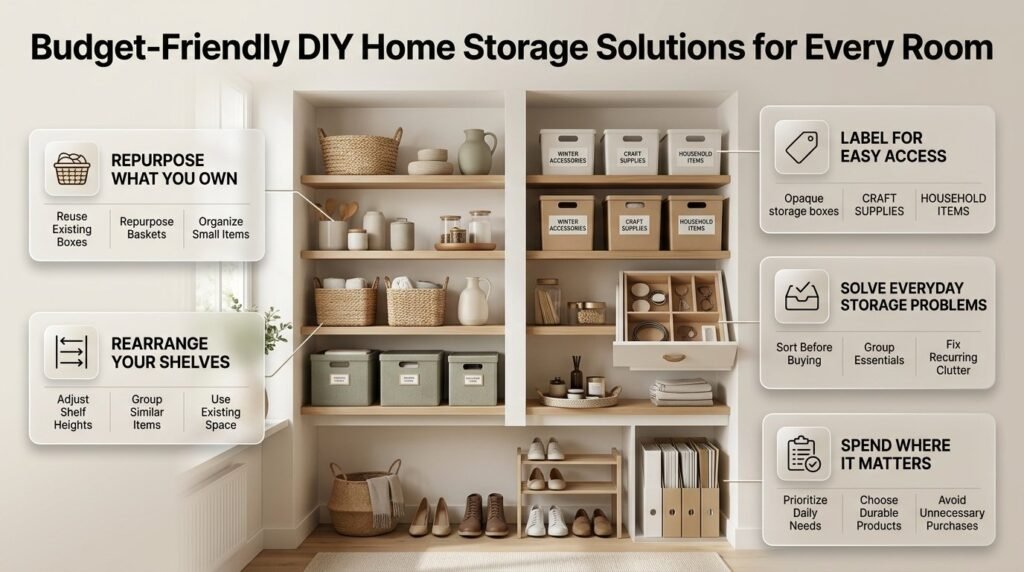
    What Are the Best Budget-Friendly and DIY Home Storage Solutions?

    Budget-friendly DIY home storage solutions featuring repurposed baskets, labeled boxes, organized shelves, drawer dividers, and affordable storage ideas.

    Affordable storage often starts with rearranging existing furniture, reusing suitable containers, and creating clearer categories. Before buying new organizers, identify what you already own and determine whether a small change could solve the problem.

    Repurpose Containers You Already Have

    Sturdy boxes, baskets, trays, and unused drawer organizers can be useful for grouping belongings.

    Suitable examples include:

    • Reusing a small tray for everyday accessories.
    • Using a sturdy box to separate craft supplies.
    • Repurposing baskets for blankets or lightweight household items.
    • Reorganizing existing drawer dividers for different categories.
    • Using clearly labeled containers for suitable seasonal belongings.

    Check that reused containers are clean, durable, and appropriate for their intended location. Avoid ordinary cardboard in damp areas or containers that cannot safely support their contents.

    Rearrange Existing Shelves

    Sometimes the problem is not a lack of storage but inefficient use of the space you already have.

    Adjust shelf heights where possible, group similar items, and remove objects that don’t belong in the area. A tall unused gap above a row of small containers might accommodate a shelf adjustment or a suitably sized organizer.

    Before buying additional furniture, test a new arrangement with the shelves and containers you already own.

    Use Labels to Reduce Confusion

    Labels are particularly useful for opaque boxes, seasonal storage, shared cupboards, and household supplies.

    Use short descriptions that identify the contents clearly. For example, a container labeled “Winter Accessories” is more useful than one labeled “Miscellaneous.”

    Avoid labeling every visible object if it adds unnecessary work. Use labels where they make retrieval easier or help other household members understand the system.

    Decide Where to Spend Your Budget

    Storage problemLow-cost first stepPossible investment
    Crowded kitchen drawerRemove duplicates and sort utensilsAdjustable drawer dividers
    Overfilled wardrobeReorganize clothing by categoryAdditional shelving
    Shoes near the entranceSet a designated shoe areaSlim shoe rack
    Blankets left on furnitureChoose an existing basketStorage ottoman
    Cluttered bathroom counterGroup everyday toiletriesVanity organizer
    Scattered paperworkSort documents into categoriesSuitable file organizer

    Prioritize recurring problems rather than purchasing every product at once. A small, durable organizer that solves a daily inconvenience can be more valuable than a large furniture purchase that doesn’t suit the room.

    For broader ideas about maintaining an orderly home, Easy Home Cleaning Tips can complement your storage routine.

    What Are the Most Common Home Storage Mistakes, and How Can You Avoid Them?

    Many storage problems occur because people concentrate on hiding clutter rather than building a convenient system. Recognizing these mistakes early helps you avoid wasted money, inaccessible belongings, and repeated organizing work.

    Mistake 1: Buying Organizers Before Decluttering

    Why it happens: New containers appear to offer an immediate solution.

    Why it causes problems: Unnecessary belongings occupy the new storage space, leaving little room for items you actually use.

    How to avoid it: Sort your belongings first, identify what needs to stay, and measure the available space before purchasing products.

    Mistake 2: Storing Items Too Far From Where They’re Used

    Why it happens: People arrange storage according to available cupboards rather than daily routines.

    Why it causes problems: Retrieving and returning items requires extra effort, so belongings often end up on nearby surfaces.

    How to avoid it: Keep cooking tools near food preparation areas, laundry supplies near the laundry area when practical, and daily accessories close to where you get ready.

    Mistake 3: Overfilling Shelves and Containers

    Why it happens: Using every inch of available space seems efficient.

    Why it causes problems: Items become difficult to retrieve, containers become heavy, and shelves may be overloaded.

    How to avoid it: Respect load limits, keep heavy objects on stable lower shelves, and leave enough room to remove belongings without disturbing everything else.

    Mistake 4: Choosing Appearance Over Practicality

    Why it happens: Matching baskets and decorative containers look appealing.

    Why it causes problems: Some products are too small, difficult to clean, or inconvenient for everyday use.

    How to avoid it: Prioritize dimensions, accessibility, durability, and safety. Choose attractive finishes once the practical requirements are met.

    Mistake 5: Ignoring Household Habits

    Why it happens: A system is designed around an ideal routine rather than the way people actually live.

    Why it causes problems: Family members may not return items to complicated or inconvenient storage locations.

    How to avoid it: Make the system easy to understand. Use straightforward categories, accessible shelves, and clear locations that suit everyone using the home.

    Mistake 6: Keeping Too Many Empty Containers

    Why it happens: People save boxes and organizers in case they might be useful later.

    Why it causes problems: The containers themselves become another source of clutter.

    How to avoid it: Keep only containers with a clear purpose and a realistic place in your home. Recycle or donate suitable extras rather than storing unlimited supplies.

    Mistake 7: Forgetting About Maintenance

    Why it happens: The initial cleanup feels like the end of the project.

    Why it causes problems: New belongings accumulate, categories become mixed, and the system gradually loses its usefulness.

    How to avoid it: Establish short daily and weekly routines. If an area repeatedly becomes cluttered, review the storage arrangement rather than assuming you simply need to tidy more often.

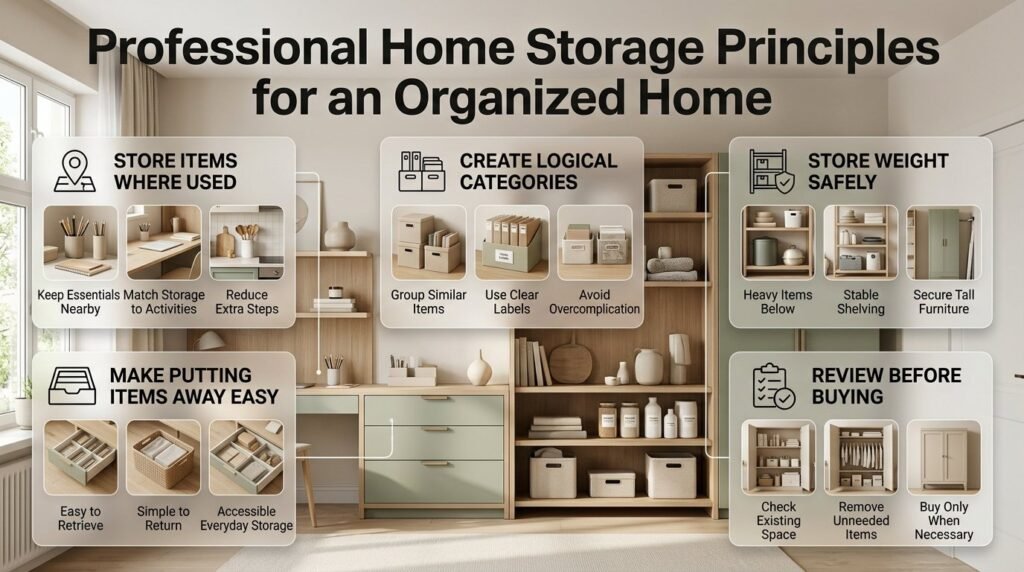
    What Practical Storage Principles Do Experienced Organizers Recommend?

    Professional home storage principles infographic featuring point-of-use organization, logical categories, accessible storage, safe weight distribution, and efficient space planning.
    Learn practical home storage principles that make everyday organization easier. Use logical categories, accessible storage, safe shelf arrangements, and thoughtful planning to create a system that works for your household.

    A dependable storage system should reduce effort, not create additional chores. The most useful principles focus on accessibility, logical grouping, appropriate capacity, and routines that work for the people living in the home.

    Follow the Point-of-Use Principle

    Store belongings close to the activities they support.

    Keep food preparation tools in the kitchen, stationery near the desk, and commonly used cleaning supplies in an appropriate nearby location.

    This arrangement reduces unnecessary movement and makes it easier to return items immediately after use.

    Make Returning Items as Easy as Retrieving Them

    Consider how an item will be put away, not just how it will be removed.

    A shallow drawer organizer may be more convenient than a deep box containing several layers of accessories. An open basket may suit frequently used blankets, while a closed cabinet may be better for paperwork or items that need protection.

    If putting an item away requires moving several other objects, reconsider the arrangement.

    Use Logical Categories Rather Than Excessive Subcategories

    Categories help people locate items, but too many small divisions can make storage complicated.

    For example, grouping everyday stationery together may be sufficient. You might separate pens, paper, and office supplies if the volume justifies it, but creating numerous tiny categories can add unnecessary maintenance.

    Start with broad groups and introduce smaller divisions only when they solve a recurring problem.

    Plan for Safe Weight Distribution

    Place heavy objects on stable, lower shelves and use furniture according to the manufacturer’s instructions. Secure tall storage units when required, particularly in households with children.

    Avoid storing heavy items in overhead containers or high shelves where retrieval would be difficult. Keep fragile belongings protected and positioned where they are unlikely to be knocked over.

    Review Storage Before Buying More

    When a cupboard becomes overcrowded, purchasing another organizer isn’t always the answer.

    First check whether belongings belong elsewhere, whether unused items can be removed, and whether the existing arrangement uses space efficiently.

    If the storage area is genuinely too small for the belongings you need, consider a measured, appropriate addition rather than an improvised pile of containers.

    For more ideas that connect organization with everyday household routines, visit Heartomenal.

    How Can You Maintain an Organized Home Without Spending Hours Tidying?

    A sustainable storage system depends on small, repeated actions rather than occasional major cleanups. Short resets, regular reviews, and clear rules for incoming belongings can prevent clutter from becoming overwhelming.

    Create a Daily Reset Routine

    Choose a convenient time to return misplaced items to their designated locations.

    A daily reset might include:

    • Returning shoes, bags, and accessories to the entryway.
    • Clearing kitchen counters after meals.
    • Putting away clothing and laundry.
    • Returning remote controls, books, and blankets to living room storage.
    • Sorting loose paperwork into an appropriate location.

    You don’t need to complete every task every day. Focus on the areas where clutter most often interferes with everyday activities.

    Use a Weekly Review

    Once a week, inspect the places that become crowded most quickly.

    Check kitchen supplies, entryway storage, frequently used drawers, and shared family areas. Return misplaced belongings, remove empty packaging, and adjust categories that no longer work.

    A brief review helps you notice small problems before they require a complete reorganization.

    Establish a Place for New Belongings

    New purchases, gifts, paperwork, and household supplies can gradually overwhelm an organized home if they have no designated location.

    Before bringing new belongings into a storage area, decide where they belong. If a cupboard is already full, review its contents before adding more items.

    For clothing, kitchen tools, and other categories that tend to accumulate, consider whether the new item serves a genuine need and whether you have suitable space for it.

    Adjust the System When Your Needs Change

    Storage requirements change with seasons, household routines, and family circumstances.

    A home office may need additional document storage during a busy period, while seasonal clothing may require more accessible space at certain times of the year.

    Review your arrangements when they become inconvenient. Moving a shelf, changing a category, or relocating occasional-use items may solve the problem without requiring a complete redesign.

    What Are the Best Home Storage Solutions for Small Spaces?

    The best home storage solutions for small spaces focus on maximizing existing areas without making rooms feel crowded. Vertical shelving, under-bed containers, multifunctional furniture, wall-mounted organizers, and slim cabinets can provide additional storage while preserving valuable floor space. The right choice depends on your room dimensions, the items you need to store, and how frequently you use them.
    Before purchasing new storage products, remove unnecessary belongings and measure the available space. This helps you avoid buying organizers that don’t fit your furniture or interfere with everyday movement.
    Practical ways to maximize small spaces:
    Install suitable wall shelves to use vertical space.
    Choose beds, benches, or ottomans with built-in storage.
    Store seasonal clothing and spare bedding in suitable under-bed containers.
    Use narrow cabinets in entryways and other compact areas.

    How Can I Organize My Entire Home on a Budget?

    Organizing your home on a budget starts with using what you already have instead of immediately purchasing new storage products. Rearranging shelves, sorting belongings, repurposing suitable baskets, and creating designated places for everyday items can improve organization without requiring a major investment.
    Begin with the areas that cause the most inconvenience, such as an overcrowded kitchen drawer, a disorganized wardrobe, or an entryway filled with shoes. Complete one area before moving to another, and purchase additional organizers only when a specific storage problem remains.
    Budget-friendly storage strategies:
    Declutter before buying baskets, boxes, or drawer dividers.
    Reuse sturdy containers that suit the items being stored.
    Adjust existing shelves to make better use of available space.
    Use simple labels to identify the contents of opaque containers.
    Prioritize durable products that solve recurring problems rather than buying decorative organizers you don’t need.

    How Do I Keep My Home Organized and Prevent Clutter From Returning?

    Maintaining an organized home requires a storage system that fits your daily habits. When belongings have convenient, clearly defined places, returning them becomes easier and clutter is less likely to accumulate. Instead of waiting until a room becomes untidy, establish short routines that keep frequently used areas manageable.
    A practical approach combines a daily reset, a weekly review, and occasional decluttering. Spend a few minutes returning misplaced items, clearing frequently used surfaces, and checking whether household supplies belong in their designated locations. If clutter repeatedly gathers in one place, reconsider the storage arrangement rather than relying on repeated cleanups.
    Habits that support long-term organization:
    Return belongings to their designated places after use.
    Clear kitchen counters and entryway surfaces regularly.
    Review crowded drawers and cupboards each week.
    Avoid keeping unnecessary duplicates and unused containers.
    Reassess storage arrangements when your household needs change.

    What Should I Consider Before Buying Home Storage Furniture and Organizers?

    Before purchasing storage furniture or organizers, consider the available dimensions, the type and weight of the items, accessibility, durability, and your budget. A product may look attractive but still be unsuitable if it blocks a walkway, cannot accommodate your belongings, or makes frequently used items difficult to retrieve.
    Measure the intended location carefully, including the height and depth of shelves, door clearance, and the space required to open drawers. Consider whether you need open shelving for visibility or closed cabinets to conceal clutter. For wall-mounted products and tall furniture, also check installation requirements and appropriate safety measures.
    Important buying considerations:
    Measure the space before ordering furniture or containers.
    Check weight limits and choose suitable materials.
    Prioritize easy access to everyday belongings.
    Compare open and closed storage according to your needs.
    Choose products that can adapt to changing household requirements.

    How Can I Choose the Best Storage Solutions for Every Room in My Home?

    The best approach is to organize each room according to its primary activities rather than using the same storage method everywhere. Kitchens need accessible spaces for cooking equipment and food supplies, bedrooms benefit from wardrobe organizers and bedding storage, and living rooms often need a combination of concealed cabinets and convenient everyday storage.
    Bathrooms require materials suitable for their moisture conditions, while entryways benefit from compact solutions for shoes, bags, and keys. Assess the items used in each room, identify where clutter develops, and select storage that makes those belongings easy to access and return.
    Room-by-room storage priorities:
    Kitchen: Drawer dividers, pantry organizers, and practical cabinet layouts.
    Bedroom: Wardrobe organization, divided drawers, and suitable under-bed storage.
    Living room: Media cabinets, storage ottomans, and designated spaces for accessories.
    Bathroom: Moisture-appropriate organizers, vanity storage, and suitable shelving.
    Entryway: Shoe racks, wall hooks, and small trays for everyday essentials.
    A room-by-room strategy helps you use available space more effectively while keeping your home functional, comfortable, and easier to maintain.

    Conclusion

    Effective home storage solutions are not about filling every corner with containers or buying expensive organizing products. They are about creating practical systems that make everyday life easier, keep essential items accessible, and help each room feel comfortable and organized. By understanding your household’s needs, using available space wisely, and giving every item a designated place, you can improve your home without making organization complicated.

    Start with one area, such as a kitchen cabinet, bedroom wardrobe, entryway, or living room shelf. Remove items you no longer need, group similar belongings together, and choose storage options that suit the space. Vertical shelving, under-bed containers, drawer dividers, baskets, and multifunctional furniture can all help reduce clutter when used thoughtfully.

    For lasting results, focus on simple habits rather than occasional major reorganizations. Return items to their proper places, review stored belongings regularly, and adjust your systems as your needs change. You can also explore more practical ideas through Heartomenal and discover ways to improve your home’s organization, cleanliness, and everyday functionality.

    Ultimately, the best home storage solutions are those that fit your space, budget, and lifestyle. With consistent effort and thoughtful planning, you can create a home that feels more spacious, functions more efficiently, and remains easier to maintain over time.

  • Living Room Home Tips

    Living Room Home Tips

    Introduction

    Living Room Home Tips | A living room can look beautiful in a photograph but feel uncomfortable when you actually use it. Furniture may take up too much space, everyday belongings may collect on tables, lighting may feel too harsh, and the overall arrangement may not support the way your family lives. These problems do not always require expensive furniture or a complete renovation. Often, the right decisions about layout, comfort, organization, and maintenance can make a significant difference.

    Living Room Home Tips help you create a space that looks welcoming, feels comfortable, and remains practical throughout the day. Whether you live in a small apartment, a family home, or a house with an open-plan living area, the goal is to make your living room work better for your actual needs.

    At Heartomenal, the focus is on practical home improvements that combine appearance with everyday functionality. The same approach applies to living room planning: understand the space, identify its problems, and make thoughtful improvements instead of buying unnecessary accessories.

    This guide explains how to plan a useful living room layout, select furniture, coordinate colors, improve lighting, organize belongings, maintain upholstery, manage cleaning routines, and make budget-friendly changes. You will also learn which decorating mistakes to avoid, how to approach different room sizes, and how to develop a maintenance routine that keeps the space comfortable over time.

    1. How Should You Plan a Living Room Before Making Changes?

    A successful living room begins with a clear understanding of how the space is used. Before purchasing furniture, selecting decorations, or changing the wall color, assess the room’s dimensions, existing features, daily activities, and problem areas. This simple planning stage helps you avoid unnecessary expenses and prevents individual design decisions from working against one another.

    Identify the Main Purpose of Your Living Room

    Every household uses its living room differently. Some families mainly watch television, while others entertain guests, read, work occasionally, or spend time together after dinner.

    Start by identifying the activities that happen most often.

    • Family relaxation: Prioritize comfortable seating, accessible storage, and durable materials.
    • Social gatherings: Provide enough flexible seating and convenient surfaces for drinks.
    • Reading: Include suitable task lighting and a comfortable chair.
    • Shared activities: Keep open floor space for children, games, or hobbies.
    • Mixed-use living: Divide the room into functional areas without making it feel disconnected.

    For example, a household that frequently hosts visitors may benefit from movable accent chairs. A household that primarily watches television may prefer a sectional sofa and a layout with clear viewing angles.

    The important point is to make decisions based on real activities rather than copying a room that looks attractive but serves a different purpose.

    Measure the Room and Record Fixed Features

    Measure the length and width of the room, then note the location of doors, windows, radiators, electrical outlets, and other fixed features.

    Also measure the furniture you already own. A sofa that fits the room’s width may still be too deep, especially if it reduces the available walking space.

    Record these details before planning your arrangement:

    • Overall room dimensions.
    • Door and window positions.
    • Furniture width, depth, and height.
    • Available electrical outlets.
    • Existing flooring and permanent finishes.
    • Main entrances and walking routes.

    A simple floor plan drawn on paper is often sufficient. You do not need specialist software to understand whether a furniture arrangement will work.

    Pro Tip: Use masking tape to outline furniture dimensions on the floor. Walk around the marked areas before moving heavy items or buying replacements. This helps you identify restricted pathways early.

    Establish a Realistic Improvement Budget

    Divide possible improvements into three groups:

    PriorityExamplesRecommended approach
    EssentialUnsafe furniture, blocked walkways, inadequate task lightingAddress first
    UsefulStorage improvements, better curtains, more suitable seatingPlan according to needs
    OptionalNew decorative accessories, seasonal accents, additional artworkConsider after essentials

    This order prevents decorative purchases from consuming money needed for more important improvements.

    If the room already has comfortable furniture, you may only need to rearrange it, improve lighting, or remove unnecessary belongings. A full makeover should not be the automatic starting point.

    2. How Can You Arrange Living Room Furniture More Effectively?

    Living room furniture arrangement tips featuring a balanced sofa layout, accent chairs, coffee table spacing, clear walkways, and a cozy conversation area.
    Discover how to arrange living room furniture for better movement, comfortable conversations, and a balanced interior. Learn practical sofa placement, coffee table spacing, and space-saving layout ideas for rooms of different sizes.

    A good living room layout makes movement easy, supports conversation, and allows furniture to serve its intended purpose. The arrangement should feel balanced without forcing every item against a wall or leaving the center of the room unnecessarily empty.

    Start With the Largest Furniture Piece

    In many living rooms, the sofa determines the rest of the arrangement. Consider its position in relation to the entrance, windows, television, fireplace, and other seating.

    Place the sofa where it supports the room’s main activity without blocking important routes.

    Next, position accent chairs, side tables, and the coffee table. Smaller furniture should support the main arrangement rather than create obstacles.

    Maintain Comfortable Walking Routes

    Clear circulation is essential for both comfort and safety. People should be able to enter the room, reach their seats, and move between adjoining spaces without squeezing around furniture.

    A clearance of approximately 30–36 inches is a useful starting point for major walking routes where space allows. In compact rooms, narrower passages may be unavoidable, but essential routes should remain practical and safe.

    Avoid placing furniture directly in front of frequently used doors or creating narrow gaps between the sofa and coffee table.

    Create a Conversation Area

    If your living room is used for family discussions or entertaining, arrange seating so people can comfortably see one another.

    Two chairs angled toward a sofa can create a more inviting conversation area than a row of seats facing the same direction.

    The distance between seats should support conversation without making people feel crowded. A small side table between two chairs can provide convenience without requiring a large coffee table.

    Position the Coffee Table Carefully

    The coffee table should be reachable from the main seats while leaving enough room for people to walk around it.

    As a practical starting point, consider approximately 14–18 inches between the coffee table and sofa. Adjust this distance to suit the table’s size, the sofa’s depth, and the needs of household members.

    Choose a table that fits the room rather than selecting one solely for its appearance.

    Table typeSuitable situationConsideration
    RectangularLonger sofas and traditional layoutsCheck walking clearance
    RoundCompact seating arrangementsSelect a suitable diameter
    Nesting tablesFlexible use and occasional guestsStore smaller tables neatly
    Storage tableRooms needing additional organizationAvoid overloading the interior
    Small side tablesReading corners and individual seatsMatch height to the seating

    Common Mistake: Buying several small tables because they appear convenient. Too many surfaces can interrupt movement and make the room feel cluttered. Choose only the pieces that support actual activities.

    Should You Push All Furniture Against the Walls?

    Not necessarily. In a larger room, moving the sofa slightly away from the wall can establish a more defined seating area. In a small room, placing certain pieces against the walls may preserve valuable floor space.

    The correct choice depends on room dimensions, door positions, and how people move through the space.

    Test more than one arrangement before deciding. A layout should be judged by comfort and usability, not by a universal decorating rule.

    3. How Can You Choose Living Room Colors That Work Together?

    The most effective living room color schemes connect the walls, flooring, furniture, curtains, and decorative details. A coordinated palette creates visual consistency, while carefully selected contrast prevents the room from looking flat.

    You do not need to use many colors to create interest. Two or three coordinated shades, supported by different textures, can produce a balanced result.

    Use the 60-30-10 Color Principle

    The 60-30-10 principle is a useful starting point for distributing color.

    • 60% dominant color: Often walls or another large visual surface.
    • 30% secondary color: Major upholstery, curtains, or substantial furnishings.
    • 10% accent color: Cushions, artwork, lampshades, and smaller accessories.

    These proportions are guidelines, not strict measurements. Patterned furniture, colorful flooring, and distinctive architectural features may require a different balance.

    For example, cream walls and a neutral rug could provide the dominant foundation, sage-green seating or curtains could supply the secondary color, and muted brass or terracotta accents could introduce contrast.

    Select Colors According to Natural Light

    The same paint color can look different in different rooms. Window direction, daylight intensity, artificial lighting, flooring, and nearby materials all influence how a color appears.

    In a darker room, lighter and warmer colors may help create a more open feeling. A bright room may support deeper shades without appearing as enclosed.

    Before painting:

    1. Test samples on separate wall areas or sample boards.
    2. Observe them at different times of day.
    3. Compare them with the flooring and upholstery.
    4. Check their appearance under evening lighting.
    5. Consider whether the color remains comfortable across changing light conditions.

    Expert Tip: Choose wall colors after reviewing the permanent features that are expensive to change. Flooring, stone, built-in cabinets, and large furniture pieces should influence the final palette.

    Coordinate Patterns Without Creating Visual Clutter

    Patterns can add character through cushions, rugs, curtains, and upholstery. However, several strong patterns may compete for attention when they share similar visual weight.

    A practical approach is to combine one prominent pattern with simpler supporting designs.

    For example, a striped cushion may work with a subtle geometric rug and solid-color curtains. Alternatively, a floral accent can complement plain upholstery and a restrained color scheme.

    Consider pattern scale as well as color. Large patterns often work well on larger surfaces, while smaller patterns can be useful for accessories.

    Choose Materials That Support the Color Scheme

    Color is only one part of a coordinated room. Texture influences whether a space feels warm, formal, relaxed, or contemporary.

    Wood, woven fabrics, ceramic accessories, linen, and metal finishes can create variety without requiring additional colors.

    A room with cream walls and green accents, for example, may feel more complete when natural wood and a textured rug introduce subtle differences in surface and finish.

    4. How Can You Improve Living Room Lighting?

    Living room lighting ideas featuring warm ambient lights, a reading floor lamp, accent lighting, natural daylight, and elegant layered illumination.
    Transform your living room with layered lighting that combines ambient, task, and accent illumination. Discover practical ways to enhance natural daylight, create a warm atmosphere, reduce glare, and improve everyday comfort.

    Living room lighting should support different activities throughout the day. Reading, relaxing, cleaning, and entertaining require different levels and types of illumination. A combination of general lighting, task lighting, and accent lighting provides more flexibility than relying entirely on one ceiling fixture.

    Understand the Three Main Lighting Types

    Ambient lighting provides general illumination. Ceiling fixtures, recessed lights, and suitable room-wide sources can help people move around safely.

    Task lighting supports particular activities. Examples include a floor lamp beside a reading chair or a table lamp near a frequently used seat.

    Accent lighting highlights selected features, such as artwork, shelves, or architectural details.

    You do not need all three types in every corner. The objective is to place light where it improves comfort, visibility, or the appearance of important features.

    Make Better Use of Natural Light

    Natural light can make a living room feel brighter and help colors appear more clearly.

    Keep window areas reasonably clear, choose curtains that suit your privacy requirements, and avoid placing bulky furniture where it unnecessarily blocks daylight.

    Mirrors can help reflect existing light when positioned thoughtfully. However, their placement should not create glare or unwanted reflections from televisions and lamps.

    If direct sunlight is strong, suitable blinds or lined curtains can help control glare and protect furnishings.

    Choose Appropriate Bulbs

    Warm-white lighting, often around 2700K–3000K, is a useful choice for relaxed living spaces. Other color temperatures may suit particular tasks or personal preferences.

    Brightness, fixture position, shade design, and glare also influence comfort.

    Check the fixture’s requirements and confirm that bulbs are compatible with any dimmer switches.

    Common Mistake: Choosing lighting based only on brightness. A powerful bulb positioned poorly may create glare, while several appropriately placed lights may provide more comfortable illumination.

    Improve Lighting Without Rewiring

    If you want a practical update without major electrical work, consider:

    • Adding a suitable floor lamp.
    • Repositioning an existing table lamp.
    • Replacing unsuitable bulbs with compatible alternatives.
    • Cleaning dusty lampshades and fixtures.
    • Adjusting curtains to make better use of daylight.

    Any electrical installation or wiring change should be handled by a qualified professional where required.

    5. How Can You Keep a Living Room Organized Every Day?

    A well-organized living room makes it easy to find belongings and return them to their proper places. The goal is not to eliminate every personal object. It is to prevent everyday items from spreading across surfaces, seats, and floors.

    Identify the Items That Create Most of the Clutter

    Observe what accumulates in your living room over several days.

    Common examples include remote controls, chargers, books, blankets, children’s toys, bags, paperwork, and drinking glasses.

    Give each frequently used category a designated storage location.

    • Keep remote controls in a small tray or accessible drawer.
    • Store blankets in a basket near the sofa.
    • Place books on a suitable shelf.
    • Use bins for toys and games.
    • Keep charging accessories in a designated organizer.
    • Return dishes to the kitchen after use.

    Storage is more effective when it is close to the place where an item is used. A complicated storage system can discourage people from putting belongings away.

    Choose Storage That Fits the Room

    Storage furniture should solve a specific problem without creating another one.

    Storage solutionBest applicationPossible limitation
    Storage ottomanBlankets and small accessoriesCan become overloaded
    Closed cabinetGames, cables, and miscellaneous itemsNeeds occasional sorting
    Open shelvingBooks and selected displaysCollects dust
    BasketsToys and soft furnishingsContents can become mixed
    Wall shelvesVertical storageRequire secure installation
    Console with drawersSmall everyday itemsNeeds sufficient wall clearance

    Choose storage based on the type and quantity of belongings you actually own.

    Use Vertical Space Thoughtfully

    Wall-mounted shelves can free floor space and provide practical storage. Taller bookcases may also help organize a room without adding several separate cabinets.

    However, using every available wall is not always the best solution. Too many shelves, objects, and decorative arrangements can create visual clutter.

    Secure shelves appropriately, particularly in households with children. Keep heavy items safely positioned and avoid overloading storage units.

    Establish a Five-Minute Reset

    A short daily routine can prevent small messes from becoming a major cleaning task.

    At the end of the day:

    1. Remove dishes and cups.
    2. Return remote controls and accessories.
    3. Fold blankets.
    4. Straighten cushions.
    5. Put away toys and books.
    6. Clear the main walking routes.

    For additional practical strategies, read Smart Home Organization Tips.

    Pro Tip: Organize frequently used items at comfortable, accessible heights. Store seasonal decorations and rarely used belongings farther away so they do not compete with everyday essentials.

    6. How Can You Select Durable Furniture and Easy-Care Materials?

    Furniture and material choices should reflect how the living room is used. A household with pets, children, or frequent visitors may need different upholstery and flooring solutions from a household that uses the room occasionally.

    The most attractive material is not necessarily the most practical one. Consider durability, cleaning instructions, comfort, sunlight exposure, and replacement costs together.

    Compare Upholstery Materials

    Tightly woven synthetic fabrics: These may be practical for frequently used furniture, depending on their construction and care requirements.

    Cotton: Cotton upholstery offers a comfortable, familiar texture but may wrinkle or stain if it is not properly maintained.

    Linen: Linen creates a natural, relaxed appearance. It can crease easily and may require more careful cleaning.

    Leather: Properly maintained leather can be wiped clean, although it may scratch and needs suitable conditioning or care.

    Performance fabrics: These are designed for particular durability or stain-resistance characteristics, but their performance varies by product.

    Before buying, inspect the manufacturer’s cleaning guidance. Do not assume that every fabric can tolerate water, steam, or the same stain-removal products.

    Select a Rug for the Way You Live

    A rug can define a seating area, introduce texture, and connect different furniture pieces.

    When choosing one, consider:

    • Whether it fits the main seating arrangement.
    • How easily it can be cleaned.
    • Whether its pile suits doors and walking routes.
    • Whether the backing is appropriate for the flooring.
    • How its colors relate to the furniture and walls.

    In many layouts, placing the front legs of the main seating on the rug helps create a unified appearance.

    A rug that is too small may make the furniture arrangement look disconnected. However, a very large rug may be unsuitable for a compact room or interfere with doors.

    Protect Furniture From Sunlight and Everyday Wear

    Prolonged direct sunlight can fade some fabrics and finishes. Curtains, blinds, suitable window treatments, and thoughtful furniture placement can help reduce exposure.

    Rotate removable cushions when recommended by the manufacturer. Use appropriate protective covers if the furniture receives heavy daily use.

    Expert Tip: Before purchasing a sofa, check more than its appearance. Sit on it if possible, assess the support, examine the construction, and confirm the cleaning requirements. A comfortable, maintainable sofa is usually a better investment than a visually impressive piece that does not suit your household.

    7. How Can You Make a Small Living Room Feel More Spacious?

    Small living room ideas featuring space-saving furniture, a storage ottoman, nesting tables, vertical shelving, a large mirror, and coordinated colors.
    Make a small living room feel more spacious with smart furniture choices, multifunctional storage, strategically placed mirrors, and a cohesive color palette. Create a comfortable, organized interior without sacrificing personality or style.

    A small living room feels more spacious when furniture fits the available area, walking routes remain clear, and storage is planned carefully. You do not need to remove all color or adopt a strict minimalist style. The objective is to make the room feel organized and easy to use.

    Reduce Unnecessary Furniture

    Begin by identifying furniture that serves no clear purpose.

    A small room may not need a large coffee table, several side tables, multiple accent chairs, and a bulky entertainment unit.

    Keep the pieces that support daily activities and remove or replace those that unnecessarily restrict movement.

    A slim console, compact side table, or appropriately sized sofa may provide better functionality than several larger items.

    Choose Multifunctional Pieces Carefully

    Multifunctional furniture can reduce the number of separate pieces required.

    Examples include:

    • An ottoman with internal storage.
    • Nesting tables that can be separated when needed.
    • A sofa bed for occasional overnight guests.
    • A console with drawers.
    • Wall-mounted shelving.

    Choose multifunctional pieces only when their extra features are genuinely useful. A sofa bed, for example, may not provide the same everyday comfort as a conventional sofa of similar size.

    Use Mirrors and Vertical Storage

    A well-positioned mirror can reflect light and create a greater sense of depth. Vertical shelving can also use wall space without occupying as much floor area as additional cabinets.

    Keep the arrangement restrained. Filling every wall with shelves or mirrors may make the room feel visually busy rather than spacious.

    Maintain a Connected Color Palette

    Using related shades across walls, curtains, and upholstery can help a compact room feel more cohesive.

    This does not mean avoiding dark colors. A navy accent chair or deep-green cushion can add character when balanced with the rest of the room.

    Quick Tip: Before buying another storage unit, sort through existing belongings. Removing items you no longer need may solve the storage problem without adding more furniture.

    For additional guidance on making compact spaces work harder, explore Small Space Home Tips.

    8. How Can You Decorate a Living Room Without Overcrowding It?

    A finished living room should reflect personal taste while remaining practical. Artwork, cushions, plants, books, and decorative accessories can add character, but each item should contribute to the overall arrangement.

    The goal is to create visual interest without making every surface compete for attention.

    Choose Artwork That Relates to the Furniture

    Artwork should suit the scale of the wall and the furniture beneath it.

    A large piece above a sofa may create a strong focal point. A gallery wall can work well when several smaller pieces share a consistent relationship through color, frame style, or subject.

    Before hanging artwork, arrange the pieces on the floor or use paper templates to test the layout.

    Avoid hanging artwork so high that it appears disconnected from the furniture. Also consider the viewing distance and the height of nearby architectural features.

    Use Cushions and Throws With Purpose

    Cushions can introduce accent colors and textures without requiring major changes.

    For example, a neutral sofa may work well with two solid-color cushions, one patterned cushion, and a coordinating throw.

    Varying texture can create interest even when the colors remain similar. A woven cushion, smooth cotton cover, and soft throw may work together without making the arrangement look busy.

    Do not add so many cushions that people must remove them before sitting down.

    Add Plants Where Conditions Are Suitable

    Houseplants can introduce natural color and texture. Select them according to available light, room temperature, watering needs, and maintenance requirements.

    If you have pets or young children, check plant safety before bringing a plant into the home. Keep pots stable and avoid placing them where water can damage furniture or flooring.

    Artificial plants may be suitable where natural light is insufficient or maintenance is difficult.

    Style Shelves With Balance

    A useful shelf arrangement combines selected objects with open space.

    Group a few books with a decorative object, vary heights, and leave some areas clear. You can also repeat a material or color from elsewhere in the room to create a connection between different parts of the design.

    Review your shelves periodically rather than adding decorations whenever you find something attractive.

    Common Mistake: Treating every empty surface as an opportunity to display another object. Empty space is part of a balanced arrangement and makes important decorative pieces easier to appreciate.

    9. How Can You Maintain a Clean and Fresh Living Room?

    Regular maintenance keeps a living room comfortable and prevents small problems from becoming difficult cleaning tasks. The most effective approach combines short daily habits with weekly cleaning and occasional deeper maintenance.

    Your routine should reflect the household’s needs. A room used by several people and pets may require more frequent attention than a room used occasionally.

    Follow a Practical Cleaning Schedule

    FrequencyRecommended tasks
    Daily or as neededRemove dishes, return belongings, address visible spills
    WeeklyDust surfaces, vacuum floors, clean high-touch areas
    MonthlyCheck corners, organize cabinets, inspect selected upholstery areas
    SeasonallyReview curtains, clean overlooked areas, check furniture condition

    This schedule is a starting point rather than a strict rule. Adjust it according to foot traffic, pets, allergies, and the materials in your room.

    Clean From Top to Bottom

    Begin with higher surfaces, such as shelves and lamps, then move to tables and lower furniture. Finish by vacuuming or cleaning the floor.

    This sequence reduces the chance of dust falling onto areas you have already cleaned.

    Use appropriate cleaning attachments and follow the care instructions for upholstery, rugs, flooring, and electronic equipment.

    Handle Spills Promptly

    When a spill occurs, check the material’s care instructions before applying a cleaning product.

    Blot suitable fabric spills gently with a clean cloth rather than rubbing aggressively. Test approved cleaners in an inconspicuous area and follow the manufacturer’s instructions.

    Never mix household cleaning chemicals. Some combinations can release dangerous fumes.

    Reduce Dust and Odors

    Dust can accumulate on shelves, curtains, upholstery, and decorative objects.

    Regular vacuuming, suitable ventilation, and laundering washable fabrics according to their care instructions can help keep the room fresh.

    If an unpleasant odor persists, investigate its source instead of relying only on air fresheners. Food residue, damp materials, dirty upholstery, or inadequate ventilation may require specific attention.

    For more detailed cleaning routines, read Easy Home Cleaning Tips.

    10. How Can You Make Your Living Room Safer for Everyday Use?

    Living room safety tips featuring clear walkways, secured rugs, organized electrical cables, anchored furniture, and safe placement of heating equipment.
    Create a safer living room with clear walking routes, secure furniture, organized cables, and careful placement of heat sources. These practical precautions help make everyday living more comfortable for the whole household.

    A practical living room should be comfortable and visually appealing without creating avoidable hazards. Safety considerations are particularly important in homes with children, older adults, pets, or people who have difficulty moving around.

    Keep Walkways Clear

    Avoid leaving bags, toys, charging cables, and other belongings across frequently used paths.

    Secure loose rugs with suitable nonslip backing and check whether rug edges curl upward. Make sure furniture does not obstruct essential exits.

    If you regularly move furniture, inspect the new arrangement for narrow passages and trip hazards.

    Manage Electrical Cables

    Television cables, lamp cords, chargers, and extension leads can create hazards when left across the floor.

    Keep cables organized using suitable cable-management products and position electrical equipment according to manufacturer instructions.

    Avoid overloading outlets or using damaged cables. Seek qualified assistance if electrical fittings require repair.

    Position Heavy Furniture Securely

    Bookcases, cabinets, and tall storage units should be installed or secured appropriately, especially in homes with children.

    Place heavy objects on stable surfaces and avoid stacking items where they could fall onto seating or walking areas.

    Consider Heat and Fire Safety

    Keep candles, portable heaters, and other heat-producing items away from curtains, upholstery, and other combustible materials.

    Never leave open flames unattended. Ensure that heating equipment is used according to its instructions, and keep required exits accessible.

    These precautions should be part of your furniture planning rather than something considered only after the room is decorated.

    11. What Are the Most Common Living Room Home Improvement Mistakes?

    Many living room problems arise because decisions are made separately instead of considering how the entire space functions. A sofa may look attractive but block a doorway. Decorative objects may suit individual shelves but create clutter when combined. A paint color may look perfect in a store but appear different under the room’s lighting.

    Understanding these mistakes helps you make better decisions before spending money.

    Mistake 1: Buying Furniture Without Measuring

    Why it happens: People judge furniture by photographs, showroom displays, or appearance alone.

    Why it causes problems: The furniture may restrict movement, overwhelm the room, or prevent doors from opening properly.

    How to avoid it: Measure the room, check furniture dimensions, and mark the intended footprint on the floor.

    Mistake 2: Choosing Appearance Over Comfort

    Why it happens: A stylish sofa or chair attracts attention, even when it does not support everyday use.

    Why it causes problems: Poor seating comfort can make the room less enjoyable despite its attractive appearance.

    How to avoid it: Test seating when possible, consider how long it will be used, and evaluate support and fabric maintenance.

    Mistake 3: Overusing Decorative Accessories

    Why it happens: Individual objects look attractive, so they accumulate over time.

    Why it causes problems: Shelves become crowded, cleaning takes longer, and the room loses visual focus.

    How to avoid it: Keep meaningful and useful items, group accessories selectively, and leave some surfaces clear.

    Mistake 4: Ignoring Lighting Conditions

    Why it happens: People select colors or lighting fixtures without evaluating the actual room.

    Why it causes problems: Colors may appear different than expected, and poorly positioned lights can create glare or dark corners.

    How to avoid it: Test samples in different lighting conditions and use more than one suitable light source where necessary.

    Mistake 5: Adding Storage Without Decluttering

    Why it happens: Extra cabinets seem like the quickest solution to overflowing surfaces.

    Why it causes problems: The room becomes more crowded, while unnecessary belongings remain.

    How to avoid it: Sort belongings first, then add storage only for items that genuinely need a designated place.

    Mistake 6: Neglecting Furniture Maintenance

    Why it happens: Cleaning and care are postponed until visible dirt or damage appears.

    Why it causes problems: Some stains become harder to remove, dust accumulates, and materials may deteriorate more quickly.

    How to avoid it: Follow a realistic cleaning schedule and address spills, loose fittings, and other minor problems promptly.

    Mistake 7: Following Every Decorating Trend

    Why it happens: New styles can make existing furniture seem outdated.

    Why it causes problems: Constant changes cost money and may create a room that does not reflect your needs.

    How to avoid it: Establish a practical foundation with comfortable furniture, coordinated colors, and useful storage. Introduce trends through smaller, replaceable items when they genuinely suit your taste.

    12. What Professional Planning Principles Make a Living Room Work Better?

    Professional-style planning focuses on the relationship between space, movement, furniture, materials, lighting, and everyday activities. The best result is not necessarily the most expensive or elaborate room. It is a room in which the major decisions support one another.

    Follow the Correct Order of Decisions

    Work through these stages:

    1. Measure the room and identify fixed features.
    2. Decide how the room will be used.
    3. Establish the furniture layout.
    4. Coordinate major colors and materials.
    5. Plan general and task lighting.
    6. Choose rugs, curtains, and upholstery.
    7. Add artwork and decorative accessories.
    8. Review comfort, movement, and maintenance.

    This sequence helps prevent unnecessary purchases and reduces the risk of discovering that a decorative choice does not suit the final arrangement.

    Balance Scale, Texture, and Contrast

    Scale refers to how furniture and accessories relate to the dimensions of the room and to one another.

    A large sofa may dominate a compact room, while tiny accessories may look insignificant against substantial furniture.

    Texture adds variety. A linen sofa can work with a woven rug, wooden furniture, and ceramic accessories. These materials create interest without requiring many competing colors.

    Contrast helps individual elements remain visible. If everything has the same color and brightness, the room may feel flat. Introduce a darker accent, varied texture, or distinctive artwork to create depth.

    Consider the Full Cost of Ownership

    Furniture costs do not end with the purchase price.

    Some materials require specialist cleaning, while others may need regular conditioning or careful protection from sunlight. Delicate decorative objects may also require more maintenance than durable everyday alternatives.

    Before purchasing a major item, consider:

    • Initial price and expected lifespan.
    • Cleaning and maintenance requirements.
    • Suitability for household activities.
    • Availability of replacement covers or parts.
    • Delivery and installation requirements.

    A slightly more expensive item may offer better value if it remains comfortable and practical for longer. However, price alone does not guarantee durability, so assess quality and care requirements carefully.

    Observe How the Room Is Actually Used

    Spend several days noticing where people sit, where belongings accumulate, and which routes feel inconvenient.

    You may discover that the main problem is not the sofa itself but the position of a side table. Alternatively, the room may need a dedicated place for books, a better reading light, or a simpler storage arrangement.

    Expert Tip: Test small changes before committing to major purchases. Rearrange the furniture, use temporary storage baskets, or try a different lamp position. Observe the results and keep the changes that genuinely improve daily life.

    13. How Can You Improve Your Living Room on a Budget?

    Budget-friendly living room ideas featuring rearranged furniture, refreshed cushions, affordable lighting, organized shelves, and coordinated neutral decor.
    Refresh your living room on a budget with simple furniture rearrangements, better organization, thoughtful lighting, and affordable decorative updates. Create a comfortable, stylish space without replacing everything or making unnecessary purchases.

    A living room refresh can begin with changes that cost little or nothing. Rearranging furniture, removing unnecessary objects, improving existing lighting, and cleaning neglected surfaces may provide a noticeable improvement without replacing major items.

    Start With Free Improvements

    Try these changes before shopping:

    • Rearrange furniture to improve walking routes.
    • Remove decorations that compete for attention.
    • Clean lampshades, shelves, and furniture surfaces.
    • Reorganize books and selected decorative objects.
    • Move existing artwork to a more suitable location.
    • Wash curtains according to their care instructions.
    • Create a consistent place for everyday belongings.
    • Use existing cushions and throws more thoughtfully.

    These improvements address common problems without introducing additional items.

    Prioritize Purchases That Solve Specific Problems

    If the room still needs improvement, identify the most important remaining issue.

    For example, replace a damaged lamp if poor lighting affects everyday activities. Add a suitable storage unit if frequently used belongings have no practical home. Consider new cushion covers if the sofa remains comfortable but its appearance needs refreshing.

    Avoid purchasing several unrelated accessories simply because they are inexpensive.

    Decide Where to Spend and Where to Save

    ItemWhen spending more may be worthwhileWhen saving may make sense
    SofaDaily use requires lasting comfort and supportExisting seating remains comfortable and structurally sound
    LightingBetter illumination is essentialRepositioning a suitable existing lamp solves the problem
    RugDurability and regular cleaning matterA smaller, washable rug suits the room
    CurtainsPrivacy, light control, and durability are importantExisting curtains remain functional
    CushionsFabric quality matters for frequent useReplaceable covers provide an affordable update
    AccessoriesA meaningful piece creates a useful focal pointTemporary decorative changes meet your needs

    Make Improvements in Stages

    You do not need to finish the room in one weekend.

    Begin with the layout, then improve organization, lighting, and color coordination. After living with those changes, decide whether additional furniture or accessories are necessary.

    This staged approach gives you time to evaluate the results and helps prevent impulse purchases.

    For broader practical ideas that support everyday home life, explore Home Tips & Ideas.

    14. How Can You Keep the Living Room Connected to the Rest of Your Home?

    A living room rarely functions entirely on its own. People move between the living area, kitchen, bedrooms, and other spaces throughout the day. A coordinated approach to household organization can make these transitions easier without requiring every room to look identical.

    Coordinate Storage Between Shared Spaces

    Items often move between rooms. Books may be carried from the living room to a bedroom, while dishes and glasses travel to the kitchen.

    Create simple routines that return belongings to their correct locations. A small collection basket can temporarily hold items that need to be returned elsewhere, provided it does not become a permanent source of clutter.

    For kitchen-related routines, Kitchen Organization Tips can help you plan practical storage and reduce the accumulation of everyday items.

    Keep Shared Belongings Easy to Find

    If household members regularly share chargers, blankets, books, or remote controls, agree on convenient storage locations.

    Consistent storage reduces the time spent searching for items and makes it easier for everyone to maintain the room.

    The system should remain simple enough for all household members to follow.

    Use Similar Principles Across Bedrooms and Living Areas

    Your living room does not need to match your bedroom exactly. However, consistent habits such as returning belongings, maintaining clear surfaces, and reviewing storage can make the whole home easier to manage.

    For additional ideas about maintaining an organized personal space, explore Bedroom Organization Tips.

    These related routines support the same goal: creating a home that feels comfortable and functions well without requiring constant effort.

    What Are the Best Living Room Home Tips for Creating a Comfortable and Stylish Space?

    The best living room home tips focus on balancing comfort, functionality, and visual appeal. A well-designed living room should support everyday activities while maintaining a welcoming atmosphere. Instead of filling the room with decorative items, prioritize comfortable seating, suitable lighting, coordinated colors, and a layout that allows people to move freely.
    Start by identifying how your household uses the room. If you spend most evenings watching television, arrange seating for comfortable viewing. If you frequently welcome guests, create a conversation area with accessible side tables. Choose furniture that fits the room’s dimensions and introduce accessories gradually so the space remains practical.
    Practical tips to follow:
    Choose furniture that suits the room’s size and daily requirements.
    Combine ambient lighting with task and accent lighting.
    Use a coordinated color palette to create visual consistency.
    Keep frequently used belongings organized and accessible.
    Add cushions, rugs, and artwork without overcrowding the room.
    The most effective approach is to improve one area at a time. This makes it easier to identify which changes genuinely improve comfort and appearance.

    How Should You Arrange Living Room Furniture to Make the Space Look Bigger?

    To make a living room look bigger, choose appropriately sized furniture, maintain clear walking routes, and avoid unnecessary pieces that occupy valuable floor space. A thoughtful furniture arrangement can improve the room’s visual balance without requiring structural changes or expensive renovations.
    Begin by measuring the room and identifying its main focal point, such as a window, fireplace, or television. Position the sofa to support the room’s primary activity, then arrange chairs and tables around it. In smaller rooms, multifunctional furniture can provide additional usefulness without introducing too many separate items.
    Professional furniture arrangement tips:
    Keep entrances and main walking routes clear.
    Select coffee tables that allow comfortable movement around them.
    Use wall-mounted shelves when appropriate to preserve floor space.
    Consider mirrors to reflect available natural light.
    Avoid buying oversized sofas or several unnecessary accent chairs.
    A room does not need to be completely empty to feel spacious. The goal is to ensure that every furniture piece serves a purpose and that the arrangement feels open, balanced, and comfortable.

    Which Living Room Colors and Combinations Create the Most Attractive Interior?

    The most attractive living room colors are those that complement the existing flooring, furniture, natural light, and overall decorating style. Neutral shades such as cream, beige, and warm white provide a versatile foundation, while green, navy blue, terracotta, and muted pastels can introduce character and contrast.
    A practical way to coordinate colors is to use the 60-30-10 principle. Choose a dominant color for larger surfaces, a secondary color for substantial furnishings, and an accent shade for smaller decorative details. This creates a useful starting point without making the room feel overly coordinated or repetitive.
    Color combinations worth considering:
    Cream and sage green: Creates a relaxed, natural atmosphere.
    Navy blue and warm white: Introduces contrast and a classic appearance.
    Beige and natural wood: Provides warmth and flexibility.
    Terracotta and cream: Adds an earthy, welcoming character.
    Soft blue and light gray: Creates a calm, understated interior.
    Before painting, test sample colors in the actual room under daylight and artificial lighting. Existing furniture and flooring should influence the final choice. A color that looks attractive in a showroom may appear noticeably different at home.

    How Can You Keep Your Living Room Clean, Organized, and Clutter-Free Every Day?

    Keeping a living room organized becomes easier when frequently used belongings have designated storage locations and cleaning is divided into manageable tasks. Rather than waiting until the room becomes untidy, establish simple routines that prevent clutter from accumulating.
    Start by identifying the items that regularly collect on tables, sofas, and floors. Remotes, blankets, books, toys, and charging accessories should each have a convenient place. Storage baskets, closed cabinets, shelving, and storage ottomans can help, provided they suit the room’s size and actual needs.
    A practical organization routine includes:
    Returning everyday belongings to their designated locations.
    Removing dishes and cups after use.
    Folding blankets and straightening cushions.
    Dusting surfaces and vacuuming regularly.
    Reviewing storage areas to remove unnecessary belongings.
    Cleaning upholstery according to the manufacturer’s instructions.
    A short daily reset can reduce the amount of time needed for deeper cleaning. The key is to create a system that household members can maintain consistently, rather than relying on occasional major cleaning sessions.

    How Can You Improve Your Living Room on a Budget Without Replacing All the Furniture?

    You can improve your living room on a budget by focusing on changes that solve specific problems rather than replacing furniture simply to achieve a new look. Rearranging existing pieces, improving lighting, reducing clutter, and coordinating decorative accessories can make a noticeable difference without requiring a complete makeover.
    Begin with a thorough cleaning and assess what already works. If the sofa remains comfortable and structurally sound, consider updating its cushion covers rather than purchasing a replacement. If the room feels dark, improve the placement of existing lamps or add a suitable light source before considering expensive renovations.
    Budget-friendly improvements to prioritize:
    Rearrange furniture to improve movement and balance.
    Refresh the room with coordinated cushion covers and throws.
    Reorganize shelves and display fewer, more meaningful accessories.
    Improve lighting with suitable bulbs and additional lamps.
    Maintain existing furniture to extend its useful life.
    Purchase new items only when they solve a genuine functional problem.
    Plan improvements in stages instead of buying everything at once. This allows you to evaluate each change before spending more money. A well-organized room with comfortable furniture, thoughtful lighting, and a consistent color scheme can look polished without an expensive decorating budget.

    Conclusion

    Creating a comfortable and well-organized living room does not require expensive furniture, a complete renovation, or following every interior design trend. The most effective living room home tips focus on understanding your daily needs, arranging furniture thoughtfully, choosing complementary colors, improving lighting, and maintaining a clutter-free environment. When these elements work together, the living room becomes more inviting, functional, and enjoyable for everyone in the household.

    Start with the essentials before making decorative changes. Establish a practical furniture layout, keep walking paths clear, choose durable materials, and use storage solutions that make everyday organization easier. Small improvements, such as adding layered lighting, rearranging existing furniture, introducing textured cushions, or creating a simple cleaning routine, can make a noticeable difference without stretching your budget.

    It is also important to consider how your living room connects with the rest of your home. Coordinating colors, maintaining consistent organization habits, and choosing decor that reflects your personal preferences can create a more harmonious atmosphere. Whether you have a spacious family room or a compact apartment living area, thoughtful planning will help you make the best use of the available space.

    For more practical ideas, explore Home Tips & Ideas and discover helpful ways to improve comfort, organization, and everyday living. You can also revisit Heartomenal for inspiration on creating a home that feels welcoming, functional, and suited to your lifestyle.

    Ultimately, the best living room is not the one with the most expensive decor. It is the one that supports your routine, reflects your personality, and makes you feel comfortable every day. Start with one manageable improvement, build on your progress, and let your living room develop into a space that combines practical function with lasting style.

  • Bedroom Organization Tips

    Bedroom Organization Tips

    Introduction

    Bedroom Organization Tips | A bedroom can become cluttered even when you regularly try to keep it clean. Clothes collect on chairs, drawers become difficult to open, bedside tables fill with everyday belongings, and storage space seems to disappear. The more frustrating part is that the room may look organized immediately after cleaning but return to its previous condition within a few days.

    The solution isn’t necessarily buying more furniture, adding decorative storage boxes, or spending an entire weekend cleaning. Effective bedroom organization tips focus on creating practical systems that suit your daily routine. When every item has a convenient place, storage is easy to access, and clutter is addressed before it accumulates, keeping a bedroom organized becomes much simpler.

    At Heartomenal, the focus is on practical ideas that help make everyday home life more comfortable and manageable. This guide takes that approach to bedroom organization, explaining how to declutter your room, organize closets and drawers, manage clothing and accessories, maximize small spaces, arrange furniture, and develop habits that keep your bedroom tidy.

    Whether you have a small bedroom, a spacious master bedroom, a shared room, or a bedroom with limited storage, you’ll find practical solutions that can be adapted to your space, budget, and lifestyle.

    1. Where Should You Start When Organizing a Bedroom?

    The best way to organize a bedroom is to begin with visible clutter, sort belongings into categories, and assign a practical storage location to everything you decide to keep. Instead of emptying the entire room at once, complete one area before moving to another. This prevents the task from becoming overwhelming and makes it easier to maintain progress.

    A bedroom contains several types of belongings, including clothing, bedding, personal accessories, books, electronics, paperwork, and decorative objects. These items have different storage requirements, so trying to organize everything simultaneously can make the process unnecessarily complicated.

    Start with the easiest tasks and gradually move toward areas that require more decisions.

    Follow a simple bedroom organization sequence

    Step 1: Remove obvious rubbish.

    Collect empty packaging, unwanted paper, broken items, and anything that no longer serves a purpose. Removing unnecessary items creates space before you begin organizing the belongings you actually use.

    Step 2: Collect all laundry.

    Separate dirty clothing from clean garments. Place dirty laundry in a hamper and return clean clothes to their proper storage areas.

    Step 3: Clear visible surfaces.

    Remove unnecessary belongings from your bed, bedside table, dresser, desk, and chairs. Sort the items instead of moving everything into a drawer without considering where it belongs.

    Step 4: Group similar belongings.

    Place clothing together, collect accessories in one location, and separate books, electronics, personal-care products, and miscellaneous items.

    Step 5: Decide where everything belongs.

    Frequently used belongings should remain convenient to reach. Seasonal items, spare bedding, and occasionally used accessories can occupy less accessible storage.

    Step 6: Finish one zone at a time.

    Complete your bedside table, one closet section, or a dresser before starting another area. This prevents unfinished tasks from spreading throughout the room.

    Practical example: If your bedroom floor is covered with clothing, start by sorting the garments into clean clothes, dirty laundry, and items that can be worn again. Once the floor is clear, organize the closet rather than attempting to reorganize the entire bedroom simultaneously.

    Pro Tip: Keep a donation bag and a rubbish bag nearby. Having a clear destination for unwanted items makes sorting faster and reduces unnecessary interruptions.

    2. How Can You Declutter Your Bedroom Without Feeling Overwhelmed?

    Bedroom decluttering infographic showing four sorting categories, organized storage baskets, tidy drawers, and simple steps to reduce bedroom clutter.
    Learn how to declutter your bedroom without feeling overwhelmed by sorting belongings into manageable categories, organizing one zone at a time, and keeping meaningful possessions.

    Bedroom decluttering means reviewing your belongings and removing items you no longer need, use, or want to keep. It is an essential first step because storage systems cannot solve a clutter problem when unnecessary possessions occupy the available space.

    The goal isn’t to discard everything that isn’t used daily. Instead, identify what deserves space in your bedroom and make sure the belongings you keep are easy to store and access.

    Use four categories to sort belongings

    CategoryExamplesRecommended action
    KeepEveryday clothing, useful accessories, favorite booksReturn to appropriate storage
    DonateUsable items you no longer needSet aside for donation
    Recycle or discardUnusable packaging and damaged itemsDispose of responsibly
    RelocateBelongings that belong elsewhereMove to their proper location

    Start with straightforward decisions. Empty packaging, unwanted paper, and items that clearly belong in another room are generally easier to sort than sentimental possessions.

    Once visible clutter has been removed, review clothing and accessories. Ask whether an item fits your current needs, whether you use it, and whether you have an appropriate place to store it.

    There is no need to discard meaningful photographs, gifts, or keepsakes simply to achieve a minimalist appearance. A well-organized bedroom can contain personal belongings as long as they have suitable storage.

    Declutter according to manageable zones

    Instead of treating the bedroom as one enormous project, divide it into smaller sections.

    • First session: Bedside tables, visible surfaces, and rubbish.
    • Second session: Everyday clothing and laundry.
    • Third session: Dresser drawers and accessories.
    • Fourth session: Closet shelves and seasonal belongings.
    • Fifth session: Books, decorations, and miscellaneous items.

    You can complete these sessions on different days or combine them when you have enough time.

    How do you decide what to keep?

    Consider three questions:

    1. Does this item serve a current purpose?
    2. Is it something I genuinely want to keep?
    3. Does it have a suitable storage location?

    If an item is useful or meaningful, make room for it. If it no longer serves a purpose, consider whether it can be donated, recycled, or discarded appropriately.

    Common Mistake: Emptying every closet, drawer, and cupboard before deciding what to keep can create a larger mess than you started with. Work in manageable sections so each area can be completed before you move on.

    3. What Is the Best Way to Organize a Bedroom Closet?

    The most effective closet organization system groups similar clothing together and places frequently used garments where they are easy to reach. When each category has a designated location, getting dressed becomes simpler, returning clean laundry takes less effort, and overcrowded shelves become easier to identify.

    Begin by reviewing your clothes and determining how much space each category requires.

    Group clothing by purpose

    Useful categories include:

    • Everyday shirts and tops.
    • Trousers, jeans, and skirts.
    • Workwear or school clothing.
    • Jackets and outerwear.
    • Sleepwear and loungewear.
    • Occasionwear.
    • Seasonal garments.
    • Delicate or special-care clothing.

    Arrange each category according to your routine. If you wear similar outfits throughout the week, keeping everyday garments together can make getting dressed easier. If you need different clothing for work, school, or other activities, separating those categories may be more useful.

    Make better use of hanging space

    Closets often contain unused space above hanging garments or between shelves. You can use these areas for lightweight storage boxes, folded clothing, or accessories, provided the arrangement remains safe and accessible.

    Useful closet organizers include:

    • Slim hangers that reduce wasted hanging space.
    • Shelf dividers for folded garments.
    • Small baskets for accessories.
    • Hanging organizers for suitable lightweight items.
    • Labeled containers for seasonal clothing.

    Avoid squeezing too many garments onto one rail. Clothes should be easy to remove without pulling other items out of place.

    Organize shelves according to accessibility

    Keep frequently used items on convenient shelves and move occasional-use belongings to less accessible areas.

    For example, everyday T-shirts might belong on a middle shelf, while spare blankets or seasonal accessories can occupy a higher shelf if they can be retrieved safely.

    Don’t stack folded clothing so high that the pile becomes unstable. Shorter, manageable stacks are usually easier to maintain.

    Should you organize clothes by color or category?

    Category-based organization is generally the most practical starting point because it helps you find the type of garment you need. Color organization can be added afterward if it helps you plan outfits.

    Organization methodBest useMain advantage
    By categoryEveryday wardrobesMakes clothing easier to locate
    By colorCoordinated wardrobesSimplifies visual outfit planning
    By frequency of useBusy daily routinesKeeps essentials accessible
    By seasonLimited storage spaceReduces crowding from unused garments

    Expert Tip: Combine category and frequency-of-use systems. Keep everyday shirts together, place the garments you wear most often at the front, and arrange them by color if that makes outfit selection easier.

    How can you maintain an organized closet?

    After laundry is complete, return clothing to its assigned category instead of placing it wherever space happens to be available.

    Review your closet periodically, especially when drawers become difficult to close or garments are hard to retrieve. These are signs that the current arrangement may need adjusting.

    You do not necessarily need additional storage. Sometimes, moving one category to another shelf or removing unused items can solve the problem.

    4. How Can You Organize Bedroom Drawers Efficiently?

    Bedroom drawer organization infographic showing folded clothes, adjustable dividers, organized accessories, and practical storage solutions for tidy drawers.
    Discover practical bedroom drawer organization tips using dedicated storage categories, adjustable dividers, space-saving folding techniques, and properly sized organizers.

    Bedroom drawers become easier to maintain when each one has a clear purpose. Instead of placing miscellaneous belongings wherever there is room, assign specific categories to individual drawers and use dividers where they solve a genuine problem.

    This approach prevents small items from mixing together and makes it easier to return belongings after use.

    Give each drawer a specific purpose

    A dresser might be arranged in the following way:

    • Top drawer: Socks, underwear, and small everyday accessories.
    • Second drawer: T-shirts and casual tops.
    • Third drawer: Sleepwear and loungewear.
    • Lower drawer: Seasonal clothing or less frequently used garments.

    This is only an example. Your ideal arrangement depends on the size of your dresser, the number of drawers, and the belongings you use most often.

    If your dresser has shallow drawers, reserve them for smaller garments and accessories. Larger drawers can accommodate bulkier clothing or grouped storage containers.

    Use drawer dividers where they help

    Drawer dividers can separate socks, accessories, and other small belongings. Adjustable dividers are useful because their layout can change when your needs change.

    For flexible garments such as T-shirts and leggings, try folding them into compact shapes and placing them upright when drawer height permits. This makes more items visible without requiring you to lift an entire stack.

    However, vertical folding isn’t suitable for every fabric. Delicate garments, bulky knitwear, and clothing that creases easily may be better stored flat.

    Prevent drawers from becoming mixed storage

    Avoid placing unrelated items in every available gap. A drawer filled with stationery, clothing, spare cables, receipts, and accessories becomes difficult to maintain because there is no clear system.

    Instead, group related belongings together. If you need to store unrelated categories in one drawer, use separate compartments.

    Quick Tip: Measure the interior width, depth, and height of a drawer before purchasing organizers. A container that doesn’t fit properly can waste more space than it saves.

    5. What Are the Best Bedroom Storage Ideas for Small Spaces?

    Small bedrooms benefit from storage solutions that use existing space efficiently, reduce unnecessary furniture, and keep daily essentials accessible. The goal is to make the room functional without obstructing movement or filling every empty corner with containers.

    Before buying new storage products, consider what you already own and whether rearranging your belongings could solve the problem.

    Use the space under your bed

    The area beneath a bed can provide useful storage for belongings that don’t require daily access, provided the bed design offers sufficient clearance.

    Suitable items include:

    • Extra sheets and pillowcases.
    • Out-of-season clothing.
    • Spare blankets.
    • Travel accessories.
    • Lightweight bags and occasional-use items.

    Choose containers that fit the available space and can be removed easily. Lidded boxes or zippered fabric bags can help protect stored belongings from dust.

    Check under the bed periodically for moisture, dust, or signs of pests. Avoid storing items there if the area is damp or poorly ventilated.

    Make better use of vertical space

    When floor space is limited, wall-mounted storage can provide additional capacity without requiring another large piece of furniture.

    Consider these options:

    • Wall shelves for books and lightweight belongings.
    • Hooks for bags and frequently used accessories.
    • Hanging organizers for small items.
    • Compact bedside shelves where a conventional nightstand won’t fit.

    Always consider the wall construction, appropriate fixings, and the manufacturer’s weight limits before installing shelves or hooks.

    Choose furniture that serves more than one purpose

    Furniture with built-in storage can reduce the need for separate pieces.

    Storage solutionBenefitConsideration
    Storage bedProvides space beneath the mattressCheck access and ventilation
    Tall dresserUses vertical spaceEnsure it fits safely
    Storage ottomanCombines seating and storageAvoid using it as a dumping place
    Under-bed containersUses otherwise empty spaceRequires sufficient clearance
    Wall shelvesKeeps floor space availableRequires suitable installation

    Measure the room before purchasing furniture. Remember to account for drawer openings, wardrobe doors, and walking paths.

    Make existing furniture work harder

    You don’t always need to purchase specialist organizers. A suitable box, basket, or tray you already own may be enough to group small belongings.

    For example, a small box can hold charging cables, a basket can contain accessories, and an existing shelf can provide a designated place for books.

    The important thing is to choose storage that fits the belongings and remains easy to access.

    For more practical ideas for compact rooms and homes, explore Small Space Home Tips.

    6. How Should You Organize Your Bedside Table?

    Bedside table organization infographic featuring a reading lamp, book, phone charger, organized cables, storage drawer, and clutter-free nightstand.
    Create a tidy, functional bedside table by organizing everyday essentials, managing charging cables, using drawer storage, and keeping the surface clear.

    A bedside table should hold the belongings you genuinely use near bedtime or immediately after waking. Keeping its contents limited makes the surface easier to clean and prevents miscellaneous items from accumulating beside your bed.

    Keep everyday essentials within reach

    Depending on your routine, useful items might include:

    • A reading lamp.
    • A book or e-reader.
    • A phone charger.
    • A small tissue box.
    • A watch or frequently used accessory.
    • A glass of water placed securely.

    If your bedside table has drawers, use them for small essentials such as charging cables, stationery, or other suitable belongings.

    Avoid turning the table into a general storage surface for receipts, shopping bags, unused cosmetics, and miscellaneous household items.

    Keep cables and electronics organized

    Loose cables can make an otherwise tidy bedside area look messy. Cable clips, cable organizers, or a small tray can help keep cords together.

    Position electrical devices where they have adequate ventilation, and keep chargers away from bedding and other materials that could obstruct ventilation or trap heat. Follow the manufacturer’s charging and electrical safety instructions.

    Keep the surface practical

    A bedside table doesn’t need to be completely empty. It simply needs enough room to serve its purpose.

    If you regularly read before sleeping, a book and a lamp may deserve a permanent place. If you use a phone charger every night, arrange it so the cable doesn’t become tangled with other belongings.

    Pro Tip: Leave some empty space on the bedside table. An uncluttered surface is easier to wipe and gives you room for anything you temporarily need.

    7. How Can You Keep Clothes and Laundry Under Control?

    Clothing is one of the most common sources of recurring bedroom clutter. Clean clothes, dirty laundry, and garments that have been worn once often end up together on a chair or at the foot of the bed.

    The solution is to establish separate destinations for each category.

    Create three clear clothing destinations

    Dirty laundry: Place a hamper somewhere convenient, such as inside the closet or near the area where you change clothes.

    Clean clothing: Fold or hang clean garments and return them to storage after washing and drying.

    Clothes that can be worn again: Designate a hook or a small section of hanging space for garments that don’t yet need washing.

    This third category can be useful for jeans, jackets, and other garments that aren’t necessarily washed after every use.

    Make laundry easier to finish

    Your laundry system should fit your schedule. You might complete laundry on specific days, fold clothes as soon as they’re dry, or put away a small load each evening.

    If putting clothes away feels difficult, simplify the process. Move the hamper closer to where you change, reduce unnecessary folding steps, or make everyday storage more accessible.

    The objective is to create a routine that is easy to repeat rather than one that requires constant effort.

    Prevent laundry from becoming a permanent pile

    Use these practical habits:

    • Avoid leaving clean laundry in baskets for several days.
    • Return hanging garments directly to the closet.
    • Fold everyday clothes using a consistent method.
    • Empty the hamper regularly.
    • Review clothing categories when drawers become difficult to close.

    If clothing continues to collect on a chair, identify why. Perhaps the hamper is too far away, the closet is overcrowded, or the designated place for reusable garments is inconvenient.

    Changing the system is often more effective than repeatedly clearing the same pile.

    8. How Do You Organize Bedroom Accessories and Personal Items?

    Accessories, jewelry, and personal-care products can create considerable clutter because they are small enough to be left on multiple surfaces. Grouping similar belongings together makes them easier to locate and prevents them from spreading throughout the bedroom.

    Give jewelry its own storage area

    Use small trays, compartment boxes, or suitable hanging organizers to separate necklaces, earrings, bracelets, watches, and other accessories.

    Keep frequently worn items in accessible storage. Valuable or delicate pieces should be stored appropriately rather than left exposed on an open dresser.

    For necklaces, individual compartments or separate hooks can help prevent tangling. Avoid placing every piece into one container where chains can become intertwined.

    Organize personal-care products

    If you get ready in your bedroom, create a small station for everyday personal-care products.

    A tray can hold frequently used items, while a drawer organizer can store backup supplies. Keep products according to their storage instructions, and avoid overcrowding the surface.

    Review products occasionally and dispose of expired or unusable items according to their labels and local disposal guidance.

    Manage miscellaneous accessories

    Small belongings such as sunglasses, belts, watches, stationery, and electronic accessories are easier to manage when each category has a specific location.

    A divided drawer, a small box, or a dedicated shelf may be enough. Choose a storage method based on the quantity and type of items rather than the appearance of the organizer.

    Common Mistake: Buying several storage containers before sorting your belongings can create unnecessary clutter. Decide what you need to store first, then select products that fit those items and your available space.

    9. How Can Furniture Placement Improve Bedroom Organization?

    Bedroom furniture placement infographic showing an organized bed, accessible wardrobe, practical dresser layout, clear walkways, and space-saving furniture ideas.
    Improve bedroom organization with thoughtful furniture placement, accessible storage, clear walking paths, and appropriately sized furniture that makes everyday routines easier.

    Furniture placement affects how easily you can move around the bedroom, access storage, make the bed, and clean the floor. A practical layout can improve the room without requiring new furniture or expensive changes.

    Keep movement and access in mind

    Arrange the bed, wardrobe, dresser, and other furniture so the room remains easy to navigate.

    Check that you can:

    • Walk comfortably between furniture pieces.
    • Open closet and dresser doors fully.
    • Reach bedside essentials without stretching awkwardly.
    • Access windows and necessary room features.
    • Clean around furniture when needed.

    If a drawer repeatedly hits another piece of furniture, consider repositioning one of the items rather than accepting the inconvenience as normal.

    Match furniture to the available space

    A large dresser may offer substantial storage but become impractical if it blocks movement. In a small room, a tall and narrow storage unit may be more useful than a wide cabinet.

    In a larger bedroom, additional furniture can be practical if it serves a clear purpose. However, adding a chair, table, or cabinet simply because there is room may create more surfaces for clutter to accumulate.

    Before rearranging furniture, measure the room and note door swings, electrical outlets, windows, and other features that affect placement.

    Avoid unnecessary furniture

    A practical bedroom doesn’t need a separate piece of furniture for every category of belongings.

    If your existing dresser, closet, and bedside table already provide adequate storage, additional units may make the room harder to navigate. First review how current storage is being used and whether moving items between categories could solve the problem.

    Expert Tip: Don’t assume that more furniture means better organization. A smaller number of appropriately sized pieces can be easier to maintain than a room filled with separate storage units.

    10. How Should You Organize Bedroom Shelves and Decorative Items?

    Bedroom shelves work best when they combine practical storage with a manageable amount of decoration. Filling every shelf completely can make the room feel crowded and create more work when dusting or cleaning.

    Group belongings in a practical way

    Keep books together, place small accessories in suitable containers, and leave some open space between decorative objects.

    For example, a shelf might contain a small book collection, one storage basket, and a few meaningful decorative items. The arrangement can remain personal without becoming difficult to maintain.

    Keep frequently used items accessible

    Place regularly used books and accessories at convenient heights. Store occasional-use belongings on higher shelves when they can be accessed safely.

    Avoid positioning heavy items above the bed or in locations where they could fall. Ensure shelves are securely installed and suitable for the weight they carry.

    Balance decoration and function

    Decorative objects can make a bedroom feel personal, but they shouldn’t interfere with useful storage.

    If you enjoy displaying photographs, keepsakes, or collections, group them thoughtfully instead of spreading them across every surface. You can preserve the room’s character while leaving enough space for everyday activities.

    A useful rule is to keep frequently cleaned surfaces relatively simple and reserve designated areas for objects you genuinely enjoy displaying.

    Prevent shelves from becoming cluttered again

    Review shelf contents when adding new belongings. If a shelf is already full, decide where a new item belongs rather than simply squeezing it into the nearest gap.

    This doesn’t mean you must remove something every time you add an object. It means maintaining enough space for items to remain accessible and preventing shelves from becoming difficult to clean.

    11. How Can You Organize Bedding and Linen Storage?

    Bedding is easy to overlook when organizing a bedroom because spare sheets, pillowcases, blankets, and mattress protectors may be stored in different places. Giving these items a designated location makes changing the bed easier and prevents linen from taking over everyday clothing storage.

    Group bedding by purpose

    Separate bedding into practical categories:

    • Current sheets and pillowcases.
    • Spare sheet sets.
    • Extra blankets.
    • Seasonal bedding.
    • Mattress protectors and pillow covers.

    Keep items that are used together in the same storage area where possible. For example, store matching sheets and pillowcases as a set so you don’t need to search through several cupboards when changing the bed.

    Choose suitable linen storage

    If your bedroom has a linen shelf, reserve a section for spare bedding. If space is limited, a suitable under-bed container may work, provided the area is clean and dry.

    Make sure bedding is completely dry before storing it. Damp fabric can develop unpleasant odors and may be damaged by prolonged moisture.

    Avoid overfilling storage containers. Compressed bedding becomes harder to retrieve, and a container that is too full may be difficult to close properly.

    Review linen regularly

    Keep the bedding you use most frequently in accessible locations. Less frequently used seasonal items can be placed elsewhere, provided they remain clean and protected.

    If your linen storage is consistently overflowing, review how many spare sets you realistically need and whether some items can be stored in another suitable household location.

    The objective is to make bedding easy to find and return, not to create a complicated linen management system.

    12. What Bedroom Organization Mistakes Should You Avoid?

    Bedroom organization mistakes infographic highlighting excess storage purchases, complicated systems, overflowing drawers, misplaced clutter, and impractical organizing habits.
    Avoid common bedroom organization mistakes by decluttering before buying storage, simplifying your systems, managing everyday clutter, and choosing practical habits over perfection.

    Many organization systems fail because they look attractive but don’t fit the way people actually live. Recognizing common mistakes can help you build a system that remains useful long after the initial cleanup.

    Buying storage before decluttering

    Why it happens: Containers and organizers appear to offer an immediate solution to a messy room.

    Why it causes problems: You may end up storing belongings you don’t need or purchasing products that don’t fit your available space.

    How to avoid it: Declutter first, measure storage areas, and buy only what solves a specific problem.

    Creating complicated storage systems

    Why it happens: Detailed labels, multiple containers, and highly specific categories can appear more organized.

    Why it causes problems: Returning an item becomes inconvenient, encouraging belongings to accumulate on visible surfaces.

    How to avoid it: Keep categories simple and choose locations that are easy to access.

    Ignoring everyday habits

    Why it happens: The bedroom is organized during one major session without considering what happens afterward.

    Why it causes problems: Laundry, accessories, and miscellaneous belongings gradually return to their previous locations.

    How to avoid it: Establish a short daily reset and put items away when you finish using them.

    Overfilling closets and drawers

    Why it happens: Every available space is used, even when storage has already become difficult to access.

    Why it causes problems: Clothes become harder to remove, drawers become disordered, and returning belongings takes longer.

    How to avoid it: Leave enough room to retrieve items comfortably and reconsider what belongs in each storage area.

    Using the bedroom as a dumping ground

    Why it happens: The bedroom becomes a convenient place to leave parcels, shopping bags, paperwork, and items that belong elsewhere.

    Why it causes problems: Unrelated belongings occupy useful storage and make surfaces harder to clean.

    How to avoid it: Relocate items promptly and use a temporary collection basket only when necessary.

    Choosing appearance over practicality

    Why it happens: A particular organizing method looks attractive in photographs or seems more sophisticated.

    Why it causes problems: The system may not suit the available space or the way you use your belongings.

    How to avoid it: Test a simple arrangement before investing in matching containers or replacing furniture.

    Trying to maintain everything perfectly

    Why it happens: People assume an organized bedroom must remain spotless throughout the day.

    Why it causes problems: The expectation can make normal daily mess feel like failure and turn maintenance into an exhausting task.

    How to avoid it: Aim for a room that is functional and easy to reset. Temporary mess is normal; a useful system helps you restore order without starting over.

    13. What Practical Strategies Make Bedroom Organization Easier?

    Effective bedroom organization depends less on expensive products and more on how well a system supports everyday behavior. The best arrangement makes useful actions convenient: clothes have accessible storage, small belongings have clear destinations, and frequently used items remain within reach.

    Organize according to frequency of use

    Keep everyday clothing, accessories, and personal essentials in easy-to-reach locations. Seasonal items and rarely used belongings can occupy less accessible shelves or suitable storage containers.

    This reduces the time spent searching for essentials and prevents frequently used areas from becoming overcrowded.

    Store related items together

    Keep spare pillowcases with bedding, accessories near the area where you get ready, and everyday reading materials near the bed.

    Grouping items according to how you use them reduces unnecessary movement around the room and makes tidying easier.

    Design storage around your actual routine

    Observe which areas become messy repeatedly. If clothes always accumulate beside the wardrobe, you may need a more convenient hamper or a designated place for garments that can be worn again.

    If accessories regularly cover the dresser, a small tray or drawer divider may solve the problem.

    Instead of repeatedly reorganizing the same area, identify why clutter returns and adjust the system accordingly.

    Use labels only where they help

    Labels can be particularly useful for opaque boxes, shared storage, seasonal clothing, and items used infrequently.

    Transparent containers can help you identify contents quickly, while closed containers can conceal miscellaneous belongings. Neither option is automatically better; choose according to what you store and how often you need to access it.

    Test changes before buying more products

    After organizing a zone, use it for a week before making additional purchases.

    Notice whether clothes are easy to put away, drawers remain manageable, and frequently used items are accessible. If the arrangement isn’t working, adjust the system before buying something new.

    Professional Recommendation: When the same area becomes cluttered repeatedly, treat it as useful information. The storage location may be inconvenient, the category may be too broad, or the available capacity may not match the amount of belongings you keep there.

    14. How Can You Maintain an Organized Bedroom Every Day?

    A bedroom stays organized when small habits prevent clutter from accumulating. You don’t need to repeat a complete decluttering project every week; a few consistent actions can keep surfaces, closets, and drawers manageable.

    Establish a short daily reset

    At the end of the day, return misplaced items to their proper locations, put dirty clothes in the hamper, and clear unnecessary objects from visible surfaces.

    Make the bed if that helps your morning routine, but remember that a neatly made bed doesn’t replace putting away clothing and personal belongings.

    Create a realistic weekly routine

    FrequencyOrganization taskApproximate time
    DailyReturn items, manage laundry, clear surfaces5–10 minutes
    WeeklyDust surfaces, clean floors, review clutter15–30 minutes
    MonthlyCheck drawers, accessories, and storage areas20–40 minutes
    SeasonallyReview clothing and rotate seasonal itemsAs needed

    These are flexible estimates rather than strict requirements. Adjust the routine to suit your room size, household responsibilities, and schedule.

    Connect organization with cleaning

    Cleaning becomes easier when belongings are already in their proper places. You can wipe surfaces without repeatedly moving miscellaneous items, vacuum the floor without stepping around clothing, and reach furniture corners more easily.

    For practical advice on maintaining a cleaner home, Easy Home Cleaning Tips can complement your bedroom organization routine.

    Build a routine that suits your schedule

    Some people prefer tidying before bed, while others find it easier to reset the room in the morning. Either approach can work.

    Choose a time when you can complete a few small tasks consistently. If a routine feels too demanding, reduce the number of steps rather than abandoning the system entirely.

    The goal is to make maintaining order feel manageable, not to create another long list of household responsibilities.

    15. How Can Smart Organization Habits Help You Manage Your Home?

    Smart home organization infographic featuring designated storage, daily tidying routines, organized bedroom belongings, laundry management, and household planning.
    Build smarter home organization habits with designated storage locations, simple daily routines, manageable household tasks, and consistent decluttering practices.

    Bedroom organization is part of a wider household routine. When belongings have clear storage locations and everyday tasks are easy to repeat, managing the bedroom can become less time-consuming.

    The same principles can be applied to other rooms, but each space has different requirements. A bedroom prioritizes clothing, personal belongings, bedding, and comfort, while a kitchen needs accessible food storage, cooking equipment, and easy-to-clean surfaces.

    Create a home for recurring items

    Items that regularly enter the bedroom should have a clear destination.

    For example, a watch may belong in a bedside drawer, a bag may have a designated hook, and clean laundry may go directly into the closet.

    When an item repeatedly appears on the floor or on a chair, ask whether its current storage location is convenient enough.

    Keep household routines simple

    A useful routine might include a short evening reset, a regular laundry schedule, and a monthly review of drawers or shelves.

    Avoid adding unnecessary tasks simply to make the system feel more comprehensive. A practical routine should reduce effort rather than create more work.

    Connect organization with broader household systems

    If several rooms need attention, focus on one area at a time. Completing a small task, such as organizing a bedroom drawer, can be more productive than starting multiple projects without finishing them.

    For related strategies that help you manage belongings throughout your home, visit Smart Home Organization Tips.

    16. How Can You Organize a Bedroom on a Budget?

    An organized bedroom doesn’t require a large budget. In many cases, decluttering, rearranging existing furniture, and assigning clear storage locations can make a meaningful difference without purchasing anything.

    Before spending money, identify the specific problem you want to solve.

    Start with the storage you already have

    Look at your current closet, dresser, shelves, and bedside table.

    Could a drawer be used more effectively? Would moving seasonal clothing to a less accessible shelf free space for everyday garments? Could an existing box keep accessories together?

    These changes may solve the problem without requiring new products.

    Reuse suitable containers

    A clean, sturdy box or basket you already own may be suitable for organizing accessories, small belongings, or selected seasonal items.

    Choose containers that fit the space and are appropriate for the contents. Avoid reusing packaging that is damaged, dirty, or unsuitable for the items being stored.

    Buy only what solves a real problem

    Some products are worth considering when existing storage cannot meet your needs.

    For example, a drawer divider may help separate small garments, while a suitable under-bed container may protect seasonal clothing. However, decorative labels and matching containers aren’t necessary for every category.

    Use this decision guide before making a purchase:

    ProblemFirst solution to tryWhen buying something may help
    Mixed drawer contentsAssign categoriesWhen compartments are still needed
    Clothes on the floorImprove laundry placementWhen a suitable hamper is missing
    Crowded closetReview clothing and rearrange shelvesWhen existing storage remains insufficient
    Scattered accessoriesGroup items in one locationWhen a divider or tray improves access
    Limited storageReuse available spaceWhen a safe, suitable storage gap remains

    The most cost-effective approach is to solve the storage problem before selecting the product.

    What Is the Best Way to Organize a Bedroom and Keep It Clutter-Free?

    The best way to organize a bedroom is to create a clear place for every item and arrange the room according to your daily routine. Start by removing belongings you no longer use, then organize your clothes, bedside essentials, accessories, and personal items into practical storage zones. Rather than buying storage products immediately, assess your existing furniture and identify where space is being wasted.
    A bedroom becomes easier to maintain when frequently used items are accessible and rarely used belongings are stored out of the way. For more practical ideas, explore these Smart Home Organization Tips to develop a consistent approach to managing household clutter.
    Practical tips:
    Make your bed each morning to establish a simple daily habit.
    Keep frequently used items in easily accessible drawers or containers.
    Remove unnecessary objects from the floor and bedside tables.
    Spend five to ten minutes each evening returning items to their designated places.

    How Can I Organize a Small Bedroom With Limited Storage Space?

    Organizing a small bedroom requires making better use of the available space rather than filling it with additional furniture. Begin by identifying underused areas, such as the space beneath the bed, the back of the bedroom door, and the vertical space inside a wardrobe. Storage boxes, drawer dividers, hanging organizers, and compact bedside furniture can help keep belongings accessible without making the room feel crowded.
    Choose storage solutions that match the items you own and the dimensions of your bedroom. For example, under-bed containers work well for seasonal clothing and spare bedding, while wall-mounted shelves can hold books and lightweight decorative objects. Avoid adding too many storage units because excessive furniture can make a small bedroom harder to navigate.
    Practical tips:
    Use under-bed storage for items you do not need every day.
    Install suitable shelves to use vertical space efficiently.
    Choose furniture with built-in drawers when additional storage is necessary.
    Keep walkways and frequently used areas clear.
    Follow these Small Space Home Tips for more ideas on making compact rooms functional.

    How Often Should You Declutter and Reorganize Your Bedroom?

    A bedroom does not need a complete reorganization every week. The most effective approach is to combine small daily habits with regular reviews of clothing, accessories, bedding, and other personal belongings. A brief daily reset prevents clutter from accumulating, while a more detailed monthly or seasonal review helps you identify items that no longer serve a purpose.
    The ideal schedule depends on your lifestyle, the size of your bedroom, and how quickly belongings accumulate. A shared bedroom or a room with limited storage may require more frequent attention than a spacious room with well-defined storage areas. Consistency matters more than following a rigid schedule.
    Practical tips:
    Daily: Return misplaced items, put away clothes, and clear the bedside surface.
    Weekly: Review laundry, tidy drawers that receive frequent use, and change bedding as needed.
    Monthly: Check wardrobes, accessories, and storage containers for unnecessary items.
    Seasonally: Reorganize clothing and bedding according to changing weather and household needs.
    A regular cleaning routine also helps maintain the results of decluttering. You can complement your bedroom routine with these Easy Home Cleaning Tips to keep your space tidy and comfortable.

    What Bedroom Storage Solutions Work Best for Clothes, Shoes, and Accessories?

    The most effective bedroom storage solutions depend on the type of belongings you need to organize and how frequently you use them. Wardrobes and hanging rails are useful for clothes that wrinkle easily, while drawers work well for folded garments, sleepwear, and smaller accessories. Shoes are easier to manage when stored in designated racks, clear boxes, or wardrobe compartments rather than scattered across the floor.
    Before choosing new storage products, divide your belongings into categories. This makes it easier to select suitable organizers and prevents you from purchasing containers that do not fit your needs. Labels can be helpful for shared storage or seasonal items, but everyday belongings should remain easy to identify without opening multiple boxes.
    Practical tips:
    Use drawer dividers to separate socks, undergarments, and accessories.
    Arrange hanging clothes by category or frequency of use.
    Store shoes in one designated location to keep walkways clear.
    Place seasonal clothing in clearly labeled containers.
    Keep everyday bags, watches, and other frequently used accessories in accessible spaces.
    For a more organized home overall, you can also explore Home Tips & Ideas for practical ways to improve everyday household routines.

    How Can I Keep My Bedroom Organized Without Spending a Lot of Money?

    You can create an organized bedroom without purchasing expensive furniture or decorative storage systems. The first step is to reduce unnecessary belongings and make better use of the storage options you already have. Existing drawers, shelves, baskets, and suitable containers can often be rearranged to provide more practical storage.
    Budget-friendly organization focuses on solving specific problems. If clothes accumulate on a chair, establish a dedicated laundry area. If accessories clutter a bedside table, use a small tray or an existing drawer. If seasonal items occupy valuable wardrobe space, relocate them to a suitable storage area. These small adjustments can improve the room’s functionality without requiring a major makeover.
    Practical tips:
    Repurpose clean boxes or containers to separate small belongings.
    Rearrange existing furniture before purchasing additional storage units.
    Use folded clothing and vertical drawer arrangements to improve visibility.
    Establish a regular donation or decluttering routine for usable items you no longer need.
    Prioritize practical storage solutions before buying decorative accessories.
    The goal is not to create a perfectly styled bedroom at any cost. It is to build a manageable system that keeps essential belongings accessible, reduces everyday mess, and makes the room more comfortable to use.

    Conclusion

    Bedroom organization is not just about keeping a room neat; it is about creating a comfortable, functional space that supports your everyday routine. By decluttering unnecessary belongings, arranging clothes and accessories properly, making better use of available storage, and keeping frequently used items within reach, you can make your bedroom easier to manage without spending a lot of money.

    The most effective approach is to start with small, practical changes and maintain them through consistent daily habits. Make your bed, return belongings to their designated places, keep surfaces clear, and review your storage areas regularly. If you have a small bedroom, prioritize vertical storage, multifunctional furniture, and clear walkways to make the most of the available space.

    For more inspiration, explore Heartomenal for practical home improvement ideas, organization strategies, and helpful routines. You can also apply ideas from Smart Home Organization Tips to improve how you manage everyday clutter throughout your home.

    Ultimately, an organized bedroom does not need to be perfect or expensive. A thoughtful layout, suitable storage, and a few consistent habits can help you maintain a tidy, welcoming environment that feels easier to use and enjoy every day.

  • Kitchen Organization Tips

    Kitchen Organization Tips

    Introduction

    Kitchen Organization Tips | A kitchen can become cluttered surprisingly quickly. Cooking utensils end up in the wrong drawers, food packages take over pantry shelves, containers lose their lids, and countertops gradually become storage areas for things that don’t belong there. Even when you have plenty of cabinets, a poorly organized kitchen can make everyday cooking feel more difficult than it needs to be.

    The solution is not necessarily to buy more storage products or replace your existing cabinets. Effective kitchen organization tips focus on making better use of the space you already have, arranging items according to your daily routine, and creating simple systems that are easy to maintain.

    At Heartomenal, the goal is to make everyday home management more practical through thoughtful organization and useful household ideas. A well-organized kitchen supports that goal by making cooking, cleaning, grocery storage, and meal preparation easier to manage.

    In this guide, you’ll discover how to organize kitchen cabinets, drawers, pantry shelves, countertops, refrigerators, cookware, and small kitchen spaces. You’ll also learn how to avoid common organizing mistakes, choose useful storage solutions, and maintain a functional kitchen without turning organization into another demanding household task.

    1. How Do You Start Organizing a Kitchen?

    The best way to organize a kitchen is to begin with one area, remove unnecessary items, group similar belongings together, and assign each category a convenient storage location. Starting small prevents unnecessary disruption and helps you build an organization system that works with your everyday habits.

    Many people make the mistake of emptying every cabinet and drawer at once. Although this may seem like an efficient way to begin, it can leave the entire kitchen unusable while you try to make decisions about hundreds of items.

    A better approach is to work in manageable sections.

    Step 1: Identify the Most Frustrating Area

    Think about which part of your kitchen causes the most inconvenience.

    Perhaps you cannot find cooking utensils when preparing dinner, your pantry shelves are difficult to navigate, or your countertops have very little free space. Choose the area that creates the biggest daily problem.

    Solving one specific problem gives your project a clear purpose.

    Step 2: Remove and Sort the Contents

    Take everything out of the selected drawer, cabinet, or shelf. Separate the contents into practical groups, such as everyday utensils, baking equipment, food-storage containers, or dry ingredients.

    Set aside broken tools, duplicate gadgets you rarely use, and items that belong somewhere else.

    You do not have to discard everything you have not used recently. Special-occasion cookware, seasonal equipment, and tools needed for particular recipes may still deserve a place in your kitchen.

    Step 3: Clean Before Reorganizing

    Wipe the empty shelf or drawer and allow it to dry before returning anything. This is also a useful opportunity to check for crumbs, sticky residue, damaged shelf liners, or signs of moisture.

    Cleaning first makes it easier to maintain the area afterward.

    Step 4: Return Items According to Frequency of Use

    Place everyday essentials in accessible locations. Items used occasionally can go on higher shelves or in less convenient cabinets, provided they remain safe to reach.

    For example, everyday plates belong somewhere convenient for serving meals, while a large roasting pan used only during special occasions may be stored elsewhere.

    Step 5: Test Your New Arrangement

    Use the organized area during a normal cooking session. Notice whether you can find what you need without moving several other items.

    If an arrangement looks tidy but makes cooking harder, change it. A successful system should improve everyday use, not simply create an attractive appearance.

    Pro Tip: Complete one area before starting another. A finished drawer or cabinet provides immediate value and helps prevent an organization project from spreading throughout the kitchen.

    2. What Is the Best Way to Organize Kitchen Cabinets?

    Kitchen cabinets are most useful when items are grouped according to their purpose and stored close to the activities where they are used. Keep everyday dishes accessible, cooking equipment near the preparation and cooking areas, and heavier objects on sturdy lower shelves.

    You do not need to arrange every cabinet identically. Different cabinets serve different purposes, so their contents should reflect your kitchen layout and cooking habits.

    Create Functional Cabinet Zones

    A cabinet near the dishwasher can hold plates, bowls, and everyday glasses. This makes unloading easier because clean dishes can be returned to their usual places without crossing the kitchen repeatedly.

    Cabinets near the cooking area can hold suitable pots, pans, and frequently used cooking tools. A cabinet near your preparation surface can store mixing bowls, measuring cups, and other equipment needed while preparing ingredients.

    Use the following arrangement as a starting point.

    Cabinet locationSuitable itemsMain benefit
    Near the dishwasherPlates, bowls, everyday glassesEasier unloading
    Near the cooking areaPots, pans, cooking utensilsConvenient meal preparation
    Near the preparation surfaceMixing bowls, measuring toolsFaster ingredient preparation
    Upper cabinetsMugs, lighter dishes, suitable dry goodsAccessible everyday storage
    Lower cabinetsHeavy cookware and appliancesSafer lifting and handling
    Less accessible cabinetsOccasional-use serving piecesFrees convenient shelves

    Make Better Use of Existing Shelves

    Shelf risers can create additional usable levels for lightweight dishes, mugs, or suitable pantry supplies. Vertical dividers help separate baking trays, chopping boards, and flat cookware.

    Pull-out organizers can improve access to deep cabinets, especially when items at the back are otherwise difficult to reach.

    However, these products are not necessary for every kitchen. First determine whether you need additional storage or simply a better arrangement.

    Measure Before Buying Organizers

    Measure the internal width, depth, and height of your cabinets. Account for hinges, handles, pipes, and the clearance needed to open doors or remove shelves.

    An organizer that technically fits inside a cabinet may still prevent the door from closing properly or make everyday items harder to access.

    Expert Tip: Keep frequently used items between comfortable reaching heights whenever possible. Heavy cookware should sit on sturdy lower shelves rather than being stored overhead.

    3. How Can You Organize Kitchen Drawers Efficiently?

    Kitchen drawers become easier to use when each drawer has a clear purpose and small objects are separated into suitable compartments. Instead of mixing utensils, measuring tools, clips, and miscellaneous items together, create categories that reflect the tasks you perform most often.

    Drawers are particularly useful for smaller kitchen essentials because they keep objects accessible without occupying valuable countertop space.

    Organize Drawers by Function

    Cutlery drawer: Separate forks, spoons, knives, and serving utensils into dedicated compartments.

    Cooking utensil drawer: Group spatulas, ladles, tongs, and other tools used during cooking.

    Preparation drawer: Store peelers, measuring spoons, small graters, and other frequently used preparation tools.

    Baking drawer: Keep measuring cups, pastry tools, and suitable baking accessories together.

    Food-storage drawer: Arrange clips, reusable bags, and container accessories so that small items do not become scattered.

    These categories are flexible. If you rarely bake, you may not need a dedicated baking drawer. Use the available space according to your actual requirements.

    Choose Suitable Drawer Dividers

    Adjustable dividers work well when drawer dimensions or contents may change. Fixed compartments are useful for standard cutlery, while small removable trays can hold clips, twist ties, and other tiny objects.

    Before purchasing a divider, check the drawer’s internal measurements and available height.

    Avoid creating so many compartments that the drawer becomes difficult to rearrange. Simple sections usually work better than a highly complicated system.

    Organize Food Containers Separately

    Food-storage containers often become disorganized because their lids and bases are stored in different places.

    Nest compatible containers by size and keep their matching lids in a nearby compartment or suitable organizer. If you own many containers, remove damaged pieces and those that no longer have useful matching parts.

    Common Mistake: Filling every drawer completely. Leaving a little room makes it easier to remove tools, return items after washing, and adjust the arrangement when your needs change.

    4. What Are the Best Pantry Organization Tips?

    Pantry organization tips featuring categorized dry goods, clear food containers, labeled shelves, FIFO food rotation, and accessible kitchen ingredients.
    Create a more functional kitchen with smart pantry organization. Group similar ingredients, label suitable storage containers, rotate older supplies, and keep everyday essentials within easy reach.

    A well-organized pantry makes ingredients easier to find, helps you monitor supplies, and reduces the risk of purchasing duplicates. Group similar foods together, keep frequently used ingredients accessible, and arrange products so that labels and important food information remain visible.

    A pantry does not need to be a separate walk-in room. A few shelves or one dedicated cabinet can provide effective food storage when arranged thoughtfully.

    Group Pantry Items Into Categories

    Start by separating food into practical groups.

    Dry staples: Rice, pasta, flour, oats, beans, and other grains.

    Canned goods: Vegetables, soups, beans, and preserved ingredients.

    Baking supplies: Sugar, cocoa, baking powder, and other baking ingredients.

    Snacks: Crackers, packaged snacks, and other convenient foods.

    Breakfast supplies: Cereals, oats, spreads, and similar everyday products.

    Cooking ingredients: Suitable packaged sauces, seasoning mixes, and other ingredients used during meal preparation.

    Store each category together. This makes it easier to check what you have before writing a shopping list.

    Use Containers Only When They Help

    Clear food-storage containers can make certain dry ingredients easier to identify. They may also help keep suitable ingredients protected from moisture and pests when the containers are appropriately sealed.

    However, transferring every pantry item into matching containers is not necessary.

    Original packaging often contains important information about ingredients, allergens, storage requirements, and expiration dates. If you transfer food into another container, retain access to the relevant information and label the new container clearly.

    Choose food-safe containers that are suitable for the specific ingredient. Ensure they are clean and completely dry before use.

    Apply the First-In, First-Out Method

    Place older suitable products toward the front and newly purchased products behind them. This simple arrangement helps you use existing supplies before opening newer packages.

    Check dates and storage guidance when replenishing your pantry. Discard food that is no longer suitable for consumption, and avoid assuming that a product is safe simply because it looks normal.

    Keep Frequently Used Ingredients Accessible

    If you regularly prepare breakfast, keep suitable breakfast supplies together. If you cook with rice, pasta, or particular spices most days, arrange those ingredients where you can reach them easily.

    Rarely used ingredients can occupy less accessible shelves, provided they remain stored safely.

    Quick Tip: Keep a simple pantry inventory or shopping list in a convenient location. Add items when supplies run low instead of waiting until you discover that an ingredient is missing during cooking.

    For broader ideas about making everyday household systems more efficient, explore Smart Home Organization Tips.

    5. How Do You Organize a Small Kitchen With Limited Storage?

    A small kitchen becomes more functional when you use available vertical space, reduce unnecessary duplicates, and keep work surfaces clear. Instead of trying to fit more objects into every cabinet, prioritize essential items and choose storage methods that make the most of the space you already have.

    Small kitchens require thoughtful decisions, but they do not automatically need expensive renovations.

    Use Vertical Storage

    Flat items such as baking trays, chopping boards, and suitable cookware can be stored upright in dividers instead of being stacked horizontally.

    Vertical storage allows you to remove one item without moving everything above it. Make sure the organizer is stable and suitable for the weight of the items.

    Use Cabinet Doors Carefully

    The inside of a cabinet door can sometimes accommodate a lightweight organizer for wraps, bags, or small supplies.

    Before installing anything, check whether the organizer will interfere with hinges, shelves, or the cabinet’s closing mechanism. Avoid overloading doors or using unsuitable mounting methods.

    Choose Space-Saving Equipment

    Nesting bowls, stackable containers, and compact kitchen tools can reduce the amount of storage space needed.

    However, space-saving equipment is only useful if it works for your household. Buying several specialized products that you rarely use may create more clutter than it removes.

    Keep Countertops Selective

    Store occasional-use appliances in suitable cabinets or another accessible location. Leave everyday essentials within reach while preserving enough clear space for chopping, mixing, and serving.

    A small kitchen benefits from clear work surfaces because even a few unnecessary objects can make food preparation more difficult.

    Create a Dedicated Food-Storage Area

    If your kitchen has no separate pantry, use one cabinet or a designated shelf for dry ingredients.

    Group products in baskets or suitable bins, keep labels visible, and avoid storing food alongside cleaning chemicals. Heavier supplies should be placed on sturdy lower shelves.

    Make the Layout Work for Your Household

    If several people use the kitchen, keep common items easy to identify and return. Avoid placing essential equipment in locations that require awkward reaching or moving other objects.

    For additional ideas focused on making compact spaces more useful, visit Small Space Home Tips.

    6. How Can You Keep Kitchen Countertops Clutter-Free?

    The easiest way to maintain clear kitchen countertops is to keep only regularly used items within reach and assign everything else a proper storage location. Clear surfaces provide more room for food preparation, make cleaning easier, and help prevent unrelated household objects from accumulating in the kitchen.

    A countertop does not have to be completely empty to be organized. The goal is to preserve practical working space.

    Decide Which Items Deserve Counter Space

    Before leaving an item on the counter, consider how frequently you use it and whether it makes sense to keep it accessible.

    A coffee maker used every morning may deserve a permanent position. A large appliance used only occasionally might be better stored in a suitable cabinet.

    Apply these questions:

    • Do I use this item regularly?
    • Is it convenient and safe to leave here?
    • Does it occupy space needed for food preparation?
    • Can it be stored nearby without creating inconvenience?

    If an item does not serve a regular purpose on the countertop, consider moving it elsewhere.

    Create Small Functional Stations

    A coffee station can group a coffee maker, mugs, and suitable supplies in one location. A cooking station may hold a small selection of frequently used utensils near the preparation or cooking area.

    These arrangements work best when they remain compact. Avoid filling every available corner with jars, trays, decorative accessories, and appliances.

    Manage Incoming Clutter

    Mail, shopping bags, reusable bottles, and unrelated household items can quickly take over kitchen surfaces.

    Create suitable homes for these belongings outside the food preparation area. Return items to those locations instead of allowing the countertop to become a temporary storage space.

    Expert Tip: Leave a clear work surface large enough for the meals you normally prepare. Organization should make cooking easier rather than simply make the kitchen look attractive.

    7. What Is the Best Way to Organize a Refrigerator?

    Refrigerator organization tips showing labeled leftovers, safely stored raw meat, organized produce drawers, grouped dairy products, and clear shelves.
    Organize your refrigerator with practical food-storage zones, dated leftovers, accessible ingredients, and clear shelves while prioritizing food safety and proper temperature control.

    An organized refrigerator helps you locate ingredients quickly, monitor food freshness, and reduce forgotten leftovers. Use the designated compartments correctly, follow your appliance manufacturer’s storage guidance, and keep raw foods safely separated from ready-to-eat items.

    Refrigerator organization should prioritize food safety and suitable storage conditions rather than appearance alone.

    Arrange Food According to Storage Needs

    Refrigerator areaOrganization approach
    Upper shelvesSuitable ready-to-eat foods and leftovers
    Middle shelvesFrequently used products according to their storage requirements
    Lower shelvesRaw meat, poultry, and seafood in sealed, leak-proof containers
    Produce drawersFruits and vegetables stored according to suitable conditions
    Door shelvesCondiments and products suitable for temperature fluctuations

    The exact arrangement can vary by refrigerator design. Follow the manufacturer’s recommendations and keep raw animal products contained on the lowest appropriate shelf to reduce the risk of drips contaminating other foods.

    Label and Date Leftovers

    Store leftovers in appropriate covered containers and label them with the preparation date. Place them where they are visible and easy to check.

    Follow recognized food-safety guidance for cooling, refrigeration temperatures, and storage periods. Do not rely only on smell or appearance to determine whether food remains safe.

    Avoid Overfilling the Refrigerator

    An overcrowded refrigerator can make it harder to find ingredients and may interfere with proper air circulation.

    Remove empty packaging, check forgotten items regularly, and avoid blocking cooling vents.

    Keep Similar Items Together

    Group suitable dairy products, sauces, beverages, and other frequently used ingredients to make them easier to locate. Keep products in their appropriate temperature zones rather than moving everything into whichever shelf looks most convenient.

    Common Mistake: Organizing the refrigerator so tightly that food disappears behind other containers. Visibility is important because forgotten products are more likely to be wasted.

    8. How Should You Organize Spices, Oils, and Cooking Essentials?

    Spices and cooking essentials are easier to manage when they are grouped by use and stored in suitable conditions. Keep frequently used seasonings accessible, organize less common ingredients separately, and protect products from unnecessary exposure to heat, light, and moisture.

    A practical spice system saves time during meal preparation without requiring every jar to look identical.

    Choose a Spice Arrangement

    If you own many spices, alphabetical order can make individual jars easier to find.

    If your collection is smaller, grouping ingredients by purpose may be more practical. For example, keep everyday seasonings together, baking spices in another group, and less frequently used blends in a separate section.

    A tiered shelf, drawer insert, or small suitable organizer can improve visibility. Measure the space before buying anything.

    Label Spices Clearly

    Labels should be easy to read without removing every jar from the shelf.

    Include the ingredient name and any useful date or storage information. If you transfer a spice into another container, retain access to relevant product information and avoid confusing similar-looking ingredients.

    Store Oils Properly

    Cooking oils should generally be kept in a cool, dark location away from direct sunlight and heat sources. Exposure to heat and light can affect their quality.

    Avoid placing oils directly beside the stove if another suitable storage location is available.

    Keep Cooking Essentials Near Their Point of Use

    Frequently used utensils and ingredients should be convenient to reach, but convenience should not compromise safety.

    For example, avoid placing combustible packaging, towels, or unsuitable containers close to burners. Keep ingredients protected from steam and splashes.

    Quick Tip: Review your spices periodically. Check their condition, aroma, packaging information, and storage guidance rather than allowing old jars to accumulate indefinitely.

    9. How Do You Organize Pots, Pans, and Kitchen Appliances?

    Pots, pans, and appliances should be stored according to their weight, size, frequency of use, and handling requirements. Heavy cookware belongs on sturdy lower shelves, while regularly used equipment should be accessible without awkward lifting or unnecessary movement.

    The aim is to make cooking equipment easy to retrieve and equally easy to put away.

    Store Cookware by Type

    Group compatible pots and pans together. Nest suitable pieces to save space, but use protective separators between delicate or nonstick surfaces when necessary.

    Keep lids in a dedicated compartment, vertical organizer, or other suitable location so you do not need to search through a stack whenever you cook.

    Baking trays and cutting boards can often be stored upright in a stable divider.

    Decide Which Appliances Need Accessible Storage

    Not every appliance needs to remain on the countertop.

    Appliance usageSuitable approach
    Used every dayAccessible countertop or nearby storage
    Used several times a weekConvenient cabinet or designated shelf
    Used occasionallySuitable storage outside the main work area
    Large or heavy equipmentStable, sturdy, accessible storage
    Seasonal equipmentDesignated storage area that remains easy to access when needed

    Avoid storing heavy appliances on unstable shelves or in positions that require unsafe lifting.

    Keep Appliance Accessories Together

    Store removable parts, suitable attachments, and related accessories with their appliance when practical. This reduces the time spent searching for missing components.

    However, make sure equipment is clean and completely dry before storage, and follow the manufacturer’s instructions for handling and maintenance.

    Avoid Overcrowding Appliance Cabinets

    Appliances are easier to use when they can be removed without moving several other objects.

    If a cabinet is difficult to navigate, reassess whether all its contents need to remain there. Relocating occasional-use equipment may improve access more effectively than adding another organizer.

    10. How Can You Organize Kitchen Cleaning Supplies?

    Kitchen cleaning supply organization with labeled cleaning products, neatly arranged brushes, separate storage zones, and safe cabinet organization.
    Keep your kitchen cleaning supplies organized with a dedicated storage zone, clearly labeled original containers, neatly grouped cleaning tools, and practical safety measures.

    Kitchen cleaning supplies should have a designated storage location that is separate from food, dishes, and food preparation equipment. Keep products in their original labeled containers whenever possible, follow the manufacturer’s storage directions, and ensure that children cannot access hazardous products.

    Organization is particularly important in this area because convenience should never compromise safe handling.

    Create a Dedicated Cleaning Zone

    Choose a suitable cabinet or storage location for the products you use to clean kitchen surfaces, dishes, and floors.

    Keep cleaning cloths, brushes, and other tools grouped by purpose. Store items that need to dry in an appropriate location rather than placing damp materials in a closed container.

    Separate Different Types of Supplies

    Group dishwashing products, surface-cleaning supplies, and floor-care equipment so that each category is easy to locate.

    Keep products in their original packaging and retain their labels. Never transfer cleaning chemicals into food or beverage containers, and do not mix cleaning products unless their labels explicitly permit the combination.

    Maintain the Storage Area

    Check for leaks, damaged packaging, and products that need replacement. Follow label instructions for storage and disposal.

    Avoid placing cleaning products beside pantry food or in drawers used for utensils.

    For additional advice on maintaining a clean and manageable home, explore Easy Home Cleaning Tips.

    11. What Kitchen Organization Mistakes Should You Avoid?

    The most common kitchen organization mistakes include buying storage products before measuring, keeping too many unnecessary items, placing everyday essentials in inconvenient locations, and creating systems that require too much effort to maintain.

    A kitchen can look organized immediately after a major cleanup but quickly become cluttered again if the system does not suit daily routines.

    Mistake 1: Buying Organizers Before Decluttering

    Why it happens: Attractive storage products make it tempting to begin shopping immediately.

    Why it causes problems: Organizers may be too large, unsuitable for the cabinet, or unnecessary once unwanted items are removed.

    How to avoid it: Declutter first, measure the available space, and identify a specific problem before buying anything.

    Mistake 2: Keeping Too Many Duplicate Items

    Why it happens: People keep extra gadgets, utensils, and containers because they might be useful someday.

    Why it causes problems: Rarely used objects occupy the storage space needed for everyday essentials.

    How to avoid it: Keep the quantities that reasonably support your cooking habits. Retain duplicates when you genuinely need them for family meals, baking, or entertaining.

    Mistake 3: Organizing According to Appearance Alone

    Why it happens: Matching containers and perfectly arranged shelves can make a kitchen look appealing.

    Why it causes problems: An attractive arrangement may be inconvenient to use or difficult to maintain.

    How to avoid it: Test your system during ordinary cooking. Keep items accessible and change arrangements that create unnecessary movement.

    Mistake 4: Ignoring Vertical Space

    Why it happens: People often concentrate on horizontal shelves and forget that suitable vertical storage may improve access.

    Why it causes problems: Trays, boards, and other flat items may become difficult to remove from tall stacks.

    How to avoid it: Use stable dividers or appropriate vertical organizers where they fit safely.

    Mistake 5: Overfilling Every Cabinet

    Why it happens: People try to use every available inch of storage.

    Why it causes problems: Items become difficult to reach, and putting things away requires moving several other objects.

    How to avoid it: Leave a little room for access and changes in household needs. Move occasional-use equipment elsewhere if a cabinet becomes difficult to use.

    Mistake 6: Using Too Many Containers

    Why it happens: Matching jars and baskets can make an organization project appear more complete.

    Why it causes problems: Containers take up space, require cleaning, and may hide important product information.

    How to avoid it: Use containers only when they improve access, visibility, freshness, or space efficiency.

    Mistake 7: Creating Complicated Categories

    Why it happens: People divide their belongings into too many small groups.

    Why it causes problems: Household members may struggle to remember where things belong.

    How to avoid it: Choose clear categories that are easy to understand. A simple cooking utensil drawer is often more useful than several tiny compartments with overlapping purposes.

    Mistake 8: Forgetting Maintenance

    Why it happens: Most attention goes toward the initial organizing project.

    Why it causes problems: Small amounts of clutter gradually accumulate, and food products may be forgotten.

    How to avoid it: Establish a short daily reset and a regular review of pantry supplies, refrigerator contents, and crowded drawers.

    12. What Do Professionals Recommend for Better Kitchen Organization?

    Effective kitchen organization begins with workflow, accessibility, and maintenance rather than decorative storage accessories. A practical layout reduces unnecessary movement, keeps preparation surfaces usable, and makes it easier for everyone in the household to find and return everyday items.

    The best arrangement depends on the kitchen’s size, existing cabinets, appliances, and the way people prepare meals.

    Organize Around Everyday Tasks

    Consider the steps involved in preparing a normal meal.

    You may take ingredients from the refrigerator or pantry, wash and prepare them, cook them, and then serve the finished meal. Arrange commonly used equipment so these activities flow naturally through your existing kitchen layout.

    For example, keep cutting boards and mixing bowls near the preparation surface. Store suitable cookware near the cooking area, and place everyday dishes where serving meals is convenient.

    You do not need to redesign the entire kitchen to improve this workflow. Small changes in storage locations can make a noticeable practical difference.

    Keep Heavy Items Low

    Heavy pots, large appliances, and bulky equipment should be stored on sturdy lower shelves whenever practical.

    This reduces awkward lifting and makes items easier to retrieve. Ensure that shelves can safely support the weight of their contents.

    Prioritize Visibility

    Items are easier to manage when you can identify them without unpacking several containers or moving multiple objects.

    Use suitable dividers, clear labels, and sensible categories to make storage easier to understand.

    Visibility is particularly useful in pantries and refrigerators because it helps you notice ingredients that need to be used.

    Make the System Easy for Everyone

    If several people share the kitchen, create storage arrangements that everyone can follow.

    Everyday plates, cutlery, cups, and commonly used utensils should have obvious locations. Avoid relying on complicated rules that only one person understands.

    Leave Room for Flexibility

    Household needs change. You may buy different groceries, cook more frequently during certain periods, or need additional space for seasonal equipment.

    An organization system should accommodate those changes. Leaving some spare room in suitable cabinets and drawers makes it easier to adapt without starting over.

    Expert Tip: If the same item repeatedly ends up on the counter instead of returning to its assigned cabinet, consider whether the cabinet is too crowded or inconveniently located. Recurring clutter often indicates that the system needs adjustment.

    13. How Can You Maintain an Organized Kitchen Every Day?

    Daily kitchen organization tips featuring tidy countertops, organized utensils, clean food preparation surfaces, pantry checks, and simple kitchen reset habits.
    Maintain an organized kitchen with simple daily resets, clean-as-you-cook habits, weekly pantry reviews, and monthly storage checks that keep clutter under control.

    A kitchen stays organized when small habits prevent clutter from accumulating. You do not need to repeat a complete decluttering project every week; a few consistent actions can keep countertops, cabinets, and food-storage areas manageable.

    Establish a Short Daily Reset

    At the end of the day, return utensils and ingredients to their proper places, clear unnecessary objects from the countertops, and wipe food preparation surfaces.

    Wash dishes or load the dishwasher according to your household routine. Check for spills and return misplaced items to their designated locations.

    These small actions help prevent mess from building up over several days.

    Clean as You Cook

    When practical, put ingredients away after use and clean suitable tools while food is cooking.

    For example, return a spice jar to its storage location after seasoning a dish. Place used measuring cups in the sink or dishwasher instead of leaving them scattered across the counter.

    Cleaning as you cook reduces the amount of work waiting after the meal.

    Review the Pantry Weekly

    Check which ingredients are running low, which foods need to be used soon, and whether products have been placed in the wrong category.

    Update your shopping list before purchasing groceries. This helps you avoid duplicate purchases and makes meal planning easier.

    Review Storage Monthly

    Every few weeks, check drawers and cabinets for recurring problems.

    Are utensils accumulating in the wrong drawer? Are food containers becoming difficult to stack? Is a shelf so full that items fall out whenever the door opens?

    Adjust the system where necessary instead of repeatedly reorganizing the same area without addressing the cause.

    Make Organization a Shared Habit

    If other household members use the kitchen, explain the storage arrangement and keep everyday categories straightforward.

    A system is more sustainable when everyone can follow it without needing detailed instructions.

    The purpose is not to make the kitchen perfect at every moment. It is to make returning items to their proper places an easy part of daily life.

    What Is the Best Way to Organize a Kitchen for Everyday Use?

    The best way to organize a kitchen is to create practical storage zones based on your daily cooking routine. Keep frequently used utensils, cookware, ingredients, and dishes close to the areas where you need them. This reduces unnecessary movement, saves preparation time, and makes it easier to maintain a tidy kitchen.
    Instead of organizing everything according to appearance, focus on accessibility and convenience. For example, store pots and pans near the cooking area, cutting boards near your food preparation surface, and everyday dishes close to where you serve meals.
    Practical tips:
    Group similar kitchen items together.
    Keep everyday essentials within comfortable reach.
    Store heavy cookware on sturdy lower shelves.
    Give every item a clearly defined storage location.
    Review your arrangement whenever daily tasks become inconvenient.

    How Can I Organize a Small Kitchen With Limited Cabinet Space?

    Organizing a small kitchen starts with making better use of existing storage rather than immediately purchasing additional furniture or organizers. Remove unnecessary duplicates, use vertical storage where appropriate, and prioritize the items you regularly use. Even a small kitchen can become more functional when cabinets, drawers, and countertops have clearly defined purposes.
    Stackable containers, suitable shelf risers, drawer dividers, and vertical organizers can help maximize available space. However, choose these products only after measuring your storage areas and identifying the specific problem you need to solve.
    Space-saving strategies:
    Store baking trays and chopping boards vertically in suitable dividers.
    Nest compatible bowls and cookware to reduce wasted space.
    Move occasional-use appliances away from the main preparation area.
    Use cabinet doors for lightweight items when the installation is safe and suitable.
    Keep countertops clear enough for comfortable food preparation.

    How Do I Keep My Kitchen Organized Without Spending Money?

    The most common kitchen organization mistakes include buying organizers before measuring, overcrowding cabinets, keeping too many unnecessary items, and storing everyday essentials in inconvenient locations. These problems can make a kitchen look organized initially while making regular cooking and cleaning more difficult.
    Another common mistake is creating an overly complicated storage system. If family members cannot easily identify where something belongs, items are more likely to end up on countertops or in the wrong drawers. A successful arrangement should be simple enough for everyone to maintain.
    Mistakes to avoid:
    Purchasing storage products before decluttering.
    Filling every shelf and drawer to capacity.
    Storing heavy appliances in awkward overhead positions.
    Transferring pantry food without retaining important product information.
    Ignoring recurring clutter instead of correcting the storage arrangement.

    How Can I Maintain an Organized Kitchen Every Day?

    Maintaining an organized kitchen is easier when you develop small, consistent habits rather than waiting until clutter becomes overwhelming. Returning items to their designated places, cleaning as you cook, and reviewing food supplies regularly can prevent everyday mess from accumulating.
    A short evening reset is particularly useful. Clear unnecessary objects from countertops, put away ingredients, deal with dishes, and wipe food preparation surfaces. Once a week, review pantry supplies and check the refrigerator for food that needs attention.
    Simple maintenance habits:
    Return utensils and ingredients immediately after use.
    Clean spills before they become difficult to remove.
    Keep countertops free from unrelated household objects.
    Check grocery supplies before shopping.
    Adjust storage locations when an arrangement repeatedly causes clutter.
    The most effective approach is to create a system that fits your household’s routine. When every item has a convenient home and daily maintenance takes little effort, keeping your kitchen organized becomes a manageable part of everyday life.

    Conclusion: Create a Kitchen That Is Organized, Practical, and Easy to Maintain

    A well-organized kitchen is not just about keeping cabinets neat or countertops free from clutter. It is about creating a practical space where cooking, cleaning, and everyday tasks feel easier. By organizing kitchen cabinets, arranging drawers thoughtfully, storing pantry items in accessible locations, and keeping frequently used tools within reach, you can make better use of the space you already have.

    The most effective kitchen organization system is one that suits your cooking habits, available storage, and daily routine. You do not need expensive containers or a complete kitchen makeover to achieve noticeable improvements. Start with one area at a time, remove items you no longer need, and give every essential item a designated place.

    Consistency is equally important. A few simple habits, such as returning items after use, wiping countertops, checking food supplies, and spending a few minutes resetting the kitchen each evening, can help prevent clutter from building up again.

    For more practical ideas, explore Heartomenal and discover helpful guidance on home organization, cleaning routines, and making everyday living spaces more comfortable. With thoughtful planning and small, consistent improvements, you can create a kitchen that looks inviting, functions efficiently, and remains easier to maintain over time.

  • Small Space Home Tips

    Small Space Home Tips

    Introduction

    Small Space Home Tips | Living in a small home can be challenging when everyday belongings seem to occupy every available surface. A bedroom may feel crowded because of oversized furniture, a kitchen counter may disappear beneath appliances, and a living room may have little space left for comfortable movement. The good news is that you don’t always need more square footage to solve these problems.

    The right small space home tips can help you use your existing rooms more effectively, create practical storage, improve furniture arrangements, and make everyday household tasks easier. Instead of filling every empty corner with another organizer, focus on understanding how you use your space and what makes it difficult to maintain.

    This guide from Heartomenal explains practical ways to make a compact home more comfortable, from choosing space-saving furniture to organizing kitchens, bedrooms, bathrooms, and shared living areas. You’ll also learn how to avoid expensive mistakes, improve your layout on a budget, and establish simple habits that keep your home functional over time.

    What Are the Best Small Space Home Tips?

    The best small space home tips focus on three priorities: using available space efficiently, keeping essential belongings accessible, and maintaining enough open space for comfortable movement. You can achieve these goals by choosing appropriately sized furniture, using vertical storage, reducing unnecessary clutter, and giving everyday items designated places.

    Start with the changes that solve your most noticeable problems rather than attempting to redesign the entire home.

    • Measure before buying: Check furniture dimensions and the space required to use drawers, doors, and folding components.
    • Think vertically: Use suitable wall shelves, hooks, and tall storage units where they improve access.
    • Choose furniture carefully: Look for useful features such as built-in drawers, nesting tables, or foldable work surfaces.
    • Create functional zones: Give sleeping, working, dining, and relaxing activities clear places.
    • Protect open space: Avoid filling every wall, corner, or tabletop with unnecessary items.
    • Build simple routines: Return belongings to their designated locations and review crowded areas regularly.

    These principles work in small apartments, studio flats, compact houses, and individual rooms with limited storage. The specific solution depends on your floor plan, household needs, and budget.

    1. How Can You Make a Small Home Feel Bigger?

    A small home can feel more spacious when furniture fits the room, natural light remains unobstructed, and walking routes are easy to follow. Light colors and mirrors can help, but the most important improvements often come from reducing visual congestion and arranging essential furniture thoughtfully.

    Keep Walking Paths Open

    Begin by identifying the routes you use most frequently. These may include the path from the entrance to the living room, the space between the bed and wardrobe, or the route from the kitchen counter to the refrigerator.

    Move furniture that unnecessarily interrupts these routes. Keep shoes, bags, laundry baskets, and loose belongings out of the main pathways.

    Example: If a coffee table makes it difficult to walk between the sofa and the entrance, try a smaller table or a nesting design that can be moved when necessary.

    The goal isn’t to leave the entire floor empty. It’s to make movement feel natural instead of forcing people to navigate around obstacles.

    Use Light Colors Without Limiting Your Style

    Soft white, warm cream, pale beige, and light gray can help reflect available light and create a more continuous appearance. These colors are particularly useful in rooms with small windows or limited daylight.

    However, a small home doesn’t need to be entirely white. You can introduce navy, forest green, terracotta, or other deeper shades through furniture, cushions, artwork, and accent walls.

    For a balanced appearance, choose a main color, a supporting color, and one or two accent shades. Repeating these colors across connected spaces can create visual continuity.

    Position Mirrors Thoughtfully

    A mirror can make a room feel brighter when it reflects a window or another light source. A full-length mirror near a wardrobe can also serve a practical purpose without requiring a separate dressing area.

    Before hanging one, check what it reflects. A mirror facing a crowded shelf may emphasize clutter rather than improve the room’s appearance.

    Use secure mounting appropriate for the mirror’s weight, and avoid placing heavy mirrors where they could fall onto a bed or seating area.

    Choose Curtains That Suit the Room

    Heavy curtains can make a small room feel visually crowded when they cover a large portion of a window. Lightweight curtains may allow more daylight through while still providing privacy.

    If the window arrangement permits, mounting the curtain rod slightly above the window frame can create the impression of greater height.

    Choose curtain lengths and fabrics according to privacy, sunlight, and cleaning needs rather than appearance alone.

    Pro Tip: Before purchasing decorations, remove a few nonessential items and observe how the room feels. You may find that a clearer arrangement makes a bigger difference than adding another decorative feature.

    2. Which Furniture Is Best for Small Homes?

    Furniture works best in a small home when it fits the available floor area, supports the activities you perform daily, and doesn’t interfere with access to other items. Storage beds, compact sofas, nesting tables, folding desks, and extendable dining tables can be useful when their features solve a genuine space problem.

    Furniture typeBest applicationMain benefitImportant consideration
    Storage bedSmall bedroomStores bedding or clothingDrawer clearance
    Nesting tablesLiving roomFlexible surface spaceStability
    Folding deskSmall work areaCan be folded awaySupport and wall clearance
    Storage ottomanLiving roomCombines seating and storageUsable interior capacity
    Extendable tableDining areaAccommodates changing needsSpace when fully extended
    Narrow bookcaseSmall roomUses vertical spaceStability and anchoring
    Sofa bedGuest or multipurpose roomProvides seating and occasional sleepingComfort and opening space

    Measure Furniture Before Purchasing

    One of the most common small-home mistakes is choosing furniture based on its appearance without checking its dimensions.

    A sofa may look compact online but leave little room for a coffee table once it arrives. A storage bed may fit perfectly until you discover that its drawers cannot open because they face a wall.

    Before buying furniture, measure:

    1. The available floor area.
    2. Doorways, hallways, and other delivery access points.
    3. The furniture’s full width, height, and depth.
    4. The space required for doors, drawers, and extendable components.
    5. The remaining walking space after installation.

    You can use removable tape to mark the furniture’s footprint on the floor. This simple test helps you understand how the room will function before you spend money.

    Should You Buy Multifunctional Furniture?

    Multifunctional furniture is especially useful when one room serves more than one purpose. A desk may double as a dressing table, a dining table may provide a workspace, and a storage bench may offer seating near the entrance.

    However, multifunctional furniture isn’t always the best solution.

    A folding table can become inconvenient if you need to open it several times every day. A sofa bed may not provide the comfort you want for everyday sleeping. A storage ottoman may be difficult to use if you must remove everything on top whenever you need something inside.

    Choose based on your actual routine, not simply the number of functions a product advertises.

    When Is Larger Furniture Better Than Several Small Pieces?

    A room filled with many tiny furniture pieces can sometimes look more cluttered than a room with one appropriately sized sofa and a single useful table.

    Larger furniture can work well when it anchors the room, provides sufficient seating, and reduces the need for several separate items. The key is proportion: the furniture must suit the dimensions of the space and leave comfortable routes around it.

    Common Mistake: Don’t assume that every piece of furniture must be miniature. Measure the room, consider its main purpose, and choose the arrangement that provides the best combination of comfort and usable space.

    3. How Can You Maximize Vertical Space?

    Vertical storage infographic featuring wall shelves, tall cabinets, door organizers, and space-saving storage solutions for compact rooms.
    Discover how wall shelves, door organizers, and tall storage units can maximize vertical space while keeping small rooms organized, accessible, and visually uncluttered.

    Vertical storage uses walls and available height to reduce dependence on floor-standing furniture. Shelves, wall-mounted cabinets, hooks, and tall bookcases can create useful storage in compact rooms, provided they’re installed safely and don’t make everyday items difficult to reach.

    Install Shelves Where They Solve a Problem

    Shelves are useful above desks, beside beds, inside suitable storage areas, and on unused wall sections. They can hold books, folded towels, lightweight baskets, and frequently used accessories.

    Before installing a shelf, consider three things:

    • What items will it hold?
    • How much weight will it support?
    • Can you reach those items safely?

    Use fixings appropriate for the wall material and the shelf’s intended load. Heavy objects should not be stored above beds or seating where a falling item could cause injury.

    Make Better Use of Door Space

    The backs of doors and the insides of cabinet doors can provide additional storage without occupying much floor area.

    Depending on the door and organizer, you might store:

    • Coats, bags, or lightweight accessories.
    • Bathroom toiletries.
    • Small cleaning supplies.
    • Kitchen utensils or other lightweight items.

    Check the organizer’s weight limits and make sure the door can close properly. Avoid hanging heavy objects where they could make a door unstable or interfere with its movement.

    Choose Tall Storage Units Carefully

    A tall, narrow cabinet may provide more storage than a wide unit occupying a similar amount of floor space. This can be useful in bedrooms, kitchens, hallways, and utility areas.

    However, taller furniture is not automatically better. It needs to be stable and appropriately secured, and its upper shelves should remain accessible without climbing on chairs or unstable furniture.

    Avoid Turning Every Wall Into a Storage Area

    Vertical storage is helpful, but too many shelves can create visual clutter and increase cleaning work.

    Leave some wall areas open. Use closed cabinets for miscellaneous belongings and reserve open shelves for items that are attractive, useful, or easy to keep orderly.

    Expert Tip: Plan storage by category rather than by available gaps. Keeping similar belongings together makes them easier to find and helps prevent the same items from spreading throughout the house.

    4. How Do You Organize a Small Kitchen?

    A small kitchen becomes easier to use when everyday equipment has a convenient place, food preparation surfaces remain available, and cupboards are arranged according to cooking habits. Instead of trying to store everything within arm’s reach, prioritize the items you use most frequently.

    Create Practical Kitchen Zones

    Even a compact kitchen can have distinct zones for different activities.

    Preparation zone: Keep cutting boards, mixing bowls, and frequently used utensils near the main preparation surface.

    Cooking zone: Place suitable pots, pans, and cooking tools near the stove without obstructing ventilation or creating heat hazards.

    Cleaning zone: Keep dishwashing supplies near the sink, stored safely and separately from food.

    Food storage zone: Group pantry staples, containers, and dry ingredients together.

    These zones don’t require separate counters. They’re simply a way to make everyday activities more organized.

    Use Cupboard Space More Efficiently

    Shelf risers can help separate plates or cups, while drawer dividers can prevent utensils from becoming mixed together. Vertical organizers may also make baking trays and cutting boards easier to access.

    Before buying any organizer, measure the cupboard’s width, depth, and height. A product that doesn’t fit correctly may reduce usable storage rather than increase it.

    Use clear, food-safe containers for suitable pantry items when they improve visibility and fit the available shelves. Label containers when different ingredients could otherwise be confused.

    Reduce Countertop Clutter

    Kitchen counters need enough space for preparing food, washing dishes, and placing hot or freshly prepared items safely.

    Keep frequently used appliances available when they genuinely save time. Store occasional-use equipment elsewhere if doing so is practical.

    Avoid stacking appliances or placing items near the stove where heat, moisture, or splashes could create problems.

    Use Small Kitchen Accessories Selectively

    A magnetic rack, under-shelf holder, or hanging rail can help organize suitable lightweight items. However, adding accessories to every surface may make the kitchen harder to clean.

    Choose one solution for a clearly identified problem. If utensils already fit comfortably in a drawer, you may not need a wall-mounted rack.

    Quick Example: If mugs take up too much cupboard space, a suitable under-shelf mug holder may free up room. If your real problem is an overcrowded counter, removing an appliance you rarely use may be the better solution.

    For broader household ideas, the Home Tips & Ideas guide can complement this article without replacing its specific focus on compact living.

    5. How Can You Make a Small Bedroom More Functional?

    A functional small bedroom needs comfortable access to the bed, practical clothing storage, suitable lighting, and enough space to move safely. The best layout depends on the room’s shape, window placement, wardrobe position, and whether the bedroom serves additional purposes.

    Start With Bed Placement

    Because the bed usually occupies a large portion of a bedroom, its position affects almost everything else.

    Try different arrangements on paper before moving heavy furniture. In some rooms, placing the bed against a wall creates more floor space. In others, keeping access on both sides may be more practical.

    Consider the location of:

    • Bedroom doors and wardrobe doors.
    • Windows and radiators.
    • Electrical outlets and lighting.
    • Drawers and other storage furniture.
    • The route from the entrance to the bed.

    Don’t sacrifice comfortable access simply to fit another piece of furniture.

    Make Under-Bed Space Useful

    The area beneath a bed can hold seasonal clothing, spare linens, and other belongings that don’t need daily access.

    Choose storage containers that fit the available height and can be pulled out without moving the bed. If dust is a concern, lidded containers may be useful.

    Avoid storing damp clothing, wet shoes, or items that need regular ventilation in enclosed spaces.

    Simplify Bedside Storage

    A large bedside cabinet may not be necessary if you only need somewhere for a lamp, book, and phone.

    Consider a narrow table, a compact cabinet, or a suitable wall-mounted shelf. Keep essential items accessible and avoid using the bedside area as a general dumping ground.

    Make sure lamps and charging equipment are positioned safely, with cables arranged to avoid trip hazards.

    Organize Clothing According to Your Routine

    Store everyday clothing in the most accessible parts of the wardrobe. Keep occasional-use and seasonal items in other suitable areas.

    Drawer dividers can help separate socks, accessories, and smaller belongings. Matching hangers may make a wardrobe easier to navigate, but they won’t solve overcrowding if there are simply too many items for the available space.

    Review clothing periodically and remove items that no longer serve a purpose.

    What If the Bedroom Also Needs to Be a Workspace?

    If you work or study in your bedroom, give the desk a clearly defined place. A compact desk beside a window may work well if it doesn’t obstruct the bed or wardrobe.

    Use a small container or drawer for work supplies so that the desk can be cleared when the workday ends. This helps the bedroom return to its primary purpose: rest and comfort.

    Pro Tip: Before buying a new bedside table or desk, try removing one nonessential furniture item temporarily. A few days of testing can reveal whether you genuinely need more furniture or simply a better layout.

    6. How Can You Organize a Small Living Room?

    Small living room organization infographic showing space-saving furniture, nesting tables, storage baskets, balanced decor, and layered lighting.
    Make a small living room more functional with thoughtful furniture placement, compact tables, practical storage baskets, balanced decorations, and comfortable layered lighting.

    A small living room works best when the main seating arrangement supports conversation, movement remains comfortable, and storage doesn’t dominate the room. You can improve its functionality through furniture placement, compact tables, useful baskets, and a clear focal point.

    Arrange Furniture Around the Main Activity

    First decide how you use the living room. Is it mainly for watching television, talking with family, reading, or hosting visitors?

    Position the sofa and chairs to support that activity. Avoid placing furniture in positions that block the entrance or make it difficult to reach windows and other important features.

    In some layouts, placing the sofa against a wall creates more open floor space. In others, moving it slightly away from the wall can improve circulation or define a separate area.

    Choose a Practical Coffee Table

    A coffee table should provide a useful surface without interfering with movement.

    Nesting tables can be separated when additional surface space is needed and stacked when they’re not. A storage ottoman may provide seating and a place for blankets or other lightweight belongings.

    If you rarely use a central table, a small side table may be sufficient.

    Use Baskets for Shared Belongings

    A basket can hold remote controls, magazines, children’s toys, or other small items that are used in the living room.

    Choose a size that suits the belongings you intend to store. An oversized basket can become a new source of clutter if people use it to collect anything that doesn’t have a proper place.

    Empty and reset the basket regularly rather than allowing it to become a permanent miscellaneous storage area.

    Keep Decorations Balanced

    A living room can have personality without displaying every decorative object you own.

    Choose a few meaningful accessories, such as artwork, cushions, or a plant suitable for the room’s lighting. Leave enough space between objects so that the main features remain visible.

    A single larger artwork may create a clearer focal point than many small pieces scattered across every wall.

    Improve Lighting in Layers

    Use the lighting you need for different activities. General room lighting provides overall visibility, while a reading lamp or task light supports specific activities.

    Avoid placing lamps where cables cross walking routes. Make sure the light is comfortable for the room’s purpose rather than relying on one harsh overhead source.

    Practical Tip: If your living room feels crowded, temporarily remove a side table or decorative chair. Evaluate the room for several days before deciding whether to bring it back.

    7. How Can You Create Separate Zones in a Studio Apartment?

    A studio apartment can support sleeping, working, dining, and relaxing without permanent walls. The most effective approach is to establish visual and functional boundaries using furniture, rugs, lighting, and storage while preserving natural light and safe pathways.

    Use Furniture to Define Areas

    A sofa can distinguish a lounge area from a dining space. A bookcase may create a partial divider, while a desk against a wall can establish a dedicated work area.

    Keep furniture dividers appropriately sized. A tall, bulky unit placed in the wrong position can make a studio feel divided into several cramped spaces.

    Use Rugs to Identify Functional Zones

    A rug can help distinguish a seating area from a workspace or dining area. Choose a size that works with the furniture arrangement and doesn’t obstruct doors.

    You don’t need a different rug for every activity. Too many separate floor coverings can make the room feel fragmented.

    Give Each Activity Its Own Storage

    Shared rooms become difficult to maintain when work supplies, blankets, dining accessories, and personal belongings all compete for the same surfaces.

    Use a drawer, basket, or small cabinet for each major category. For example, keep work equipment together so it can be put away after studying or working.

    This makes it easier to change the room’s purpose without rearranging everything.

    Consider Privacy and Noise

    A visual divider doesn’t provide the same privacy or sound control as a wall. If your sleeping area is near a television or work desk, consider where lights and noise will travel.

    Position the bed away from busy pathways when possible, and use suitable lighting that can be controlled independently in different areas.

    Common Mistake: Trying to create too many separate zones. A studio may only need a sleeping area, a flexible living area, and a compact work or dining surface. Keep the arrangement simple enough to use every day.

    8. How Can You Make a Small Bathroom More Organized?

    A small bathroom is easier to maintain when toiletries are grouped by purpose, everyday products remain accessible, and the sink and floor aren’t used as overflow storage. You can often improve the layout with drawer dividers, suitable wall storage, and a few changes to what you keep in the room.

    Use the Space Beneath the Sink

    The area beneath a bathroom sink can hold toiletries, spare toilet paper, and suitable cleaning supplies. However, pipes and plumbing fixtures reduce the available space, so measure the area before purchasing organizers.

    Use containers that can be removed easily when you need to access the plumbing. Keep products upright and separate cleaning chemicals from personal-care items.

    Check for leaks regularly. Don’t store products in an area where water damage could go unnoticed.

    Use Wall and Door Storage

    Hooks can hold towels or robes, while suitable shelves can store lightweight toiletries. An over-door organizer may be useful when the door can close properly with it installed.

    Keep frequently used products at a comfortable height. Items used by children or other household members should be accessible without requiring unsafe climbing.

    Keep the Shower Area Simple

    Use a suitable shower caddy for products you use regularly. Avoid storing excessive bottles around the edge of the bathtub or on narrow surfaces where they can fall.

    Choose materials designed for damp environments and allow the area to dry properly. Good ventilation is important because crowded, poorly ventilated spaces can retain moisture.

    Remove Duplicate and Expired Products

    Bathrooms often accumulate partly used toiletries, duplicate products, and items that are rarely used.

    Review these supplies periodically. Keep products that are suitable for continued use, dispose of expired items according to their labels, and avoid buying replacements until you know what you already have.

    Quick Tip: A small tray can keep daily toiletries together on a vanity, making the surface easier to clear when you need to clean it.

    9. How Can You Improve Storage in a Small Entryway?

    An entryway becomes more functional when shoes, bags, keys, and outerwear have designated places close to the door. The goal is to prevent everyday belongings from spreading into the living room while keeping the entrance clear and easy to use.

    Create a Simple Drop Zone

    A drop zone is a designated place for belongings that you bring home or need when leaving.

    Depending on the available space, it might include:

    • A small tray for keys.
    • A few suitable hooks for bags or coats.
    • A compact shoe rack.
    • A narrow bench, if there is enough room.
    • A small container for mail that needs attention.

    You don’t need every item on this list. Choose only the features that solve a real problem in your entryway.

    Choose Shoe Storage According to Your Household

    If only a few pairs of shoes are used daily, a small rack may be sufficient. A larger household may need a cabinet or a clearly defined place for each person’s footwear.

    Avoid storing wet shoes in a closed space without allowing them to dry first. Keep the entrance clear enough for people to enter and leave safely.

    Make the Most of a Narrow Hallway

    In a narrow hallway, prioritize shallow storage that doesn’t reduce walking space. Wall-mounted hooks may work better than a deep cabinet, provided the wall can support the installation.

    Measure the hallway before buying furniture, and check that doors can open fully.

    Expert Tip: Store frequently used belongings near the entrance and occasional-use items elsewhere. This reduces the number of objects that accumulate beside the door.

    10. How Can You Organize a Small Home Office?

    A small home office needs a reliable work surface, comfortable seating, adequate lighting, and organized equipment. Even a compact corner can work well when the desk is sized appropriately and work supplies have designated storage.

    Select a Desk That Fits Your Work

    A narrow desk may be suitable for a laptop and notebook, while tasks involving multiple screens or paperwork may require a larger surface.

    Before buying, consider:

    • The equipment you use daily.
    • The depth needed for comfortable working.
    • Space for a chair and safe movement.
    • Access to electrical outlets.
    • Whether the desk will be used for another activity.

    Don’t sacrifice basic comfort simply to fit the smallest possible desk into the room.

    Use Vertical Storage for Work Supplies

    A suitable shelf or wall organizer can hold notebooks, reference materials, and lightweight supplies. Keep essential items within easy reach and store less frequently used materials elsewhere.

    Secure shelves appropriately and avoid placing heavy objects where they could fall onto the desk.

    Keep Cables and Devices Organized

    Use suitable cable clips or a cable-management box to reduce loose wires. Keep cables away from walking routes and follow the equipment manufacturer’s guidance for ventilation and charging.

    Avoid overloading electrical outlets or using extension leads in ways that create safety risks.

    Make It Easy to Pack Work Away

    If the desk is in a bedroom or living room, a small drawer or container can hold work supplies when the day ends.

    This allows the room to return to its other purpose without requiring a complete rearrangement.

    Practical Example: If you work at the dining table, keep your laptop accessories and paperwork in one portable container. When work is finished, move the container to its designated storage location and clear the table for meals.

    11. How Can You Reduce Clutter Without Giving Up Everything You Own?

    Decluttering infographic featuring a four-category sorting method, everyday storage solutions, labeled organizers, and practical clutter-prevention habits.
    Discover how to reduce household clutter while keeping the belongings you value. Sort items thoughtfully, create convenient storage spots, and choose organizers only after assessing what you need.

    Reducing clutter means making your belongings easier to use and maintain, not removing everything that makes a home personal. The best approach is to identify what you need, give those items suitable storage, and make deliberate decisions about things that no longer serve a purpose.

    Use a Four-Category Sorting Method

    When organizing a cupboard, drawer, or shelf, separate items into four groups:

    1. Keep: Belongings you use regularly or genuinely need.
    2. Relocate: Items that belong in another room.
    3. Donate or give away: Usable belongings you no longer need.
    4. Recycle or discard: Items that cannot reasonably be reused, following local disposal guidance.

    Work on one small area at a time. Emptying the entire home at once can create a larger mess and make the task difficult to finish.

    Give Everyday Items a Permanent Home

    Keys, chargers, bags, shoes, and mail frequently create clutter because they lack convenient storage locations.

    Choose a designated place near where each item is used. A tray near the entrance, a basket for frequently used accessories, or a charging station can prevent objects from spreading across several surfaces.

    The location should be practical enough that household members can maintain the system without extra effort.

    Avoid Buying Organizers Too Early

    Storage containers can be useful, but they don’t solve the problem of owning more belongings than your available storage can accommodate.

    Sort your belongings first. Then measure the space and choose organizers that fit the items you intend to keep.

    Clear containers may help when you need to see their contents, while opaque containers can create a calmer appearance for items that don’t need to be visible. Use labels when they genuinely improve access.

    Try a One-In, One-Out Habit

    When you purchase a new item in a category that already has limited space, consider whether an older item can be donated or removed.

    This can be useful for clothing, decorative accessories, mugs, and small household tools. It isn’t necessary for every purchase, particularly essential supplies, but it helps prevent collections from growing without a plan.

    Common Mistake: Organizing belongings into attractive boxes without reviewing what they contain. The result may look tidier at first, but the same storage problems return if the underlying clutter remains.

    For additional organization strategies, read Smart Home Organization Tips. That guide can support a broader organizing routine, while this article focuses on using limited home space more effectively.

    12. How Can You Make a Small Home Easier to Clean?

    A compact home is easier to clean when surfaces are accessible, belongings have designated storage, and the cleaning routine is simple enough to repeat. You don’t need to keep every surface empty; you need to reduce the amount of unnecessary moving, sorting, and searching involved in everyday cleaning.

    Clear Surfaces Before Cleaning

    Move loose items into their designated places before wiping counters or tables. This prevents you from repeatedly cleaning around the same objects.

    Use trays or small containers for items that genuinely need to remain accessible. When you need to clean, you can move the group together rather than handling every item separately.

    Store Cleaning Supplies Conveniently

    Keep suitable cleaning tools near the areas where they’re used, provided they’re stored safely. For example, bathroom supplies can remain in an appropriate bathroom cabinet, while kitchen cleaning cloths can be stored near the cleaning zone.

    Always follow product labels, avoid mixing cleaning chemicals, and keep products away from children and pets.

    Build a Short Daily Reset

    A daily reset might include returning belongings, clearing the kitchen counter, putting away laundry, and checking the entrance for misplaced shoes or bags.

    Keep the routine realistic. A short, repeatable process is more useful than a complicated schedule that becomes difficult to maintain.

    For more detailed cleaning routines and practical household advice, visit Easy Home Cleaning Tips.

    Keep Floors Accessible

    Avoid storing unnecessary objects on the floor. Baskets, shoes, and laundry can make vacuuming or mopping more difficult when they remain scattered across a room.

    Choose storage that can be accessed without moving several other items first.

    Pro Tip: When choosing between two organizing systems, prefer the one that makes putting items away easier. A practical system is more likely to last than one that only looks good immediately after organizing.

    13. How Can You Improve a Small Home on a Limited Budget?

    You can make a small home more functional without replacing every piece of furniture or purchasing expensive storage systems. Begin with free changes, such as rearranging furniture and sorting belongings, then spend money only when a specific problem remains.

    Start With Free Improvements

    Before shopping, try these changes:

    • Move furniture to improve walking routes.
    • Remove unused objects from counters and shelves.
    • Rearrange cupboards so frequently used items are easier to reach.
    • Repurpose sturdy containers you already own.
    • Use existing lamps to improve lighting in work or reading areas.
    • Move occasional-use belongings to suitable secondary storage.

    These changes may reveal that you need fewer new products than you originally expected.

    Choose Low-Cost Storage Carefully

    If additional storage is genuinely necessary, consider drawer dividers, suitable hooks, compact baskets, and stackable containers.

    Compare the product’s usable capacity, durability, and dimensions rather than choosing solely by price. A cheap organizer that breaks quickly or doesn’t fit the space may cost more in the long run.

    Buy Furniture That Solves a Specific Problem

    Before buying a storage bed, folding desk, or compact cabinet, identify the exact issue it will solve.

    For example, a storage bed makes sense if spare bedding has no suitable home. It may be unnecessary if the real problem is that the wardrobe contains items you no longer use.

    Budget Rule: Rearrange first, declutter second, measure third, and shop last.

    14. How Can Renters Maximize Space Without Permanent Changes?

    Renters can often improve storage through furniture arrangement, freestanding shelving, suitable over-door organizers, and removable products designed for the relevant surfaces. The best approach is to check the rental agreement and product limitations before installing anything that could damage walls, doors, or fixtures.

    Use Freestanding Storage

    A narrow bookcase, compact drawer unit, or rolling cart may add useful storage without drilling into walls.

    Check the footprint carefully and choose stable furniture that doesn’t obstruct doors or windows. Tall units may still require anchoring for safety, so consider the property rules and obtain permission where necessary.

    Try Removable Products With Care

    Removable hooks and adhesive organizers can be useful for lightweight items when they’re compatible with the surface.

    However, removable doesn’t always mean damage-free. Heat, moisture, wall texture, paint condition, and weight can affect performance.

    Follow the manufacturer’s installation and removal instructions. Don’t use adhesive products to support heavy objects or anything that could injure someone if it falls.

    Use Flexible Furniture

    A folding table, movable trolley, or nesting table can adapt to changing needs without requiring permanent alterations.

    These options are particularly helpful when one room serves several purposes. Store movable items in a designated place when they’re not in use so that flexibility doesn’t turn into clutter.

    Keep the Property’s Original Features Accessible

    Don’t block ventilation, electrical panels, windows, or emergency exits to create additional storage. Avoid making changes to fixtures without appropriate permission.

    A renter-friendly layout should improve daily convenience while respecting the property’s condition and safety requirements.

    15. What Are the Most Common Small-Space Decorating Mistakes?

    Small-space decorating infographic showing overcrowded corners, undersized furniture, clashing patterns, poor lighting, and impractical room layouts.
    Learn how to avoid five common small-space decorating mistakes with better furniture proportions, coordinated colors, balanced lighting, and layouts tailored to your everyday needs.

    Decorating a small home becomes easier when you balance style with function. The aim isn’t to remove personality from a room, but to ensure that decorations, furniture, and storage work together instead of competing for attention.

    Mistake 1: Filling Every Empty Corner

    Why it happens: Empty space can feel unfinished when you’re decorating a room.

    Why it causes problems: Additional furniture and accessories may block movement and create more surfaces to clean.

    How to avoid it: Leave useful gaps around furniture. Add an item only when it improves comfort, storage, lighting, or the room’s appearance.

    Mistake 2: Choosing Furniture That Is Too Small

    Why it happens: People assume that several small pieces will automatically make a room feel larger.

    Why it causes problems: The room can look fragmented, and small furniture may not provide enough seating or storage.

    How to avoid it: Choose furniture according to the room’s proportions. A well-sized sofa and one functional table may work better than several small, disconnected pieces.

    Mistake 3: Using Too Many Patterns and Colors

    Why it happens: Different colors and patterns can look attractive individually.

    Why it causes problems: When every surface introduces a new visual element, the room can feel busy.

    How to avoid it: Establish a consistent palette and repeat a few colors across textiles, furniture, and accessories. Add contrasting colors deliberately rather than using them everywhere.

    Mistake 4: Ignoring Lighting

    Why it happens: Furniture and storage often receive more attention than lighting.

    Why it causes problems: Dark corners can make rooms feel less inviting, and inadequate task lighting can make everyday activities uncomfortable.

    How to avoid it: Combine suitable general lighting with task lighting for reading, cooking, or working. Keep windows unobstructed where possible and choose lighting that suits each activity.

    Mistake 5: Copying a Room Layout Without Considering Your Needs

    Why it happens: A photograph or design example looks appealing.

    Why it causes problems: The layout may depend on different dimensions, window locations, or household routines.

    How to avoid it: Treat inspiration as a starting point. Adapt the ideas to your room measurements, storage needs, and daily activities.

    16. What Do Home Organization Professionals Recommend?

    A practical small-home plan begins by observing how a room is used, identifying the main problem, and choosing a solution that can be maintained. The most useful improvements aren’t necessarily the most expensive; they are the ones that reduce everyday frustration without introducing new difficulties.

    Follow the Problem-Solution Method

    Instead of setting a broad goal such as “make the house organized,” identify one specific issue.

    For example:

    ProblemPossible solutionHow to evaluate it
    Shoes collect near the entranceDesignated shoe storageIs the entrance easier to use?
    Kitchen counters are crowdedRelocate occasional-use appliancesIs preparation space available?
    Clothing is difficult to findReorganize wardrobe categoriesCan you locate everyday items quickly?
    Desk occupies the living roomConsider a folding or compact deskCan the room serve both purposes?
    Spare bedding fills the closetAssess suitable under-bed storageIs the bedding accessible and protected?

    This approach helps you spend time and money where they can make a meaningful difference.

    Observe the Room Before Making Major Changes

    Live with a room long enough to understand how you naturally use it. Notice where you leave belongings, which cupboards are difficult to reach, and where movement becomes awkward.

    These patterns often reveal the real issue. If mail always collects near the entrance, a designated drop zone may help more than a new cabinet in the living room.

    Make Storage Easy to Maintain

    Keep everyday items close to where they’re used and avoid systems that require several steps to put belongings away.

    A storage solution should fit your household’s habits. A beautifully arranged shelf is less useful if nobody can maintain it comfortably.

    Review Your Progress

    After making a change, evaluate whether it solves the original problem. If a new organizer makes a cupboard harder to use, adjust the arrangement rather than buying another product immediately.

    For more general home inspiration and practical living ideas, return to Heartomenal, where you can explore other home-related topics beyond small-space layouts.

    What Are the Best Small Space Home Tips for Making a Small House Look Bigger?

    The most effective small space home tips focus on improving the layout, reducing visual clutter, and making better use of natural light. You don’t need to remove all your furniture or decorate every room in white. Instead, choose furniture that fits the available space, maintain clear walking paths, and use a consistent color palette to create a more connected appearance.
    Mirrors can help reflect natural light, while curtains mounted slightly higher than the window can create a sense of height. Keeping floors and countertops reasonably clear also helps rooms feel less crowded.
    Practical tips to follow:
    Choose furniture according to your room’s dimensions rather than appearance alone.
    Use light, coordinated colors while retaining accents that reflect your personal style.
    Keep doorways and main walking routes free from unnecessary obstacles.
    Avoid filling every empty corner with decorative accessories or storage units.
    The key is to make the available space feel open and functional without sacrificing everyday comfort.

    How Can I Maximize Storage in a Small Home Without Spending Too Much Money?

    Maximizing storage starts with using the space you already have. Before purchasing new organizers or furniture, review your belongings, rearrange existing storage, and identify areas that aren’t being used effectively. Under-bed spaces, suitable wall sections, cupboard interiors, and the backs of doors may offer practical storage opportunities.
    Affordable solutions such as drawer dividers, sturdy baskets, suitable hooks, and stackable containers can help when they fit your needs. However, buying storage products before decluttering can create additional expenses without solving the underlying problem.
    Budget-friendly strategies:
    Reorganize cupboards according to how frequently you use their contents.
    Store seasonal belongings separately from everyday essentials.
    Use suitable vertical storage to reduce dependence on floor-standing furniture.
    Measure cupboards and shelves before buying containers.
    Repurpose sturdy items you already own when they’re appropriate for storage.
    A well-organized small home doesn’t require expensive products. It requires a clear plan that makes belongings easy to locate, use, and put away.

    Which Furniture Is Best for Small Homes and Small Apartments?

    The best furniture for a small home combines appropriate dimensions with useful functionality. Storage beds, nesting tables, folding desks, extendable dining tables, and storage ottomans can help maximize available space. The right choice depends on the room’s layout, your household’s needs, and how frequently you’ll use each feature.
    For example, a folding desk may work well in a studio apartment where a permanent office would occupy too much space. A bed with drawers may be more useful in a bedroom with limited wardrobe capacity. In a living room, nesting tables can provide additional surfaces when needed without permanently occupying the same area.
    Before purchasing furniture, consider:
    The furniture’s full dimensions and the space needed to use it.
    Whether drawers, doors, or folding components can open comfortably.
    The item’s durability, stability, and everyday comfort.
    Whether one multifunctional piece can replace several unnecessary items.
    The remaining space available for safe and convenient movement.
    Remember that multifunctional furniture is valuable only when its features genuinely support your routine. A simpler piece that is comfortable and easy to use may be a better investment.

    How Can I Keep a Small Home Clean, Organized, and Clutter-Free?

    Keeping a small home organized is easier when everyday belongings have designated storage locations and cleaning doesn’t require moving numerous objects. Instead of waiting until clutter becomes overwhelming, establish small routines that prevent belongings from accumulating on countertops, floors, and furniture.
    Start by organizing one area at a time. Give frequently used items convenient storage locations, keep cleaning supplies safely accessible, and return belongings to their proper places after use. These habits make it easier to maintain an organized home without spending hours reorganizing every week.
    Simple habits that make a difference:
    Spend a few minutes returning misplaced items to their designated locations.
    Clear kitchen counters after food preparation.
    Put away clean laundry instead of allowing it to accumulate.
    Keep shoes, bags, and other everyday belongings organized near the entrance.
    Review crowded drawers and shelves regularly.
    Follow a realistic weekly cleaning and organization routine.
    The most sustainable system is one that fits your lifestyle. Simple, repeatable habits are generally more effective than complicated organizing methods that are difficult to maintain.

    How Can I Decorate a Small Home Stylishly Without Making It Feel Crowded?

    A stylish small home balances personal expression with practical use of space. You can create an attractive interior with coordinated colors, suitable lighting, appropriately sized furniture, and a few meaningful decorative pieces. The goal isn’t to remove personality but to avoid making every surface compete for attention.
    Begin with a simple color palette that works with your existing furniture and natural lighting. Introduce interest through cushions, artwork, textiles, plants suitable for the room, or a distinctive lamp. Mirrors can help reflect light, while rugs can define functional areas in open-plan spaces.
    Professional decorating recommendations:
    Choose a consistent palette and repeat selected colors throughout connected rooms.
    Use a few purposeful decorations rather than covering every shelf.
    Select rugs that suit the furniture arrangement and room dimensions.
    Combine general lighting with task lighting for reading, cooking, or working.
    Leave enough open wall and floor space to maintain visual balance.
    Prioritize comfort and functionality over copying a design that may not suit your layout.
    A small home can have just as much character as a larger one. Thoughtful choices help create a space that feels personal, comfortable, and easy to maintain.

    Conclusion

    Making the most of a small home does not require expensive renovations, oversized storage systems, or sacrificing your personal style. With thoughtful planning, multifunctional furniture, vertical storage, suitable lighting, and consistent decluttering, even a compact space can feel comfortable, organized, and welcoming.

    The most effective small space home tips focus on making everyday life easier. Choose furniture that fits your rooms, use overlooked corners wisely, keep frequently used items accessible, and create a designated place for everything. Simple improvements, such as adding shelves, using storage baskets, selecting lighter colors, and maintaining clear walkways, can make a meaningful difference without stretching your budget.

    Remember that an organized home is not about filling every available corner with furniture or decorative accessories. It is about creating a practical balance between storage, comfort, functionality, and personal style. Start with one room, identify the biggest challenge, and make small improvements gradually.

    For more practical inspiration, explore Heartomenal and discover helpful ideas for creating a beautiful, functional, and comfortable home. With consistent effort and smart choices, you can transform even the smallest living space into a home that works better for your everyday needs.

  • Easy Home Cleaning Tips

    Easy Home Cleaning Tips

    Introduction

    Easy Home Cleaning Tips | Keeping a home clean can feel like a full-time job. You finish washing the dishes, and another meal creates more mess. You tidy the living room, but everyday belongings soon find their way back onto the table. Before long, the entire house seems to need attention at the same time.

    The solution isn’t to spend every free hour cleaning. It’s to develop practical habits that prevent mess from building up and make everyday household tasks easier to manage. With the right easy home cleaning tips, you can maintain a comfortable living space without turning cleaning into an exhausting responsibility.

    Whether you live in a small apartment, share a family home, or manage several busy rooms, a simple routine can make a meaningful difference. You can begin by focusing on frequently used surfaces, choosing appropriate cleaning products, following an efficient cleaning order, and dividing larger jobs into manageable tasks.

    At Heartomenal, practical home care is about making everyday living more comfortable. This guide explains how to clean different rooms, organize your cleaning routine, choose suitable supplies, avoid common mistakes, and create a realistic schedule that works with your lifestyle.

    What Are the Best Easy Home Cleaning Tips for Beginners?

    The best easy home cleaning tips are simple habits that prevent dirt, clutter, and residue from accumulating. Clean kitchen surfaces after preparing food, put belongings away after use, manage dishes regularly, dust before cleaning floors, and give frequently touched areas appropriate attention. These habits reduce the amount of work needed during longer cleaning sessions.

    You don’t need an elaborate cleaning system to get started. A few consistent actions can make your home easier to maintain.

    1. Start With the Most Noticeable Mess

    When a room looks messy, it can be difficult to decide where to begin. Rather than trying to clean everything simultaneously, identify the tasks that will make the biggest practical difference.

    For example, if your kitchen counter is covered with dishes, packaging, and crumbs, clear those items before polishing cabinet handles or organizing a drawer.

    Begin with:

    • Collecting visible rubbish.
    • Moving dishes to the kitchen sink or dishwasher.
    • Placing dirty clothes in a laundry basket.
    • Returning frequently used belongings to their proper places.
    • Clearing the surfaces that need cleaning.

    This approach creates a manageable starting point and prevents you from wasting time cleaning around unnecessary objects.

    2. Follow a Consistent Cleaning Order

    A consistent cleaning sequence helps prevent repeated work. In most rooms, remove clutter first, clean higher surfaces, wipe furniture and counters, and finish with the floor.

    A practical sequence looks like this:

    Declutter → Dust → Wipe surfaces → Clean touchpoints → Vacuum or sweep → Mop if needed

    The exact order can change depending on the task. For example, a fresh kitchen spill should be handled promptly rather than left until the end of a general cleaning session.

    Pro Tip: Use the same basic sequence whenever you clean a room. Familiar steps reduce decision-making and make it easier to notice anything you have missed.

    3. Clean Small Messes Before They Become Larger Jobs

    Fresh spills, crumbs, and everyday residue are generally easier to manage before they dry or accumulate.

    Wipe a suitable kitchen surface after food preparation, pick up crumbs after meals, and address bathroom splashes before they leave visible marks.

    This doesn’t mean every minor mark requires an immediate deep clean. Focus on messes that affect hygiene, may cause damage, or are likely to become more difficult to remove.

    4. Make Everyday Cleaning Supplies Easy to Find

    A cleaning routine becomes less convenient when you spend several minutes searching for cloths, brushes, or suitable products.

    Keep frequently used supplies together in a designated storage area. If you use a portable cleaning caddy, make sure it is stable, safely stored, and kept away from children and pets.

    A basic cleaning collection may include:

    • Microfiber cloths.
    • A suitable all-purpose cleaner.
    • Dishwashing liquid.
    • An appropriate bathroom cleaner.
    • A non-scratch sponge or scrub brush.
    • A broom, dustpan, or vacuum.
    • A mop suitable for your flooring.
    • Cleaning gloves when recommended.

    You don’t need a separate product for every object in your home. Choose supplies based on the surfaces you need to clean and the instructions provided by their manufacturers.

    5. Avoid Trying to Make Every Room Perfect

    A common beginner mistake is treating every cleaning session like a complete deep clean.

    You might begin by wiping the kitchen counter, then decide to organize the cupboards, clean the refrigerator, rearrange the pantry, and wash every appliance. A small task can quickly become an overwhelming project.

    Instead, decide what the current session needs to accomplish. Daily maintenance can focus on visible mess and hygiene, while more detailed tasks can be scheduled separately.

    Practical Tips for Making the Most of Small Spaces

    Making a small home feel comfortable and functional starts with using the available space thoughtfully. Instead of filling every corner with furniture or decorative items, focus on practical storage, multipurpose furniture, clear pathways, and simple organization habits. Vertical shelving, storage baskets, and furniture with built-in compartments can help keep everyday essentials accessible without creating unnecessary clutter. For more practical ideas, explore our guide to small space home tips to discover ways to improve room layouts, organize belongings, and make compact living areas feel more open and manageable. With a few well-planned adjustments, even a limited space can become a more organized, welcoming, and comfortable place to live.

    How Can You Clean Your Home Quickly Without Missing Important Areas?

    To clean your home efficiently, remove clutter first, work in a consistent order, and prioritize areas that receive the most daily use. Concentrate on the kitchen, bathroom, living room, and main walking routes when time is limited. Finish with the floors so that dust and loose dirt collected during cleaning are removed at the end.

    Step 1: Collect Items That Don’t Belong in the Room

    Walk through the area and collect rubbish, dishes, laundry, and misplaced belongings.

    Don’t start sorting every document or opening storage containers. Those activities can distract you from the immediate cleaning task.

    Place items in a basket if they belong in other rooms. Return them after the main cleaning work is complete.

    Step 2: Clear the Surfaces

    Remove loose objects from counters, tables, desks, and other areas you intend to clean.

    Wipe surfaces using an appropriate cloth and product. Follow the label instructions, especially when a product requires dilution, rinsing, or a particular contact time.

    For electronic equipment, use the manufacturer’s recommended cleaning method. Never spray liquid directly onto a screen, keyboard, or electrical connection.

    Step 3: Prioritize Frequently Used Areas

    If you have limited time, focus on the spaces that influence everyday comfort and hygiene.

    A kitchen with clean food preparation surfaces, a bathroom with maintained fixtures, and a tidy living area may matter more immediately than perfectly organized storage cupboards.

    Use this flexible guide:

    Available timePractical cleaning goal
    5 minutesCollect rubbish and clear one important surface
    10 minutesTidy a small room and wipe frequently used surfaces
    15–20 minutesRefresh a kitchen or bathroom
    30 minutesComplete a focused room-by-room maintenance session
    45–60 minutesHandle several routine tasks across the home

    These are examples, not deadlines. The time required depends on the size of your home, the amount of clutter, and how much cleaning is needed.

    Step 4: Finish With the Floor

    Once you have cleaned surfaces, vacuum or sweep the floor to remove loose dirt.

    Mop suitable hard floors when needed, following the flooring manufacturer’s instructions. Avoid excessive water on wood, laminate, and other moisture-sensitive materials.

    You don’t need to move heavy furniture during every routine clean. Concentrate on accessible areas and schedule more detailed floor care periodically.

    Quick Tip: If guests are arriving soon, prioritize the entrance, bathroom, kitchen counters, and main seating area. These areas often have the greatest immediate impact on how comfortable your home feels.

    What Is the Best Room-by-Room Home Cleaning Routine?

    Room-by-room home cleaning routine infographic showing kitchen, bathroom, bedroom, and living room cleaning tasks with essential supplies.
    Make household cleaning more manageable with a room-by-room routine covering kitchen surfaces, bathroom care, bedroom dust control, and everyday living room tidying.

    A room-by-room cleaning routine works because different spaces collect different types of dirt. Kitchens need attention to food residue and grease, bathrooms require regular care for moisture and soap buildup, bedrooms benefit from clean bedding and dust control, and living rooms need routine tidying. Cleaning each space according to its use is more effective than applying one identical method everywhere.

    How to Clean the Kitchen Efficiently

    The kitchen often requires frequent attention because food preparation creates crumbs, grease, spills, and residue.

    Start by putting away food, collecting rubbish, and washing dishes. Once the counter is clear, clean the food preparation surfaces and other areas that have become dirty.

    A practical kitchen routine includes:

    1. Wash dishes or load the dishwasher.
    2. Remove food scraps and loose crumbs.
    3. Clean counters using a suitable product.
    4. Wipe the stovetop when it is safe to do so.
    5. Clean frequently touched handles and switches as needed.
    6. Check the sink for residue.
    7. Sweep or vacuum the floor.

    Pay attention to the surfaces that come into contact with food. Use products suitable for those surfaces and follow any instructions about rinsing before food preparation.

    The refrigerator also needs periodic attention. Remove spoiled food, wipe spills, and clean shelves according to the manufacturer’s guidance.

    Expert Tip: Address cooking spills promptly once the surface is safe to handle. Fresh residue is often easier to remove than grease that has been left to accumulate.

    How to Keep the Bathroom Clean

    Bathrooms collect soap residue, water marks, hair, and dirt from everyday use. Regular maintenance helps prevent these deposits from becoming more difficult to remove.

    Start by clearing the sink area. Wipe the basin and faucet with a suitable product, clean the mirror, and maintain the toilet and shower according to their materials and cleaning instructions.

    Remember to:

    • Clean the toilet using a suitable toilet cleaner.
    • Wipe sink and faucet surfaces.
    • Remove visible soap residue from the shower or bathtub.
    • Replace used towels as needed.
    • Clean frequently touched handles and switches.
    • Allow wet surfaces to dry when practical.
    • Improve ventilation to reduce persistent moisture.

    Different bathroom materials may require different cleaning products. Acidic cleaners, for example, can damage some natural stone surfaces.

    Never mix cleaning chemicals. Bleach must not be mixed with ammonia, vinegar, acids, or other cleaning products because hazardous reactions or gases may result.

    Common Mistake: Assuming that a strong fragrance proves a bathroom is clean. A pleasant smell doesn’t establish whether dirt has been removed or whether a surface has been properly disinfected.

    How to Clean a Bedroom Without Spending Hours

    A bedroom is easier to maintain when everyday belongings have designated storage locations.

    Begin by making the bed, collecting dirty clothes, and putting away items scattered across the floor or furniture. Dust accessible surfaces before vacuuming or sweeping.

    A useful bedroom routine includes:

    • Changing bedding regularly according to household needs.
    • Wiping bedside tables and other furniture.
    • Cleaning accessible shelves.
    • Keeping dirty laundry in a basket.
    • Removing unnecessary objects from the floor.
    • Vacuuming carpets or cleaning suitable hard flooring.
    • Checking areas where dust accumulates.

    A slightly damp microfiber cloth may help capture dust more effectively than moving it around with a dry cloth. Use the method appropriate for the furniture’s finish.

    You don’t need to reorganize the entire wardrobe during an ordinary cleaning session. Keep routine cleaning separate from larger decluttering projects.

    How to Refresh the Living Room

    Living rooms often collect remote controls, books, blankets, packaging, crumbs, and dust.

    Start by returning everyday items to their proper places. Straighten cushions, fold blankets, clear the coffee table, and collect rubbish.

    Then dust furniture, clean suitable glass surfaces, and vacuum the floor. Upholstered furniture should be cleaned according to its care instructions.

    Frequently touched objects, including remote controls and door handles, may also need regular cleaning.

    If the room becomes cluttered quickly, consider whether everyday items have convenient storage locations. A simple basket for blankets or a designated shelf for books may reduce the time needed for future cleaning.

    How to Keep Hallways and Entryways Clean

    Entryways collect dirt brought in on shoes, bags, and clothing. Keeping this area manageable can also reduce the amount of dirt transferred into the rest of the home.

    Use a suitable doormat, store shoes in a designated place, and keep bags and outdoor accessories off walking routes.

    Sweep or vacuum the floor regularly, especially during wet or dusty weather. Wipe visible marks from suitable surfaces as needed.

    Avoid overcrowding the entrance with storage items. Clear walking space makes the area easier to clean and safer to use.

    How Often Should You Clean Different Areas of Your Home?

    The right cleaning frequency depends on household activity, pets, cooking habits, the number of occupants, and the rate at which dirt accumulates. High-use surfaces may require daily attention, while less frequently used areas can often be cleaned weekly or periodically. A flexible schedule helps maintain hygiene without repeating unnecessary tasks.

    Cleaning taskSuggested frequency
    Wash dishesDaily or after meals
    Clean food preparation surfacesAfter use
    Collect visible rubbishDaily or as needed
    Tidy shared spacesDaily or as needed
    Wipe bathroom sinkDaily or as needed
    Clean toilet and showerRegularly, often weekly or more frequently
    Change beddingCommonly weekly, adjusted to household needs
    Dust furnitureWeekly or as needed
    Vacuum high-traffic floorsWeekly or more frequently
    Clean refrigerator spillsPromptly
    Wash curtains and clean window tracksPeriodically, according to dirt and care instructions
    Clean behind accessible furniturePeriodically or when needed

    This is a starting point rather than a universal rule. A home with pets or several occupants may need more frequent floor cleaning than a home used by one person.

    Which Cleaning Tasks Should You Prioritize?

    Some tasks deserve attention because they affect food hygiene, moisture control, or frequently touched surfaces.

    Prioritize:

    • Cleaning food preparation areas after use.
    • Removing food waste and addressing spills.
    • Maintaining clean bathroom fixtures.
    • Replacing damp towels when necessary.
    • Addressing persistent moisture.
    • Cleaning visible dirt from frequently touched surfaces.
    • Keeping bedding and frequently used fabrics reasonably clean.

    Cleaning and disinfecting are different processes. Cleaning removes dirt and many germs, while disinfecting uses a suitable product to kill specified germs under the conditions stated on its label. Routine household cleaning doesn’t automatically require disinfecting every surface.

    What Cleaning Supplies Do You Really Need?

    Essential home cleaning supplies infographic featuring microfiber cloths, all-purpose cleaner, gloves, brushes, a mop, and floor-cleaning tools.
    Build a practical home cleaning kit with essential cloths, brushes, suitable cleaning products, and floor-care tools without buying unnecessary supplies.

    A practical cleaning kit should make routine work easier without filling cupboards with unnecessary products. Most households can begin with a small collection of suitable cloths, brushes, basic cleaners, and floor-cleaning equipment. Add specialized products when a particular surface, stain, or maintenance requirement makes them necessary.

    Essential Supplies for Everyday Cleaning

    Microfiber cloths: Useful for dusting and wiping many compatible surfaces. Wash them according to the care instructions and keep bathroom cloths separate from those used around food.

    All-purpose cleaner: Convenient for compatible household surfaces. Check the label before using it on wood, stone, electronics, or delicate finishes.

    Dishwashing liquid: Useful for washing dishes and some suitable washable surfaces when used according to instructions.

    Bathroom cleaner: Choose a product suitable for your sink, toilet, shower, and other bathroom materials.

    Broom or vacuum: Use the equipment appropriate for your flooring and the type of dirt you need to remove.

    Mop: Select one that suits your floor’s material and moisture tolerance.

    Cleaning gloves: Wear them when recommended or when they help reduce contact with irritating products.

    How to Choose Between Similar Cleaning Products

    Compare products according to their intended use rather than fragrance or marketing claims.

    Product typeBest suited forImportant consideration
    All-purpose cleanerCompatible general surfacesNot suitable for every material
    Glass cleanerAppropriate glass and mirrorsAvoid unsuitable coatings
    Bathroom cleanerSpecific bathroom depositsCheck compatibility with stone and metal
    DisinfectantSituations requiring disinfectionFollow the stated contact time
    Floor cleanerCompatible flooringAvoid excess water on sensitive floors

    You don’t need to purchase every category immediately. Start with the tasks you perform most often, then add products when a clear need arises.

    Pro Tip: Read the instructions before your first use of any product. The recommended amount, application method, contact time, and rinsing requirements can affect both safety and results.

    Are Natural and Budget-Friendly Cleaning Methods Effective?

    Budget-friendly cleaning often depends more on choosing the right method than buying an expensive product. Reusable cloths, basic cleaning tools, and suitable everyday cleaners can handle many routine jobs. However, natural ingredients aren’t automatically safer or more effective, and homemade mixtures should never be combined casually with commercial chemicals.

    Use Microfiber Cloths for Dusting

    Microfiber cloths can capture dust and reduce the need for disposable wipes.

    Use separate cloths for general surfaces, bathrooms, and food preparation areas. Wash them according to the manufacturer’s care instructions.

    Replace or wash a cloth when it becomes visibly dirty rather than continuing to spread residue around the home.

    Understand the Limits of Vinegar

    Vinegar is acidic and may help with certain compatible mineral deposits. However, it can damage natural stone, some finishes, and other acid-sensitive materials.

    It should not be treated as a universal household cleaner or disinfectant.

    Never mix vinegar with bleach or other cleaning products. Use it only when the surface manufacturer confirms that the material is compatible.

    Use Baking Soda Carefully

    Baking soda may help with selected mild scrubbing tasks, but abrasive rubbing can damage delicate surfaces.

    Before applying it to a visible area, check the surface care instructions and test a small, inconspicuous spot when appropriate.

    Don’t assume that combining baking soda with another ingredient automatically makes the mixture more effective.

    Save Money Through Prevention

    The most reliable budget-friendly strategy is to prevent avoidable mess and damage.

    For example:

    • Use a suitable mat to reduce dirt entering the home.
    • Wipe fresh spills before they dry.
    • Maintain appliances according to their manuals.
    • Wash reusable cloths rather than constantly buying disposable wipes.
    • Purchase products for specific, genuine needs.
    • Address leaks and moisture problems promptly.

    Preventive habits often save more effort than repeatedly treating the same problem after it has become severe.

    How Can You Make Home Cleaning Easier in a Busy Household?

    The easiest routine is one that fits naturally into your daily activities. Instead of leaving every task until the weekend, connect small cleaning actions to things you already do. Return items after use, manage dishes regularly, and share household responsibilities fairly.

    Create a Short Daily Reset

    A daily reset restores order to the most frequently used areas.

    For example, before going to bed:

    1. Put away items left in the living room.
    2. Place dirty dishes in the kitchen.
    3. Wipe the dining table if needed.
    4. Collect clothes that need washing.
    5. Prepare frequently used items for the next day.

    Adjust the routine according to your household and available time. The aim is to make tomorrow easier, not to complete every possible chore.

    Give Everyday Belongings a Permanent Home

    Keys, chargers, shoes, paperwork, and bags often become clutter because they don’t have convenient storage locations.

    Choose a practical place for each category. A tray near the entrance, a basket for everyday accessories, or a designated shelf may prevent belongings from spreading across the home.

    For more ideas that support practical household routines, explore Smart Home Organization Tips. Focus on simple systems that make putting items away easier rather than adding complicated storage projects to your cleaning workload.

    Share Responsibilities Fairly

    If several people live in the same home, routine cleaning doesn’t need to fall to one person.

    Responsibilities can be divided according to age, ability, availability, and household needs. One person might manage dishes, another might help with rubbish, and another might keep shared belongings organized.

    Clear responsibilities reduce confusion. Specific tasks, such as wiping the dining table after a meal, are easier to understand than a general instruction to clean everything.

    Separate Cleaning From Decluttering

    Cleaning and decluttering are related, but they aren’t the same job.

    Cleaning removes dirt and residue. Decluttering involves deciding what belongings to keep, relocate, donate, or discard.

    Trying to do both at once can make a routine cleaning session unnecessarily long. Put belongings away first, clean the accessible surfaces, and schedule larger organization projects separately.

    For additional practical household guidance, Home Tips & Ideas can complement a simple cleaning routine without turning everyday maintenance into a large project.

    What Are the Most Common Home Cleaning Mistakes?

    Many cleaning problems arise from rushing, using unsuitable products, or trying to handle too many tasks at once. Avoiding these mistakes can protect household surfaces, reduce repeated work, and make your routine more effective.

    1. Cleaning Around Clutter

    Why it happens: People begin wiping surfaces while clothes, papers, and other belongings remain scattered around.

    Why it’s harmful: Cleaning takes longer because objects must repeatedly be moved, and some areas remain inaccessible.

    How to avoid it: Collect loose items and clear the surface before wiping.

    2. Using Too Much Cleaning Product

    Why it happens: People assume that extra product will produce better results.

    Why it’s harmful: Excess residue may leave streaks, require additional rinsing, or create unnecessary exposure to cleaning chemicals.

    How to avoid it: Follow the product label and use the recommended amount.

    3. Reusing the Same Dirty Cloth Everywhere

    Why it happens: Reusing one cloth seems convenient.

    Why it’s harmful: Dirt and germs can transfer between surfaces, particularly between bathrooms and food preparation areas.

    How to avoid it: Use separate cloths for different areas and wash or replace them when needed.

    4. Ignoring Frequently Touched Surfaces

    Why it happens: People notice dusty shelves and dirty floors more easily than handles and switches.

    Why it’s harmful: Frequently touched objects can be overlooked in routine cleaning.

    How to avoid it: Include suitable cleaning of door handles, faucet handles, light switches, and remote controls in your regular routine.

    5. Using an Incompatible Cleaner

    Why it happens: A product works well on one surface, so it is used throughout the home.

    Why it’s harmful: Unsuitable chemicals or abrasive tools can damage natural stone, wood finishes, metals, and delicate coatings.

    How to avoid it: Check the product label and the material manufacturer’s care instructions.

    6. Mixing Cleaning Chemicals

    Why it happens: Some people believe combining products will make them stronger.

    Why it’s harmful: Certain combinations can produce dangerous gases or other hazardous reactions.

    How to avoid it: Never mix cleaning products unless the manufacturers explicitly instruct you to do so. Keep chemicals in their original containers and store them securely away from children and pets.

    7. Deep-Cleaning the Entire House in One Session

    Why it happens: People wait until several jobs have accumulated before starting.

    Why it’s harmful: The workload becomes exhausting, and the routine may be difficult to repeat.

    How to avoid it: Maintain everyday essentials and divide deeper tasks across the week.

    8. Ignoring Moisture and Persistent Odors

    Why it happens: People clean the visible surface without investigating the underlying problem.

    Why it’s harmful: A recurring odor or damp patch may return because its source remains unresolved.

    How to avoid it: Check for leaks, inadequate ventilation, and other moisture sources. Seek appropriate professional help for persistent or extensive mold or unexplained household odors.

    What Do Cleaning Professionals Recommend for Better Results?

    Professional home cleaning tips infographic showing top-to-bottom cleaning, suitable tools, correct product contact time, and household safety practices.
    Achieve better home cleaning results by following an efficient cleaning order, using surface-appropriate tools, respecting product instructions, and prioritizing household safety.

    Effective cleaning relies on preparation, the correct order of work, suitable products, and consistency. A repeatable process helps reduce unnecessary movement and prevents the same surfaces from being cleaned repeatedly.

    Work From Higher Surfaces to Lower Surfaces

    Dust shelves and other accessible higher surfaces before cleaning furniture and floors.

    This allows falling dust to be removed during the later stages of the routine. Use suitable equipment and avoid climbing on unstable chairs or furniture to reach high places.

    Clean Relatively Clean Areas Before Heavily Soiled Ones

    When practical, begin with relatively clean areas and move toward dirtier ones.

    Use separate cloths and tools when contamination could spread. A cloth used to clean a toilet should not be reused on a kitchen counter.

    Allow Products to Work as Directed

    Some cleaners need a specified contact time, while others should be wiped away promptly. Disinfectants may need to remain visibly wet for the period specified on their labels.

    Follow the manufacturer’s instructions rather than assuming that wiping a product away immediately will produce the intended result.

    Use the Right Tool for the Surface

    A soft microfiber cloth may be appropriate for furniture, while a suitable brush may work better for certain bathroom deposits.

    Avoid abrasive tools on delicate surfaces. Choose a vacuum attachment that suits the material, and use only cleaning methods recommended for the item.

    Protect Yourself and Your Household

    Read safety instructions, ventilate areas when necessary, and use suitable protective equipment.

    Keep cleaning products away from food and never transfer chemicals into drinking bottles or other unmarked containers. Follow appliance instructions when cleaning electrical equipment.

    If you encounter extensive mold, persistent moisture, or a potentially hazardous material, don’t treat it as an ordinary cleaning task. Address the underlying cause and seek appropriate professional guidance.

    How Can You Build a Simple Weekly Home Cleaning Schedule?

    A weekly schedule divides household tasks into manageable groups. Instead of trying to clean everything on one day, assign a few jobs to each day and leave room for unexpected messes.

    The best schedule is one you can follow consistently.

    Example of a Weekly Cleaning Plan

    DayMain focusSuggested tasks
    MondayKitchenClean counters, stovetop, and visible spills
    TuesdayBathroomClean sink, toilet, mirror, and shower surfaces
    WednesdayBedroomsTidy belongings, dust, and change bedding when needed
    ThursdayLiving areasDust furniture and organize shared spaces
    FridayFloorsVacuum or sweep and mop suitable flooring
    SaturdayExtra tasksClean selected appliances or neglected areas
    SundayLight resetPut away clutter and prepare for the coming week

    Continue everyday essentials throughout the week, including managing dishes, removing food waste, and wiping food preparation surfaces.

    How Should You Adapt the Schedule?

    A small apartment may need only a few short cleaning sessions each week. A larger home may benefit from assigning different rooms to different days.

    Households with pets or frequent visitors may need to vacuum more often. Shared homes may benefit from dividing responsibilities.

    If a particular day becomes busy, move the task rather than abandoning the entire routine.
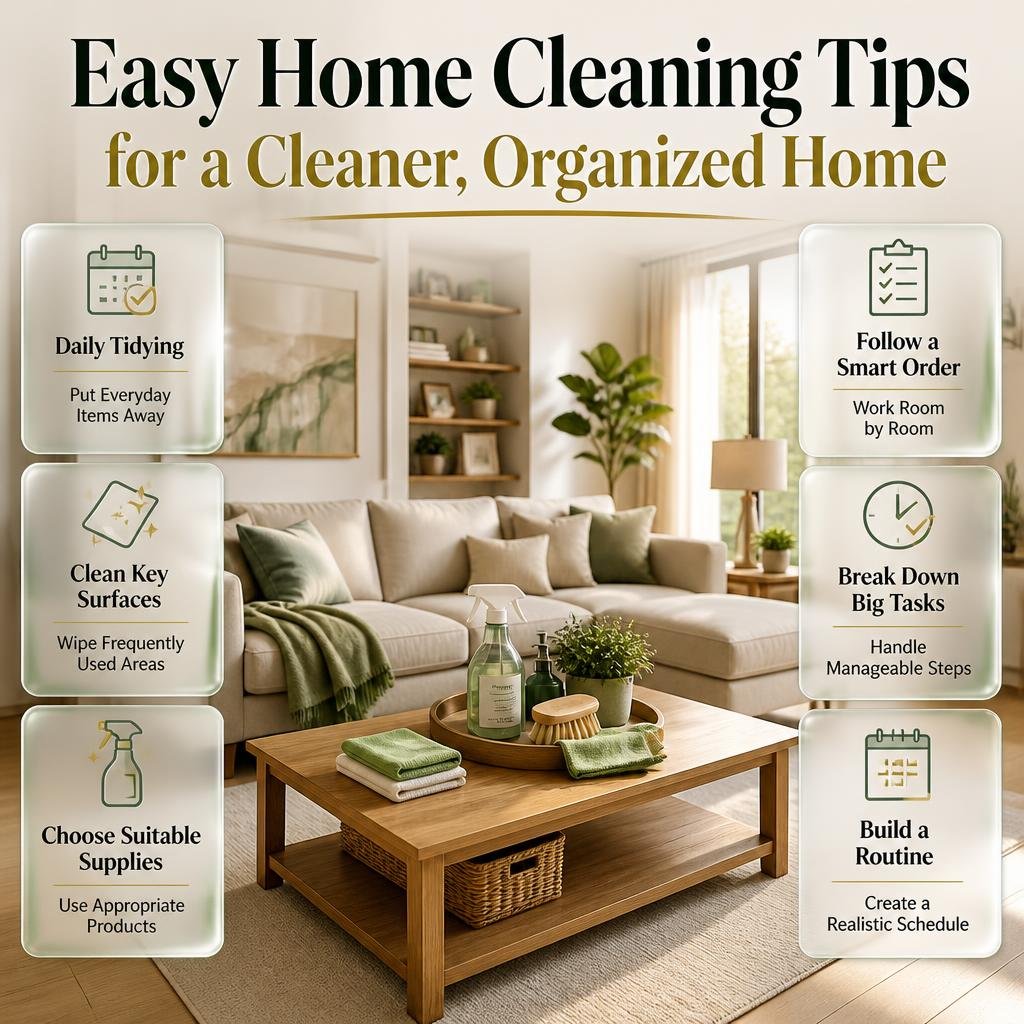
    Quick Tip: Start with a small schedule. Once it becomes comfortable, add occasional tasks such as cleaning window tracks or maintaining appliance interiors.

    How Can You Keep Your Home Cleaner for Longer?

    Keeping a home clean for longer depends on reducing the sources of mess, maintaining practical storage systems, and addressing problems before they become larger.

    Reduce Dirt at the Entrance

    Use suitable doormats and designate a place for outdoor shoes. Clean the entrance regularly, particularly during dusty or wet weather.

    This can reduce the amount of dirt carried into living spaces.

    Maintain Frequently Used Surfaces

    Kitchen counters, dining tables, and bathroom sinks are easier to maintain when residue is addressed regularly.

    Choose a convenient moment to wipe these surfaces, such as after preparing food or completing a bathroom routine.

    Prevent Clutter From Spreading

    Return objects to their designated locations instead of moving them from one surface to another.

    If an item repeatedly ends up in the wrong place, consider whether its storage location is inconvenient. A small change in where you keep something may improve the entire routine.
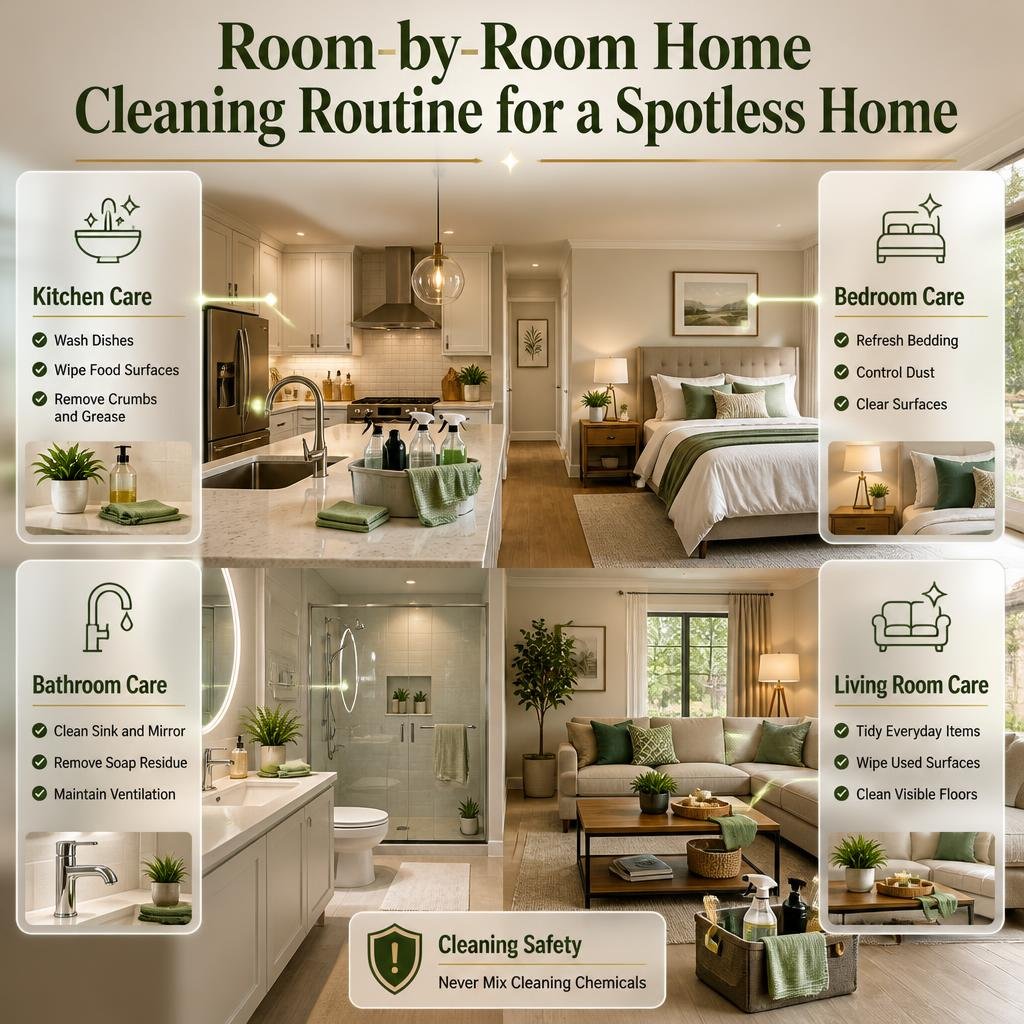
    Address Small Maintenance Problems Promptly

    Cleaning cannot solve every household issue. A leaking pipe, damaged seal, or persistent moisture problem needs appropriate attention.

    Deal with visible spills promptly, inspect accessible areas when necessary, and follow manufacturer guidance for maintaining household appliances and fixtures.

    Preventing damage is often easier than repairing it after the problem has progressed.

    What Is the Easiest Way to Keep Your House Clean Every Day?

    The easiest way to keep your house clean every day is to build small cleaning habits into your regular routine instead of waiting until the entire home becomes messy. Focus on everyday tasks such as washing dishes, wiping kitchen counters after preparing food, putting belongings away, and keeping frequently used rooms tidy. These simple actions prevent dirt and clutter from accumulating, making weekly cleaning less demanding.
    Practical tips:
    Spend a few minutes each day clearing visible clutter.
    Wipe kitchen surfaces after food preparation.
    Return frequently used items to their designated places.
    Complete a short evening reset to prepare your home for the next day.
    Focus on maintaining cleanliness rather than making every room perfect.

    What Should You Clean First When Cleaning Your Entire House?

    Start by collecting rubbish, dishes, laundry, and misplaced belongings before cleaning individual surfaces. Once the clutter is removed, work from higher surfaces to lower ones, clean furniture and counters, and finish with the floors. This sequence prevents dust and loose dirt from settling on areas you’ve already cleaned and reduces unnecessary repeated work.
    A practical cleaning order:
    First: Collect rubbish, dishes, and laundry.
    Second: Clear tables, counters, and other surfaces.
    Third: Dust shelves and accessible higher surfaces.
    Fourth: Wipe furniture and frequently touched areas.
    Finally: Vacuum or sweep, then mop suitable hard floors if needed.
    Professional tip: Address fresh spills and hygiene-related messes promptly, even when they don’t fit your usual cleaning order.

    How Often Should You Clean Your Kitchen and Bathroom?

    Kitchens and bathrooms generally need more frequent attention than less-used areas because they are exposed to food residue, moisture, soap buildup, and regular contact. Kitchen food preparation surfaces should be cleaned after use, while dishes and food waste should be managed daily. Bathrooms benefit from regular cleaning of sinks, toilets, showers, and frequently touched surfaces, with the frequency adjusted to household activity.
    Recommended cleaning routine:
    Kitchen: Clean food preparation surfaces after use and manage dishes and rubbish daily.
    Bathroom sink: Wipe regularly, especially when visible residue develops.
    Toilet and shower: Clean on a consistent schedule, often weekly or more frequently when needed.
    Floors: Clean according to visible dirt and how heavily the areas are used.
    High-touch surfaces: Include handles and switches in your routine.
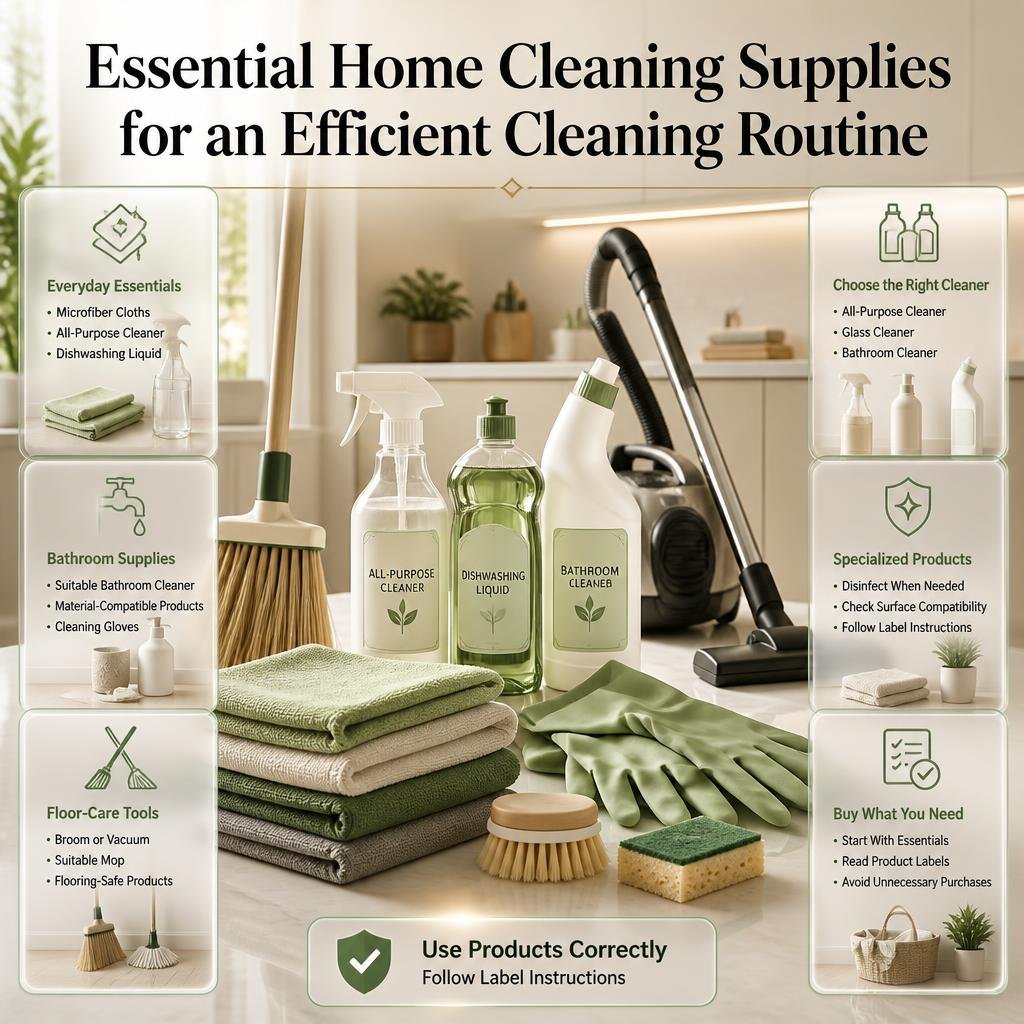
    Important reminder: Follow cleaning product labels and never mix chemicals. Bleach must not be combined with vinegar, ammonia, or other cleaning products.

    What Cleaning Supplies Do You Really Need for an Easy Home Cleaning Routine?

    You can maintain a clean home with a small collection of suitable cleaning supplies rather than purchasing a separate product for every surface. Start with microfiber cloths, an appropriate all-purpose cleaner, dishwashing liquid, a suitable bathroom cleaner, a non-scratch sponge, and a broom or vacuum. Add a mop and specialized products according to your flooring and other household materials.
    Essential supplies to consider:
    Microfiber cloths for dusting and wiping compatible surfaces.
    An all-purpose cleaner for suitable household surfaces.
    Dishwashing liquid for dishes and appropriate cleaning tasks.
    A bathroom cleaner designed for your fixtures and materials.
    A broom, vacuum, or dustpan for loose dirt.
    A suitable mop for hard floors.
    Cleaning gloves when recommended by product instructions.
    Professional tip: Check the manufacturer’s directions before using a cleaner on wood, natural stone, electronics, or delicate finishes. Using the wrong product can cause damage that costs more to repair than the cleaning supplies themselves.

    How Can You Clean Your Home Quickly When You Have Very Little Time?

    When time is limited, focus on the tasks that make the biggest difference to hygiene and everyday comfort. Remove rubbish, collect dishes, clear visible clutter, wipe frequently used surfaces, and clean the main walking areas. You don’t need to deep-clean every room in one session. A short, focused routine is often more manageable than starting several tasks and leaving them unfinished.
    A practical 15-minute cleaning plan:
    Minutes 1–3: Collect rubbish, dishes, and misplaced items.
    Minutes 4–7: Clear and wipe important kitchen or living-room surfaces.
    Minutes 8–11: Refresh the bathroom sink and other visibly dirty areas.
    Minutes 12–15: Tidy the main living space and address visible floor dirt where time permits.
    Adjust the plan to your home’s condition and size. If the kitchen or bathroom needs more attention, prioritize that area rather than rushing through every room.
    Professional tip: Keep a short list of your highest-priority cleaning tasks. When an unexpected visitor arrives or your schedule becomes busy, you’ll know exactly where to begin.

    Conclusion: Make Easy Home Cleaning Tips Part of Your Daily Routine

    Keeping your home clean does not have to involve spending hours on household chores or following a complicated schedule. With the right approach, easy home cleaning tips can help you maintain a fresher, more comfortable living space while making everyday tasks easier to manage. The key is to focus on small, consistent actions rather than waiting until every room needs a complete cleaning.

    Start by making your bed, wiping frequently used surfaces, washing dishes regularly, and returning everyday items to their proper places. Divide larger tasks into manageable sections, follow a realistic weekly cleaning schedule, and give extra attention to kitchens, bathrooms, and other high-use areas. Choosing suitable cleaning supplies and using them safely can also make your routine more effective.

    Remember that every household has different needs. Create a cleaning plan that fits your available time, household size, and daily responsibilities instead of trying to achieve perfection. For more practical ideas that support a cleaner, more organized, and comfortable home, explore Home Tips and Tricks Heartomenal and discover helpful ways to simplify everyday household tasks.

    Ultimately, a clean home is built through consistent habits, thoughtful planning, and realistic expectations. Begin with one small improvement today, maintain the routines that work for you, and gradually develop a cleaning system that keeps your home welcoming without making housework feel overwhelming.

  • Smart Home Organization Tips

    Smart Home Organization Tips

    Introduction

    Smart Home Organization Tips | A home should make everyday life easier, but cluttered kitchen counters, overflowing wardrobes, crowded shelves, and misplaced belongings can turn simple tasks into frustrating routines. You might clean your home regularly and still feel that everything becomes messy again within a few days. In many cases, the problem isn’t the size of your home. It’s how your belongings are arranged and how easily you can maintain that arrangement.

    Smart home organization tips can help you create a cleaner, more functional living environment without spending a fortune on storage products or renovating every room. By combining practical decluttering methods, efficient storage solutions, and simple daily habits, you can make better use of the space you already have.

    Whether you live in a compact apartment, a family house, or a home with limited storage, this guide will show you how to organize different rooms, maximize unused space, manage everyday belongings, and prevent clutter from returning. For more inspiration, explore Heartomenal, where you can discover ideas for making your home more comfortable, attractive, and practical.

    What Are Smart Home Organization Tips?

    Smart home organization tips are practical strategies for arranging belongings, creating efficient storage systems, and establishing routines that keep a home functional and manageable. The purpose is not simply to hide clutter. It’s to make everyday items easy to find, use, and return to their proper places.

    An organized home should reflect the way its occupants actually live. A family that cooks frequently needs an accessible kitchen arrangement, while someone working remotely may benefit from a dedicated workspace with organized documents and equipment.

    Effective home organization generally focuses on four principles:

    • Accessibility: Frequently used belongings should be easy to reach.
    • Functionality: Each room should support the activities that take place there.
    • Space efficiency: Storage should make good use of available areas without overcrowding rooms.
    • Maintainability: The system should be simple enough to follow during busy days.

    For example, storing cooking utensils beside the food preparation area saves time, while keeping keys in a designated tray near the entrance reduces the chances of losing them.

    The best organization system isn’t necessarily the most expensive or visually impressive. It’s the one that makes your daily routines easier.

    Why Is Home Organization Important?

    Home organization improves the way you use your living space by reducing unnecessary searching, simplifying cleaning, and making household routines more predictable. It also helps you understand what you own, avoid duplicate purchases, and maintain a more comfortable environment.

    1. It Saves Time During Everyday Activities

    Small inconveniences can consume a surprising amount of time. Searching for a phone charger, locating a particular kitchen tool, or looking through several drawers for important paperwork interrupts your routine.

    When belongings have consistent locations, you spend less time searching and more time completing the task you intended to do.

    Start by organizing the items you use most frequently:

    • Keys, wallets, and everyday bags.
    • Chargers, headphones, and electronic accessories.
    • Cooking utensils and food preparation tools.
    • Cleaning supplies and laundry essentials.
    • School materials, notebooks, and household documents.

    Make sure the storage locations are convenient for everyone who uses them. If family members cannot easily identify where something belongs, they may leave it on a counter or table instead.

    2. It Makes Your Home Feel More Spacious

    A room can feel crowded even when it contains enough physical space. Unnecessary furniture, overloaded shelves, and belongings spread across surfaces can make movement difficult and reduce the room’s visual openness.

    Before buying new furniture, assess what you already own and identify items that no longer serve a useful purpose.

    You may be able to create more usable space by removing unused furniture, arranging storage vertically, or relocating belongings to appropriate rooms.

    For example, a bedroom wardrobe may become easier to manage after you remove clothes that no longer fit and separate seasonal items from everyday outfits.

    3. It Makes Cleaning Less Difficult

    Home organization infographic showing clutter-free surfaces, easy cleaning, accessible supplies, organized storage, and reduced unnecessary household purchases.
    Discover how an organized home makes everyday cleaning easier and helps prevent unnecessary purchases. Clear surfaces and grouped household supplies support simpler cleaning routines and better awareness of what you already own.

    Cleaning becomes easier when floors, counters, and furniture surfaces are relatively clear. You can vacuum more efficiently, wipe surfaces without moving dozens of objects, and reach areas that might otherwise collect dust.

    An organized home also makes it easier to return cleaning equipment to its proper place.

    Pro Tip: Arrange frequently used items so that putting them away takes less effort than leaving them out. A basket near the sofa, a tray beside the entrance, or a laundry hamper in the right location can make a noticeable difference.

    4. It Helps You Avoid Unnecessary Purchases

    Disorganization can make people forget what they already own. You might purchase another household cleaner, charging cable, kitchen utensil, or pack of stationery because the existing one is hidden.

    Grouping similar items together makes your inventory easier to understand.

    Before shopping, check relevant cupboards, drawers, and storage boxes. You may discover that you already have enough supplies and only need to arrange them more effectively.

    5. It Supports Better Household Routines

    A practical organization system can make shared responsibilities easier. When everyone knows where laundry belongs, where household supplies are stored, and how to return frequently used items, the home becomes less dependent on one person constantly tidying up.

    Clear storage locations also make it easier for children to develop age-appropriate habits and participate in everyday household tasks.

    How to Make Everyday Home Cleaning Easier

    Keeping your home clean does not have to involve a complicated routine or hours of work every day. A practical approach is to focus on small, manageable tasks, use suitable cleaning supplies, and establish a schedule that fits your household’s needs. If you want to make your routine more efficient, explore our guide to easy home cleaning tips for helpful ideas on maintaining tidy surfaces, managing everyday messes, and keeping frequently used spaces fresh. By building consistent habits and tackling minor cleaning tasks before they accumulate, you can create a more comfortable living environment without making household maintenance feel overwhelming.

    How Should You Start Organizing Your Home?

    The most manageable way to organize a home is to work on one defined area at a time. Start with a space that creates a recurring problem, remove unnecessary belongings, group the items you want to keep, and create a storage arrangement that suits your routine.
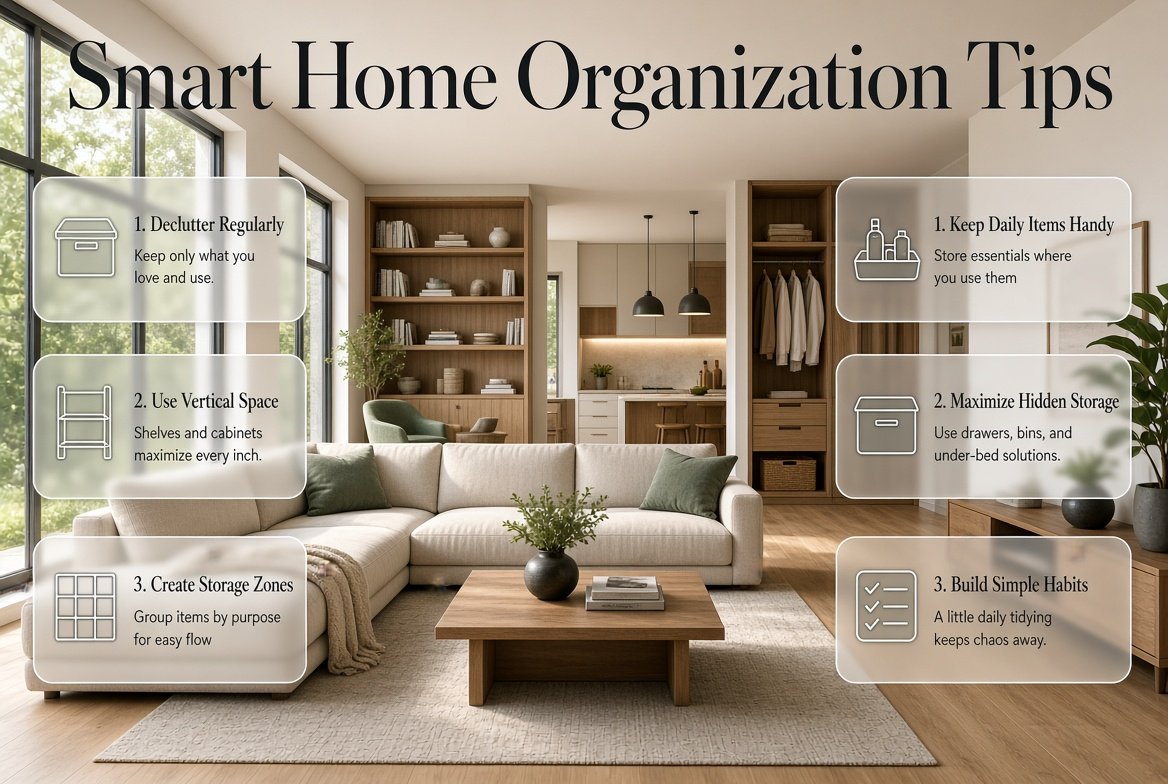
    Trying to reorganize the entire house in one session can leave multiple rooms unfinished and create even more clutter.

    Step 1: Identify Your Biggest Organization Problems

    Walk through your home and notice which areas cause the most inconvenience.

    Ask yourself:

    • Where do belongings accumulate most quickly?
    • Which drawers or cupboards are difficult to use?
    • What items do I frequently lose?
    • Which surfaces become cluttered every day?
    • What takes the longest to clean?
    • Which storage areas are filled with things I rarely use?

    Choose one area with a clear problem. For example, if your kitchen counter is constantly crowded, begin there rather than opening every cupboard in the house.

    Step 2: Set a Realistic Goal

    A useful organization goal describes a specific result you can complete.

    Instead of saying, “I need to organize my whole home,” try:

    • Clear and organize one kitchen drawer.
    • Arrange the shoes near the entrance.
    • Sort one section of the wardrobe.
    • Create a dedicated place for incoming paperwork.
    • Organize the bathroom cabinet.
    • Remove unused items from a bedside table.

    Small tasks are easier to complete and allow you to test your approach before applying it elsewhere.

    If a task is larger than expected, divide it into smaller stages. Completing one shelf properly is more useful than emptying an entire room and running out of time.

    Step 3: Declutter Before Buying Storage

    Decluttering should usually come before purchasing organizers because storage products cannot solve the underlying problem of owning more belongings than your space can comfortably accommodate.

    Sort the contents of your selected area into four categories.

    CategoryAppropriate action
    KeepRetain items that are useful, necessary, or meaningful.
    Donate or give awayPass on suitable items you no longer need.
    Recycle or discardDispose of unwanted or unusable items responsibly.
    RelocateMove belongings that belong in another room.

    Be realistic when deciding what to keep. An item does not need to remain in your home simply because it was expensive, received as a gift, or purchased for a project you no longer pursue.

    However, avoid rushing decisions about important documents, expensive equipment, emergency supplies, or sentimental possessions.

    Step 4: Group Similar Belongings Together

    Once you have decided what to keep, group related belongings.

    For example, keep baking supplies together, organize chargers in a designated electronics area, and store cleaning cloths with appropriate household cleaning equipment.

    Grouping items makes it easier to identify duplicates and determine how much storage you actually need.

    It also prevents everyday belongings from becoming scattered across unrelated cupboards and drawers.

    Step 5: Give Every Item a Practical Home

    Each frequently used item should have a clear storage location.

    Consider where you naturally use something and where you are most likely to put it away afterward.

    Keys belong near the entrance, cooking utensils should be close to the preparation area, and laundry baskets should be positioned where clothes are regularly changed.

    The more convenient the storage location, the more likely everyone is to use it consistently.

    Step 6: Test Your System Before Expanding It

    Use your new arrangement for several days before purchasing additional products or reorganizing other rooms.

    Notice whether drawers open comfortably, whether items are easy to reach, and whether family members can return belongings without assistance.

    If something repeatedly ends up on the counter instead of inside a cupboard, the cupboard may be inconveniently arranged.

    Treat this as useful feedback. Adjust the system to suit your routine instead of expecting everyone to adapt to an impractical arrangement.

    What Are the Best Smart Kitchen Organization Tips?

    Smart kitchen organization tips featuring cooking zones, divided utensil drawers, labeled pantry containers, and clutter-free countertops.
    Discover smart kitchen organization tips to simplify meal preparation, improve pantry storage, and keep cooking essentials within easy reach. Practical storage zones and organized drawers help create a cleaner, more functional kitchen.

    A well-organized kitchen keeps food, cooking equipment, utensils, and cleaning supplies easy to locate while preserving enough counter space for meal preparation. The most effective arrangement groups items by activity and places frequently used belongings close to where they are needed.

    Organize the Kitchen Around Cooking Activities

    Think about the tasks you perform in the kitchen, including food preparation, cooking, serving, washing, and storing groceries.

    Create practical zones for these activities.

    Food preparation zone: Keep suitable cutting boards, measuring tools, knives, and mixing bowls near the main preparation surface.

    Cooking zone: Place commonly used utensils, oven-safe equipment, and appropriate cookware near the stove while maintaining safe distances from heat.

    Cleaning zone: Store dishwashing supplies and cleaning cloths in an accessible location, separated from food and food-contact surfaces.

    Food storage zone: Group pantry supplies by category so you can identify ingredients quickly and monitor quantities.

    These zones do not require a large kitchen. Even a small counter and a few well-arranged cupboards can support a more efficient workflow.

    Use Drawer Dividers for Small Kitchen Items

    Kitchen drawers often become crowded with cutlery, measuring spoons, peelers, scissors, and miscellaneous accessories.

    Drawer dividers separate these items and reduce the time spent searching for a particular tool.

    Before buying a divider, measure the drawer and consider how much space your utensils require. Adjustable dividers can be useful when the drawer contains different types of equipment.

    Avoid filling every compartment with rarely used gadgets. Keep the tools that support your actual cooking habits.

    Make Pantry Storage Easier to Manage

    Group pantry supplies such as grains, canned foods, spices, baking ingredients, snacks, and breakfast products.

    Place frequently used ingredients where they are easy to reach, while heavier items should be stored at a safe and comfortable height.

    Transparent containers can help you see suitable dry goods at a glance. However, transferring every product into a matching container is not essential.

    If you use containers, make sure they are appropriate for food storage, clean, dry, and properly labeled. Preserve important information about ingredients, allergens, and expiration or best-before dates.

    Use older suitable products before newer ones when appropriate, and follow the manufacturer’s storage instructions.

    Reduce Countertop Clutter

    Kitchen counters are valuable working surfaces, not simply storage areas.

    Keep regularly used appliances available when they genuinely support your routine. Move occasional-use equipment to a suitable cupboard or shelf if doing so does not make it difficult to access.
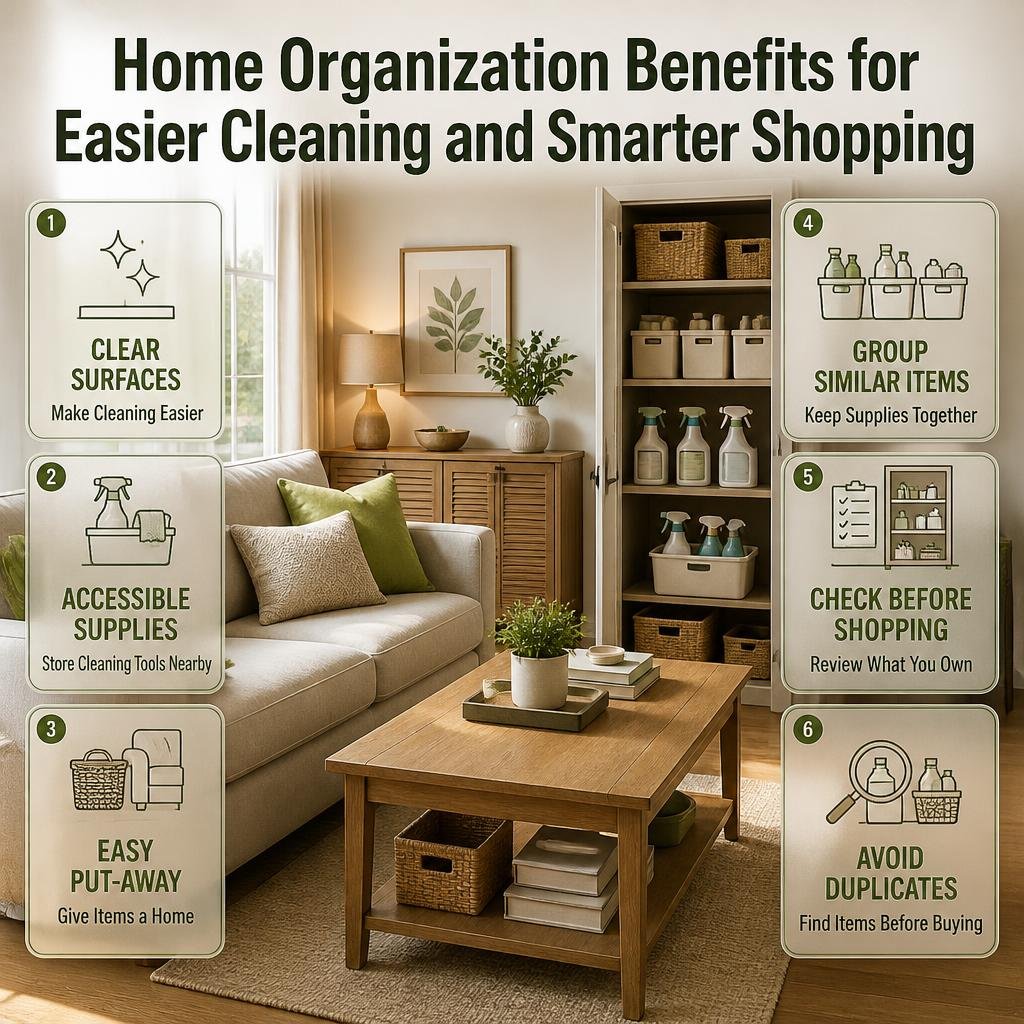
    Remove unnecessary decorative objects, duplicate utensils, and paperwork that has no reason to remain in the kitchen.

    A clear preparation area makes cooking and cleaning easier without requiring a complete kitchen makeover.

    Common Mistake: Buying multiple storage containers before checking cupboard dimensions. Containers that are too tall, too wide, or difficult to stack can waste space instead of improving it.

    How Can You Organize Your Bedroom and Wardrobe?

    Bedroom organization works best when clothing, bedding, accessories, and personal belongings are arranged according to frequency of use. The objective is to make dressing easier, reduce visual clutter, and keep enough open space for comfortable movement.

    Sort Clothes Before Rearranging the Wardrobe

    Remove clothing that no longer fits, is unsuitable for your lifestyle, or remains unused despite being appropriate for the current season.

    Sort the remaining clothes into practical categories:

    • Everyday clothing.
    • Workwear or school uniforms.
    • Occasion outfits.
    • Sleepwear.
    • Exercise clothing.
    • Seasonal clothing.

    Choose a storage method for each category. Hanging works well for garments that wrinkle easily, while folding is often suitable for T-shirts, casual clothing, and some knitwear.

    Keep frequently worn items in the most accessible part of the wardrobe.

    Use Drawer Dividers and Consistent Folding

    Small clothing items can become difficult to manage when mixed together.

    Drawer dividers help separate socks, undergarments, accessories, and other small belongings.

    You can also fold clothing consistently so that items are easier to identify without removing an entire stack.

    The goal isn’t to achieve a particular aesthetic. It’s to make the contents visible and easy to return after use. For more practical ideas on making the most of limited space, explore our guide to small space home tips, which offers helpful ways to keep everyday belongings organized and make smaller living areas more functional.

    Use Under-Bed Storage Carefully

    The space beneath a bed can accommodate suitable seasonal clothing, spare bedding, and other occasional-use items.

    Choose containers that fit the available clearance and can be removed without moving heavy furniture.

    Store only clean, dry belongings and check the area periodically for dust or moisture. Avoid blocking ventilation or creating conditions that could damage stored items.

    Keep Bedside Surfaces Simple

    A bedside table often collects books, chargers, water glasses, accessories, and unrelated household items.

    Keep the items you genuinely use near the bed and move everything else to its appropriate location.

    A small tray or drawer can help group essentials without overcrowding the surface.

    If you need more storage, consider whether the existing furniture can be rearranged before purchasing another cabinet.

    How Can You Keep Your Bathroom Organized?

    Bathroom organization depends on grouping toiletries, towels, personal-care products, and cleaning supplies while accounting for moisture and hygiene. The best arrangement makes daily routines convenient without overcrowding the vanity or creating unsafe storage conditions.

    Separate Daily Products From Backup Supplies

    Keep the products used every day in an accessible area. Store backup toiletries separately so that unopened supplies do not occupy the space needed for daily essentials.

    For example, a small drawer or container can hold everyday grooming items, while a separate cupboard can accommodate additional soap, tissues, and suitable personal-care products.

    Review stored items periodically and dispose of expired or unsuitable products according to their instructions.

    Use Small Organizers for Drawers and Cabinets

    Drawer inserts and small baskets can separate skincare products, grooming tools, and other accessories.

    Choose materials that can tolerate the bathroom environment and are easy to clean.

    Avoid placing moisture-sensitive cardboard organizers in damp cupboards. Ensure that products are dry before storing them where necessary.

    Make Better Use of Vertical Space

    Wall-mounted shelves, suitable hooks, and over-the-door organizers can provide additional storage in bathrooms with limited cabinetry.

    However, installation methods must suit the wall surface and the weight of the items being stored.

    Keep heavy objects securely supported, avoid obstructing ventilation, and ensure that storage does not interfere with plumbing or electrical fittings.

    Store Cleaning Products Safely

    Keep household cleaning products separate from toiletries and stored securely, particularly where children or pets are present.

    Follow product instructions and never mix cleaning chemicals unless the manufacturer explicitly states that doing so is safe.

    Medications should be stored according to their specific requirements. Bathroom humidity and temperature fluctuations may make a bathroom cabinet unsuitable for some products.

    What Are the Best Living Room Organization Ideas?

    The living room should support relaxation, conversation, entertainment, and other activities without becoming a collection point for miscellaneous belongings. Smart storage can keep frequently used items accessible while maintaining clear surfaces and comfortable walkways.

    Create a Dedicated Place for Everyday Items

    Remote controls, magazines, chargers, blankets, gaming accessories, and children’s toys can quickly spread throughout the living room.

    Use a drawer, basket, or suitable cabinet to group these belongings.

    Choose storage based on the people using the room. A low basket may be convenient for toys, while a closed cabinet may be better for electronics and accessories.

    Avoid placing everything into one large miscellaneous container. Grouping related items makes it easier to locate and return them.

    Make Shelves Functional and Attractive

    Bookshelves and display shelves can provide both storage and decoration.

    Arrange books in a way that makes them easy to retrieve, then leave some room for decorative objects or baskets.

    Overcrowded shelves can become difficult to clean and may make the room feel visually busy.

    If you have items you rarely use, consider storing them elsewhere rather than filling every available shelf.

    Manage Cables and Electronic Accessories

    Television areas and work-from-home corners often accumulate tangled cables, adapters, and spare chargers.

    Use suitable cable clips, ties, or organizers to keep wires arranged neatly. Preserve access to plugs and connections, allow equipment to ventilate, and avoid pinching cables behind heavy furniture.

    Labeling frequently used adapters can also help identify the correct cable without testing several options.

    Consider Furniture With Built-In Storage

    Storage ottomans, coffee tables with drawers, and media cabinets can help manage everyday belongings.

    Before buying additional furniture, measure the room and consider whether the new piece will obstruct movement or make cleaning more difficult.

    A storage product is only useful when it provides accessible space without creating another source of clutter.

    How Can You Organize Your Entryway?

    Entryway organization infographic featuring wall hooks, a shoe rack, key tray, bag storage, and an organized mail station in a welcoming home entrance.
    Create a tidy, welcoming entryway with designated spaces for keys, shoes, bags, jackets, and incoming mail. Simple storage solutions help prevent clutter while keeping everyday essentials within easy reach.

    The entryway is where everyday items enter and leave the home, making it one of the most useful places to establish a simple organization system. A designated location for keys, shoes, bags, and incoming mail can prevent clutter from spreading into other rooms.

    Start by identifying what usually accumulates near your entrance.

    Create a practical arrangement that may include:

    • A tray or hook for keys.
    • A shoe rack or designated shoe area.
    • Hooks for frequently used bags and jackets.
    • A small container for items that need to leave the house.
    • A folder or tray for incoming paperwork.

    If space is limited, wall-mounted hooks and narrow storage furniture may be more suitable than a large cabinet.

    Keep the walkway clear, especially near the front door and emergency exits.

    Review the area regularly so that packages, shoes, and miscellaneous belongings do not become permanent fixtures.

    How Should You Organize a Home Office?

    An organized home office makes work materials easier to find and reduces distractions caused by crowded surfaces, tangled cables, and unmanaged paperwork. Start by separating active work supplies from reference materials and items you only use occasionally.

    Organize Your Desk According to Your Workflow

    Keep the items you use most often close to your working position.

    These may include a notebook, pens, computer accessories, headphones, and a frequently used reference document.

    Move unrelated objects to another location and avoid using the desk as a general storage surface.

    A desk does not need to be completely empty. It needs enough usable space for the work you perform.

    Create a Paperwork Management System

    Paperwork becomes difficult to manage when important documents are mixed with advertising, receipts, and notes.

    Create separate categories such as:

    • Action required.
    • Documents to file.
    • Reference materials.
    • Recycling or secure disposal.

    Review incoming paperwork regularly rather than allowing it to accumulate indefinitely.

    Store confidential records securely and dispose of sensitive documents appropriately.

    Organize Digital Files as Well

    Home organization isn’t limited to physical belongings. Digital clutter can also make everyday work more difficult.

    Create a clear folder structure for work documents, household records, photographs, and personal projects.

    Use descriptive filenames and review duplicate or outdated files periodically. Back up important information and protect sensitive documents with appropriate security measures.

    The goal is to make files easy to locate without creating an unnecessarily complicated folder system.

    How Can You Maximize Storage in a Small Home?

    Small-home organization depends on using available space carefully, reducing unnecessary possessions, and choosing storage that preserves comfortable movement. Vertical shelves, under-bed containers, multifunctional furniture, and well-planned cupboards can increase usable storage without requiring a larger home.

    Use Vertical Space

    Walls often provide useful storage opportunities, especially in compact apartments.

    Consider wall-mounted shelves, hooks, tall bookcases, and appropriately installed storage units.

    Keep frequently used items at a comfortable height. Reserve higher shelves for lightweight belongings that you access less often.

    Always secure tall furniture and shelving properly, particularly in homes with children or pets.

    Choose Multifunctional Furniture

    Furniture that serves more than one purpose can be valuable when floor space is limited.

    Examples include:

    • Beds with built-in drawers.
    • Storage ottomans for blankets.
    • Benches with compartments.
    • Extendable dining tables.
    • Nesting tables that can be tucked away.
    • Compact desks with drawers.

    Measure the available space before purchasing furniture and check whether its storage is easy to access.

    A large storage bed may offer useful capacity, for example, but it may not be appropriate for a room where drawers cannot open fully.

    Make Use of the Space Behind Doors

    Suitable over-door organizers can hold lightweight accessories, toiletries, or other small belongings.

    Check the door’s clearance and weight capacity before installation. Avoid arrangements that interfere with door operation or create hazards.

    In rented accommodation, consider removable solutions where suitable, but follow product instructions and check that the installation method will not damage the surface.

    Use Corners and Unused Cupboard Space

    Corners, narrow gaps, and the upper portions of cupboards can sometimes provide additional storage.

    Shelf risers, stackable containers, and suitable corner shelves may help you use these areas more efficiently.

    However, don’t fill every gap simply because it is available. Storage should remain accessible, easy to clean, and safe to use.

    Measure Before Buying Storage Products

    Measure the width, depth, and height of the available space.

    Account for door hinges, drawer rails, handles, and any clearance needed to remove containers.

    Compare these measurements with the dimensions of the proposed organizer. A product that fits on paper may still be inconvenient if it blocks access to other belongings.

    Which Home Organization Products Are Worth Buying?

    The most useful organization products solve a specific problem. Before buying anything, decide what needs to be stored, how frequently it will be used, and whether your existing furniture or containers can already do the job.

    ProductBest useImportant consideration
    Drawer dividersCutlery, stationery, accessoriesMeasure the drawer first.
    Clear containersSuitable pantry suppliesChoose appropriate food-safe materials.
    Storage basketsBlankets, toys, everyday belongingsConsider dust and cleaning needs.
    Under-bed boxesSeasonal clothing and beddingCheck clearance and ventilation.
    Wall shelvesBooks and lightweight belongingsSecure installation is essential.
    Labeled boxesSeasonal items and household recordsKeep labels accurate.
    Cable organizersDesk and entertainment areasPreserve ventilation and access.
    Shelf risersCupboards and pantry shelvesCheck weight capacity and dimensions.
    Over-door organizersLightweight accessoriesConfirm door clearance.
    Storage ottomansBlankets and living room itemsEnsure the lid and contents are easy to access.

    Start with inexpensive solutions you already own. Suitable trays, baskets, and sturdy boxes can often provide effective storage without additional spending.

    Buy new products only when they improve accessibility, solve a space problem, or make an existing system easier to maintain.

    How Can You Keep Your Home Organized Every Day?

    Maintaining an organized home is easier when tidying becomes part of your existing routine rather than a separate, exhausting activity. Small resets prevent everyday belongings from spreading across surfaces and make larger cleaning sessions more manageable.

    Establish a 10-Minute Daily Reset

    Choose a time that suits your schedule, such as after dinner or before bed.

    Use the time to restore order in the areas that matter most.

    1. Return misplaced belongings to their designated locations.
    2. Clear the kitchen and dining surfaces.
    3. Put away shoes, bags, and outerwear.
    4. Place laundry in the appropriate basket.
    5. Prepare essential items for the following day.

    You don’t need to complete every household chore during this period.

    The purpose is to reduce the amount of clutter that carries over into tomorrow.

    Create a Flexible Weekly Routine

    A weekly schedule can help you remember tasks that aren’t part of daily tidying.

    For example:

    • Monday: Review pantry supplies and refrigerator contents.
    • Tuesday: Organize bathroom products and towels.
    • Wednesday: Sort paperwork and household mail.
    • Thursday: Review clothing and bedroom storage.
    • Friday: Tidy the living room and entryway.
    • Weekend: Complete one larger task or review the entire system.

    Adjust the schedule according to your household’s needs. There is no benefit in following a rigid routine that becomes difficult to maintain.

    Use the One-In, One-Out Principle

    When you bring a new item into a category that is already full, consider whether an existing item should be donated, recycled, or discarded.

    This principle can be particularly useful for clothing, decorative objects, mugs, toys, and household accessories.

    However, it should remain flexible. Don’t discard useful or necessary belongings simply to follow a numerical rule.

    The real purpose is to prevent unnecessary accumulation.

    Make Tidying Easy for Everyone

    If a home is shared, organization should not depend entirely on one person.

    Use accessible storage, simple labels, and clear categories that household members can understand.

    Children may find low baskets easier to use than high shelves. Other household members may prefer labeled drawers or dedicated cupboards.

    Discuss recurring problems and adjust storage locations when necessary.

    A system that supports cooperation is more sustainable than one that requires constant reminders.

    What Are the Most Common Home Organization Mistakes?

    Home organization infographic showing cluttered storage, oversized containers, inaccessible essentials, unnecessary belongings, and practical decluttering solutions.
    Discover common home organization mistakes that cause clutter to return, from buying storage containers too early to creating inconvenient systems. Learn how to build practical, maintainable routines for a more organized home.

    Many organization systems fail because they focus on appearance rather than convenience. A room may look excellent immediately after a cleanup, but if everyday belongings have no practical place, clutter can quickly return.

    Mistake 1: Buying Organizers Before Decluttering

    Why it happens: New storage products seem like a quick solution to a messy room.

    Why it’s harmful: They can hide unnecessary belongings and consume space without solving the underlying problem.

    How to avoid it: Sort your belongings first, remove what you no longer need, and measure the remaining storage requirements before shopping.

    Mistake 2: Trying to Organize the Entire House at Once

    Why it happens: People want immediate results and begin several rooms simultaneously.

    Why it’s harmful: The project becomes difficult to finish, unfinished piles spread through the home, and motivation may decrease.

    How to avoid it: Choose one manageable area and complete it before starting another. Divide larger projects into smaller sessions.

    Mistake 3: Making Everyday Items Difficult to Reach

    Why it happens: Attractive arrangements take priority over convenience, or daily essentials are placed in deep cupboards and high shelves.

    Why it’s harmful: People may leave items on counters because returning them is inconvenient.

    How to avoid it: Store frequently used belongings in accessible locations and reserve less convenient storage for occasional-use items.

    Mistake 4: Keeping Too Many Miscellaneous Items

    Why it happens: Small objects seem harmless individually and are often placed in drawers without being sorted.

    Why it’s harmful: These collections become difficult to search and may conceal useful belongings.

    How to avoid it: Create sensible categories, limit the space allocated to miscellaneous items, and review the collection periodically.

    Mistake 5: Choosing Containers That Don’t Fit

    Why it happens: A container looks attractive but hasn’t been measured against the intended space.

    Why it’s harmful: Poorly sized products waste room, block drawers, and make items harder to reach.

    How to avoid it: Measure shelves and drawers first. Consider weight, material, accessibility, and cleaning requirements.

    Mistake 6: Expecting the Home to Stay Perfect

    Why it happens: People assume a successful organization system should prevent all future clutter.

    Why it’s harmful: Normal household activity creates mess, and small setbacks can make the entire system feel unsuccessful.

    How to avoid it: Expect maintenance to be part of the process. Judge success by how easily you can restore order after everyday use.

    Mistake 7: Ignoring the Needs of Other Household Members

    Why it happens: One person designs the entire arrangement according to their own preferences.

    Why it’s harmful: Other people may not understand the system or may find it inconvenient to follow.

    How to avoid it: Consider who uses each area and make storage locations accessible and easy to understand.

    Mistake 8: Hiding Clutter Instead of Addressing It

    Why it happens: Putting everything into a cupboard or storage box creates an immediate visual improvement.

    Why it’s harmful: Unsorted belongings remain difficult to locate, and the storage area may become overcrowded.

    How to avoid it: Group items, remove unnecessary belongings, and use containers to support a clear storage plan rather than conceal an unresolved problem.

    What Do Professionals Recommend for Long-Term Home Organization?

    A practical organization system begins with understanding how a household uses its space. Instead of selecting storage products first, identify recurring problems, examine the available space, and choose solutions that make daily activities easier.

    Organize by Frequency of Use

    Divide belongings into three broad categories.

    Everyday items: Things you use regularly, such as keys, cooking tools, and personal-care products. Keep them easy to reach.

    Occasional-use items: Things you need weekly or monthly. Store them in secondary cupboards or drawers.

    Seasonal or rarely used items: Belongings you need only at certain times, such as seasonal decorations or occasional-use equipment. Store them in appropriate, less accessible areas.

    This approach makes prime storage locations available for the belongings that genuinely need them.

    Establish Storage Limits

    Each category should have a reasonable amount of space.

    For example, designate a particular shelf for reusable shopping bags or a specific drawer for stationery. When the space becomes full, review the contents instead of automatically adding another container.

    Storage limits help reveal when belongings are accumulating beyond what the household can comfortably accommodate.

    Use Labels Where They Provide Real Value

    Labels are helpful for pantry containers, shared cupboards, document folders, seasonal boxes, and children’s belongings.

    However, labeling every object is rarely necessary.

    Use labels when they reduce confusion, improve accessibility, or help people return belongings correctly. Keep them accurate and update them whenever the contents change.

    Make Cleaning Part of the Design

    An organized room should also be easy to clean.

    Avoid overcrowding shelves, placing unnecessary items on the floor, or choosing storage products that are difficult to move.

    Keep frequently cleaned surfaces relatively clear and ensure that furniture does not obstruct access to important areas.

    A storage system that creates more cleaning work may need to be simplified.

    Review Your Home Seasonally

    Household needs change. Clothing sizes, hobbies, work arrangements, family routines, and storage requirements may all evolve.

    Review the areas that have become difficult to maintain every few months or whenever your circumstances change.

    Remove unnecessary belongings, adjust storage locations, and replace unsuitable solutions.

    You don’t need to reorganize everything each season. Focus on the areas where your existing system no longer works.

    For more practical inspiration, visit Heartomenal and explore ideas for creating a home that balances comfort, appearance, and everyday functionality.

    How Can You Create a Simple Home Organization Plan?

    A home organization plan helps turn broad intentions into manageable tasks. Instead of attempting a complete transformation, identify your priorities, set realistic time limits, and decide how you’ll maintain each improvement.

    Use this five-stage plan as a starting point.

    Stage 1: Assess Your Home

    Walk through each room and identify its main organization problems.

    Write down recurring issues such as crowded surfaces, overfilled cupboards, misplaced items, or difficult-to-clean areas.

    Choose the three problems that cause the greatest inconvenience.

    Stage 2: Prioritize High-Impact Areas

    Start with areas that affect your daily routine.
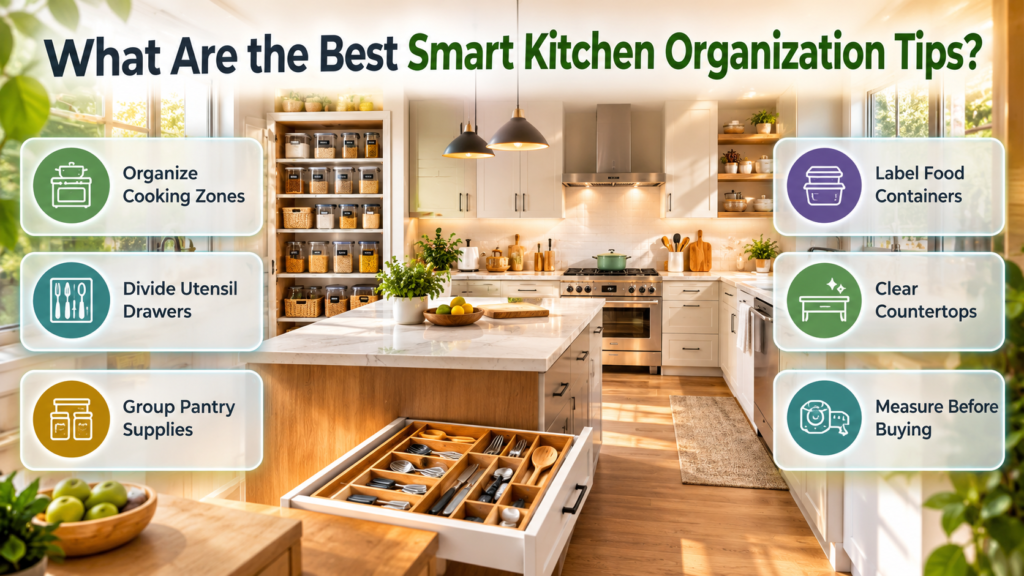
    For many households, these include the kitchen, entrance, bathroom, and bedroom. However, the best starting point depends on your own circumstances.

    If you work from home, an overcrowded desk may be more important than a decorative storage shelf.

    Stage 3: Declutter and Arrange

    Work through one area at a time.

    Remove unwanted belongings, group similar items, and assign suitable storage locations.

    Measure the available space before buying organizers, and test the arrangement before expanding it.

    Stage 4: Establish Maintenance Habits

    Create a short daily reset and a flexible weekly review.

    Make sure each household member understands where commonly used belongings belong.

    When a system repeatedly fails, identify the cause and adjust the arrangement.

    Stage 5: Review Your Progress

    After a few weeks, consider whether the changes have improved your daily routine.
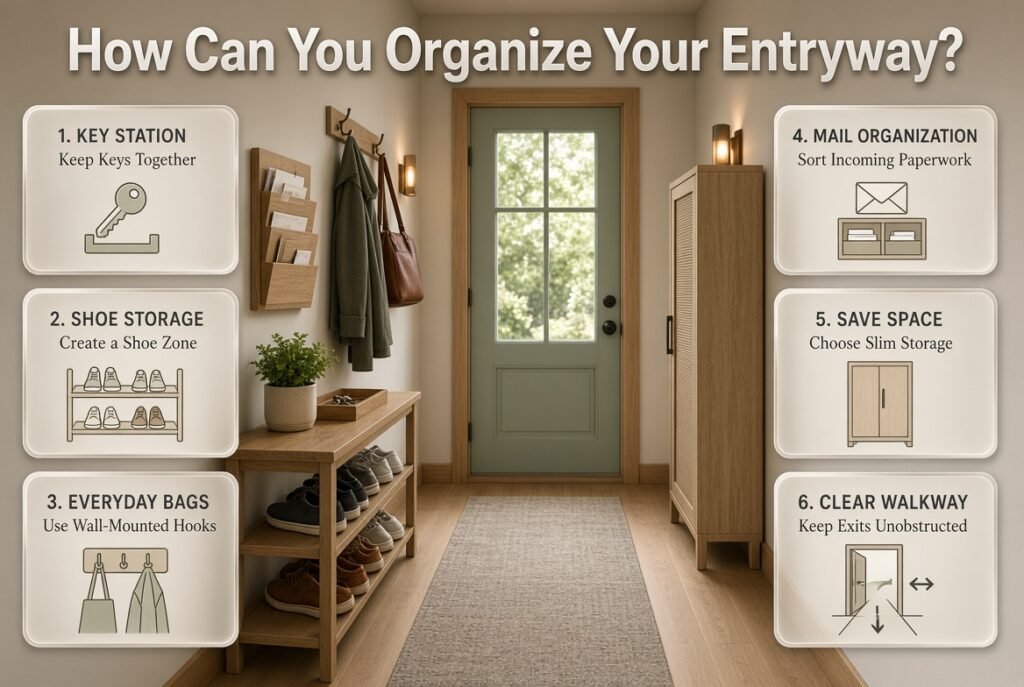
    Ask yourself:

    • Can I find essential belongings more easily?
    • Are counters and walkways less crowded?
    • Has cleaning become simpler?
    • Can household members maintain the system?
    • Are there storage arrangements that still feel inconvenient?

    Use your answers to improve the system rather than adding unnecessary complexity.

    What Are the Best Smart Home Organization Tips for Keeping Every Room Clutter-Free?

    The best smart home organization tips focus on creating practical storage systems that match your daily routine. Instead of simply hiding belongings in cupboards, organize each room according to its purpose, keep frequently used items within easy reach, and remove things that no longer serve a useful function. A kitchen benefits from activity-based storage, a bedroom needs an accessible wardrobe system, and a living room works better when everyday accessories have designated places.
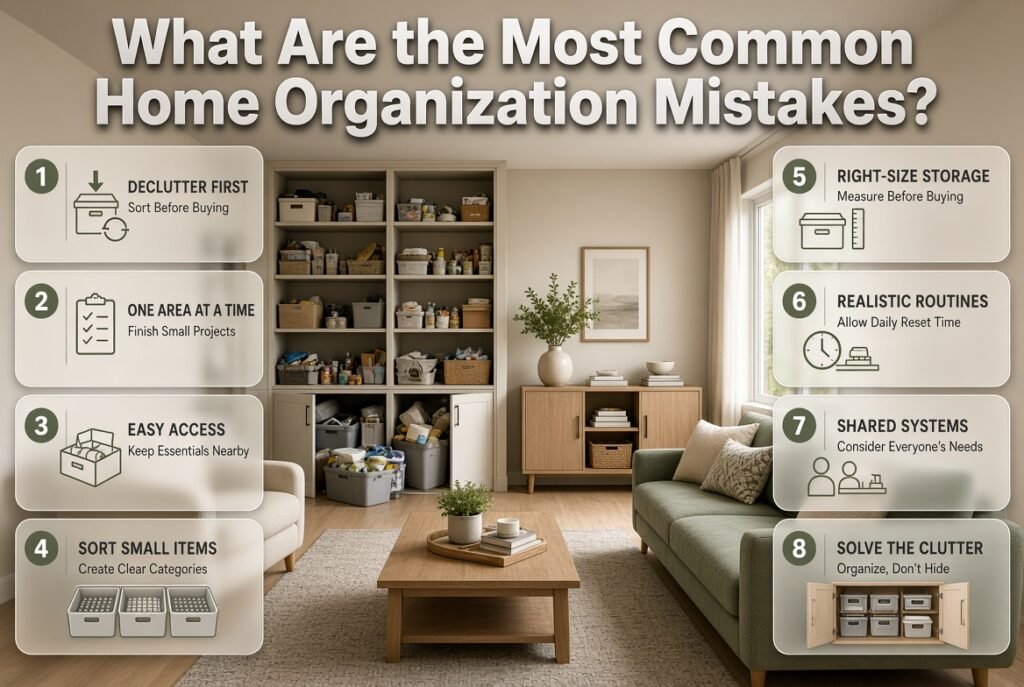
    Consistency is equally important. A home doesn’t need to remain perfectly tidy throughout the day, but returning items to their proper locations makes it easier to restore order without spending hours cleaning.
    Practical points to follow:
    Assign a specific place to frequently used belongings.
    Declutter one drawer, shelf, or room at a time.
    Keep countertops and walkways clear wherever possible.
    Use baskets, drawer dividers, and shelves only when they solve a genuine storage problem.
    Establish a short daily reset to prevent clutter from accumulating.

    How Can I Organize a Small Home to Maximize Space Without Spending Too Much Money?

    Organizing a small home starts with making better use of existing space rather than immediately purchasing new furniture or storage products. Remove unnecessary belongings, group similar items together, and identify underused areas such as the space beneath beds, the inside of suitable cupboard doors, and empty vertical wall space. These changes can increase usable storage while keeping rooms comfortable and accessible.
    Affordable solutions often work just as well as expensive organizing systems. Reusing suitable boxes, baskets, trays, and containers can help separate belongings without adding unnecessary costs. Before buying anything, measure your available storage space and decide exactly what needs to be organized.
    Budget-friendly organization strategies:
    Use existing containers to group small belongings.
    Install suitable wall shelves when additional vertical storage is needed.
    Store seasonal clothing and spare bedding in appropriate under-bed containers.
    Choose multifunctional furniture when it genuinely saves space.
    Avoid buying organizers before decluttering and measuring cupboards.

    How Do I Keep My Home Organized Every Day With a Busy Schedule?

    Maintaining an organized home with a busy schedule requires simple routines that fit naturally into everyday life. Rather than waiting until clutter becomes overwhelming, spend a few minutes returning misplaced items, clearing frequently used surfaces, and preparing essential belongings for the next day. These small actions reduce the amount of work required during weekly cleaning.
    The most effective routine is one that remains realistic when you’re tired or short on time. Focus on high-impact areas such as the kitchen, entrance, and living room instead of expecting every room to look perfect every day. If a particular area repeatedly becomes messy, review its storage arrangement to determine whether putting items away is unnecessarily difficult.
    Daily habits that make a difference:
    Spend 5–10 minutes resetting important areas.
    Return keys, bags, shoes, and everyday accessories to designated locations.
    Clear kitchen counters after meal preparation.
    Put laundry in its appropriate basket instead of leaving it on furniture.
    Divide larger organization tasks across the week.
    Encourage household members to maintain shared spaces.

    What Are the Most Useful Home Organization Products for Reducing Clutter?

    The most useful home organization products are those that solve specific problems, improve accessibility, and make belongings easier to maintain. Drawer dividers are helpful for small accessories, transparent containers can simplify suitable pantry storage, and labeled boxes make seasonal belongings easier to identify. For smaller homes, wall shelves and multifunctional furniture may provide additional storage without taking up excessive floor space.
    However, buying more organizers doesn’t automatically create a more organized home. Too many baskets, boxes, and containers can occupy valuable space or conceal belongings that should have been removed. Choose products according to your actual storage needs, available dimensions, and the frequency with which you use the items.
    Useful products to consider:
    Drawer dividers: Separate kitchen utensils, stationery, and accessories.
    Storage baskets: Group blankets, toys, and frequently used household items.
    Clear containers: Make suitable pantry supplies easier to identify.
    Under-bed storage boxes: Accommodate seasonal clothing and spare bedding.
    Wall-mounted shelves: Use vertical space for books and lightweight belongings.
    Cable organizers: Keep electronic accessories and wires arranged neatly.

    What Are the Biggest Home Organization Mistakes, and How Can I Prevent Clutter From Returning?

    One of the biggest home organization mistakes is purchasing storage products before deciding which belongings are actually worth keeping. Another is creating an arrangement that looks attractive but is inconvenient to use. When everyday items are difficult to reach or have no obvious storage location, people naturally leave them on counters, tables, and other convenient surfaces. Clutter then returns even after a thorough cleanup.
    Preventing this problem requires a combination of decluttering, practical storage, and consistent maintenance. Every frequently used item should have a convenient home, and the organization system should reflect the habits of everyone who shares the space. Periodically reviewing crowded drawers and cupboards also helps prevent unnecessary accumulation.
    Professional recommendations:
    Declutter before investing in new storage products.
    Keep everyday essentials in accessible locations.
    Avoid filling every shelf and cupboard to capacity.
    Create simple categories instead of collecting unrelated items in miscellaneous boxes.
    Review belongings before purchasing additional items in already crowded categories.
    Adjust storage arrangements that repeatedly fail.
    Focus on sustainable routines rather than maintaining a perfectly tidy home.
    The key to lasting home organization is not eliminating every sign of daily activity. It’s creating a practical system that makes tidying easier, uses available space efficiently, and supports your household’s real needs.

    Conclusion

    Smart home organization is not about buying more storage products or making every room look perfect. It is about creating practical systems that make everyday life easier, reduce clutter, and help you use your space more efficiently. Whether you live in a small apartment or a spacious house, the best results come from understanding your needs, giving every frequently used item a designated place, and choosing storage solutions that fit your routine.

    Start with one area at a time instead of trying to organize your entire home in a single day. Remove items you no longer need, make better use of vertical space, organize drawers and cabinets, and keep everyday essentials within easy reach. Simple habits, such as returning items after use, resetting busy areas each evening, and reviewing storage spaces regularly, can prevent clutter from building up again.

    The most effective organization system is one you can maintain without unnecessary effort. Focus on convenience, accessibility, and consistency rather than perfection. With a few thoughtful changes and realistic daily routines, you can create a home that feels more comfortable, functions better, and supports your lifestyle throughout the year.