Introduction
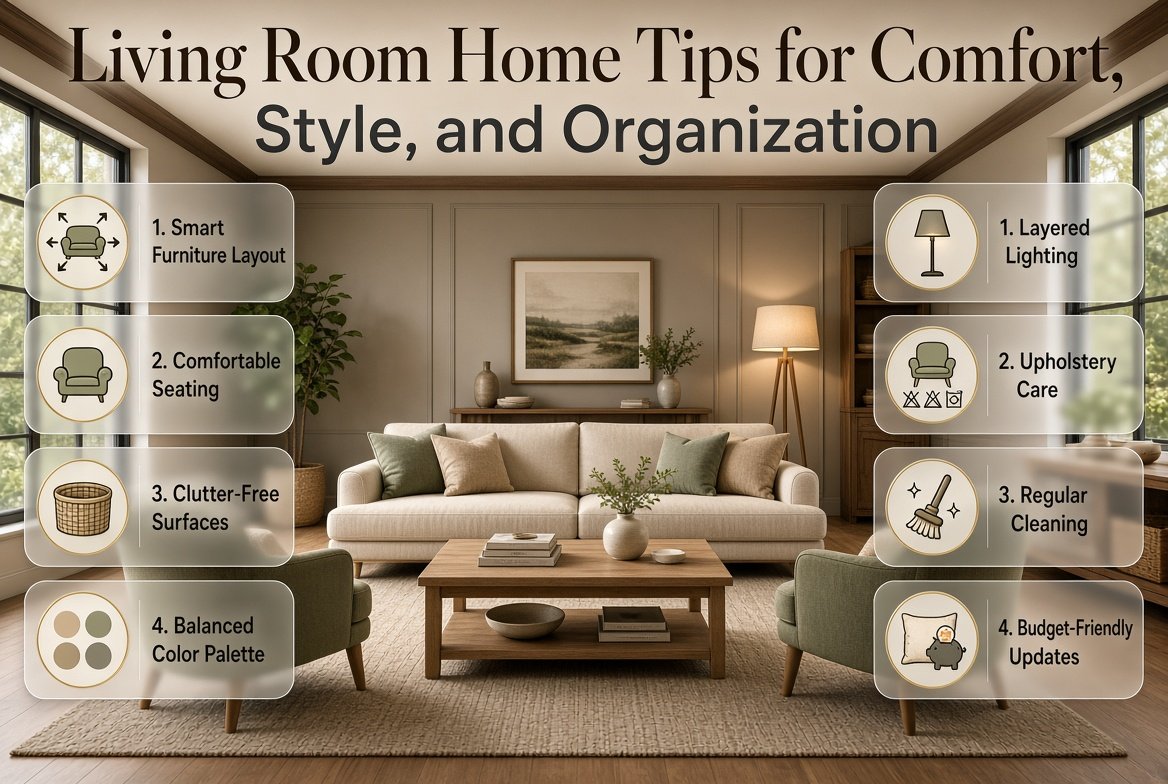
Living Room Home Tips | A living room can look beautiful in a photograph but feel uncomfortable when you actually use it. Furniture may take up too much space, everyday belongings may collect on tables, lighting may feel too harsh, and the overall arrangement may not support the way your family lives. These problems do not always require expensive furniture or a complete renovation. Often, the right decisions about layout, comfort, organization, and maintenance can make a significant difference.
Living Room Home Tips help you create a space that looks welcoming, feels comfortable, and remains practical throughout the day. Whether you live in a small apartment, a family home, or a house with an open-plan living area, the goal is to make your living room work better for your actual needs.
At Heartomenal, the focus is on practical home improvements that combine appearance with everyday functionality. The same approach applies to living room planning: understand the space, identify its problems, and make thoughtful improvements instead of buying unnecessary accessories.
This guide explains how to plan a useful living room layout, select furniture, coordinate colors, improve lighting, organize belongings, maintain upholstery, manage cleaning routines, and make budget-friendly changes. You will also learn which decorating mistakes to avoid, how to approach different room sizes, and how to develop a maintenance routine that keeps the space comfortable over time.
1. How Should You Plan a Living Room Before Making Changes?
A successful living room begins with a clear understanding of how the space is used. Before purchasing furniture, selecting decorations, or changing the wall color, assess the room’s dimensions, existing features, daily activities, and problem areas. This simple planning stage helps you avoid unnecessary expenses and prevents individual design decisions from working against one another.
Identify the Main Purpose of Your Living Room
Every household uses its living room differently. Some families mainly watch television, while others entertain guests, read, work occasionally, or spend time together after dinner.
Start by identifying the activities that happen most often.
- Family relaxation: Prioritize comfortable seating, accessible storage, and durable materials.
- Social gatherings: Provide enough flexible seating and convenient surfaces for drinks.
- Reading: Include suitable task lighting and a comfortable chair.
- Shared activities: Keep open floor space for children, games, or hobbies.
- Mixed-use living: Divide the room into functional areas without making it feel disconnected.
For example, a household that frequently hosts visitors may benefit from movable accent chairs. A household that primarily watches television may prefer a sectional sofa and a layout with clear viewing angles.
The important point is to make decisions based on real activities rather than copying a room that looks attractive but serves a different purpose.
Measure the Room and Record Fixed Features
Measure the length and width of the room, then note the location of doors, windows, radiators, electrical outlets, and other fixed features.
Also measure the furniture you already own. A sofa that fits the room’s width may still be too deep, especially if it reduces the available walking space.
Record these details before planning your arrangement:
- Overall room dimensions.
- Door and window positions.
- Furniture width, depth, and height.
- Available electrical outlets.
- Existing flooring and permanent finishes.
- Main entrances and walking routes.
A simple floor plan drawn on paper is often sufficient. You do not need specialist software to understand whether a furniture arrangement will work.
Pro Tip: Use masking tape to outline furniture dimensions on the floor. Walk around the marked areas before moving heavy items or buying replacements. This helps you identify restricted pathways early.
Establish a Realistic Improvement Budget
Divide possible improvements into three groups:
| Priority | Examples | Recommended approach |
|---|---|---|
| Essential | Unsafe furniture, blocked walkways, inadequate task lighting | Address first |
| Useful | Storage improvements, better curtains, more suitable seating | Plan according to needs |
| Optional | New decorative accessories, seasonal accents, additional artwork | Consider after essentials |
This order prevents decorative purchases from consuming money needed for more important improvements.
If the room already has comfortable furniture, you may only need to rearrange it, improve lighting, or remove unnecessary belongings. A full makeover should not be the automatic starting point.
2. How Can You Arrange Living Room Furniture More Effectively?
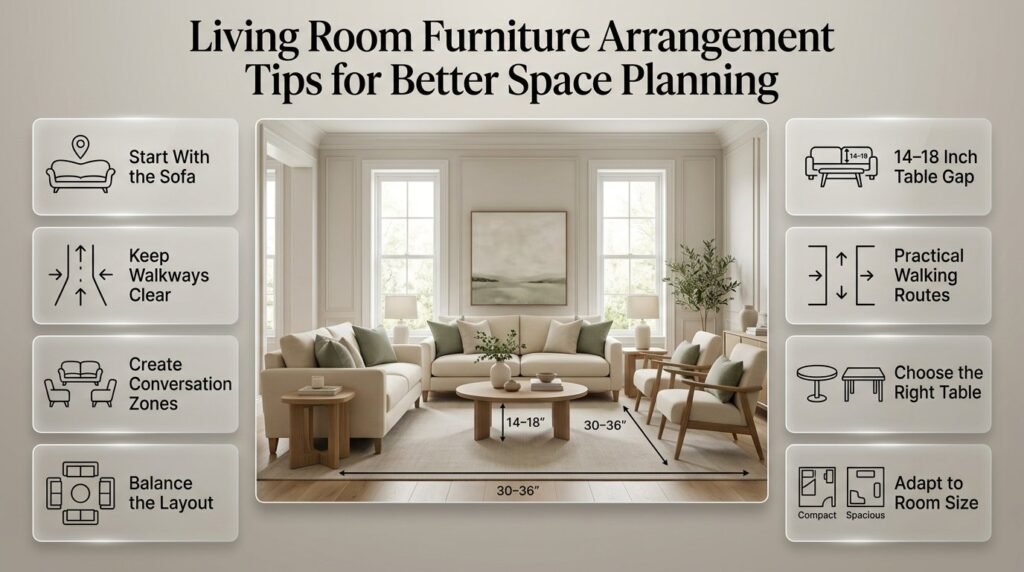
A good living room layout makes movement easy, supports conversation, and allows furniture to serve its intended purpose. The arrangement should feel balanced without forcing every item against a wall or leaving the center of the room unnecessarily empty.
Start With the Largest Furniture Piece
In many living rooms, the sofa determines the rest of the arrangement. Consider its position in relation to the entrance, windows, television, fireplace, and other seating.
Place the sofa where it supports the room’s main activity without blocking important routes.
Next, position accent chairs, side tables, and the coffee table. Smaller furniture should support the main arrangement rather than create obstacles.
Maintain Comfortable Walking Routes
Clear circulation is essential for both comfort and safety. People should be able to enter the room, reach their seats, and move between adjoining spaces without squeezing around furniture.
A clearance of approximately 30–36 inches is a useful starting point for major walking routes where space allows. In compact rooms, narrower passages may be unavoidable, but essential routes should remain practical and safe.
Avoid placing furniture directly in front of frequently used doors or creating narrow gaps between the sofa and coffee table.
Create a Conversation Area
If your living room is used for family discussions or entertaining, arrange seating so people can comfortably see one another.
Two chairs angled toward a sofa can create a more inviting conversation area than a row of seats facing the same direction.
The distance between seats should support conversation without making people feel crowded. A small side table between two chairs can provide convenience without requiring a large coffee table.
Position the Coffee Table Carefully
The coffee table should be reachable from the main seats while leaving enough room for people to walk around it.
As a practical starting point, consider approximately 14–18 inches between the coffee table and sofa. Adjust this distance to suit the table’s size, the sofa’s depth, and the needs of household members.
Choose a table that fits the room rather than selecting one solely for its appearance.
| Table type | Suitable situation | Consideration |
|---|---|---|
| Rectangular | Longer sofas and traditional layouts | Check walking clearance |
| Round | Compact seating arrangements | Select a suitable diameter |
| Nesting tables | Flexible use and occasional guests | Store smaller tables neatly |
| Storage table | Rooms needing additional organization | Avoid overloading the interior |
| Small side tables | Reading corners and individual seats | Match height to the seating |
Common Mistake: Buying several small tables because they appear convenient. Too many surfaces can interrupt movement and make the room feel cluttered. Choose only the pieces that support actual activities.
Should You Push All Furniture Against the Walls?
Not necessarily. In a larger room, moving the sofa slightly away from the wall can establish a more defined seating area. In a small room, placing certain pieces against the walls may preserve valuable floor space.
The correct choice depends on room dimensions, door positions, and how people move through the space.
Test more than one arrangement before deciding. A layout should be judged by comfort and usability, not by a universal decorating rule.
3. How Can You Choose Living Room Colors That Work Together?
The most effective living room color schemes connect the walls, flooring, furniture, curtains, and decorative details. A coordinated palette creates visual consistency, while carefully selected contrast prevents the room from looking flat.
You do not need to use many colors to create interest. Two or three coordinated shades, supported by different textures, can produce a balanced result.
Use the 60-30-10 Color Principle
The 60-30-10 principle is a useful starting point for distributing color.
- 60% dominant color: Often walls or another large visual surface.
- 30% secondary color: Major upholstery, curtains, or substantial furnishings.
- 10% accent color: Cushions, artwork, lampshades, and smaller accessories.
These proportions are guidelines, not strict measurements. Patterned furniture, colorful flooring, and distinctive architectural features may require a different balance.
For example, cream walls and a neutral rug could provide the dominant foundation, sage-green seating or curtains could supply the secondary color, and muted brass or terracotta accents could introduce contrast.
Select Colors According to Natural Light
The same paint color can look different in different rooms. Window direction, daylight intensity, artificial lighting, flooring, and nearby materials all influence how a color appears.
In a darker room, lighter and warmer colors may help create a more open feeling. A bright room may support deeper shades without appearing as enclosed.
Before painting:
- Test samples on separate wall areas or sample boards.
- Observe them at different times of day.
- Compare them with the flooring and upholstery.
- Check their appearance under evening lighting.
- Consider whether the color remains comfortable across changing light conditions.
Expert Tip: Choose wall colors after reviewing the permanent features that are expensive to change. Flooring, stone, built-in cabinets, and large furniture pieces should influence the final palette.
Coordinate Patterns Without Creating Visual Clutter
Patterns can add character through cushions, rugs, curtains, and upholstery. However, several strong patterns may compete for attention when they share similar visual weight.
A practical approach is to combine one prominent pattern with simpler supporting designs.
For example, a striped cushion may work with a subtle geometric rug and solid-color curtains. Alternatively, a floral accent can complement plain upholstery and a restrained color scheme.
Consider pattern scale as well as color. Large patterns often work well on larger surfaces, while smaller patterns can be useful for accessories.
Choose Materials That Support the Color Scheme
Color is only one part of a coordinated room. Texture influences whether a space feels warm, formal, relaxed, or contemporary.
Wood, woven fabrics, ceramic accessories, linen, and metal finishes can create variety without requiring additional colors.
A room with cream walls and green accents, for example, may feel more complete when natural wood and a textured rug introduce subtle differences in surface and finish.
4. How Can You Improve Living Room Lighting?

Living room lighting should support different activities throughout the day. Reading, relaxing, cleaning, and entertaining require different levels and types of illumination. A combination of general lighting, task lighting, and accent lighting provides more flexibility than relying entirely on one ceiling fixture.
Understand the Three Main Lighting Types
Ambient lighting provides general illumination. Ceiling fixtures, recessed lights, and suitable room-wide sources can help people move around safely.
Task lighting supports particular activities. Examples include a floor lamp beside a reading chair or a table lamp near a frequently used seat.
Accent lighting highlights selected features, such as artwork, shelves, or architectural details.
You do not need all three types in every corner. The objective is to place light where it improves comfort, visibility, or the appearance of important features.
Make Better Use of Natural Light
Natural light can make a living room feel brighter and help colors appear more clearly.
Keep window areas reasonably clear, choose curtains that suit your privacy requirements, and avoid placing bulky furniture where it unnecessarily blocks daylight.
Mirrors can help reflect existing light when positioned thoughtfully. However, their placement should not create glare or unwanted reflections from televisions and lamps.
If direct sunlight is strong, suitable blinds or lined curtains can help control glare and protect furnishings.
Choose Appropriate Bulbs
Warm-white lighting, often around 2700K–3000K, is a useful choice for relaxed living spaces. Other color temperatures may suit particular tasks or personal preferences.
Brightness, fixture position, shade design, and glare also influence comfort.
Check the fixture’s requirements and confirm that bulbs are compatible with any dimmer switches.
Common Mistake: Choosing lighting based only on brightness. A powerful bulb positioned poorly may create glare, while several appropriately placed lights may provide more comfortable illumination.
Improve Lighting Without Rewiring
If you want a practical update without major electrical work, consider:
- Adding a suitable floor lamp.
- Repositioning an existing table lamp.
- Replacing unsuitable bulbs with compatible alternatives.
- Cleaning dusty lampshades and fixtures.
- Adjusting curtains to make better use of daylight.
Any electrical installation or wiring change should be handled by a qualified professional where required.
5. How Can You Keep a Living Room Organized Every Day?
A well-organized living room makes it easy to find belongings and return them to their proper places. The goal is not to eliminate every personal object. It is to prevent everyday items from spreading across surfaces, seats, and floors.
Identify the Items That Create Most of the Clutter
Observe what accumulates in your living room over several days.
Common examples include remote controls, chargers, books, blankets, children’s toys, bags, paperwork, and drinking glasses.
Give each frequently used category a designated storage location.
- Keep remote controls in a small tray or accessible drawer.
- Store blankets in a basket near the sofa.
- Place books on a suitable shelf.
- Use bins for toys and games.
- Keep charging accessories in a designated organizer.
- Return dishes to the kitchen after use.
Storage is more effective when it is close to the place where an item is used. A complicated storage system can discourage people from putting belongings away.
Choose Storage That Fits the Room
Storage furniture should solve a specific problem without creating another one.
| Storage solution | Best application | Possible limitation |
|---|---|---|
| Storage ottoman | Blankets and small accessories | Can become overloaded |
| Closed cabinet | Games, cables, and miscellaneous items | Needs occasional sorting |
| Open shelving | Books and selected displays | Collects dust |
| Baskets | Toys and soft furnishings | Contents can become mixed |
| Wall shelves | Vertical storage | Require secure installation |
| Console with drawers | Small everyday items | Needs sufficient wall clearance |
Choose storage based on the type and quantity of belongings you actually own.
Use Vertical Space Thoughtfully
Wall-mounted shelves can free floor space and provide practical storage. Taller bookcases may also help organize a room without adding several separate cabinets.
However, using every available wall is not always the best solution. Too many shelves, objects, and decorative arrangements can create visual clutter.
Secure shelves appropriately, particularly in households with children. Keep heavy items safely positioned and avoid overloading storage units.
Establish a Five-Minute Reset
A short daily routine can prevent small messes from becoming a major cleaning task.
At the end of the day:
- Remove dishes and cups.
- Return remote controls and accessories.
- Fold blankets.
- Straighten cushions.
- Put away toys and books.
- Clear the main walking routes.
For additional practical strategies, read Smart Home Organization Tips.
Pro Tip: Organize frequently used items at comfortable, accessible heights. Store seasonal decorations and rarely used belongings farther away so they do not compete with everyday essentials.
6. How Can You Select Durable Furniture and Easy-Care Materials?
Furniture and material choices should reflect how the living room is used. A household with pets, children, or frequent visitors may need different upholstery and flooring solutions from a household that uses the room occasionally.
The most attractive material is not necessarily the most practical one. Consider durability, cleaning instructions, comfort, sunlight exposure, and replacement costs together.
Compare Upholstery Materials
Tightly woven synthetic fabrics: These may be practical for frequently used furniture, depending on their construction and care requirements.
Cotton: Cotton upholstery offers a comfortable, familiar texture but may wrinkle or stain if it is not properly maintained.
Linen: Linen creates a natural, relaxed appearance. It can crease easily and may require more careful cleaning.
Leather: Properly maintained leather can be wiped clean, although it may scratch and needs suitable conditioning or care.
Performance fabrics: These are designed for particular durability or stain-resistance characteristics, but their performance varies by product.
Before buying, inspect the manufacturer’s cleaning guidance. Do not assume that every fabric can tolerate water, steam, or the same stain-removal products.
Select a Rug for the Way You Live
A rug can define a seating area, introduce texture, and connect different furniture pieces.
When choosing one, consider:
- Whether it fits the main seating arrangement.
- How easily it can be cleaned.
- Whether its pile suits doors and walking routes.
- Whether the backing is appropriate for the flooring.
- How its colors relate to the furniture and walls.
In many layouts, placing the front legs of the main seating on the rug helps create a unified appearance.
A rug that is too small may make the furniture arrangement look disconnected. However, a very large rug may be unsuitable for a compact room or interfere with doors.
Protect Furniture From Sunlight and Everyday Wear
Prolonged direct sunlight can fade some fabrics and finishes. Curtains, blinds, suitable window treatments, and thoughtful furniture placement can help reduce exposure.
Rotate removable cushions when recommended by the manufacturer. Use appropriate protective covers if the furniture receives heavy daily use.
Expert Tip: Before purchasing a sofa, check more than its appearance. Sit on it if possible, assess the support, examine the construction, and confirm the cleaning requirements. A comfortable, maintainable sofa is usually a better investment than a visually impressive piece that does not suit your household.
7. How Can You Make a Small Living Room Feel More Spacious?
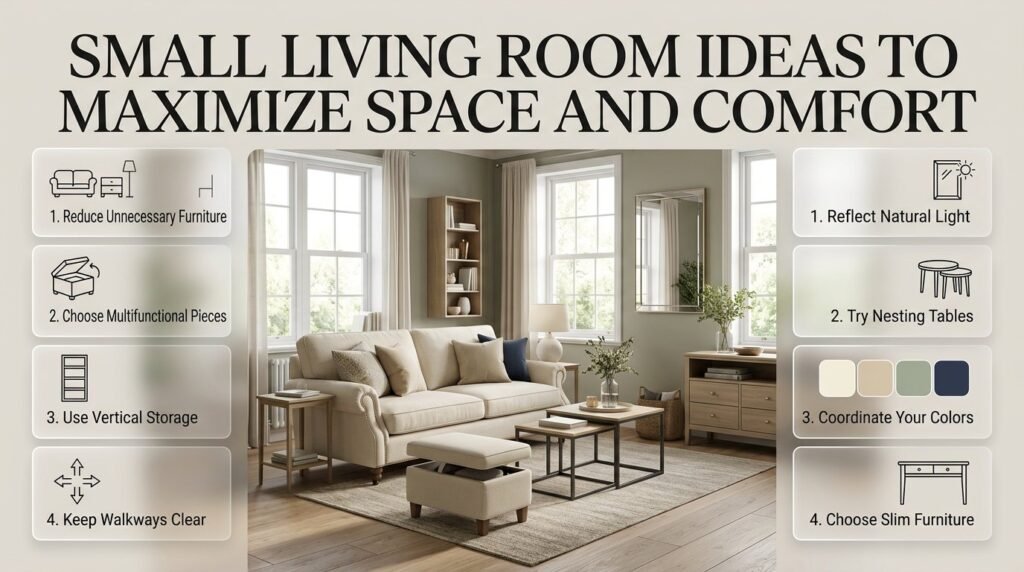
A small living room feels more spacious when furniture fits the available area, walking routes remain clear, and storage is planned carefully. You do not need to remove all color or adopt a strict minimalist style. The objective is to make the room feel organized and easy to use.
Reduce Unnecessary Furniture
Begin by identifying furniture that serves no clear purpose.
A small room may not need a large coffee table, several side tables, multiple accent chairs, and a bulky entertainment unit.
Keep the pieces that support daily activities and remove or replace those that unnecessarily restrict movement.
A slim console, compact side table, or appropriately sized sofa may provide better functionality than several larger items.
Choose Multifunctional Pieces Carefully
Multifunctional furniture can reduce the number of separate pieces required.
Examples include:
- An ottoman with internal storage.
- Nesting tables that can be separated when needed.
- A sofa bed for occasional overnight guests.
- A console with drawers.
- Wall-mounted shelving.
Choose multifunctional pieces only when their extra features are genuinely useful. A sofa bed, for example, may not provide the same everyday comfort as a conventional sofa of similar size.
Use Mirrors and Vertical Storage
A well-positioned mirror can reflect light and create a greater sense of depth. Vertical shelving can also use wall space without occupying as much floor area as additional cabinets.
Keep the arrangement restrained. Filling every wall with shelves or mirrors may make the room feel visually busy rather than spacious.
Maintain a Connected Color Palette
Using related shades across walls, curtains, and upholstery can help a compact room feel more cohesive.
This does not mean avoiding dark colors. A navy accent chair or deep-green cushion can add character when balanced with the rest of the room.
Quick Tip: Before buying another storage unit, sort through existing belongings. Removing items you no longer need may solve the storage problem without adding more furniture.
For additional guidance on making compact spaces work harder, explore Small Space Home Tips.
8. How Can You Decorate a Living Room Without Overcrowding It?
A finished living room should reflect personal taste while remaining practical. Artwork, cushions, plants, books, and decorative accessories can add character, but each item should contribute to the overall arrangement.
The goal is to create visual interest without making every surface compete for attention.
Choose Artwork That Relates to the Furniture
Artwork should suit the scale of the wall and the furniture beneath it.
A large piece above a sofa may create a strong focal point. A gallery wall can work well when several smaller pieces share a consistent relationship through color, frame style, or subject.
Before hanging artwork, arrange the pieces on the floor or use paper templates to test the layout.
Avoid hanging artwork so high that it appears disconnected from the furniture. Also consider the viewing distance and the height of nearby architectural features.
Use Cushions and Throws With Purpose
Cushions can introduce accent colors and textures without requiring major changes.
For example, a neutral sofa may work well with two solid-color cushions, one patterned cushion, and a coordinating throw.
Varying texture can create interest even when the colors remain similar. A woven cushion, smooth cotton cover, and soft throw may work together without making the arrangement look busy.
Do not add so many cushions that people must remove them before sitting down.
Add Plants Where Conditions Are Suitable
Houseplants can introduce natural color and texture. Select them according to available light, room temperature, watering needs, and maintenance requirements.
If you have pets or young children, check plant safety before bringing a plant into the home. Keep pots stable and avoid placing them where water can damage furniture or flooring.
Artificial plants may be suitable where natural light is insufficient or maintenance is difficult.
Style Shelves With Balance
A useful shelf arrangement combines selected objects with open space.
Group a few books with a decorative object, vary heights, and leave some areas clear. You can also repeat a material or color from elsewhere in the room to create a connection between different parts of the design.
Review your shelves periodically rather than adding decorations whenever you find something attractive.
Common Mistake: Treating every empty surface as an opportunity to display another object. Empty space is part of a balanced arrangement and makes important decorative pieces easier to appreciate.
9. How Can You Maintain a Clean and Fresh Living Room?
Regular maintenance keeps a living room comfortable and prevents small problems from becoming difficult cleaning tasks. The most effective approach combines short daily habits with weekly cleaning and occasional deeper maintenance.
Your routine should reflect the household’s needs. A room used by several people and pets may require more frequent attention than a room used occasionally.
Follow a Practical Cleaning Schedule
| Frequency | Recommended tasks |
|---|---|
| Daily or as needed | Remove dishes, return belongings, address visible spills |
| Weekly | Dust surfaces, vacuum floors, clean high-touch areas |
| Monthly | Check corners, organize cabinets, inspect selected upholstery areas |
| Seasonally | Review curtains, clean overlooked areas, check furniture condition |
This schedule is a starting point rather than a strict rule. Adjust it according to foot traffic, pets, allergies, and the materials in your room.
Clean From Top to Bottom
Begin with higher surfaces, such as shelves and lamps, then move to tables and lower furniture. Finish by vacuuming or cleaning the floor.
This sequence reduces the chance of dust falling onto areas you have already cleaned.
Use appropriate cleaning attachments and follow the care instructions for upholstery, rugs, flooring, and electronic equipment.
Handle Spills Promptly
When a spill occurs, check the material’s care instructions before applying a cleaning product.
Blot suitable fabric spills gently with a clean cloth rather than rubbing aggressively. Test approved cleaners in an inconspicuous area and follow the manufacturer’s instructions.
Never mix household cleaning chemicals. Some combinations can release dangerous fumes.
Reduce Dust and Odors
Dust can accumulate on shelves, curtains, upholstery, and decorative objects.
Regular vacuuming, suitable ventilation, and laundering washable fabrics according to their care instructions can help keep the room fresh.
If an unpleasant odor persists, investigate its source instead of relying only on air fresheners. Food residue, damp materials, dirty upholstery, or inadequate ventilation may require specific attention.
For more detailed cleaning routines, read Easy Home Cleaning Tips.
10. How Can You Make Your Living Room Safer for Everyday Use?

A practical living room should be comfortable and visually appealing without creating avoidable hazards. Safety considerations are particularly important in homes with children, older adults, pets, or people who have difficulty moving around.
Keep Walkways Clear
Avoid leaving bags, toys, charging cables, and other belongings across frequently used paths.
Secure loose rugs with suitable nonslip backing and check whether rug edges curl upward. Make sure furniture does not obstruct essential exits.
If you regularly move furniture, inspect the new arrangement for narrow passages and trip hazards.
Manage Electrical Cables
Television cables, lamp cords, chargers, and extension leads can create hazards when left across the floor.
Keep cables organized using suitable cable-management products and position electrical equipment according to manufacturer instructions.
Avoid overloading outlets or using damaged cables. Seek qualified assistance if electrical fittings require repair.
Position Heavy Furniture Securely
Bookcases, cabinets, and tall storage units should be installed or secured appropriately, especially in homes with children.
Place heavy objects on stable surfaces and avoid stacking items where they could fall onto seating or walking areas.
Consider Heat and Fire Safety
Keep candles, portable heaters, and other heat-producing items away from curtains, upholstery, and other combustible materials.
Never leave open flames unattended. Ensure that heating equipment is used according to its instructions, and keep required exits accessible.
These precautions should be part of your furniture planning rather than something considered only after the room is decorated.
11. What Are the Most Common Living Room Home Improvement Mistakes?
Many living room problems arise because decisions are made separately instead of considering how the entire space functions. A sofa may look attractive but block a doorway. Decorative objects may suit individual shelves but create clutter when combined. A paint color may look perfect in a store but appear different under the room’s lighting.
Understanding these mistakes helps you make better decisions before spending money.
Mistake 1: Buying Furniture Without Measuring
Why it happens: People judge furniture by photographs, showroom displays, or appearance alone.
Why it causes problems: The furniture may restrict movement, overwhelm the room, or prevent doors from opening properly.
How to avoid it: Measure the room, check furniture dimensions, and mark the intended footprint on the floor.
Mistake 2: Choosing Appearance Over Comfort
Why it happens: A stylish sofa or chair attracts attention, even when it does not support everyday use.
Why it causes problems: Poor seating comfort can make the room less enjoyable despite its attractive appearance.
How to avoid it: Test seating when possible, consider how long it will be used, and evaluate support and fabric maintenance.
Mistake 3: Overusing Decorative Accessories
Why it happens: Individual objects look attractive, so they accumulate over time.
Why it causes problems: Shelves become crowded, cleaning takes longer, and the room loses visual focus.
How to avoid it: Keep meaningful and useful items, group accessories selectively, and leave some surfaces clear.
Mistake 4: Ignoring Lighting Conditions
Why it happens: People select colors or lighting fixtures without evaluating the actual room.
Why it causes problems: Colors may appear different than expected, and poorly positioned lights can create glare or dark corners.
How to avoid it: Test samples in different lighting conditions and use more than one suitable light source where necessary.
Mistake 5: Adding Storage Without Decluttering
Why it happens: Extra cabinets seem like the quickest solution to overflowing surfaces.
Why it causes problems: The room becomes more crowded, while unnecessary belongings remain.
How to avoid it: Sort belongings first, then add storage only for items that genuinely need a designated place.
Mistake 6: Neglecting Furniture Maintenance
Why it happens: Cleaning and care are postponed until visible dirt or damage appears.
Why it causes problems: Some stains become harder to remove, dust accumulates, and materials may deteriorate more quickly.
How to avoid it: Follow a realistic cleaning schedule and address spills, loose fittings, and other minor problems promptly.
Mistake 7: Following Every Decorating Trend
Why it happens: New styles can make existing furniture seem outdated.
Why it causes problems: Constant changes cost money and may create a room that does not reflect your needs.
How to avoid it: Establish a practical foundation with comfortable furniture, coordinated colors, and useful storage. Introduce trends through smaller, replaceable items when they genuinely suit your taste.
12. What Professional Planning Principles Make a Living Room Work Better?
Professional-style planning focuses on the relationship between space, movement, furniture, materials, lighting, and everyday activities. The best result is not necessarily the most expensive or elaborate room. It is a room in which the major decisions support one another.
Follow the Correct Order of Decisions
Work through these stages:
- Measure the room and identify fixed features.
- Decide how the room will be used.
- Establish the furniture layout.
- Coordinate major colors and materials.
- Plan general and task lighting.
- Choose rugs, curtains, and upholstery.
- Add artwork and decorative accessories.
- Review comfort, movement, and maintenance.
This sequence helps prevent unnecessary purchases and reduces the risk of discovering that a decorative choice does not suit the final arrangement.
Balance Scale, Texture, and Contrast
Scale refers to how furniture and accessories relate to the dimensions of the room and to one another.
A large sofa may dominate a compact room, while tiny accessories may look insignificant against substantial furniture.
Texture adds variety. A linen sofa can work with a woven rug, wooden furniture, and ceramic accessories. These materials create interest without requiring many competing colors.
Contrast helps individual elements remain visible. If everything has the same color and brightness, the room may feel flat. Introduce a darker accent, varied texture, or distinctive artwork to create depth.
Consider the Full Cost of Ownership
Furniture costs do not end with the purchase price.
Some materials require specialist cleaning, while others may need regular conditioning or careful protection from sunlight. Delicate decorative objects may also require more maintenance than durable everyday alternatives.
Before purchasing a major item, consider:
- Initial price and expected lifespan.
- Cleaning and maintenance requirements.
- Suitability for household activities.
- Availability of replacement covers or parts.
- Delivery and installation requirements.
A slightly more expensive item may offer better value if it remains comfortable and practical for longer. However, price alone does not guarantee durability, so assess quality and care requirements carefully.
Observe How the Room Is Actually Used
Spend several days noticing where people sit, where belongings accumulate, and which routes feel inconvenient.
You may discover that the main problem is not the sofa itself but the position of a side table. Alternatively, the room may need a dedicated place for books, a better reading light, or a simpler storage arrangement.
Expert Tip: Test small changes before committing to major purchases. Rearrange the furniture, use temporary storage baskets, or try a different lamp position. Observe the results and keep the changes that genuinely improve daily life.
13. How Can You Improve Your Living Room on a Budget?
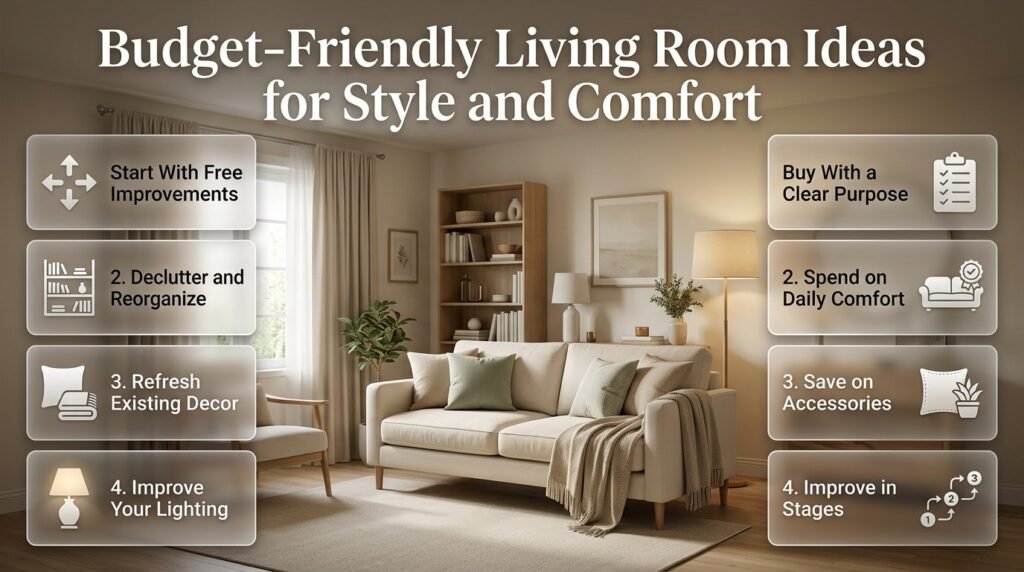
A living room refresh can begin with changes that cost little or nothing. Rearranging furniture, removing unnecessary objects, improving existing lighting, and cleaning neglected surfaces may provide a noticeable improvement without replacing major items.
Start With Free Improvements
Try these changes before shopping:
- Rearrange furniture to improve walking routes.
- Remove decorations that compete for attention.
- Clean lampshades, shelves, and furniture surfaces.
- Reorganize books and selected decorative objects.
- Move existing artwork to a more suitable location.
- Wash curtains according to their care instructions.
- Create a consistent place for everyday belongings.
- Use existing cushions and throws more thoughtfully.
These improvements address common problems without introducing additional items.
Prioritize Purchases That Solve Specific Problems
If the room still needs improvement, identify the most important remaining issue.
For example, replace a damaged lamp if poor lighting affects everyday activities. Add a suitable storage unit if frequently used belongings have no practical home. Consider new cushion covers if the sofa remains comfortable but its appearance needs refreshing.
Avoid purchasing several unrelated accessories simply because they are inexpensive.
Decide Where to Spend and Where to Save
| Item | When spending more may be worthwhile | When saving may make sense |
|---|---|---|
| Sofa | Daily use requires lasting comfort and support | Existing seating remains comfortable and structurally sound |
| Lighting | Better illumination is essential | Repositioning a suitable existing lamp solves the problem |
| Rug | Durability and regular cleaning matter | A smaller, washable rug suits the room |
| Curtains | Privacy, light control, and durability are important | Existing curtains remain functional |
| Cushions | Fabric quality matters for frequent use | Replaceable covers provide an affordable update |
| Accessories | A meaningful piece creates a useful focal point | Temporary decorative changes meet your needs |
Make Improvements in Stages
You do not need to finish the room in one weekend.
Begin with the layout, then improve organization, lighting, and color coordination. After living with those changes, decide whether additional furniture or accessories are necessary.
This staged approach gives you time to evaluate the results and helps prevent impulse purchases.
For broader practical ideas that support everyday home life, explore Home Tips & Ideas.
14. How Can You Keep the Living Room Connected to the Rest of Your Home?
A living room rarely functions entirely on its own. People move between the living area, kitchen, bedrooms, and other spaces throughout the day. A coordinated approach to household organization can make these transitions easier without requiring every room to look identical.
Coordinate Storage Between Shared Spaces
Items often move between rooms. Books may be carried from the living room to a bedroom, while dishes and glasses travel to the kitchen.
Create simple routines that return belongings to their correct locations. A small collection basket can temporarily hold items that need to be returned elsewhere, provided it does not become a permanent source of clutter.
For kitchen-related routines, Kitchen Organization Tips can help you plan practical storage and reduce the accumulation of everyday items.
Keep Shared Belongings Easy to Find
If household members regularly share chargers, blankets, books, or remote controls, agree on convenient storage locations.
Consistent storage reduces the time spent searching for items and makes it easier for everyone to maintain the room.
The system should remain simple enough for all household members to follow.
Use Similar Principles Across Bedrooms and Living Areas
Your living room does not need to match your bedroom exactly. However, consistent habits such as returning belongings, maintaining clear surfaces, and reviewing storage can make the whole home easier to manage.
For additional ideas about maintaining an organized personal space, explore Bedroom Organization Tips.
These related routines support the same goal: creating a home that feels comfortable and functions well without requiring constant effort.
What Are the Best Living Room Home Tips for Creating a Comfortable and Stylish Space?
The best living room home tips focus on balancing comfort, functionality, and visual appeal. A well-designed living room should support everyday activities while maintaining a welcoming atmosphere. Instead of filling the room with decorative items, prioritize comfortable seating, suitable lighting, coordinated colors, and a layout that allows people to move freely.
Start by identifying how your household uses the room. If you spend most evenings watching television, arrange seating for comfortable viewing. If you frequently welcome guests, create a conversation area with accessible side tables. Choose furniture that fits the room’s dimensions and introduce accessories gradually so the space remains practical.
Practical tips to follow:
Choose furniture that suits the room’s size and daily requirements.
Combine ambient lighting with task and accent lighting.
Use a coordinated color palette to create visual consistency.
Keep frequently used belongings organized and accessible.
Add cushions, rugs, and artwork without overcrowding the room.
The most effective approach is to improve one area at a time. This makes it easier to identify which changes genuinely improve comfort and appearance.
How Should You Arrange Living Room Furniture to Make the Space Look Bigger?
To make a living room look bigger, choose appropriately sized furniture, maintain clear walking routes, and avoid unnecessary pieces that occupy valuable floor space. A thoughtful furniture arrangement can improve the room’s visual balance without requiring structural changes or expensive renovations.
Begin by measuring the room and identifying its main focal point, such as a window, fireplace, or television. Position the sofa to support the room’s primary activity, then arrange chairs and tables around it. In smaller rooms, multifunctional furniture can provide additional usefulness without introducing too many separate items.
Professional furniture arrangement tips:
Keep entrances and main walking routes clear.
Select coffee tables that allow comfortable movement around them.
Use wall-mounted shelves when appropriate to preserve floor space.
Consider mirrors to reflect available natural light.
Avoid buying oversized sofas or several unnecessary accent chairs.
A room does not need to be completely empty to feel spacious. The goal is to ensure that every furniture piece serves a purpose and that the arrangement feels open, balanced, and comfortable.
Which Living Room Colors and Combinations Create the Most Attractive Interior?
The most attractive living room colors are those that complement the existing flooring, furniture, natural light, and overall decorating style. Neutral shades such as cream, beige, and warm white provide a versatile foundation, while green, navy blue, terracotta, and muted pastels can introduce character and contrast.
A practical way to coordinate colors is to use the 60-30-10 principle. Choose a dominant color for larger surfaces, a secondary color for substantial furnishings, and an accent shade for smaller decorative details. This creates a useful starting point without making the room feel overly coordinated or repetitive.
Color combinations worth considering:
Cream and sage green: Creates a relaxed, natural atmosphere.
Navy blue and warm white: Introduces contrast and a classic appearance.
Beige and natural wood: Provides warmth and flexibility.
Terracotta and cream: Adds an earthy, welcoming character.
Soft blue and light gray: Creates a calm, understated interior.
Before painting, test sample colors in the actual room under daylight and artificial lighting. Existing furniture and flooring should influence the final choice. A color that looks attractive in a showroom may appear noticeably different at home.
How Can You Keep Your Living Room Clean, Organized, and Clutter-Free Every Day?
Keeping a living room organized becomes easier when frequently used belongings have designated storage locations and cleaning is divided into manageable tasks. Rather than waiting until the room becomes untidy, establish simple routines that prevent clutter from accumulating.
Start by identifying the items that regularly collect on tables, sofas, and floors. Remotes, blankets, books, toys, and charging accessories should each have a convenient place. Storage baskets, closed cabinets, shelving, and storage ottomans can help, provided they suit the room’s size and actual needs.
A practical organization routine includes:
Returning everyday belongings to their designated locations.
Removing dishes and cups after use.
Folding blankets and straightening cushions.
Dusting surfaces and vacuuming regularly.
Reviewing storage areas to remove unnecessary belongings.
Cleaning upholstery according to the manufacturer’s instructions.
A short daily reset can reduce the amount of time needed for deeper cleaning. The key is to create a system that household members can maintain consistently, rather than relying on occasional major cleaning sessions.
How Can You Improve Your Living Room on a Budget Without Replacing All the Furniture?
You can improve your living room on a budget by focusing on changes that solve specific problems rather than replacing furniture simply to achieve a new look. Rearranging existing pieces, improving lighting, reducing clutter, and coordinating decorative accessories can make a noticeable difference without requiring a complete makeover.
Begin with a thorough cleaning and assess what already works. If the sofa remains comfortable and structurally sound, consider updating its cushion covers rather than purchasing a replacement. If the room feels dark, improve the placement of existing lamps or add a suitable light source before considering expensive renovations.
Budget-friendly improvements to prioritize:
Rearrange furniture to improve movement and balance.
Refresh the room with coordinated cushion covers and throws.
Reorganize shelves and display fewer, more meaningful accessories.
Improve lighting with suitable bulbs and additional lamps.
Maintain existing furniture to extend its useful life.
Purchase new items only when they solve a genuine functional problem.
Plan improvements in stages instead of buying everything at once. This allows you to evaluate each change before spending more money. A well-organized room with comfortable furniture, thoughtful lighting, and a consistent color scheme can look polished without an expensive decorating budget.
Conclusion
Creating a comfortable and well-organized living room does not require expensive furniture, a complete renovation, or following every interior design trend. The most effective living room home tips focus on understanding your daily needs, arranging furniture thoughtfully, choosing complementary colors, improving lighting, and maintaining a clutter-free environment. When these elements work together, the living room becomes more inviting, functional, and enjoyable for everyone in the household.
Start with the essentials before making decorative changes. Establish a practical furniture layout, keep walking paths clear, choose durable materials, and use storage solutions that make everyday organization easier. Small improvements, such as adding layered lighting, rearranging existing furniture, introducing textured cushions, or creating a simple cleaning routine, can make a noticeable difference without stretching your budget.
It is also important to consider how your living room connects with the rest of your home. Coordinating colors, maintaining consistent organization habits, and choosing decor that reflects your personal preferences can create a more harmonious atmosphere. Whether you have a spacious family room or a compact apartment living area, thoughtful planning will help you make the best use of the available space.
For more practical ideas, explore Home Tips & Ideas and discover helpful ways to improve comfort, organization, and everyday living. You can also revisit Heartomenal for inspiration on creating a home that feels welcoming, functional, and suited to your lifestyle.
Ultimately, the best living room is not the one with the most expensive decor. It is the one that supports your routine, reflects your personality, and makes you feel comfortable every day. Start with one manageable improvement, build on your progress, and let your living room develop into a space that combines practical function with lasting style.
Leave a Reply